Jump to content
Twins Daily
  • Create Account

Recommended Posts

Twins Daily Contributor
Posted

The Minnesota Twins set an MLB record by striking out 1,654 times during the 2023 season. Veteran additions this winter point to the team digging themselves out of last year’s strikeout woes.

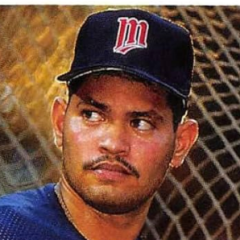
Image courtesy of William Parmeter

Stylistically, baseball has changed in recent years. Besides the rare cases, gone are the days of players striving for a .300 batting average. Instead, batters have focused on increasing exit velocity and launch angle to drive the ball with power in the air. (To wit: last year nine qualified players had a batting average of .300 or better, in 2003 there were 40.)

Teams are also deploying power arms out of the bullpen earlier in games, as some starters aren’t given an opportunity to go through a lineup more than twice. Swinging for the fences comes with other downfalls as strikeout totals rise and teams attempt to balance the art of hitting home runs and avoiding strikeouts. 

The Star Tribune’s Chip Scoggins asked Derek Falvey about the general acceptance of rising strikeout totals in baseball’s current landscape. "We never intend to hunt strikeout records. That's not a goal, I promise you,” he said. “Any fan that thinks that you need to tell them that is not the case. That was not our goal. That was never our mission."

The Twins weren’t alone in their strikeout futility last season. Minnesota set the record for most strikeouts in a season, but the Seattle Mariners also would have broken the all-time mark with 1,603 strikeouts of their own. Minnesota had seven players with 100 strikeouts or more, but two of the team’s top three strikeout leaders (Joey Gallo and Michael A. Taylor) won’t be on the roster for 2024. So, how did the team replace those hitters, and can we expect the strikeout numbers to decrease?

Joey Gallo Replacement: Carlos Santana
Last season, the Twins signed Joey Gallo to a one-year, $11 million contract to add him to the team’s options at first base. Many fans were happy the team had moved on from Miguel Sanó, but the club went and signed the only other player in MLB history with a higher strikeout rate. Gallo has a 37.5 K% for his career, but his 2024 rate was over five percent higher. He can obviously hit some towering home runs and draw walks, but he is prone to more slumps with his massive strikeout rate. 

Santana is a very different player type than Gallo because they strike out at opposite ends of the spectrum. Last season, Santana posted a 16.8 K%, nearly identical to his career total. He’s only posted one season with a K% higher than 20%, which was back in 2011, his first full season in the big leagues. Santana is going to put the ball in play more regularly and he can hopefully avoid the prolonged slumps Twins fans witnessed with Gallo during the 2023 campaign. 

Michael A. Taylor Replacement: Manuel Margot
Taylor outperformed many projections during the 2023 season with a career-high 21 home runs and an OPS more than 50 points higher than his career average. His jump in power came at a cost of 33.5 K%, his highest total since the 2019 campaign. For his career, Taylor has struck out in 30% of his plate appearances while also getting on base less than 29.5% of the time. Entering his age-33 season, it’s fair to expect age to impact Taylor on both sides of the ball. 

Margot has dealt with leg and arm injuries over the last two seasons but is four years younger than Taylor. He also has far less swing-and-miss to his offensive profile. For his career, Margot has a 17.8 K%, lower than that during the 2023 campaign (16.4 K%). He has only crossed the 100-strikeout total in one season (2017) while averaging 64 strikeouts over the last three seasons. Margot doesn’t have Taylor’s home run potential, but being able to avoid strikeouts is going to be a welcome addition to the back end of the lineup. 

Returning Players
There are returning players who will also impact the Twins’ strikeout totals. Correa saw a jump from a career 20.8 K% to a 22.6 K% in 2023, the worst offensive season of his career. He battled through a plantar fasciitis injury last season that impacted his swing because he couldn’t put pressure on his heel. Correa is healthy and revamped his swing this winter, so that should help lower his strikeout totals. Buxton is another player returning from injury and looking to cut back on the missed cuts. His K% has been above 30% over the last two seasons while he dealt with a nagging knee injury. If he’s more regularly available, it would benefit the team to have his K% drop back to where he had been from 2019-2021 (mid-20s). 

Minnesota’s young core also includes some players to watch regarding strikeout percentage. Julien ranked near the top of the team in total strikeouts despite playing in 109 games. His 31.4 K% was significantly higher than his totals at Double- and Triple-A, so look for him to improve. Pitchers changed their approach versus Wallner later in the season, impacting his strikeout rate. Wallner’s offensive profile is full of swing and miss, so he must adjust and avoid falling into the Gallo realm. Like Julien, Gallo posted better strikeout numbers at Triple-A (28.0 K%), which points to potential improvement.

Strikeouts will continue to be part of baseball. However, the Twins don’t need to perennially be at the bottom of the AL in total strikeouts. Key veteran additions and slight changes in offensive approach should help the 2024 Twins avoid swinging and missing. 


Do you think the team’s strikeout totals will drop this season? Which player(s) from 2023 can make the most improvements in the strikeout department? Leave a COMMENT and start the discussion. 


View full article

Posted

Out of curiosity, I looked up Michael A. Taylor's career stats to see how 2023 compared to the rest of his career. Taylor is a career .239 hitter with 95 home runs and 949 strikeouts over 2915 at bats over his ten year career. Last season, he hit more homeruns but also for a lower average and more strikeouts. He has a career OPS+ of 82. Last season, his OPS+ was 94 (his career best OPS+ is 104 in 2017). 

For comparison, Margot is a career .255 hitter with 52 homeruns and 509 strikeouts over 2612 at bats during his eight years in the Majors. Last season, he was basically right at his career average for performance. His career OPS+ is 92 (career high coincidentally also 104 in 2022).

Both are capable backup center fielders. Margot probably gets a few more hits and puts the ball in play more. Taylor hits a few more homeruns and strikes out twice as much. Neither will be an MVP caliber player this season. The goal clearly seems to be let Buxton play CF since a healthy Buxton is definitely better than either of these guys. 

I am glad they didn't re-sign Gallo. Outside of a couple of homeruns, he is a complete black hole on offense. If they wanted a Gallo, they might as well re-sign Sano to a minor league contract and see what he can do.

Posted

This is great news for me, since I hate strikeouts when the Twins are batting. Because of this and Santana's good fielding at 1B, and Buck, C4 and Lewis being healthy and Julien having more experience at 2B...I am looking forward to better defense and offense from the Twins. More runs scored by the Twins and less runs allowed. Oops, I forgot about losing Sonny Gray and Maeda and (I never thought I'd say this)...Pagan. The Twins main off-season need was a #1 or #2 starting pitcher. I think the stronger bullpen is great, but will this be enough to make up for the loss of Gray and Maeda? That is the big question for me going into 2024. 

Posted
8 minutes ago, tarheeltwinsfan said:

This is great news for me, since I hate strikeouts when the Twins are batting. Because of this and Santana's good fielding at 1B, and Buck, C4 and Lewis being healthy and Julien having more experience at 2B...I am looking forward to better defense and offense from the Twins. More runs scored by the Twins and less runs allowed. Oops, I forgot about losing Sonny Gray and Maeda and (I never thought I'd say this)...Pagan. The Twins main off-season need was a #1 or #2 starting pitcher. I think the stronger bullpen is great, but will this be enough to make up for the loss of Gray and Maeda? That is the big question for me going into 2024. 

Less strikeouts is a good formula.

In games Gray & Maeda pitched the TEAM was 6 games under .500 (my recollection, may want to check) so replacing these two guys at 33 & 35 respectively, with youth, makes sense to me. Not terrible risk. Risk, sure, but not unreasonable to think with more runs scored and better bullpen that the replacement arms can’t fare as well or better.

Gray was fortunate to win v. Toronto with a well executed pick off in 5th inning to escape a jam. He did not pitch well v. Houston. Maeda did not pitch well in relief in post season.

Twins have other competent guys that can give them an opportunity to win playoff games. Maybe not dominant arms but competitive arms.

Posted

I have heard that a strikeout is just an out... but I'd bet if I knew where to look I could find the stats to examine this more closely. Is there a productive out stat? Something that measures the net movement of baserunners with batted outs? Maybe multiple stats where some measure rbis on outs (or sacrafices - sac squeeze/sac fly); others measuring runs moved up that eventually scored; and another stat that just measures runs moved up in s and non-s positions... All -DPs. It would be an interesting addition to a slash line that helps measure the difference between someone who can be clutch in less-than-two-out situations compared to someone like Correa who just hit into a DP whenever there was someone on first. 

Then again, there is such a things as too much information.  

Posted
49 minutes ago, JD-TWINS said:

Less strikeouts is a good formula.

In games Gray & Maeda pitched the TEAM was 6 games under .500 (my recollection, may want to check) so replacing these two guys at 33 & 35 respectively, with youth, makes sense to me. Not terrible risk. Risk, sure, but not unreasonable to think with more runs scored and better bullpen that the replacement arms can’t fare as well or better.

Gray was fortunate to win v. Toronto with a well executed pick off in 5th inning to escape a jam. He did not pitch well v. Houston. Maeda did not pitch well in relief in post season.

Twins have other competent guys that can give them an opportunity to win playoff games. Maybe not dominant arms but competitive arms.

To be fair they didnt score when Gray pitched so hard to win.

Posted

I will be surprised if the Twins lead the majors in Ks this season, but they will still strike out a lot. That is the nature of today's game. One thing that I don't think got enough attention last year was that the Twins' pitching staff led the majors in strikeouts. People watching Twins games last year definitely saw more Ks than fans for any other team.

Posted
59 minutes ago, JD-TWINS said:

In games Gray & Maeda pitched the TEAM was 6 games under .500 (my recollection, may want to check) so replacing these two guys at 33 & 35 respectively, with youth, makes sense to me. Not terrible risk. 

I hope we're not getting too far off topic here. While the stat mentioned may be accurate, it just doesn't mean anything for the future. The number of wins in games started by Maeda and Gray was lower than their stats would predict and the Twins' Pythagorean W-L was also lower than the expected number, so it appears that all of the Twins' bad luck occurred when the two veteran starters were on the mound. Next year those number might reverse themselves and regression to the mean is pretty likely. I still would have a problem keeping guys in their mid-thirties with big raises. 

Posted

In past discussions... I think it has been established that patience leads to increased two strike counts and two strike counts leads to increased strikeouts. 

I also think it has been established that increased contact doesn't lead to increased offensive production. 

However... We set a record for the most strikeouts in the history of the game. That number must come down.

Because I also think it has been been established that STRIKING OUT is not a positive result. 

Posted

I think the impact of the younger guys getting experience shouldn't be understated. Both Julien and Wallner had high SO rates last year. One would expect those rates to go down with experience. Wallner needs to make some adjustments since he was SO prone at the end of the year. Juline needs to learn where the MLB strike zone is bigger than the robot zone at AAA and he'll take fewer called strikes. I would expect both of them to shave 2-5% off of their SO ratees, possibly the same for Lewis and Kirilloff. That alone when added to the replacement of Taylor and Gallo with Santana and Margot should really help. 

Posted
36 minutes ago, Riverbrian said:

Because I also think it has been been established that STRIKING OUT is not a positive result. 

I think this is precisely the idea that is up for debate now, which his why it would be interesting to see advanced metrics around this point somehow. IF increases in strikeouts is due to increased hitter patience and increases in strikeouts are also tied to increases in home runs, then perhaps increases in strikeouts are just different ways to get outs. Are more strikeouts tied to more runs overall? It is possible, which I think would be unfortunate because that would lead to more boring baseball. I like seeing people run from 2nd to 3rd on groundouts and people advance on pop outs, etc... But maybe, in total, those runners score less than they would with the 20% increase in team home runs making increased strikeouts a moot point. 

I'm sure none of this really matters. In 10 years we'll all be watching AI generated games with non-real people producing results via algorithmic calculations with fake human robots announcing "in play, run" in place of real announcers. Happy Monday to you too. 

Posted
2 hours ago, Parfigliano said:

To be fair they didnt score when Gray pitched so hard to win.

Don’t disagree at all - seems obvious he had poor run support! They still lost games he started at a higher rate than when he didn’t……he was often facing the other Team’s #1 or #2 starter, reason for lack of support as well……that’s why I think replacing his results will not be as difficult as many here seems to think. Will the Rotation’s ERA be higher, more than likely, YES! Can they go better than 15-18…….with guys that have ERA’s around 4.00…….certainly.

Posted

What was Taylor's HR potential before his career year in 2023 and how does that compare with Margot's HR for this year?

Curious and BORED Twins Fan.

Posted
2 hours ago, Muppet said:

I have heard that a strikeout is just an out... but I'd bet if I knew where to look I could find the stats to examine this more closely. Is there a productive out stat? Something that measures the net movement of baserunners with batted outs? Maybe multiple stats where some measure rbis on outs (or sacrafices - sac squeeze/sac fly); others measuring runs moved up that eventually scored; and another stat that just measures runs moved up in s and non-s positions... All -DPs. It would be an interesting addition to a slash line that helps measure the difference between someone who can be clutch in less-than-two-out situations compared to someone like Correa who just hit into a DP whenever there was someone on first. 

Then again, there is such a things as too much information.  

The data is out there, the snip below is from Correas B-Ref page and there are dozens more lines of situations.  I have been thinking for a while that we should be compiling these numbers into some sort of success percentage rate.  Regardless of style of hitter, how often are they successful plating the run from 3rd with less than 2 outs? An RBI and a strikeout are too simple for the depth of data we use everywhere else. 

Interesting that Correa is 1.5% lower strikeout rate with runner on third and less than two outs compared to runner on 1st less that two outs for his career.  It would seem to indicate that he is adjusting his approach, at least slightly. 

image.png.526571620e094ff2134b858cc69ce1cd.png

As for the strikeout, I'm in the camp that it is just another out.  However, its not a metric to manage to.  The quality of at bat is far more important over the long run than a strikeout.  Telling guys not to strikeout is counterproductive.  I haven't watched as much of Margot as Santana but I bet both their strikeout results are not from a focus on not striking out but from a consistently quality at bat.  We've watched Santana for years be a tough out in all situations because of the consistent quality of at bat.  The strikeout is a lagging indicator.

One of my favorite things about the Santana signing is that he will be showing all the kids what a quality at bat means.  I'm expecting some spikes from Julien, Wallner and especially Lewis as they get adjusted too.  Santana will help them through it.

Posted

Never understood why they signed Gallo in the 1st place. Except that Gallo is the type of hitter they like. And the pushback on the SOs has forced them to go after less SO-type hitters 

SEA traded away some of their high HRs/ SO hitters & obtained more clutch hitters. It's clutch hitters that win games. That's where the focus should be.


Posted

So yeah, very often a K is just another out. Sometimes it's an even better out. There are many times when I'd rather see a batter K instead of hitting in to an inning ending double play. But then again, I don't want back to back K's to end an inning either. And if there's a runner on 3B with less than 2 outs, I'd much rather have a fly ball than a K any day. So it works both ways. 

Power has proven through all of the research and analytics to be a more proven way to score runs. It's a lot easier to score runs with XB and HR power and maybe a BB, rather than try to string a series of base hits together. What you're looking to do is accept a certain amount of K's from your batters/lineup that coincides with XB and HR power along WITH solid BB numbers for a good OB%.

Julien is almost a perfect example of what you're trying to achieve. He is both aggressive when  he sees a pitch he believes he can hit or slug, including early in the count, but will also sit back and wait for a pitch in the zone he can handle and not swing at a pitcher's pitch. But that patience will lead to a number of 2 strike counts. At that point, he still might get a ball to hit. Or he might get the walk. Or yes, he might strike out. But 2 of those 3 are positive outcomes. So striking out, unto itself, is not necessarily a bad thing. Not does striking  out mean you can't hit, are a bad hitter, or a non productive hitter. 

All that being said, there's striking out a lot, and then there's striking out enough to set a record. And clearly, that's NOT the kind of record the Twins wanted to set last season, nor any season. But even still, and despite a rather horrific 1st half of the season in regard to hitting inconsistencies and failure in the clutch far too often, the Twins were still in the upper half of runs scored.

A little more experience from the younger players, a little better health from Buxton and Correa, and the removal of the worst  K% offenders from 2023 and replacing them with guys who make better contact and K about half as much is a welcome addition to help balance the lineup. 

Verified Member
Posted
6 hours ago, minman1982 said:

I am glad they didn't re-sign Gallo. Outside of a couple of homeruns, he is a complete black hole on offense. If they wanted a Gallo, they might as well re-sign Sano to a minor league contract and see what he can do.

Sano -- as of now.

image.png.32a332462198134222eddad2d26d2833.png


Wallner -- as of now

image.png.65e3e95dac3505165d5b922d6b6603d0.png


We have Wallner, instead.


Posted

Lets go worst to first in strikeouts…. But then we would be worst in HR’s.  Less GIDP’s would be nice also. 

Posted
18 hours ago, Riverbrian said:

In past discussions... I think it has been established that patience leads to increased two strike counts and two strike counts leads to increased strikeouts. 

I also think it has been established that increased contact doesn't lead to increased offensive production. 

However... We set a record for the most strikeouts in the history of the game. That number must come down.

Because I also think it has been been established that STRIKING OUT is not a positive result. 

I'm not convinced it's "established". Granted, this was from a few years ago. The one stat that's absent is strikeouts but it's probably safe to assume that power hitters will strike out more often.


Posted
11 minutes ago, Fezig said:

I'm not convinced it's "established". Granted, this was from a few years ago. The one stat that's absent is strikeouts but it's probably safe to assume that power hitters will strike out more often.


I should have included the word "necessarily". My fault but the sentence should have read like this.  

I think it has been established that increased contact doesn't NECESSARILY lead to increased offensive production.  

Cleveland and Washington led the league in not striking out by almost 100 less strikeouts than the 28th ranked team. 

Cleveland and Washington were not good offensive teams.


Posted
7 hours ago, Fezig said:

I'm not convinced it's "established". Granted, this was from a few years ago. The one stat that's absent is strikeouts but it's probably safe to assume that power hitters will strike out more often.


There are some big flaws in that study, in my opinion. Look at the 1B, 2B & 3B numbers between the 2 groups:

Power Hitters: 374,227 singles, 29,738 doubles, 639,285 triples

Contact hitters: 1,878,545 singles, 511,302 doubles, 62,839 triples

Even if the final slash lines look reasonable, those numbers are absurd and it plays into the run scoring assumptions made by the author (all movement on the bases is station-to-station except that a single always scores a man on 2nd and both runners on 1st/3rd score on a double [wait, why?])

Also interesting to note the significantly larger confidence interval from the contact group - run scoring appears more volatile from the contact hitters in this study. Normally I'd assume a power based offense would be more volatile. 

Anyway, we've known for a while now that OPS correlates extremely well to scoring runs. The difference in OPS between those 2 groups is over 100 points - there's essentially no chance that a .778 OPS offense is outscoring a .882 OPS offense. 


Create an account or sign in to comment

You need to be a member in order to leave a comment

Create an account

Sign up for a new account in our community. It's easy!

Register a new account

Sign in

Already have an account? Sign in here.

Sign In Now
The Twins Daily Caretaker Fund

You all care about this site. The next step is caring for it. We’re asking you to caretake this site so it can remain the premier Twins community on the internet.

×
×
  • Create New...