


Twins Video
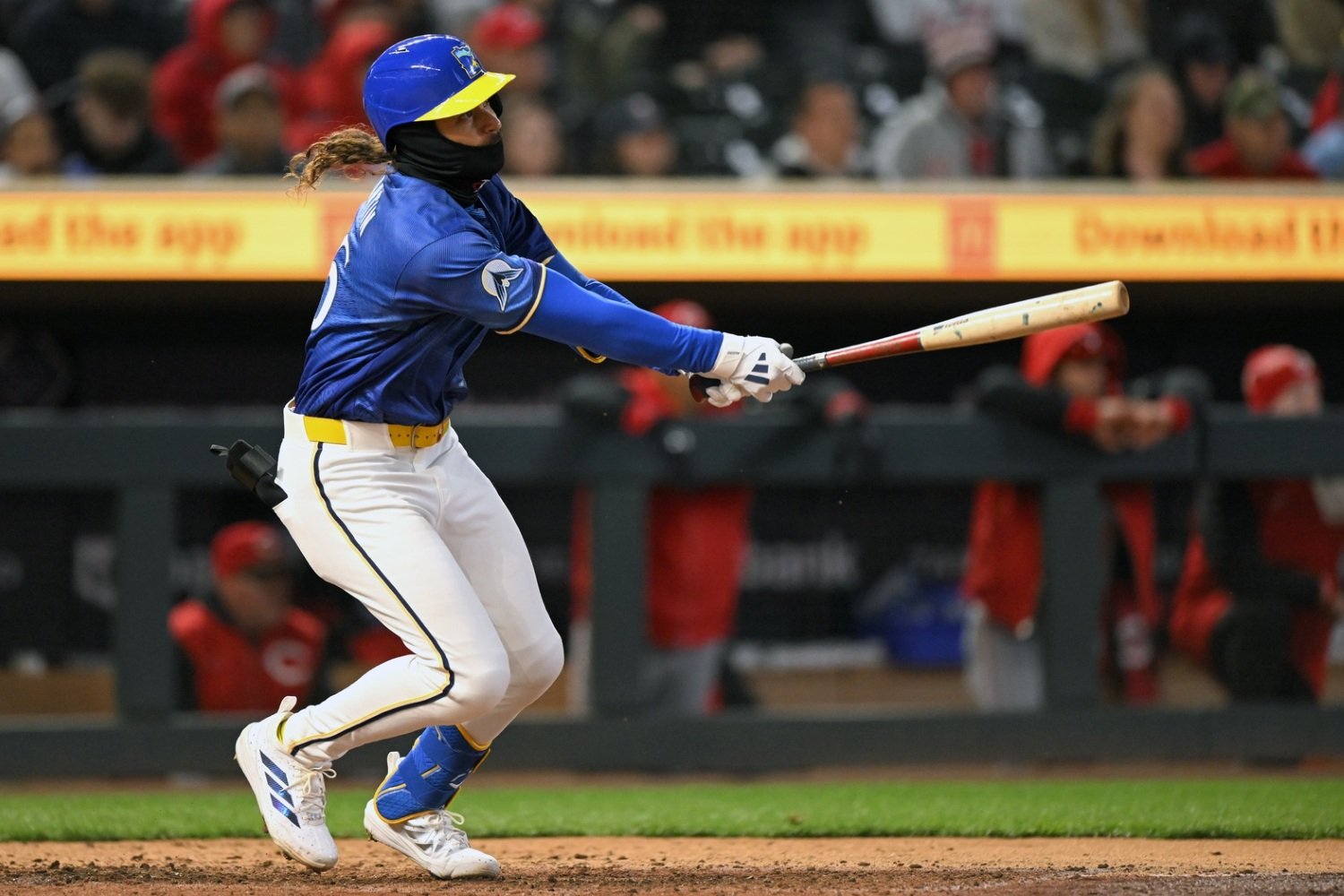
Since 1986, 19 different players have started an MLB season with an OBP of at least .515 in their first 23 games, with at least 60 plate appearances in those contests. As you'd guess, it's mostly superstars. Barry Bonds did that three times. Jason Giambi, John Olerud and Mike Trout did it twice each. The worst player to do so in the last 40 years is either Von Hayes or Wally Joyner, and even they were awfully good at their peak and never better than in the year they started that hot. That's the company Austin Martin is keeping now, after reaching base four times in Thursday night's game in New York.
Martin is, of course, being shielded from some right-handed pitchers, and the Twins have faced an extraordinary number of lefty starters early on. Still, the numbers Martin is now putting up—.347/.515/.469, in 68 plate appearances—are remarkable, and the team is starting to take notice. Martin's start Thursday night came against a right-handed starter, at the expense of slugging teammate Matt Wallner.
What's working so well? As you would guess, Martin is getting on base so much more by walking often, and he's walking often because he's swinging less than in the past. He's down from swinging just over 40% of the time to being under 32% this year—but when we break things down even further, the truth of the situation comes even more clearly into focus.
Late last season, I talked to Martin about how he handled the high pitch, as a hitter with a steep bat path but not much bat speed. His answer was simple: try not to swing at it. Force pitchers down into the middle of the zone, if at all possible. He was decent at that, too. Naturally, this season, his swing rate in the top third of the zone has... risen, while his swing rate along the bottom third has dropped considerably. Wait, what?

Martin is being much more patient, but not in the segment of the zone you'd expect to see him take that tack in. Instead, he's reaching down to the bottom of the zone much less often, despite a swing seemingly geared to get on plane with those offerings. What gives?
Well, firstly, you need to know that the strike zone isn't where it was last year. That's the biggest driver of Martin's change in approach, and well it should be. This season, with the ABS challenge system in place, the top and bottom of the zone are no longer set by the umpire's best estimate of the height of the hollow of Martin's knee or the halfway point between his belt and his shoulders. Martin was measured before the season, and a strike on him should now be between 27% of his height (around 19 inches) and 53.5% of his height (around 37.5 inches) above the ground.
That's a short zone. The 5-foot-10 Martin ends up with almost a perfectly square zone, whereas in the past, we've always thought of most players' zones as being noticeably taller than they are wide. Umpires don't enforce these top and bottom lines perfectly, of course, but the league changed the tolerances of umpire grading last season to force them to be more accurate, in anticipation of exactly this dynamic. They've been very observant of each player's new rulebook zone, as best they can be, and Martin has the challenges themselves to help ensure that. He's 3-for-4 on ABS appeals this year, always using them to question the top and bottom of the zone. Opponents, meanwhile, have tried to find the top rail by challenging called balls up there twice, with no luck.
So, when we see Martin's swing rate in the top third of the zone rising, that's not really what's happening. Instead, the vertical thirds of the zone are getting smaller, and any increase in swing rate is happening in what used to be the middle of his strike zone. He's also dedicated himself to not chasing low pitches, because even though his swing tilt gets him in position to touch those balls easily, he can't drive them. He doesn't have the bat speed for that. He's chosen, instead, to lock in on things the opponents leave up a bit, where the lift is done for him and he can just hit the center of the ball.

An altered zone means Martin can safely ignore what used to be the top third of his zone. Here's a side-by-side look at the results of pitches at which he didn't swing that came in at least 2.9 feet off the ground, for both 2025 and 2026. The raw height of the pitch when it got to home plate cuts off at the same point (34.8 inches) for both seasons, but look how many of those balls were in Martin's old zone and called strikes last year. This year, almost none are.

It's hard to convey just how valuable being able to cut off that extra five inches or so at the top of the zone is, except by restating Martin's numbers. He's getting on base more than half the time, and hitting a ton of line drives in the process, because he has pressed a newfound advantage. He's not chasing down and out of the zone, and the top of the zone now seems to be much lower than it was in the past. That leaves a nice, squat square for him to defend, and his excellent hand-eye coordination is more than up to the challenge.
That doesn't mean, of course, that his new true talent level is to hit .350. The matchups will even out; Martin will get less lucky; and the league will figure out how to pitch to the newly shrunken zone. For now, though, Martin's approach change—probably informed, via his coaches, by the installation of the ABS-influenced zone—suits his swing brilliantly, which has produced brilliant results. For a player who already had plenty of baserunning and defensive value, this could be the key to becoming a regular in the majors—or even a star.
Do you approve of Twins ownership?

Follow Twins Daily For Minnesota Twins News & Analysis



- DataNerd, Mia Bednar, Whammy and 4 others
-
 7
7



Recommended Comments
Create an account or sign in to comment
You need to be a member in order to leave a comment
Create an account
Sign up for a new account in our community. It's easy!
Register a new accountSign in
Already have an account? Sign in here.
Sign In Now