Jump to content
Twins Daily
  • Create Account

Recommended Posts

Posted
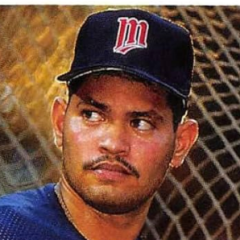
Image courtesy of Bruce Kluckhohn-Imagn Images

Emmanuel Rodriguez and Miguel Sano don't exactly look like the same type of baseball player. Sano stood 6-foot-4 and weighed more than 260 pounds during his time with the Twins. Rodriguez is listed at 5-foot-11 and 210 pounds. Their physical builds, positions, and paths through the organization are different.

But there is one important similarity between the two. Both developed into what can be described as three true outcomes prospects. That isn't necessarily a bad thing. In fact, both players demonstrated the ability to produce tremendous offensive numbers because of their power and patience. But there is a danger when too many plate appearances end without the ball ever being put into play.

And the Twins have already seen how that story can play out.

What Are the Three True Outcomes?

MLB defines a three true outcome hitter as a player whose plate appearances end almost exclusively in a home run, walk, or strikeout. These are considered "true" outcomes because defensive players aren't involved in determining the result. The pitcher and batter decide the outcome themselves.

That profile has become increasingly common in modern baseball. Hitters are encouraged to hunt pitches they can drive, accept walks when pitchers won't give them something to hit, and live with strikeouts in exchange for power.

The problem is that there can be a fine line between maximizing those strengths and becoming overly dependent on them. Rodriguez and Sano both walked that line as prospects.

Comparing Rodriguez and Sano

Sano and Rodriguez were both consensus Top 100 prospects as they moved through the Twins' farm system. Their minor-league numbers are remarkably similar in some ways, while also highlighting one major difference.

Sano hit .280/.375/.559 for a .934 OPS in the minors. He struck out in 26.3% of his plate appearances while walking 12.3% of the time. Rodriguez hit .257/.424/.489 for a .912 OPS. His strikeout rate was considerably higher at 29.7%, but his walk rate was an incredible 21.2%.

There are obvious differences. Sano hit for a much higher average and generated more power. Rodriguez, meanwhile, showed an extraordinary ability to get on base without putting the ball in play. That patience is one of Rodriguez's greatest strengths. It can also contribute to one of his biggest concerns.

Patience Can Come with a Cost

There is an important relationship between walks and strikeouts that can sometimes get overlooked. A patient hitter doesn't have to swing at a pitch simply because it is close to the strike zone. He can wait for something he believes he can drive. That approach can produce more walks, but it can also lead to deeper counts.

And deeper counts create more opportunities for strikeouts. A hitter who regularly takes pitches can find himself in two-strike counts. Once that happens, the pitcher has more freedom to expand the strike zone, and the hitter has fewer opportunities to make an aggressive swing.

Rodriguez's 21.2% minor-league walk rate is elite. But his 29.7% strikeout rate shows the other side of that approach. The goal isn't necessarily to eliminate strikeouts. Every hitter strikes out.

The question is whether Rodriguez can maintain his exceptional plate discipline while putting enough balls in play to keep his offensive production from becoming overly dependent on walks and home runs. Sano never completely solved that problem.

Sano's Major-League Warning

Sano played parts of nine seasons in the majors, experiencing plenty of highs and lows along the way. His final major-league line was .233/.325/.477 for an .801 OPS. His 36.5% strikeout rate was dramatically higher than the 26.3% mark he posted in the minors, while his 11.6% walk rate remained relatively strong.

The batting average dropped. The strikeouts climbed. The power, however, remained impressive. Sano had three seasons with at least 28 home runs, demonstrating exactly why the three true outcomes can be so appealing. A hitter doesn't necessarily need to hit for a high average if he can consistently get on base and punish mistakes.

But Sano's career also demonstrated the downside. When the walks weren't enough to offset the strikeouts and the home runs weren't coming, there wasn't much else left to carry the offensive production. A player who rarely puts the ball in play has fewer opportunities to collect singles, doubles, productive outs, or hits that come from defensive mistakes. That is the concern with Rodriguez.

What to Watch for With Rodriguez

Rodriguez's profile is not identical to Sano's, and that distinction matters. His elite walk rate gives him an offensive skill that Sano never possessed at the same level. Rodriguez has also demonstrated impressive power and has been one of the more intriguing offensive prospects in the Twins system for years. But his minor-league batting average was lower than Sano's, while his strikeout rate was higher. That's the combination worth watching as Rodriguez establishes himself at the major-league level.

The first thing to monitor is his contact rate. If major-league pitchers can consistently get Rodriguez into two-strike counts, his strikeout rate could climb even higher. The second is whether his walk rate holds up. A 21.2% walk rate is difficult to maintain against big-league pitching. If pitchers discover they can attack him in the strike zone without giving him pitches he can punish, Rodriguez could see fewer free passes.

Finally, there is the power. The three true outcomes work best when the home run portion is significant enough to offset the strikeouts. Rodriguez doesn't need to become a .300 hitter to be productive, but he does need to turn enough of those favorable counts into hard contact and extra-base damage. That's where the comparison to Sano becomes particularly interesting.

Three Outcomes, But More Than Three Possibilities

There is nothing inherently wrong with being a three true outcomes hitter. Baseball has changed, and walks and home runs are valuable. A hitter who combines patience with power can be an incredibly dangerous offensive weapon. But there is a point where the balance becomes problematic.

If Rodriguez walks 20% of the time and hits enough home runs to make the strikeouts manageable, the profile could work extremely well. If the walks fall, the strikeouts rise, and the power doesn't fully translate, the margin for error becomes much smaller. Sano's career provides a useful example of that risk without being a prediction of Rodriguez's future.

The two players look completely different standing next to each other. One was a massive slugger who seemed built to hit baseballs into the upper deck. The other is a smaller, more compact outfielder whose calling card has been an extraordinary combination of patience and power.

Yet their paths through the Twins' farm system produced a similar question. Can a hitter who lives on the edges of the strike zone generate enough damage when he does swing to compensate for all the times he doesn't put the ball in play?

For Rodriguez, that's one of the biggest questions facing his transition to the majors. The three true outcomes can produce a superstar. They can also produce a hitter whose offensive floor is lower than the prospect pedigree suggests. Rodriguez has plenty of time to prove which path he will take.


Should fans be worried about Rodriguez following Sano’s path? Leave a comment and start the discussion. 


View full article

Posted

This is an interesting topic that should be expanded to a broader discussion of hitting philosophies. As far as EmRod goes, he will never walk at the rate he did in the minors. MLB pitchers will make him swing the bat. Then the question becomes does he increase his contact rate or does he follow the Julien road. He appears to be a plus defender so that helps. 

Posted

IMO, this hitting philosophy was highly propagated throughout the Twins organization. While having some having MiLB & short-term MLB success (Sano, Wallner & Julien) it had no long-term success & threw off others natural swings which thwarted development. Your highlighting Emma's hitting tendencies, raises concerns for me. Hoping that he can make adjustments before it's too late. If not, then we need to, unfortunately, consider trading him.

Posted

Remember when fans told us Sano was a quality right fielder? Sano turned out to be an embarrassment. Over weight, over paid, over here. Twins need to see reality quicker. No more no trade contracts as the last 2 have been terrible for fans, the Twins & common sense.

Posted
29 minutes ago, Patzky said:

I see he can play a little defense. That's not gonna show up in the box score, except perhaps in the Pitcher's line. 


That was a 3-3 ballgame last night with the Angels still batting in the 8th if ERod doesn't make those 2 fine catches.  Exhibit A of how good D can affect wins and pitchers' ERAs.  But I believe there is an even greater impact of poor D which is the burden it puts on pitchers to time and again have to bear down and get another out, and another out.  It wears them down, both in-game and especially over the course of a season.

Posted

My memory of Sano’s specifics are fading, but in the end his challenge became he could not lay off sliders and breaking pitches that were low and away (similar to Lewis) and as such became an easy strike out.  Rodriguez should avoid this fate because he has elite pitch recognition. His problem is quite different in that his in zone contact is much less than expected for an elite hitter. 

Posted

I think the jury is always out when promoting young players to the bigs.  That said, EmRod's defense and apparent joy playing seemingly separate him from Sano.  I try not to be a hater, but I was pretty close to that with Sano.  He just didn't seem to give a damn as evidenced by his playing out of shape.

Posted
55 minutes ago, MikeNC said:

That was a 3-3 ballgame last night with the Angels still batting in the 8th if ERod doesn't make those 2 fine catches.  Exhibit A of how good D can affect wins and pitchers' ERAs.  But I believe there is an even greater impact of poor D which is the burden it puts on pitchers to time and again have to bear down and get another out, and another out.  It wears them down, both in-game and especially over the course of a season.

That's why I'd like to see them get Keaschall out of RF. Every runner takes an extra base on his arm.

Posted
28 minutes ago, bean5302 said:

Sano ate his way off the field. If he had stayed a reasonable weight, he would have been a high value 3B not entirely dependent on his bat.

That might be the primary cautionary tale for Emma. Don't come to spring training at 235 lbs!

Posted
15 minutes ago, djvang said:

That's why I'd like to see them get Keaschall out of RF. Every runner takes an extra base on his arm.

He s/b in LF or DH.  His OBP is a must have, it will be interesting next Spring.  

Posted

I always disagreed with when someone is in a 0-20 type slide and they get a hit the announcers are like "He broke out of his slump!". The player is still mired in a 1-21 slump. Jobu couldn't hit breaking balls and it's pretty difficult to learn at the MLB level. Jobu also offered nothing on defense. Sano reminds me more of a modern day Jhonkensky Noel than Emma. 

As mentioned, Emma has the propensity to wait to long, often missing the most "hittable" pitch of an AB, but IMO it's easier to learn selectivity and become more aggressive in-zone than teaching someone how to lay off a nasty breaking ball or changup. Defensively it's not even a convo. 

Emma looks far better than I thought both at the plate and in the field. Not always the smoothest, but that's an experience thing. You can see why he gets hurt also with his style of play. He plays a little like Keaschall with his hair on fire and some people just get hurt. To an extent he's his worst enemy. 

Emma/LeRoooooooy Jenkins/Keaschall/Buxton is fun to envision moving forward. 

Posted

Rodriguez only has 28 PA under his belt. Definitely need to grow those as fast as possible to get any meaningful sample size.

If Rodriguez can get up close to 100 PA, I'd really like to see the BB rate at 10%+ and the K rate at less than 35%, the O-swing rate at less than 30% and the swinging strike rate at 15% or under. We're not going to get truly meaningful data on him, but I'd like at least a hint.

Emma is very similar to Sano in a lot of ways. Historically, he's pretty patient and has some knowledge of the strike zone, but his swing is extremely fast and he has limited ability to adjust which means his contact rates are poor. Swinging at too many pitches outside the zone will be a career ender for him because it's already hard to make contact on pitches like that.

Posted

We haven't seen much of Emma at the mlb level yet.  Couple observations.  1) He will add much more defensive value than Sano ever dreamed of.  2) My concern is his swing and miss in the zone.  Maybe that improves with experience at this level.  Sano was more likely to chase.

Out of options so he'll be on the 26-man next year unless he's traded.  So whenever the lockout ends we're going to get some answers.

Posted

I am too old-fashioned and really do not like strikeouts and maybe one of the three true outcomes, but in reality is one of the three outs per inning. I prefer the Keaschall and Arraez hitters and know that Jenkins seems to have grounded himself. He is also a good type of prospect that I really root for. He has some power but he also has some contact. I have not been a big Emma supporter. I kind of like the look of Mendez right now. 

Posted

I actually think Sanos downfall was the higher velocity that became common a few years into his career. He couldn’t catch up to the high heat so he had to start his swing earlier which made him very vulnerable to breaking stuff low and away. 

Posted

As I've posted before, I'm most concerned with his swing and miss in the strike zone. MLB pitchers are far better at challenging in zone with nasty pitches. 

I hope he can evolve and resolve this issue, because it will clearly determine if he has a long MLB career or not.  (well that and his ability to resist the urge for headfirst slides)

Posted
5 hours ago, SE23 said:

That might be the primary cautionary tale for Emma. Don't come to spring training at 235 lbs!


2 hours ago, Eris said:

This was Sano’s listed weight. The actual weight was thought to be closer to 275 lbs. 

Sano reported to camp over 300lbs in 2018. Then they had a point where they had to sent him to Ft. Myers in 2022 because he'd sat on the sofa eating during an extended IL stint in and he wasn't in game ready shape.

I believe he was 280lbs when he was playing RF, and that's when his legs broke (stress reaction is microfractures in the tibia) from running on them.

At one point, it looks like he'd ballooned up to 330lbs.
https://www.minnesotasportsfan.com/minnesota-twins/miguel-sano-claims-he-lost-58-pounds-current-weight-is-272/

Honestly, his ideal playing weight was probably 225ish, but he was very solid at 3B early when he was 235. Keep in mind, Sano was something like 185 at like 18.

Posted

Yes, this is a big concern. The hope has to be that his extended time on the injured list means that he didn't finish developing or demonstrating his ability to make contact, while his power and defense allow him the runway to work things out.

But this is what bad teams should do, instead of loading up the lineup with 1-2 WAR veterans at the peak of their skills and kidding yourself that you're going to contend with them.

Posted

It's important to note that TTO "prospects" pretty much never turn into TTO MLB players.

And that's why I've been adamant that EmRod will not be a good major league player (to be nice).  Foremost, walks mean nothing in the minors except helping to win minor league guess.  Second, high strikeout rates pretty much make a "prospect" a non-prospect.  The former is not predictive, except in the negative, while the latter is very predictive.

For the most part, TTO MLB guys were much, much better in the minors than EmRod.  They walked at a normal rate (they weren't passive), they struck out at a reasonable rate for their power profile (not 26-35%), and, frankly, they hit the ball out of the park more.  Actually, they hit for better average, too.

Posted
13 hours ago, djvang said:

That's why I'd like to see them get Keaschall out of RF. Every runner takes an extra base on his arm.

When they have enough data to draw a meaningful conclusion, it’s going to come down to whether Keaschall’s hitting is creating more runs than his defense is giving up. If not, he’s the Twins’ next first baseman and Lewis is playing somewhere they’ll let Royce be Royce.

Posted
On 9/19/2026 at 9:26 AM, MikeNC said:

That was a 3-3 ballgame last night with the Angels still batting in the 8th if ERod doesn't make those 2 fine catches.  Exhibit A of how good D can affect wins and pitchers' ERAs.  But I believe there is an even greater impact of poor D which is the burden it puts on pitchers to time and again have to bear down and get another out, and another out.  It wears them down, both in-game and especially over the course of a season.

And taking a lot of pitches leads to earlier exits for pitching opponents. Whether it's a walk or a strikeout we are probably looking at an average of 6 pitches on those at bats. And those at bats produce no double plays. Being a fast runner also leads to fewer double plays on ground balls. 

How bout we just let him tee it up and play next year just for the heck of it .. 


Posted

Such a fine line.

The minor league profile won’t translate, IMO. There was never much of a chance it would…at least out of the gate. The hope is that he can be successful with a more aggressive approach earlier in the count as he had with the first dozen PA. If he can do damage with that, then the walks might come and lead to a good OBP. Also, hopefully the EVs will result in highish BABiP, because the K’s will always be a part of the package it seems. And yes, the redeeming defensive qualities help.

Create an account or sign in to comment

You need to be a member in order to leave a comment

Create an account

Sign up for a new account in our community. It's easy!

Register a new account

Sign in

Already have an account? Sign in here.

Sign In Now
The Twins Daily Caretaker Fund

You all care about this site. The next step is caring for it. We’re asking you to caretake this site so it can remain the premier Twins community on the internet.

×
×
  • Create New...