Jump to content
Twins Daily
  • Create Account

Recommended Posts

Posted
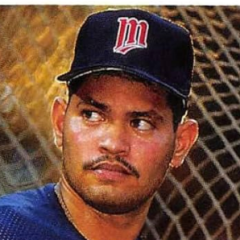
Image courtesy of Ken Blaze-Imagn Images

Hitting, in 2026, is all about conviction. Conviction, in turn, is about confidence. Sometimes, it even needs to be about arrogance. Trevor Larnach has always been a hitter defined by extremes, and taking hitting to extremes means walking that tightrope of braided confidence and arrogance across the abyss of self-doubt and overthinking. It means getting from the batter's box to second base without looking down. He's never struck that balance better than he did for the first four months of this season, but suddenly, he's caught a toe, turned his head, and finds himself freefalling.

If all that sounds a bit grandiose, well, that's life in the big leagues—and life, especially, in the heat of an unexpected push toward the playoffs. Larnach was not supposed to be a key cog in a Twins offense charting its course for October, but here we are. He entered the season as a platoon bat on whom the organization had gone lukewarm, if not quite cold; Derek Shelton named Matt Wallner as the left-hitting corner outfielder who would play even against lefties. Larnach would have to earn his keep.

Earn it he did, though. Wallner has spent the last 100-plus days in St. Paul, while Larnach emerged over the first half as a fixture at the top of Shelton's lineup card against right-handed starters. He weathered the lefty-heavy early stretch of the season by drawing oodles of walks, but as April's frost yielded to May's mere chill, Larnach warmed up faster than the weather. By July 1, he was batting .284/.376/.428. You want more power than that from your lumbering left fielder, but you can't argue with those numbers. Then, a funny thing happened: he got even hotter. In his first 60 plate appearances of July, he hit .333/.400/.574, with seven extra-base hits. There was the power. His star turn was underway.

There are two ways to explain what's happened since—which is, in a word, calamity. In the last four weeks, over 68 plate appearances, Larnach is batting .127/.191/.222. One way to explain that is that he got greedy. Fueled by that July surge and home runs on back-to-back days even to begin August, he got big. He got pull-happy. He got a little "dig me" in him, as big-leaguers say, and that loss of focus pulled him out of the narrow groove in which he found all that success in the first place.

The other explanation is sadder—or maybe the two explanations are equally sad, but this one casts Larnach as a more sympathetic figure. Right around the time that he plunged into the abyss we talked about a minute ago, the Twins agreed to trade him to the Astros in a deal that would have netted them reliever Bryan Abreu. Houston owner Jim Crane, whose Batman villain name would be The Meddler, stepped in and scuppered the deal, and the Twins pivoted. They found their high-leverage reliever in Toronto, instead, and gave up prospects for Jeff Hoffman, electing to keep Larnach. It's not clear that that choice was all that active, though. Two league sources said the team talked to the Padres about Larnach on deadline day, so the team remained open to moving him in certain deals. That the nixed Larnach-Abreu swap went so widely public and became such hard evidence of the team's willingness to give up on him, though, has to have been difficult. In this second reading of the moment when he toppled off the tightrope, it was a crisis of confidence that did it—and his own team is guilty of having caused that crisis.

Which of those two explanations you favor might depend on your generosity of spirit, or your mood, or what you think you know about ballplayers and their egos. The hard evidence tells a clear story about what's happened, but why is a much more muddled question. Let's tackle the 'what,' briefly; I'll leave the 'why' to you.

Larnach has always been an extreme fastball hitter. When he came to the majors, he obliterated fastballs—but he was exceptionally vulnerable to anything else. He whiffed on breaking and offspeed stuff at such untenable rates that he often looked doomed to Quadruple-A status; he sold out for the heater. He also had, back then, an exceptionally steep swing. His plan was to hit line drives and fly balls by sitting on and finding fastballs; his conviction stemmed from his confidence that he could do that consistently enough to overcome his shortcomings elsewhere.

Eventually, the league proved to him that that wasn't going to happen. You can count on one hand the number of players in each generation who tallywhack fastballs with such reliability and precision that they can be lousy against spin and changes of speed and still survive in the majors; Larnach learned that he isn't one of those sunkissed few. Instead, he moderated his swing, and his approach. Since the beginning of 2024, we've seen him reduce his whiff rates on non-fastballs, and since the start of 2025, he's been a flatter swinger, a change aimed at being more modular—more adaptable. Not all of that has happened consciously; Larnach is a very feel-oriented hitter. But that's what's happened.

However, he's retained his extremity in one dimension. In fact, he's more pull-oriented than ever. Larnach's swing can sometimes produce slicing liners the other way, but those are accidents. Few batters anywhere in the majors get the bat head around the ball as much as Larnach does; his whole attack is centered on being early and directing his contact toward the pull field. As you can see, that hasn't become less true this year, but more so.

image.jpeg

What does it mean to be a fastball hitter who's also a dead pull hitter? It means living on conviction. It means being so certain of the pitch you sit on each time the pitcher winds up that no part of your body or mind is elsewhere. It means visualizing hard contact, by knowing your swing and knowing the timing of the pitch you're about to get. It means the arrogance of believing you see the future, even though obviously, that's impossible. For a while, Larnach had that going. You can see how it trended up, as he claimed his place of prominence in the lineup over the season's first few weeks and then started seeing more right-handed pitchers. You can see how it spiked when he got so red-hot for most of July. And then, you can see what's happened since. It's all written in the curvature of his ideal attack angle rate, which basically tells us how often Larnach was on time with his swing over any given period. 'On time,' here, means that his bat was working uphill at the angle he wants, which means that he met the ball where he meant to. For many other hitters, being as oriented to the pull field as Larnach always is would leave them feeling early, but you can see multiple periods this year during which that was not an issue for Larnach.

chart - 2026-08-24T023105.799.jpeg

By no coincidence, Larnach's actual production maps pretty neatly to the chart above. Here's his rolling average for weighted on-base average. He found enough value by drawing walks and avoiding strikeouts early (and then took long enough to tap into his power, in the middle third of the season) to avoid such a sharp rise and fall, but the gist is the same: good, then great, then ughhhhh.

chart - 2026-08-24T023114.590.jpeg

What happens to a hitter when they lose their conviction? What becomes of the extreme beats when they're tamed by their own self-doubt? You've heard that answer a hundred times, over the years: guys get caught 'in-between'. For Larnach, that's meant being 'on time' for the fastball as much as ever, by Statcast's swing timing reckoning—but for him, that means he's really been late more often. As you can see on the right, below, he's also been underneath the heater much too much of late.

Screenshot 2026-08-24 023831.png

You could start to see that lostness creep into swings against breaking stuff, too. It's one thing to be a little late and underneath the fastball; it's another to end up underneath a breaking pitch, on which you're also radically early. That's what happened here:

And here:

Those aren't the misses of a guy who was sitting fastball. They're the misses of a guy who was sitting on the fastball's speed, but trying to cover the breaking ball's shape, and ended up doing nothing right at all. Those are the swings of a hitter caught in-between—of a hitter who's lost conviction.

Again, there are multiple valid theories about why this has happened, and I don't propose a definitive answer either way. I can only say for certain what has gone wrong, but that feels like enough. Could Larnach rediscover that conviction, and reestablish his first-half swagger? Yes, it's possible. But the Twins are running out of time, and he's been a black hole in their lineup for too long already. They need to make other arrangements.

Shelton has already arrived at this conclusion. He benched Larnach Sunday, despite Walker Buehler starting for the Padres. That's just one game, but it's the start of something. Minnesota should strongly consider calling up Walker Jenkins to meet the team Tuesday in West Sacramento. Jenkins doesn't have to take Luke Keaschall's playing time in right field, and he doesn't have to play any more in center than is made absolutely necessary by Byron Buxton's balky hip. He can and should play left field, at the expense of the exposed Larnach. Maybe the Twins broke Larnach. Maybe he was going to break on his own. Either way, he's fallen into a funk from which hitters like him struggle to recover, and the team doesn't have time to hope he proves to be that exceptional case this time. Jenkins is ready, and all the possible hurdles are out of the way. It's time to give him the left-field job, lest the team itself end up caught in-between.


View full article

Verified Member
Posted

The challenge with one dimensional hitters is that there are people (and now perhaps computers) who work long hours trying to figure out how to get hitters out. Once they find a weakness it is up to hitter to compensate. Daniel Murphy likely had an oversized impact on the Twins hitting philosophy. What is overlooked is that like Brian Dozier, Daniel Murphy’s success was short-lived. I look on in disbelief every time Buxton or Lewis take an outside pitch and ground it to the third baseman. 

Posted

Interesting article.  Perhaps over done.  The Larnach haters have been around for quite sometime.  Where were they when he was doing well?  Now they, including the writer of the article, again are coming out of the perverbial woodwork.  Couldn't the same issues be raised for Buxton for the past 2 months?  What about Clemens?  He was barely over the .100 average for a few weeks until improving just recently.  These over-analyzed articles ignore the fact that all players slump at some point during the season.  Most rebound at some point.  Yes we need Larnach back to his productive self for the team to have a chance.  Ditto for Buxton, joe Ryan, kody Clemens etal.


Posted

Hopefully Larnach can figure out the “why” and get back on track. Although, like the author states, he/they are running out of time. Trevor’s future as a ________, depends on it. (Twins, trade candidate, choose your own descriptor)

Posted

The notion that he might have had a crisis of confidence in finding out the team was so ready to get rid of him reminds me of why front offices play their cards closer to the vest than we as fans might like.

It's easy for us to hop online and say "why doesn't the team demote X player," "why can't they see we have a hole in Y position," "why can't they see Z player isn't working?"

Likely, they are seeing all of those things, but the work of maintaining morale requires that they never engage us on these things, and for my part I try to avoid dragging players through the mud even when they are plainly not playing well.

Posted

I think this can be summed up with Larnach's timing being off a little. Larnach is also pressing. His swing rate is too high (back like it used to be). People forget Larnach was Wallner without power. 35% K rates and occasional home runs.

Buxton's been slumping. We should probably DFA him to make room for Jenkins.

Buxton's last 20 games
.147/.253/.176 OPS .430 wRC+ 24

TBH, I guess DFA'ing Larnach wouldn't be terrible if you think Jenkins is better. I don't see a good reason to bring Larnach back next year and it does clear up regular playing time for Jenkins.

Create an account or sign in to comment

You need to be a member in order to leave a comment

Create an account

Sign up for a new account in our community. It's easy!

Register a new account

Sign in

Already have an account? Sign in here.

Sign In Now
The Twins Daily Caretaker Fund

You all care about this site. The next step is caring for it. We’re asking you to caretake this site so it can remain the premier Twins community on the internet.

×
×
  • Create New...