


Twins Video
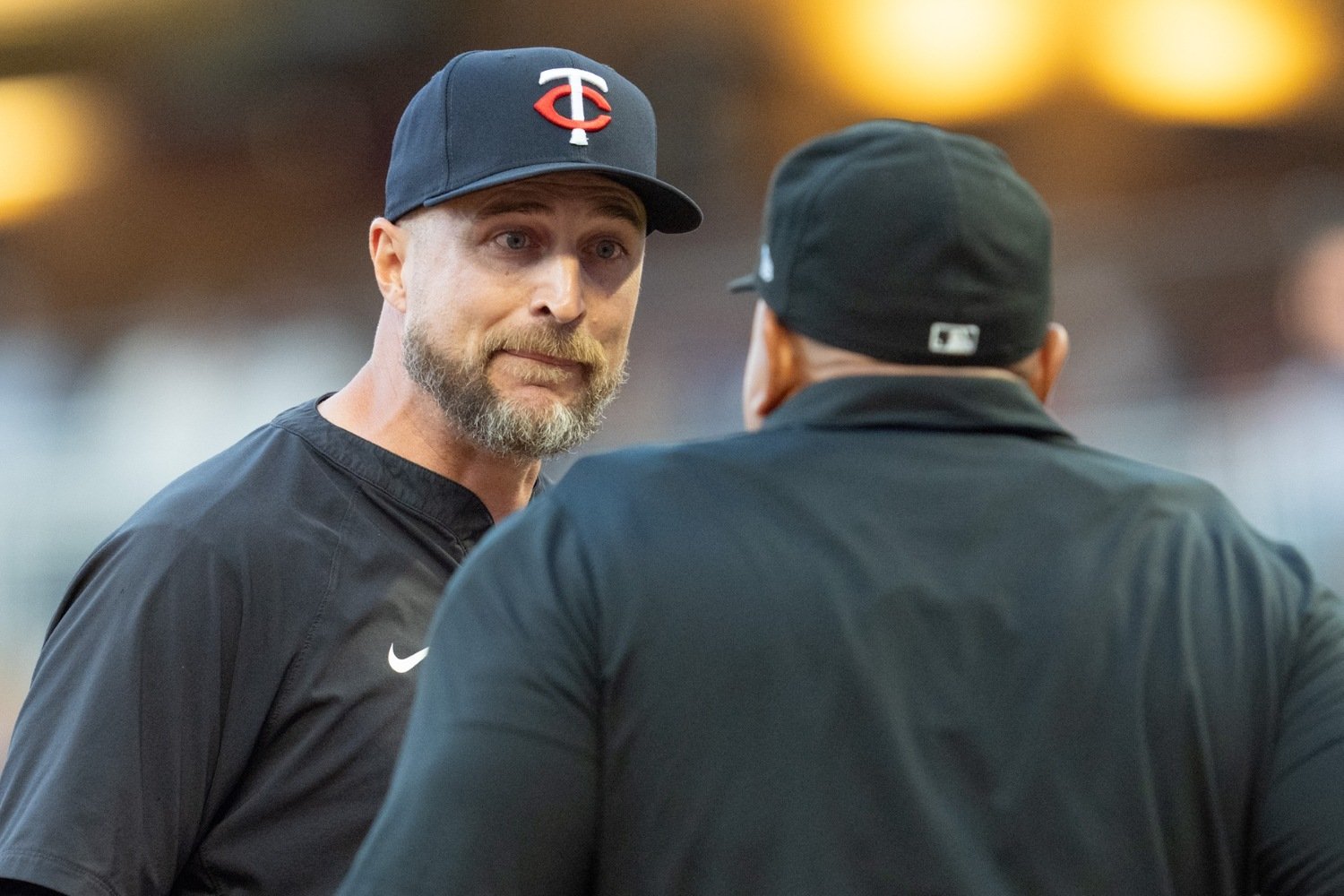
The Twins announced on Monday that manager Rocco Baldelli won’t be back for the 2026 season, despite being under contract next season. While a large portion of the fanbase has been clamoring for this for a while, the move doesn’t address the larger issues with the organization—ownership and the front office—that are getting in the way of winning.
Pohlads Remain Put, See Themselves as The Solution
“We feel we’re the right people to lead this organization,” Joe Pohlad told The Athletic after pulling the Twins off the market late in this seasson. He didn't appear to know or care that no one else agreed.
Before the 2025 season, not only did the Pohlad family express confidence in Derek Falvey, but they promoted him to oversee both the on-field and off-field aspects of the team. Now, they're widely expected to cut payroll—perhaps significantly—heading into 2026, because they can’t connect the dots between having a consistently below-average payroll and a below-average win-loss record.
In any given season, teams who invest heavily in the roster are significantly more likely to make the playoffs. The Twins, famously, have not been investing heavily. This is all but certain to get worse, before it gets better. After all, as Joe Pohlad told the Star Tribune: “The goal is not to compete. The goal is to win a World Series. That doesn’t mean it doesn’t come with some pain in the short term. Building a true winner comes with some challenge. Right?”
I can’t think of any other interpretation of short-term pain than continuing to tear the team down to the studs this offseason.
“I’m trying to get my head out of all the negativity,” Pohlad said. “But I am overwhelmingly confident about Twins baseball. I’m confident because we have got all the right [pieces] … And we have the resources that we’re ready to invest when needed.”
The most charitable assessment of these quotes is that, now that the organization is freed from their crippling debt, they can spend again. Do you believe that, though? And even if you do, is the current front office capable of spending the money in the right places?
The Front Office Has Missed More Than They've Hit — In All Areas
A mid-market team needs to win on the margins to remain successful: draft picks that hit, winning trades, uncovering undervalued assets, and hiring the right coaching and development staff to help young players put it all together. This front office has not consistently won in any of these areas, which has led to poor results. Rocco Baldelli might have been in a position to do more to mitigate some of these misses, but he was not ultimately to blame for any of them; they fall under the purview of his (ex-)bosses.
Top Draft Picks
Falvey has clearly whiffed on a number of first-round picks, and it’s too early to tell on a few more. Keoni Cavaco, Aaron Sabato, and Noah Miller all failed to launch. Brooks Lee has not yet lived up to his perceived potential, and even Chase Petty (whom the Twins flipped for Sonny Gray) has struggled mightily since reaching Triple-A.
Player Development
Falvey was hired to develop a consistent pitching pipeline, the sort that had helped the Cleveland Guardians churn out ace after ace. His strategy? Through the draft, they targeted tall pitchers from small schools with middling velocity in the middle and late rounds. These were pitchers whom other teams overlooked, and the Twins were confident they could add velocity and create frontline starters of their own, while spending their high picks on polished hitters.
For a minute, it seemed to work. Guys like Bailey Ober (12th round), Louis Varland (15th round), Zebby Matthews (8th round), David Festa (13th round), and Andrew Morris (4th round) have all been a part of this pitching pipeline. Of this group, however, only Ober has found consistent success, and even that is in question, based on his performance this season. On the hitting side, top prospects like Royce Lewis, Brooks Lee, Alex Kirilloff, Austin Martin, Edouard Julien, Jose Miranda, and Trevor Larnach have all struggled to reach even their 50th-percentile outcomes.
Trades
Speaking of winning trades, Falvey has executed the following failed trades:
- Sending Cade Povich and Yennier Canó for Jorge López
- Trading Spencer Steer, Christian Encarnacion-Strand, and Steve Hajjar for Tyler Mahle
- Selling Trevor Megill for cash
- Selling Danny Coulombe for cash
- Swapping LaMonte Wade for Shawn Anderson
In all of these examples, Falvey gave away significant surplus value, and that makes it tough to be competitive. Does this rest on the shoulders of the professional scouts—you know, the ones who were just fired? Maybe there is a problem with assessing talent from other teams. To be clear, Falvey did trade the husk of Nelson Cruz for Joe Ryan and Petty for Gray, so it’s not all bad. He has also had plenty of neutral-ish trades.
Signings
Falvey has executed the three largest free-agent signings in team history, in Josh Donaldson and Carlos Correa (twice!). Neither accomplished what Falvey hoped they would, though, and he proved incapable of building a complete roster around them. There have been copious other signings that were questionable at the time, and downright laughable in hindsight. From Matt Shoemaker to Joey Gallo, he invested limited resources in players nearly every season, and those players failed to deliver on the (rightfully) modest expectations that came with them.
An Inability to Adapt In Real-Time
Overall, the front office has shown limited ability to adapt to a changing landscape. When taking over from Terry Ryan, Falvey and company quickly corrected the analytics deficit in the organization, accurately assessing that even with a mid-market payroll, a team can invest heavily in understanding undervalued skills and the players who possess them. However, nine years later, they have once again fallen behind the league. In a recent episode of Gleeman and the Geek, Aaron Gleeman discussed the fact that the rest of the league has caught up as the Twins have failed to continue to expand their analytics staff. Teams like the Yankees and the Dodgers are massively outspending the Twins in this area of the business, at this point, but doing it with payrolls that allow them to buy all the players they need to suit their models, too.
This inability also shows up in the types of lineups the Twins have assembled: plodding, station-to-station runners with questionable defensive chops. You know, sluggers who pop 30 homers year in and year out—except, the hitters haven’t done that, either. Aside from Byron Buxton and Matt Wallner, no member of the 2025 Twins hit even 20 bombs. Despite this, it took the deadline fire sale to encourage a different style of play.
So, we have owners who don’t spend appropriately for their market size or with any understanding of a window of contention; who are out of touch with their customers’ expectations; and who are loyal to a front office that has gotten mixed results at best. We have a front office that hasn’t demonstrated a unique ability to hit on draft picks; that doesn’t develop top prospects especially well; doesn’t make one-sided trades consistently; and doesn’t find substantial value in the scratch-and-dent section of the free agent market. With those problems, does it really matter who the manager is?








Recommended Comments
Create an account or sign in to comment
You need to be a member in order to leave a comment
Create an account
Sign up for a new account in our community. It's easy!
Register a new accountSign in
Already have an account? Sign in here.
Sign In Now