


Twins Video
At some point in late November each year, teams need to decide whether to tender contracts to their arbitration-eligible players, or whether they will allow them to become free agents immediately. Heading into 2026, the Minnesota Twins will have decisions to make on no fewer than 10 players.
I will look at each of these 10 players, and speculate on which of them will—or at least should—be tendered. Before I do that, let's run through a quick primer on the process.
By tendering a contract, teams begin a process whereby they agree to financial terms on a one-year deal with each of these players—or buy time for negotiations on a multi-year pact. If they are unable to reach terms, the two sides head to an arbitration hearing. Typically speaking, good players are tendered contracts in each of their three arbitration-eligible seasons. Middling players typically get deals for their first year or two of arbitration, before they get expensive because of the guaranteed raises built into the system and are cast off a year early. Players who have struggled to find consistency or look overmatched at the big-league level are often non-tendered before their first or second arbitration-eligible season. Sometimes, if a player no longer fits into a team’s plans but has value, they can be tendered and then traded. Then, the new team is responsible for agreeing to terms.
From a salary standpoint, for an average-ish player, they will typically receive $2-3 million in their first turn through arbitration; perhaps $4-5 million their second time; and $8-10 million their third and final time. Better players earn more, and lesser players earn less.
So, without further ado, let’s look at the players by group.
The No-Brainers
This group will almost certainly be in the Twins' plans next year—or at the very least, traded, if the front office tears the team down fully. It would make no sense to non-tender them.
- Ryan Jeffers - Arb-3, 2.0 fWAR, 112 wRC+, .747 OPS, -5 catching runs
Hey, he’s the only catcher (who’s a clear major leaguer) on their roster. Someone needs to catch 162 games next season. He’s been an above-average hitter at an offensively weak position. Plus, he certainly has decent trade value and may even be an extension candidate. Plus, he’s been preparing for the advent of the ABS challenge system all season. This is $8 million or so well spent.
- Joe Ryan - Arb-2, 3.0 fWAR, 3.47 ERA, 27.7 K%, 5.7% BB%
Despite yet another late-season fade, Ryan is a great starting pitcher controlled for two more seasons, and he has tremendous trade value. Perhaps more than any other player, Ryan is likely to be tendered and then traded this offseason. If, somehow, the front office decides not to trade him, he’s a clear rotational building block. This one is written in pen.
- Cole Sands - Arb-1, 0.7 fWAR, 3.64 FIP, 94th percentile off-speed run value
The Twins, after trading their five high-leverage relievers in the deadline fire sale, have a ton of spots to fill in the bullpen next season. Sands is the likeliest option currently on the roster to be the closer and will be in his first season of arbitration eligibility. While his results regressed mightily in 2025, he has looked better of late. He's rediscovered some velocity, and it’s entirely possible the Twins can get him back to his 2024 ways.
The Likely-To-Be-Tendered
These guys still have a great chance to take a step forward, will be relatively cheap, and if it were me, would absolutely be tendered contracts. Famously, though, the Twins are run by not-me.
- Bailey Ober - Arb-2, 0.9 fWAR, 3.74 FIP from 2022-2024
Ober is the tiniest bit tricky to peg. On one hand, he had been great each of the past three seasons—a playoff-caliber starter with obvious trade value. On the other hand, he’s been bad this season. Most (if not all) of that can be traced to a mechanical issue, perhaps stemming from lingering hip soreness. If the Twins feel that an offseason of rest will get him right again, he is certain to be tendered. If the Twins move Ryan and Pablo López in the offseason, they will need a veteran who can eat innings with at least average results.
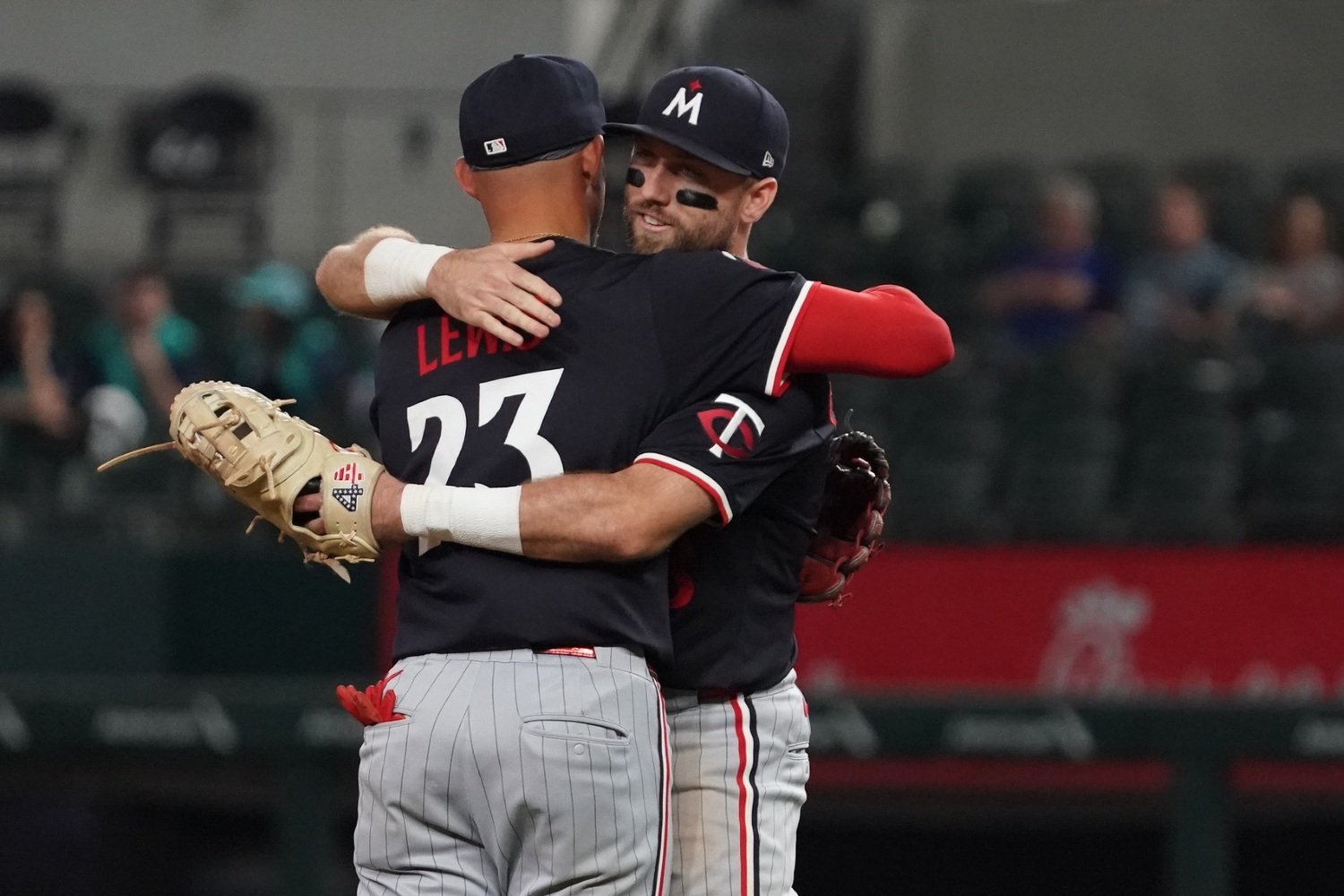
- Royce Lewis - Arb-2 (Super-2 player), 1.2 fWAR, 90 wRC+, 12 SB, struggling against the fastball
Lewis has had an enigmatic start to his professional career. Between the injuries, the endless grand slams, the slumps (even though he doesn’t do the whole slump thing), the emergent proclivity to run, and the snarky comments about those around him, he’s tough to figure out. He has all the upside in the world, as a former No. 1 overall pick, and he's shown that he can carry the offense for stretches. He’s also been ice-cold for (longer) stretches, and one could argue that his saltiness could be counterproductive to club dynamics. He could be the sort of guy who would benefit from a different mentor, or a different club entirely. I can’t envision the Twins being ready to cut bait with him, though.
- Kody Clemens - Arb-1, 1.4 fWAR, 99 wRC+, positional flexibility, good power
Clemens is one of those guys who is likely to earn less than the $2 million arb-1 estimate I gave earlier, based on lack of playing time, age, and previously sluggish performance. He has shown some positional versatility, logging innings at first, second, left field, and right field. He has 25-homer power, but is very streaky. Depending on which prospects (if any) the Twins are planning on bringing north out of spring training in 2026, he seems like a guy worth paying for at least one season.
On The Bubble
This is a tougher group to peg. They may not have proven themselves yet, could be Quad-A guys, or may be on the downswing.
- Anthony Misiewicz - Arb-1, -0.1 fWAR, 8.92 FIP (4 1/3 innings), lefty reliever
Despite throwing just a few innings this season and being (generally speaking) a replacement-level arm, he does have one thing going for him: he’s a lefty. Depending on how the Twins feel about Kody Funderburk, they may choose to tender Misiewicz under the assumption they can unlock at least a little more out of him for a likely salary near the league minimum. After suffering a pectoral strain that has sidelined him for months, Misiewicz is finishing the season by getting back on a mound and facing some hitters. That's a good sign as he enters the offseason.
- Michael Tonkin - Arb-3, -0.1 fWAR, 4.97 FIP, rubber-armed veteran
Tonkin is entering his final year of arbitration in his age-36 season. He agreed to terms at just $1 million in 2025, but will probably be due at least a small raise. He has been replacement-level, but has a rubber arm, and that holds at least a small amount of value. The Twins can probably do better at a similar price point. The only thing that could go in his favor is his veteran status.
Likely To Be Non-Tendered
This group has negative value compared to their expected salary; may clog up the pipeline; and would not net much of anything in trade.
- Trevor Larnach - Arb-2, 0.2 fWAR, 102 wRC+, best as DH but doesn’t hit well enough for it
Trevor Larnach has been a roughly replacement-level player this season. He's an average-ish hitter who offers no defensive value. He hasn’t been one of the many players adding speed on the base paths to their game down the stretch, and ultimately, he will be in the way of top prospects like Walker Jenkins and Emmanuel Rodriguez—not to mention Luke Keaschall, should he need to be moved to the outfield. The Twins supposedly attempted to trade Larnach at the deadline and couldn’t find takers. Now that he will he more expensive, there doesn’t seem to be a path for him to remain with the team, especially more than $4 million.
- Thomas Hatch - Arb-1, -0.3 fWAR, 6.03 FIP, walks too many and doesn’t strike enough out
Nothing against Hatch: he has eaten some innings as a long reliever down the stretch, seems cerebral and data-driven, and has been clear that he strives to grow as a pitcher. However, he has been replacement-level for his Twins tenure. There are plenty of pitchers in the organization who can throw a couple innings at a time when the game is already out of hand, and they all would make the league minimum. In a different organization, he might get tendered, but I don’t see the Twins wanting to spend an extra (say) $500,000 that they don’t need to.
So there you have it: 10 players, and what I think will happen with each. What do you think? Anyone you disagree with?
Are you optimistic about the Twins right now?

Follow Twins Daily For Minnesota Twins News & Analysis



- thelanges5, nclahammer, glunn and 3 others
-
 6
6


Recommended Comments
Create an account or sign in to comment
You need to be a member in order to leave a comment
Create an account
Sign up for a new account in our community. It's easy!
Register a new accountSign in
Already have an account? Sign in here.
Sign In Now