


Twins Video
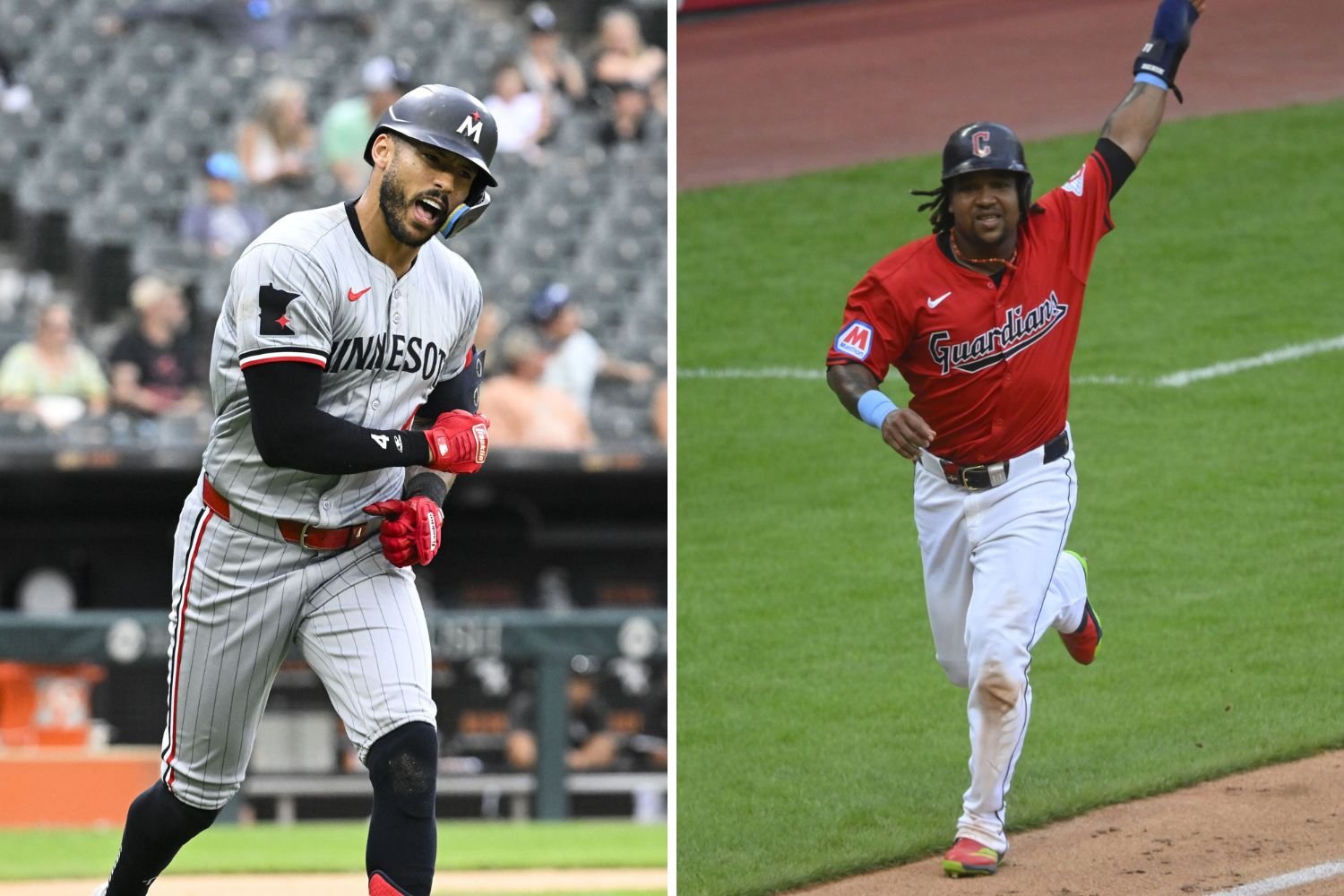
The 2024 AL Central race is giving vibes of the 2006 season. That year, the Twins went on a blistering run to reach 96 wins after a slow start, but all summer long, they struggled to gain ground on the division-leading Tigers, who were playing at a nearly 100-win pace themselves.
One of the most unforgettable, microcosmic stretches came from Jun. 8 through Jun. 30 that year, during which the Twins won 18 of 20... and picked up exactly half of a game in the standings. Throughout July and into August, Minnesota kept rattling off wins and taking series, but they just couldn't put much of a dent in their division deficit, which fluctuated between nine and 12 games for most of the season.
That held true, anyway, until the middle of August, when the Tigers finally started to relent. Detroit got as high as 40 games above .500 at the peak of their prowess -- for a good while, they were on pace for 110 wins, three years after losing 119 games -- but they began hurtling back to Earth during the stretch run. Minnesota capitalized.
In their final 50 games, Detroit went 19-31, while the Twins went 30-20 to overcome a double-digit deficit and win the division on the final day. For the younger crowd that wasn't around to witness it, let me tell you: it was wild.
This year, I believe history will repeat itself in the Central. It might not play out in such dramatic fashion, although that is no given. The bottom line is that Minnesota is the better team, and over the course of a long MLB season, the best team tends to come out on top.
Let's break down three reasons I feel confident in this proclamation.
Cleveland is good. They're not THAT good.
I'm definitely not saying the Guardians aren't a good team. They have the best record in the American League; that's obviously nothing to scoff at. But when you investigate their success through any kind of deeper statistical lens, it becomes clear that fortune has strongly bent in their favor. A project called the MLB Deserve-to-Win-O-Meter, which attempts "to determine a team's 'luck' factor by how their hits were dispersed in a game vs many simulations," while also accounting for launch angle, exit velocity, and ballpark, recently pegged Cleveland as the luckiest team in baseball, by a pretty vast margin.
The Guardians rank 10th in the majors in scoring, but are 23rd in xwOBA. Their hitters rank 10th in the majors in home runs, but rank 30th out of 30 teams in average home run distance. Their pitchers are eighth in ERA, but 15th in FIP. Their staff has the eighth-lowest BABIP in the majors and the second-highest strand rate.
I'm not saying any of these numbers change what has happened. The wins are baked in, and the Guardians deserve credit for timely hitting and clutch pitching. But the underlying metrics do paint a different picture than the surface-level representations of Cleveland's true quality and expectations going forward. The Twins, conversely, have been luck-neutral at best according to almost any metric, and probably more on the unlucky side.
I don't necessarily expect the Guardians to slump as badly as the 2006 Tigers did down the stretch, but then, the Twins don't need them to, since the division lead is not nearly as large. They simply need Cleveland to get into a prolonged stretch of playing .500 ball, and maybe that has already begun; the Guards are 6-7 here in July.
So long as Cleveland keeps coming down from their 100+ win pace, the Twins will catch them. Here's why.
Minnesota has the league's deepest and most unrelenting lineup.
Over the course of this season, Minnesota's offense has evolved into the league's best. They've removed underperformers (Alex Kirilloff, Edouard Julien), added difference-makers (José Miranda, Brooks Lee), and seen players throughout the lineup perform brilliantly. The players you could've once pointed toward as laggards – Carlos Santana, Byron Buxton, Manuel Margot, even Christian Vázquez – have rounded into improved form, while Trevor Larnach and Willi Castro have reached new levels. At some point (hopefully soon), Royce Lewis will be back.
And then at the heart of it all, you've got Carlos Correa, the team MVP and its driving force. He's an All-Star and he's been one of the most impactful players in the American League, offering leadership that goes beyond the field. Although the past weekend's plantar fasciitis diagnosis is alarming, word is that it's less serious than a year ago.
In contrast to Cleveland, the underpinning of Minnesota's offensive success is quite sustainable: they consistently make contact and hit the ball hard. The Twins rank eighth among MLB teams in xwOBA for the season, and have been considerably better since their lineup reached its current state. They rank first in the American League in wOBA, wRC+ and position player fWAR over the past two months.
Twins pitching will be good enough to get it done.
Both the Guardians and Twins have dealt with a void atop their rotation this year. Cleveland ace Shane Bieber is out for the season following elbow surgery, while Pablo López has not pitched in a manner befitting a No. 1 starter. One of those things is correctable in the second half, and one isn't.
Turning back to the lens of underlying metrics and expected numbers, everything about López screams "positive regression." His 5.11 ERA is vastly higher than his xERA (3.43) or his xFIP (3.22). He has the lowest strand rate of his career, the highest home-run rate on fly balls, and the second-highest BABIP.
None of this guarantees anything, but they are indicators that López isn't pitching as badly as the numbers suggest. Visually, his stuff looks fine for the most part. We saw last year – especially in the playoffs – what López can be, and at times, he seems very close to unlocking it again. Cleveland, with no Bieber and Triston McKenzie in shambles, just doesn't have a starter with that kind of upside.
That's not to say the Guardians have a bad pitching staff. It will continue to be a strength for them, undoubtedly. It's just a strength I think that the Twins can realistically match or even outshine the rest of the way. They've got the frontline depth with Joe Ryan, who was a borderline All-Star in the first half, and Bailey Ober, who's been their best starter for quite a while now.
In terms of bullpens, these are two of the best in the game. I'm not sure I'd put Minnesota quite at Cleveland's level, but it's close, especially if the Twins get Brock Stewart back after the break and the front office pulls a few strings in August or September. (Late-season relief roles for Louie Varland, David Festa or Zebby Matthews?)
How much does winning the division matter?
To be clear, I expect both of these teams to make the playoffs. It would likely take a mammoth collapse for Cleveland to miss out even on a Wild Card berth. But the difference between a division title and a Wild Card can be the difference between playing at home or on the road--or even the difference between a first-round bye or a precarious best-of-three matchup to reach the ALDS.
Granted, these circumstances don't dictate anything, as 2006 illustrated: Minnesota got swept in the first round by Oakland as division winners, while Detroit reached the World Series. But the playoff setup is much different from back then, with far more incentive to take the division title.
For the Twins, the key goal over these final 66 games – aside from making sure they hang onto their playoff spot – is to overtake Cleveland and win the Central for a fourth time in six years. This time around, they're really going to have to earn it. I believe they're more than capable.
This is what it's all about folks. It's gonna be a very fun and exciting second half. Strap in.








Recommended Comments
Create an account or sign in to comment
You need to be a member in order to leave a comment
Create an account
Sign up for a new account in our community. It's easy!
Register a new accountSign in
Already have an account? Sign in here.
Sign In Now