


Twins Video
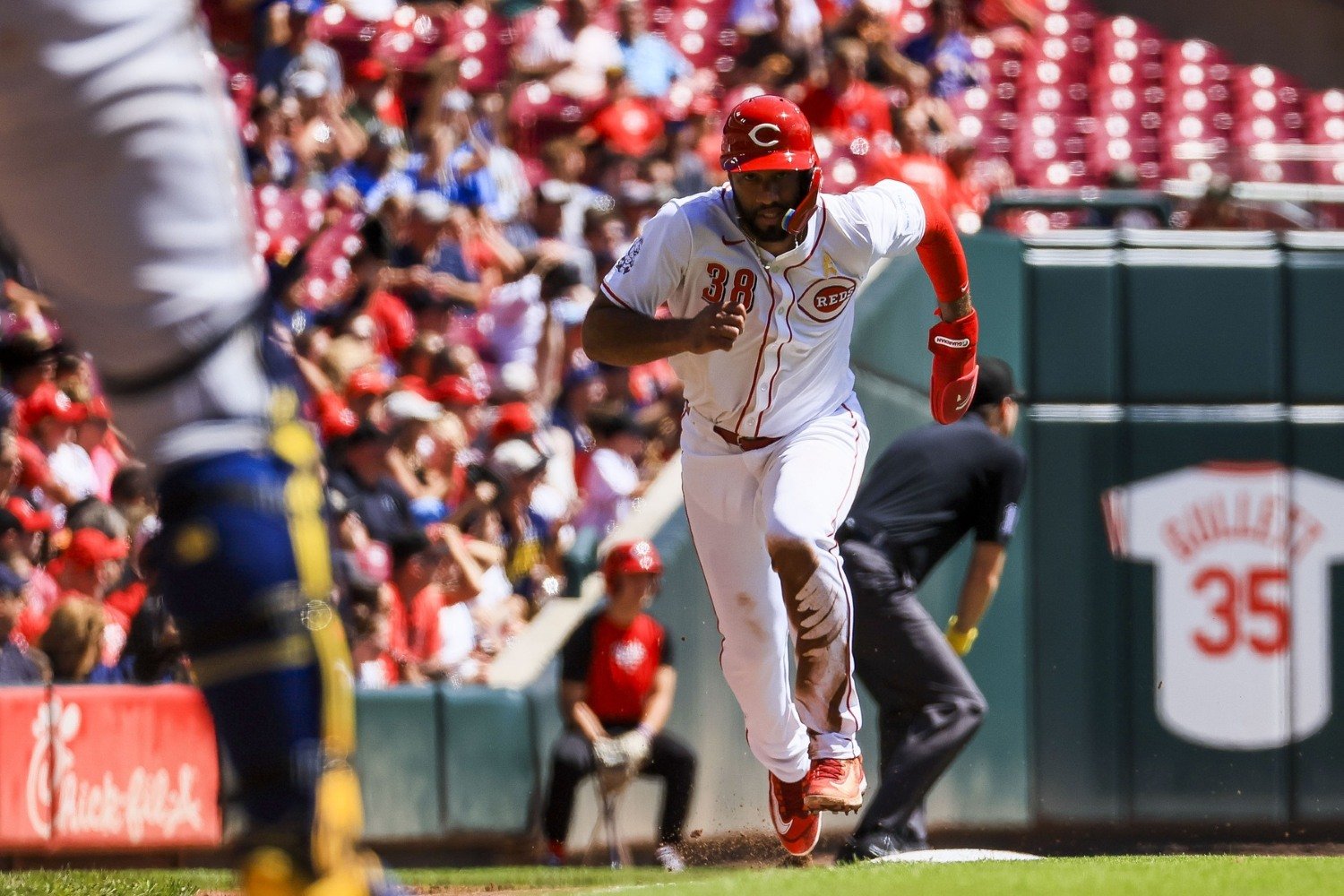
After a baseball executive has been around a while, observant fans can see a move coming from a mile away. With Derek Falvey in 2025, it’s almost too obvious that Amed Rosario will be a Twin.
Rosario is a 29-year-old right-handed utility player who spent last season with the Rays, Dodgers, and Reds. A key piece in the trade that brought Francisco Lindor to New York, Rosario enjoyed a couple of quality years in Cleveland as the team’s starting shortstop, before playing his way out of their plans in 2023.
Now, coming off an up-and-down year across three teams and projected to make modest money, he’s everything the Twins want and need. Let’s see if you see what I see.
First, Rosario is right-handed. In recent years, Twins teams have had benches almost exclusively built out of righties and switch hitters. You may have heard this before, but the club likes to platoon, so stocking the bench with potential platoon partners to their left-handed starters comes naturally. Rosario, specifically, has been a slightly below-average hitter for his career, but he’s always hit well against lefties—about 20% above league average since 2017.
I’m going to use the phrase “whether you like it or not” a few times here, so forgive me.
Whether you like it or not, Rocco Baldelli is going to platoon. Right now, the Twins’ two starting corner outfielders—Matt Wallner and Trevor Larnach—are left-handed, and potential (maybe, who knows?) second baseman or designated hitter Edouard Julien is, too. They’re going to look to pair at least one or two of those guys with a platoon partner, and a team can do a lot worse than Rosario’s 125 OPS+ against lefties.
“But Gregg,” I hear you say at your screen, “Rosario is a shortstop. You said that 217 words ago! He can’t platoon with the outfielders.” Oh, Rosario can do more than that.
He’s technically played everywhere except catcher and first base, with at least 14 appearances at second, third, shortstop, and right field in 2024. He’s not going to be a center fielder, and he’s looked iffy in the outfield, but he’s plenty athletic, and whether you like it or not, it’s not hard to imagine that the Twins could believe they could make him play passable defense.
They did something similar with Willi Castro, though Castro looked better out there before coming to Minnesota. He’s almost a diet Castro in terms of his positional flexibility, though he probably won’t match Castro’s performance at any single position, except maybe second base. If the Twins had a second Willi Castro or a Willi Castro Lite to replace Castro in the event of an offseason trade or an injury that forces Castro into a consistent starting spot, you know he’d be playing everywhere.
There have been some complaints that the Twins focus too much on finding utility players like Rosario, but whether you like it or not, it’s kinda their type. He can play just about anywhere you need him to, and the Twins love to find a need. There will be playing time to go around, with questions about the health of Carlos Correa and Royce Lewis, as well as the lack of a firm answer at second base.
One of the downsides of Castro taking a more pronounced role was losing his skills as a pinch-runner and base stealer. Castro rarely came off the bench in 2024, so there’s certainly a role there for Rosario, who is a career 75% base stealer and has a faster sprint speed than Castro or Austin Martin (who is another contender for such a role). Rosario’s 29 ft/s sprint speed would have been the fastest on the team in 2024 outside of Byron Buxton.
Digging a bit deeper, Rosario has a batting profile that echoes several of the Twins' recent offseason moves. Despite a reputation for only valuing “all-or-nothing power hitters” that we can probably at least in part blame Joey Gallo for, many of their recent veteran additions have been quite the opposite. Manuel Margot, Carlos Santana, and Donovan Solano, for example, have each been lauded for their abilities to put the bat on the ball.
In many of these cases, it seems that the Twins have tried to take players with bat-to-ball skills and add power to their profiles. By their estimation (seemingly), it’s harder to coach bat-to-ball than consistent damage on contact.
Rosario’s key offensive trait is his ability to put wood on the ball and not strike out. It’s not to quite the extent we’ve seen with the players mentioned above, but it’s undoubtedly his deal. He swings at everything and usually makes contact, sporting a batting average of .273 for his career and .280 last season. Whether you like it or not, the Twins appear to think that they can take a guy like that and up his power.
Rosario can make really hard contact, but it’s supremely sporadic, and if the Twins think they can unlock a little bit more of that, the puzzle pieces keep falling into place. Rosario will likely come at a low cost—under $3 million this year by most estimates, fitting nicely into the Twins’ inactive offseason. He can play everywhere, platoon, pinch-run off the bench, and maybe even be “fixed” at the plate.
Doesn’t this sound like the dream addition for Derek Falvey and Rocco Baldelli?
I’m not sure if I’ve talked myself into Amed Rosario: 2025 Twin or if I’ve just become resigned to the fact that he’s already a Twin. It just makes too much sense.
Are you optimistic about the Twins right now?

Follow Twins Daily For Minnesota Twins News & Analysis



- nclahammer, arby58, glunn and 11 others
-
 14
14


Recommended Comments
Create an account or sign in to comment
You need to be a member in order to leave a comment
Create an account
Sign up for a new account in our community. It's easy!
Register a new accountSign in
Already have an account? Sign in here.
Sign In Now