



Greggory Masterson
-
Posts
820 -
Joined
-
Last visited
-
Days Won
2
2 Followers

Recent Profile Visitors
38,258 profile views





Greggory Masterson's Achievements






-
 Twins33 reacted to a post in a topic:
Alan Roden Should Report to Fort Myers Next Spring with at Least One Extra Glove
Twins33 reacted to a post in a topic:
Alan Roden Should Report to Fort Myers Next Spring with at Least One Extra Glove
-
MapleGroveTwinsFan reacted to a post in a topic:
Alan Roden Should Report to Fort Myers Next Spring with at Least One Extra Glove
-
ToddlerHarmon reacted to an article:
The 5 Players Bolted Down in the 2027 Minnesota Twins Lineup
-
DocBauer reacted to a post in a topic:
Alan Roden Should Report to Fort Myers Next Spring with at Least One Extra Glove
-
chpettit19 reacted to a post in a topic:
Alan Roden Should Report to Fort Myers Next Spring with at Least One Extra Glove
-
nclahammer reacted to an article:
Alan Roden Should Report to Fort Myers Next Spring with at Least One Extra Glove
-
 IndianaTwin reacted to a post in a topic:
Alan Roden Should Report to Fort Myers Next Spring with at Least One Extra Glove
IndianaTwin reacted to a post in a topic:
Alan Roden Should Report to Fort Myers Next Spring with at Least One Extra Glove
-
Cory Engelhardt reacted to a post in a topic:
Alan Roden Should Report to Fort Myers Next Spring with at Least One Extra Glove
-
 Don't get me wrong; this isn't proposing that Roden be the primary first baseman--I'm just interested in him playing there once a week, a few times a month. My belief is that they should acquire another infielder, probably a 1B/2B with Clemens playing the other. If he's a righty, it's easy to find Roden a handful of starts there. If he's a lefty, it's harder to get Roden playing time there between Clemens and [New Guy]'s starts. And if that's the case, so be it. I'd care more about truly upgrading in the infield than finding Roden games in the infield. But even then, it would help Roden's flexibility and could come in handy if there were an infield injury.
- 54 replies
-
- 5
-
-
- alan roden
- walker jenkins
- (and 3 more)
-
Cris E reacted to a post in a topic:
The 5 Players Bolted Down in the 2027 Minnesota Twins Lineup
-
chpettit19 reacted to a post in a topic:
Alan Roden Should Report to Fort Myers Next Spring with at Least One Extra Glove
-
Like I always say: the best benches have a guy who can only play second base
- 54 replies
-
- 5
-
-
- alan roden
- walker jenkins
- (and 3 more)
-
Because you have to fill out a 13-man lineup, and that includes role players. But more importantly, something about Roden's swing scratches an itch in my brain, so I want to see it more often.
- 54 replies
-
- 4
-
-

-
-
- alan roden
- walker jenkins
- (and 3 more)
-
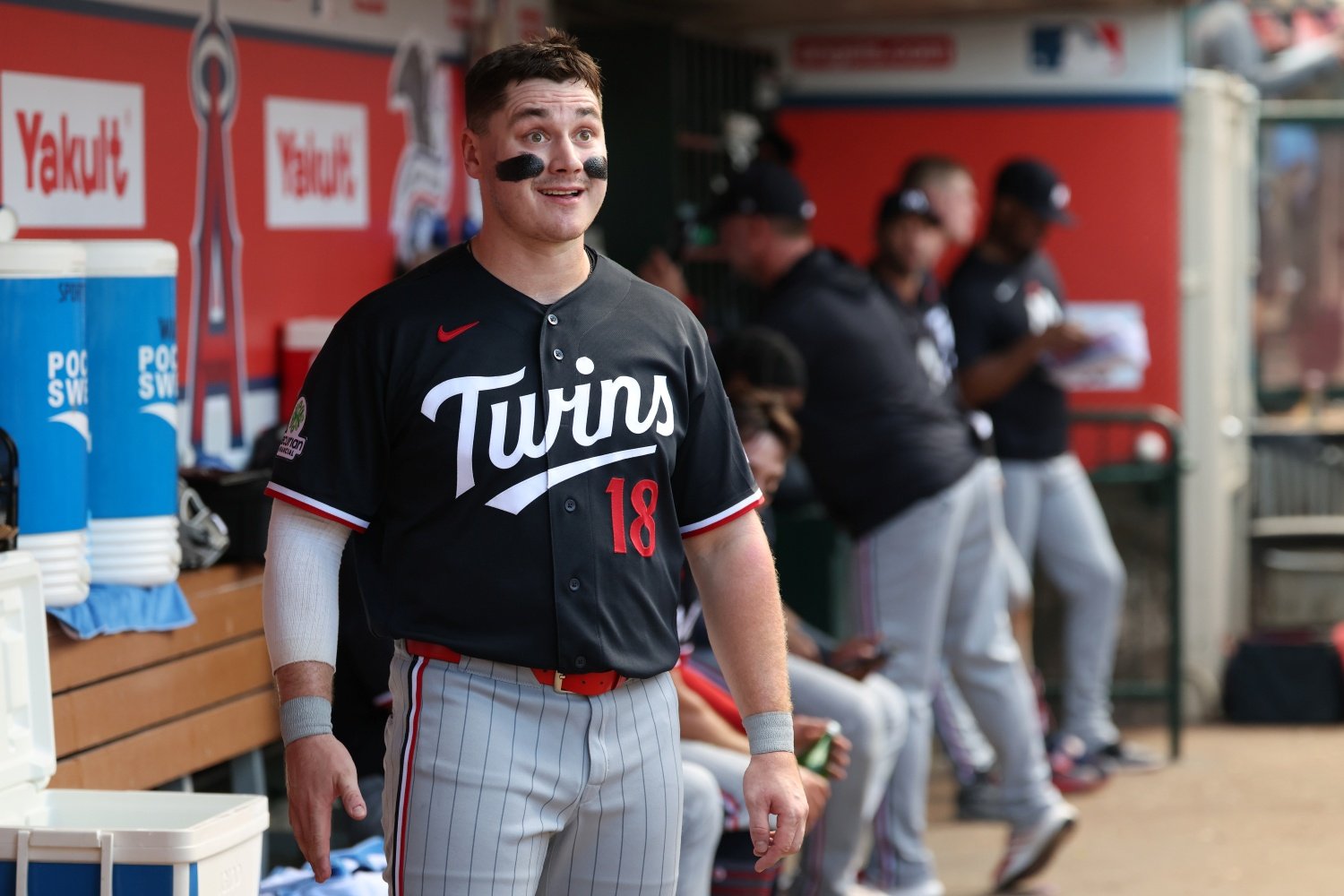 Alan Roden has had a Twins career that has been very unfair to Alan Roden, starting the moment many Twins fans learned that he existed. Twins historians may recall the 2025 trade deadline, during which the Twins made nine trades, the last of which sent then-setup man Louis Varland to Toronto. Roden was the second piece of the return for Varland (and Ty France), arriving in Minnesota alongside lefty pitching prospect Kendry Rojas. Fans were predisposed to dislike Roden for having the temerity to have been traded for a hometown kid, but he didn’t help himself much on the field. In 12 games, he mustered just a .463 OPS, then he sprained his thumb sliding into the wall chasing a foul ball. He missed the rest of that season. And Roden wasn’t in a position to struggle. At the time of his acquisition, he was just one of many left-handed corner outfield options, alongside (but not limited to) Trevor Larnach, Matt Wallner, James Outman, Walker Jenkins, and Emmanuel Rodriguez. He was thrust into a situation where he not only needed to fight for playing time in the present, but also had to fend off higher-profile prospects on his heels. After roster decisions and injury delayed Roden’s 2026 MLB season, he struggled out of the gate, with another OPS under .500 through his first eight games. However, even with a demotion and inconsistent playing time, he finished the season strong, slashing .317/.403/.450 and posting more walks than strikeouts over his last 24 games, to end the season with a .769 OPS in 32 games—15-20% better than average. It was fewer than 100 plate appearances, but it offered a glimpse of the player the Twins thought they had acquired from Toronto: a solid defensive corner outfielder with great strike-zone control and a little gap power. It’s not a high ceiling, but it’s easy to see how a player like Roden can be a solid, everyday player who helps teams win games. However, everyday play in the outfield probably isn’t feasible in Minnesota next season, even assuming that Larnach has played his last game in a Twins jersey (which, given the club’s history, might be a big assumption). Roden will be jockeying for playing time with fellow lefties Jenkins and Rodriguez, the latter of whom is out of options and will need to be on the big-league roster. Furthermore, Byron Buxton and Luke Keaschall will see a good share of time in the outfield. You might even say that the outfield is crowded before considering Roden. But there is some playing time to be spared. Jenkins, Rodriguez, Buxton, and Keaschall all have checkered injury histories, and it’s safe to assume there will be at least a couple of trips to the injured list from that group. Once you factor in rest days and a potentially fluid designated hitter spot, it’s not difficult to see some playing time every week. But at this point, he’s slotted in as the fifth outfielder. However, there might be another lane to playing time for Roden. Prior to his surprise selection in the third round of the 2022 draft, Roden was viewed primarily as a first baseman, having logged 39 appearances there as a 22-year-old junior at Creighton, compared to 15 games in the outfield. He also split time between the outfield and first base his draft summer in the Cape Cod League. As a pro, Roden has only logged one inning at first base, and he’s listed at 5-foot-11, but he’s got some athleticism, and it’s not hard to imagine him over there after watching France and Kody Clemens (both within an inch of Roden, height-wise) playing first base for the past two seasons. Even if Roden’s a bit rusty around the bag, the Twins have been successful in recent years in improving first base defense in players like Clemens and France, the latter of whom won a Gold Glove after years of being regarded as a poor defender. Carlos Santana also won his first Gold Glove at first base as a Twin, and they converted players like Luis Arraez into passable first basemen. This isn’t advocating for Roden to be an everyday first baseman or anything. But if the Twins want to get him on the field as much as is reasonably possible as a bench player, this is one way. A couple of outfield starts paired with a game at first base each week allows the Twins to play Roden about 50% of the time. Given Rodriguez’s lack of experience and Buxton’s recovery from offseason hip surgery, the Twins probably need to count on Roden even more at the beginning of the season than almost any other team’s fifth outfielder. And that day-to-day playing time can go up when any of the four guys ahead of him miss time later on. Nonetheless, it's difficult to see Roden carving out a consistent three-game-per-week role without a little time on the dirt, and he has real experience playing first base. If his true talent level is close to what he showed in 32 games this season, he’s a player that the Twins should want in the lineup—and he’d be a luxury to have on the bench. Of course, that’s assuming his true talent level is close to what we saw late this season. Roden as the backup first baseman (in addition to his work in the corners) makes sense with the roster as currently constructed, given that Royce Lewis is penciled into that spot and hits right-handed. Roden, a lefty, giving him a day off against righties would help Lewis’s numbers. But it remains to be seen if Lewis is indeed in that role next season. His production since the summer of 2024 certainly hasn’t earned it. If the everyday first baseman is instead Kody Clemens, a fellow lefty, it doesn’t make as much sense, unless the Twins play Clemens at second base on days Roden starts against a righty. Similarly, many of the potential bats that the Twins could add in free agency to replace Lewis in some form (such as Jake Bauers, Brandon Lowe, Nathaniel Lowe, Jazz Chisholm Jr., Jeff McNeil, or even Arraez) are left-handed. Adding a lefty infielder probably precludes Roden from any time on the dirt. But if they were to instead acquire a righty like Rhys Hoskins, Alec Bohm, or Gleyber Torres, Roden playing some first base could be valuable. Even without a little work at first base, Roden seems to be a valuable role player on next year’s team who could be thrust into more action at any time. But being able to add a bit of time at first base would immensely benefit his career and the Twins’ roster flexibility. Only read this if you won’t take it more than 10% seriously: Alan Roden was a high school catcher. The Twins have a very murky catching picture next season. Of course, they shouldn’t have him also come to camp with a catcher’s mitt. But maybe.
- 54 comments
-
- 7
-
-
- alan roden
- walker jenkins
- (and 3 more)
-
Image courtesy of Kiyoshi Mio-Imagn Images Alan Roden has had a Twins career that has been very unfair to Alan Roden, starting the moment many Twins fans learned that he existed. Twins historians may recall the 2025 trade deadline, during which the Twins made nine trades, the last of which sent then-setup man Louis Varland to Toronto. Roden was the second piece of the return for Varland (and Ty France), arriving in Minnesota alongside lefty pitching prospect Kendry Rojas. Fans were predisposed to dislike Roden for having the temerity to have been traded for a hometown kid, but he didn’t help himself much on the field. In 12 games, he mustered just a .463 OPS, then he sprained his thumb sliding into the wall chasing a foul ball. He missed the rest of that season. And Roden wasn’t in a position to struggle. At the time of his acquisition, he was just one of many left-handed corner outfield options, alongside (but not limited to) Trevor Larnach, Matt Wallner, James Outman, Walker Jenkins, and Emmanuel Rodriguez. He was thrust into a situation where he not only needed to fight for playing time in the present, but also had to fend off higher-profile prospects on his heels. After roster decisions and injury delayed Roden’s 2026 MLB season, he struggled out of the gate, with another OPS under .500 through his first eight games. However, even with a demotion and inconsistent playing time, he finished the season strong, slashing .317/.403/.450 and posting more walks than strikeouts over his last 24 games, to end the season with a .769 OPS in 32 games—15-20% better than average. It was fewer than 100 plate appearances, but it offered a glimpse of the player the Twins thought they had acquired from Toronto: a solid defensive corner outfielder with great strike-zone control and a little gap power. It’s not a high ceiling, but it’s easy to see how a player like Roden can be a solid, everyday player who helps teams win games. However, everyday play in the outfield probably isn’t feasible in Minnesota next season, even assuming that Larnach has played his last game in a Twins jersey (which, given the club’s history, might be a big assumption). Roden will be jockeying for playing time with fellow lefties Jenkins and Rodriguez, the latter of whom is out of options and will need to be on the big-league roster. Furthermore, Byron Buxton and Luke Keaschall will see a good share of time in the outfield. You might even say that the outfield is crowded before considering Roden. But there is some playing time to be spared. Jenkins, Rodriguez, Buxton, and Keaschall all have checkered injury histories, and it’s safe to assume there will be at least a couple of trips to the injured list from that group. Once you factor in rest days and a potentially fluid designated hitter spot, it’s not difficult to see some playing time every week. But at this point, he’s slotted in as the fifth outfielder. However, there might be another lane to playing time for Roden. Prior to his surprise selection in the third round of the 2022 draft, Roden was viewed primarily as a first baseman, having logged 39 appearances there as a 22-year-old junior at Creighton, compared to 15 games in the outfield. He also split time between the outfield and first base his draft summer in the Cape Cod League. As a pro, Roden has only logged one inning at first base, and he’s listed at 5-foot-11, but he’s got some athleticism, and it’s not hard to imagine him over there after watching France and Kody Clemens (both within an inch of Roden, height-wise) playing first base for the past two seasons. Even if Roden’s a bit rusty around the bag, the Twins have been successful in recent years in improving first base defense in players like Clemens and France, the latter of whom won a Gold Glove after years of being regarded as a poor defender. Carlos Santana also won his first Gold Glove at first base as a Twin, and they converted players like Luis Arraez into passable first basemen. This isn’t advocating for Roden to be an everyday first baseman or anything. But if the Twins want to get him on the field as much as is reasonably possible as a bench player, this is one way. A couple of outfield starts paired with a game at first base each week allows the Twins to play Roden about 50% of the time. Given Rodriguez’s lack of experience and Buxton’s recovery from offseason hip surgery, the Twins probably need to count on Roden even more at the beginning of the season than almost any other team’s fifth outfielder. And that day-to-day playing time can go up when any of the four guys ahead of him miss time later on. Nonetheless, it's difficult to see Roden carving out a consistent three-game-per-week role without a little time on the dirt, and he has real experience playing first base. If his true talent level is close to what he showed in 32 games this season, he’s a player that the Twins should want in the lineup—and he’d be a luxury to have on the bench. Of course, that’s assuming his true talent level is close to what we saw late this season. Roden as the backup first baseman (in addition to his work in the corners) makes sense with the roster as currently constructed, given that Royce Lewis is penciled into that spot and hits right-handed. Roden, a lefty, giving him a day off against righties would help Lewis’s numbers. But it remains to be seen if Lewis is indeed in that role next season. His production since the summer of 2024 certainly hasn’t earned it. If the everyday first baseman is instead Kody Clemens, a fellow lefty, it doesn’t make as much sense, unless the Twins play Clemens at second base on days Roden starts against a righty. Similarly, many of the potential bats that the Twins could add in free agency to replace Lewis in some form (such as Jake Bauers, Brandon Lowe, Nathaniel Lowe, Jazz Chisholm Jr., Jeff McNeil, or even Arraez) are left-handed. Adding a lefty infielder probably precludes Roden from any time on the dirt. But if they were to instead acquire a righty like Rhys Hoskins, Alec Bohm, or Gleyber Torres, Roden playing some first base could be valuable. Even without a little work at first base, Roden seems to be a valuable role player on next year’s team who could be thrust into more action at any time. But being able to add a bit of time at first base would immensely benefit his career and the Twins’ roster flexibility. Only read this if you won’t take it more than 10% seriously: Alan Roden was a high school catcher. The Twins have a very murky catching picture next season. Of course, they shouldn’t have him also come to camp with a catcher’s mitt. But maybe. View full article
- 54 replies
-
- 1
-
-
- alan roden
- walker jenkins
- (and 3 more)
-
Greggory Masterson reacted to a post in a topic:
The 5 Players Bolted Down in the 2027 Minnesota Twins Lineup
-
fwiw I expect Clemens to be a major factor next year, but I just have reasonable doubt that he's their first or second baseman on Opening Day
- 63 replies
-
- 3
-
-
-
- kaelen culpepper
- walker jenkins
- (and 3 more)
-
Greggory Masterson reacted to a post in a topic:
The 5 Players Bolted Down in the 2027 Minnesota Twins Lineup
-
It depends on your definition of "large," but yes, there are many fans who would prefer to not see Buxton play for the Twins again, one way or another. As for being healthy and productive, that also depends on your definition; many would say that Buxton has never been healthy and productive. I doubt anyone has ever thought, "I don't want a healthy and productive Buxton playing for the Twins," but that's probably because playing 100 games with a well above-average OPS isn't their version of "healthy and productive," given the time lost to injury. The best ability is availability, and all that.
- 63 replies
-
- 2
-
-
-
- kaelen culpepper
- walker jenkins
- (and 3 more)
-
September days and days on the injured list don't count.
- 63 replies
-
- 1
-
-
- kaelen culpepper
- walker jenkins
- (and 3 more)
-
The 5 Players Bolted Down in the 2027 Minnesota Twins Lineup
Greggory Masterson posted an article in Twins
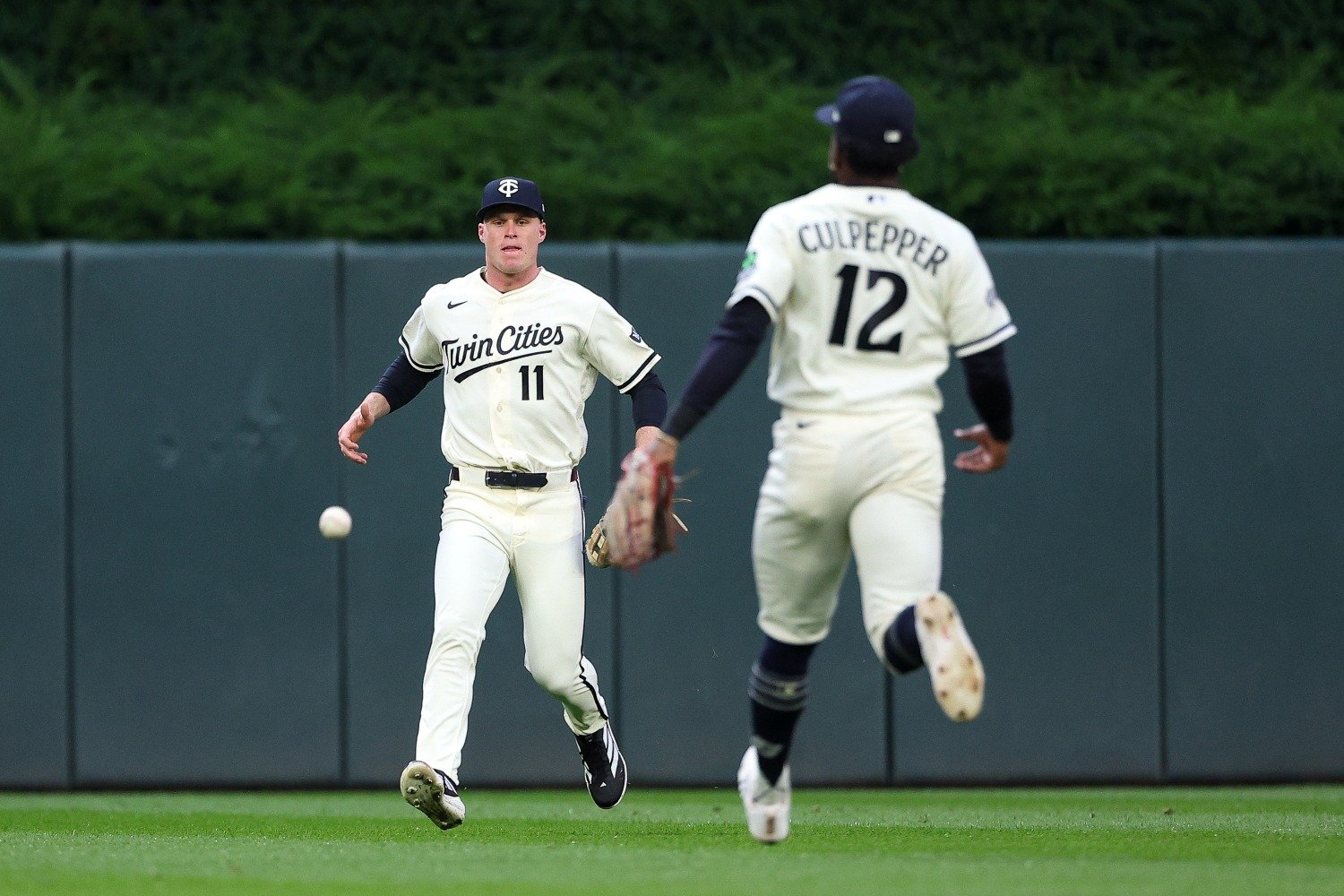 There’s a lot of uncertainty about Twins baseball right now, and a ton of questions about the hitting group manager Derek Shelton will have at his disposal next spring. About a month ago, I posted on Twitter the group I believe will almost certainly be locked into the Twins lineup next year (spoiler below). Now that the season is over, let’s go through those names. But first, defining what I mean by bolted down: I’m just going to say beyond a reasonable doubt as my standard. There might be a world in which any of these names are traded over the offseason, or the Twins might acquire players that squeeze someone on this list out of a starting job, but it’s so unlikely that it’s not worth considering. Likewise, I probably failed to include someone that you’re confident will be an everyday player. If they’re not on the list, though, I can easily envision a scenario in which they aren’t an everyday player for the Twins next season (when healthy). Let’s dig in. Infield: Brooks Lee Brooks Lee is probably the lowest-ceiling inclusion on this list. However, it’s very difficult to see him not penciled into the Opening Day lineup next season. He was a league-average hitter this season, with a .728 OPS and a low-OBP profile bolstered by a career-high 24 home runs. After being moved off shortstop midway through the season, Lee settled in well at third base, posting 6 outs above average (OAA) in about 100 games at the hot corner. A league-average bat with above-average defense at third base is a valuable secondary piece, and there’s some hope that the 25-year-old can continue to develop at the plate with better plate discipline and consistent pop. It’s very difficult to see the Twins moving on from Lee. I have him listed as a general infielder, though, because there’s a world in which he’s playing second base, instead, should the Twins bring in a third-base-only option. It’s unlikely, but hey, reasonable doubt. You might have expected Royce Lewis or Kody Clemens to appear here. Clemens is the more likely to return, but it’s hard to see both of them back in 2027, at least as everyday players. Maybe one of them is at first or second base, but the offseason was probably a failure if the Twins didn’t upgrade at either position. Neither is expensive, but neither is young, either. There are just too many ways that either could find themselves out of the picture to make this list. Shortstop: Kaelen Culpepper Kaelen Culpepper is the Twins' shortstop—at least for now. He'll still be rookie-eligible next year, after 128 plate appearances in which he slashed .274/.328/.393. Culpepper showed flashes that should get Twins fans excited for his career prospects, and there's no one crowding him out of shortstop at this point. He had moments that showed why some are skeptical about his shortstop defense, but he did enough, along with a league-average bat (which is a great thing!), to solidify his spot next season. Perhaps he has a sophomore slump that necessitates a detour to Triple-A, and maybe fellow prospect Marek Houston moves him to second or third base, but it’s very unlikely he won’t be the Opening Day shortstop. Outfield: Walker Jenkins Walker Jenkins, the Twins' No. 1 prospect, struggled in his first taste of the bigs, beginning his career 4-for-45 and making me nervous about my initial prediction. Over his final 10 games, though, he slashed .385/.400/.615. It’s clear that the global top-15 prospect will very much be in the picture next season. It’s unclear whether the Twins prefer him in right or left field, and that’s probably dependent on who the other corner outfielder is. Jenkins exclusively played center field in the majors, filling in for the sidelined Byron Buxton. When Buxton is unavailable, Jenkins is the likely fill-in. The other corner position? There are too many names to feel confident in any of them being the everyday guy. Emmanuel Rodriguez, Luke Keaschall, or even Alan Roden could be slotted into that other spot. Rodriguez has to be on the roster (or someone else’s) because he’s out of options and held his own in limited late-season MLB action, but it’s possible the Twins aren’t ready to foist him into everyday action quite yet. (Leadership did name him as part of the core around which they're building for next year, though, so he's closing in on this list.) Center Field: Byron Buxton Speaking of outfielders, Byron Buxton is the most obvious name on the list, when healthy. Being realistic, if he’s available, he’s playing. And yes, until further notice, he’s the center fielder. This almost isn’t even worth discussing. Yes, he’s coming off of labrum repair, and there’s uncertainty about his status, but if he’s healthy, he’s playing. You can’t stop it from happening. ????: Luke Keaschall Finally, Luke Keaschall. He’s probably going to be hitting leadoff. I have no idea where he’s going to play, though. The two most likely options are a corner outfield spot or a designated hitter role. Shoot, maybe even first base. I don’t know where he’s playing, but I know he will be at the top of the batting order. After a dreadful start in 2026, Keaschall rebounded to finish the season slashing .282/.374/.407, about 20% better than an average hitter. Although most designated hitters or left fielders have more power in their profiles, Keaschall’s overall line is more than sufficient to occupy one of those spots, making him a lock for next season. He added power as the season progressed, anyway. For the other four positions, your guess is as good as mine. But these five guys are locks. Potpourri This was put together with a focus on the lineup against right-handed pitching. Jenkins might not play every day against lefties. However, there’s not a platoon partner for him set in stone, either. Austin Martin got off to a great start in 2026, but he hit just .164 in the second half when he was mostly facing lefties. Gabriel Gonzalez or Aaron Sabato could factor in, but the Twins showed very little interest in playing them down the stretch. The catcher position is a mystery. Victor Caratini is under contract for next season, and it’s unlikely that the Twins cut him or find a trade partner willing to take on the $10 million he’s owed after barely playing enough late in 2026 to call him a second catcher. There’s reasonable doubt that he’s the everyday catcher, even if that is the most likely scenario. The Twins could get Ryan Jeffers back on a qualifying offer or pursue a different catcher in free agency that clears Caratini’s bar. So then, are you in agreement with this assessment? Do you have someone else bolted down, or do you think the screws are looser on any of the names I gave here?
- 63 comments
-
- 7
-
-
- kaelen culpepper
- walker jenkins
- (and 3 more)
-
Image courtesy of Matt Krohn-Imagn Images There’s a lot of uncertainty about Twins baseball right now, and a ton of questions about the hitting group manager Derek Shelton will have at his disposal next spring. About a month ago, I posted on Twitter the group I believe will almost certainly be locked into the Twins lineup next year (spoiler below). Now that the season is over, let’s go through those names. But first, defining what I mean by bolted down: I’m just going to say beyond a reasonable doubt as my standard. There might be a world in which any of these names are traded over the offseason, or the Twins might acquire players that squeeze someone on this list out of a starting job, but it’s so unlikely that it’s not worth considering. Likewise, I probably failed to include someone that you’re confident will be an everyday player. If they’re not on the list, though, I can easily envision a scenario in which they aren’t an everyday player for the Twins next season (when healthy). Let’s dig in. Infield: Brooks Lee Brooks Lee is probably the lowest-ceiling inclusion on this list. However, it’s very difficult to see him not penciled into the Opening Day lineup next season. He was a league-average hitter this season, with a .728 OPS and a low-OBP profile bolstered by a career-high 24 home runs. After being moved off shortstop midway through the season, Lee settled in well at third base, posting 6 outs above average (OAA) in about 100 games at the hot corner. A league-average bat with above-average defense at third base is a valuable secondary piece, and there’s some hope that the 25-year-old can continue to develop at the plate with better plate discipline and consistent pop. It’s very difficult to see the Twins moving on from Lee. I have him listed as a general infielder, though, because there’s a world in which he’s playing second base, instead, should the Twins bring in a third-base-only option. It’s unlikely, but hey, reasonable doubt. You might have expected Royce Lewis or Kody Clemens to appear here. Clemens is the more likely to return, but it’s hard to see both of them back in 2027, at least as everyday players. Maybe one of them is at first or second base, but the offseason was probably a failure if the Twins didn’t upgrade at either position. Neither is expensive, but neither is young, either. There are just too many ways that either could find themselves out of the picture to make this list. Shortstop: Kaelen Culpepper Kaelen Culpepper is the Twins' shortstop—at least for now. He'll still be rookie-eligible next year, after 128 plate appearances in which he slashed .274/.328/.393. Culpepper showed flashes that should get Twins fans excited for his career prospects, and there's no one crowding him out of shortstop at this point. He had moments that showed why some are skeptical about his shortstop defense, but he did enough, along with a league-average bat (which is a great thing!), to solidify his spot next season. Perhaps he has a sophomore slump that necessitates a detour to Triple-A, and maybe fellow prospect Marek Houston moves him to second or third base, but it’s very unlikely he won’t be the Opening Day shortstop. Outfield: Walker Jenkins Walker Jenkins, the Twins' No. 1 prospect, struggled in his first taste of the bigs, beginning his career 4-for-45 and making me nervous about my initial prediction. Over his final 10 games, though, he slashed .385/.400/.615. It’s clear that the global top-15 prospect will very much be in the picture next season. It’s unclear whether the Twins prefer him in right or left field, and that’s probably dependent on who the other corner outfielder is. Jenkins exclusively played center field in the majors, filling in for the sidelined Byron Buxton. When Buxton is unavailable, Jenkins is the likely fill-in. The other corner position? There are too many names to feel confident in any of them being the everyday guy. Emmanuel Rodriguez, Luke Keaschall, or even Alan Roden could be slotted into that other spot. Rodriguez has to be on the roster (or someone else’s) because he’s out of options and held his own in limited late-season MLB action, but it’s possible the Twins aren’t ready to foist him into everyday action quite yet. (Leadership did name him as part of the core around which they're building for next year, though, so he's closing in on this list.) Center Field: Byron Buxton Speaking of outfielders, Byron Buxton is the most obvious name on the list, when healthy. Being realistic, if he’s available, he’s playing. And yes, until further notice, he’s the center fielder. This almost isn’t even worth discussing. Yes, he’s coming off of labrum repair, and there’s uncertainty about his status, but if he’s healthy, he’s playing. You can’t stop it from happening. ????: Luke Keaschall Finally, Luke Keaschall. He’s probably going to be hitting leadoff. I have no idea where he’s going to play, though. The two most likely options are a corner outfield spot or a designated hitter role. Shoot, maybe even first base. I don’t know where he’s playing, but I know he will be at the top of the batting order. After a dreadful start in 2026, Keaschall rebounded to finish the season slashing .282/.374/.407, about 20% better than an average hitter. Although most designated hitters or left fielders have more power in their profiles, Keaschall’s overall line is more than sufficient to occupy one of those spots, making him a lock for next season. He added power as the season progressed, anyway. For the other four positions, your guess is as good as mine. But these five guys are locks. Potpourri This was put together with a focus on the lineup against right-handed pitching. Jenkins might not play every day against lefties. However, there’s not a platoon partner for him set in stone, either. Austin Martin got off to a great start in 2026, but he hit just .164 in the second half when he was mostly facing lefties. Gabriel Gonzalez or Aaron Sabato could factor in, but the Twins showed very little interest in playing them down the stretch. The catcher position is a mystery. Victor Caratini is under contract for next season, and it’s unlikely that the Twins cut him or find a trade partner willing to take on the $10 million he’s owed after barely playing enough late in 2026 to call him a second catcher. There’s reasonable doubt that he’s the everyday catcher, even if that is the most likely scenario. The Twins could get Ryan Jeffers back on a qualifying offer or pursue a different catcher in free agency that clears Caratini’s bar. So then, are you in agreement with this assessment? Do you have someone else bolted down, or do you think the screws are looser on any of the names I gave here? View full article
-
Former first round pick might be something there
-
Good point; I neglected to give the breakdown. Here’s his (innings) DRS/OAA/FRV at each position this season 2B (636): -5/-7/-4 RF (350): -7/-1/-2 CF (210): -8/-4/-4
-
Image courtesy of Bruce Kluckhohn-Imagn Images Luke Keaschall is 188 games into his MLB career. He’s a career .281 hitter with a .370 on-base percentage, and has stolen 31 bases at a 76% clip. The last time the Twins had a leadoff hitter this good was in 2022 with Luis Arraez, who hit .314 across four seasons in Minnesota. And like Arraez, no one has any idea where to put him on the field. Keaschall has been one of the worst defenders in baseball, splitting time between second base, center field, and right field. He’s accumulated a league-worst -19 defensive runs saved (DRS) between the three positions, meaning that he’s been 19 runs worse than a merely average defender. Those 19 runs equal about two wins lost in WAR, as well. Even if you’re not a defensive stats believer, you’ve watched enough Keachall misplays to know that his defense is an issue. He’s struggled to read balls off the bat in the outfield, made poor throwing decisions, and his lack of arm strength disqualifies him from completing many plays. Arraez never put up a defensive season this bad, but he was suspect with the glove for his whole Twins tenure. He was worth -11 DRS in 2019, with 9 of those lost runs coming at his natural position, second base. During his time in Minnesota, he was closer to average, though he fluctuated from year-to-year. For most of Arraez’s Twins tenure, he bounced around defensive positions. He played second, third, shortstop, and left field as a rookie in 2019. He stuck at second base in 2020, but in 2021, he played more third than second and spent a little time in left field, and in 2022, he played first base, with some second and a bit of third sprinkled in. He also was the designated hitter 47 times during that four-year stretch, 42 of which came after 2020, when he was replaced by Jorge Polanco as Minnesota’s primary second baseman. Because Arraez ranged from bad to middle-of-the-road defensively, the Twins felt comfortable playing him in whatever hole the lineup had in a given day. Sometimes this would change from day to day. At other times, he was filling in for an injured teammate on more of a long-term basis. But the equation was simple: he’s not going to be a plus defender at any position, so just stick him in the lineup where needed. Could this be the route with Keaschall as well? There are a few paths the Twins could take next season to keep his bat in the lineup every day. Play Keaschall Everyday in Left (or Right) Field Analyzing Keaschall in a vacuum, planting him in left field is probably the most straightforward way to keep him in the lineup every day. This is especially true if there’s a belief that Keaschall’s ability to read fly balls will improve with practice; he’s only played 717 innings in the outfield as a professional. He has the raw athleticism to get to balls, and his weak arm is mitigated by moving out of right field. The issue, though, is that Keaschall’s situation can’t be analyzed in a vacuum. Top prospects Walker Jenkins and Emmanuel Rodriguez have debuted this season, both of whom are natural outfielders. Adding the center field presence of Byron Buxton, the Twins’ outfield is crowded. Not only are all three players better outfielders than Keaschall, but they also probably have higher offensive ceilings as well (this is no guarantee, as Keaschall has set a high bar already, hitting about 20% better than an average hitter for his career). Planting Keaschall in left field squeezes one of Jenkins and Rodriguez out of the picture when Buxton is healthy, and that seems not to be something the Twins want to do. Jenkins is a top-20 prospect across baseball and has played himself to the big leagues at age 21. Rodriguez, who has been on top-100 lists for half a decade, is out of options next season, and thus needs to stick on the major-league roster or be traded. It’s a tough proposition. Send Keachall Back to the Dirt The infield is also a little crowded heading into next season, with Brooks Lee, Kaelen Culpepper, Kody Clemens, and Royce Lewis currently penciled into spots and Marek Houston potentially being an option by midseason. But if any of those options—particularly Clemens or Lewis—were to be moved over the offseason, there could be room at first or second. Keaschall played some first base in the minors when playing through a torn UCL. Arraez himself has turned into a better defender at second base after being given the chance to play at the keystone full-time this season for San Francisco and Philadelphia, accumulating 13 outs above average (OAA). He’s still been mediocre by DRS (-3), and the eye test suggests he’s closer to average than one of the best defensive second basemen in baseball, but given that he was moved off the position to be a 5’10” first baseman, it’s a very positive development Many fans know the oft-repeated anecdote about how Corey Koskie was a dreadful third baseman at his debut, but after thousands of reps he became a good defender. Players can improve defensively, but it would be nice if Twins fans had a second example of this happening. Arraez’s improvements conspicuously coincided with working with esteemed fielding coach Ron Washington in San Francisco. It may be wishful thinking to believe Keaschall can make these same improvements. Maybe two years out from Tommy John surgery, his throwing will improve, but there are still other warts. Play Keaschall Every Day at Designated Hitter Many probably scoff at this proposition because of Keaschall’s offensive profile. But the most basic answer to “Where do we play a good hitter who’s bad in the field?” is “designated hitter.” No, Keaschall is not the aging, burly slugger that you might imagine when you close your eyes and think of a designated hitter, but he is a very productive hitter who can have his defensive woes mitigated by simply not grabbing a glove. However, Keachall has thus far been a 20%-above-average hitter by wRC+, given his doubles power and high on-base percentage. The average designated hitter this season has mustered a slash line just 5% above average, compared to left field at 2% above average or even first base, which is 15% above average. The bar for a full-time DH should be higher than a 105 wRC+, but even using first base’s 115 as a benchmark, Keaschall’s 120 career wRC+ is solid. It’s not perfect, but it’s workable, and it keeps one of the Twins’ key cogs in the lineup every day. The Luis Arraez Approach As a Twin, Arraez never played more than 65 games at a single position during a year (first base in 2022). The Twins could use a similar approach with Keaschall, though maybe not to the same extreme, or with the same positions. Keaschall can play second base, the corner outfield, center field, and first base. None of them are pretty—center field was practically a disaster—and we haven’t seen him play first base in the majors. But in moderation, maybe some time bouncing around won’t hurt the Twins. Let’s use this example as a thought exercise. About a third of the team’s games are against left-handed starters. Both Jenkins and Rodriguez are lefties, and even if you want them to face lefties, maybe you can agree to have the two rookies split reps in right field against southpaws, turning left field over to Keaschall those days. That’s hypothetically 54 games in left field without cutting into Jenkins and Rodriguez games against righties. There are 108 games left in the schedule. Say Keaschall is the DH for 60 of them. He’s the team’s primary DH, but he’s not an everyday DH, which allows 102 days at DH for other Twins. Between games in left against lefties and DH days against righties, we’ve already accounted for 114 games of Luke Keaschall. Even assuming he will play all 162 games, you only need to find a spot for him 48 times. You don’t want Keaschall being your second baseman every day. But can you stomach a dozen starts at second base? That’s two games a month. Could you bear the same at first base? Maybe there’s an injury to one or more of (perhaps the most injury-prone outfield in baseball) Buxton, Jenkins, and Rodriguez, and he gets some more action in a corner outfield spot. Those other 48 games fill up quickly, even without accounting for routine days off. There’s probably something to be said for just sticking him at DH when he’s not in left field, simplifying his workload and keeping him off the dirt, but adding that wrinkle helps the team remain flexible. The point is that it’s not easy to find a way to fit Keaschall into the lineup with the team as currently (and projectedly, for next season) constructed, whether that be because the outfield is crowded or because he doesn’t have a standard profile for a first baseman or DH. It might require some creativity to make it work, but one thing is certain: the Twins need to find a way to do it. View full article
-
Luke Keaschall’s Position Next Year: The Answer Lies with Luis Arraez
Greggory Masterson posted an article in Twins
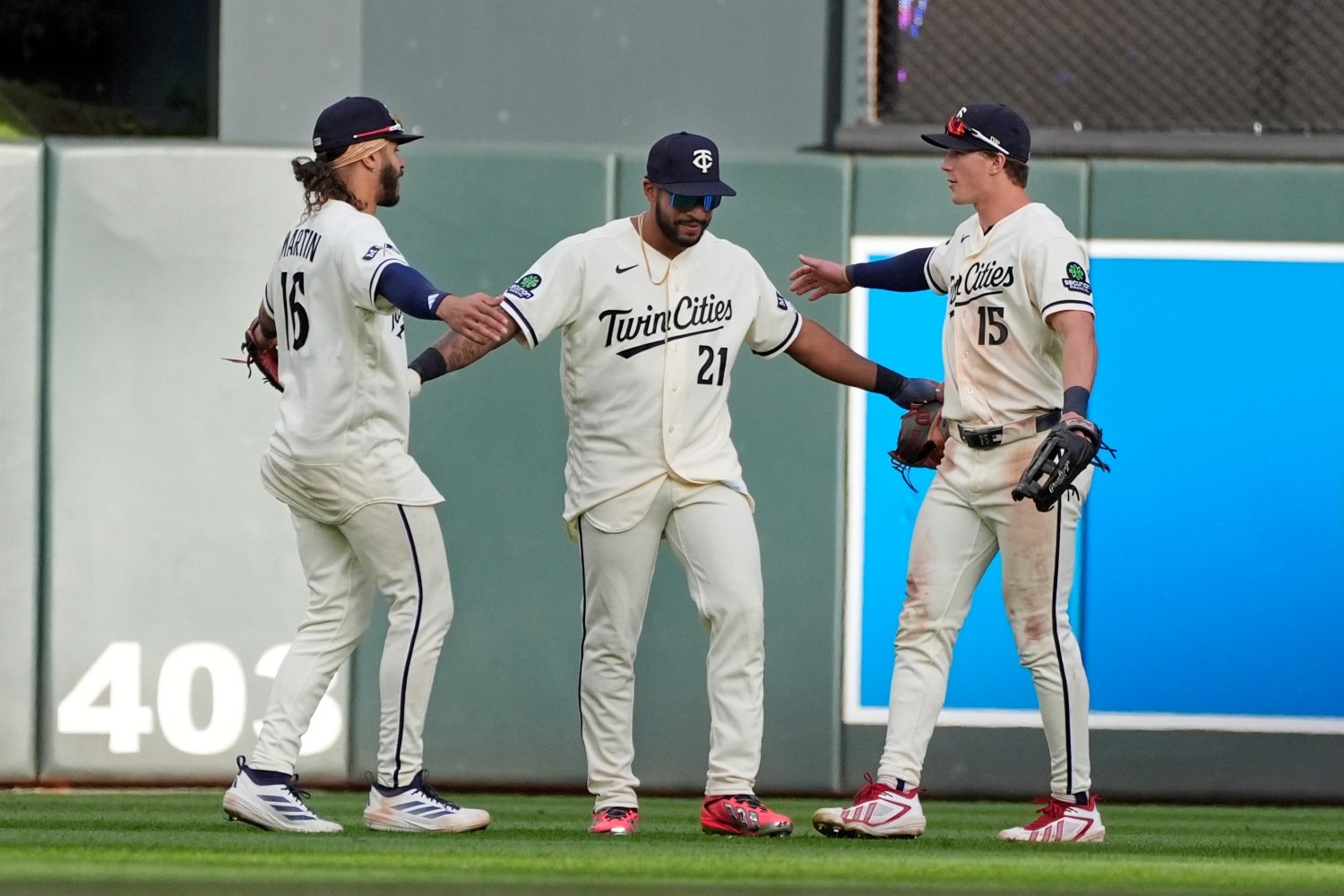 Luke Keaschall is 188 games into his MLB career. He’s a career .281 hitter with a .370 on-base percentage, and has stolen 31 bases at a 76% clip. The last time the Twins had a leadoff hitter this good was in 2022 with Luis Arraez, who hit .314 across four seasons in Minnesota. And like Arraez, no one has any idea where to put him on the field. Keaschall has been one of the worst defenders in baseball, splitting time between second base, center field, and right field. He’s accumulated a league-worst -19 defensive runs saved (DRS) between the three positions, meaning that he’s been 19 runs worse than a merely average defender. Those 19 runs equal about two wins lost in WAR, as well. Even if you’re not a defensive stats believer, you’ve watched enough Keachall misplays to know that his defense is an issue. He’s struggled to read balls off the bat in the outfield, made poor throwing decisions, and his lack of arm strength disqualifies him from completing many plays. Arraez never put up a defensive season this bad, but he was suspect with the glove for his whole Twins tenure. He was worth -11 DRS in 2019, with 9 of those lost runs coming at his natural position, second base. During his time in Minnesota, he was closer to average, though he fluctuated from year-to-year. For most of Arraez’s Twins tenure, he bounced around defensive positions. He played second, third, shortstop, and left field as a rookie in 2019. He stuck at second base in 2020, but in 2021, he played more third than second and spent a little time in left field, and in 2022, he played first base, with some second and a bit of third sprinkled in. He also was the designated hitter 47 times during that four-year stretch, 42 of which came after 2020, when he was replaced by Jorge Polanco as Minnesota’s primary second baseman. Because Arraez ranged from bad to middle-of-the-road defensively, the Twins felt comfortable playing him in whatever hole the lineup had in a given day. Sometimes this would change from day to day. At other times, he was filling in for an injured teammate on more of a long-term basis. But the equation was simple: he’s not going to be a plus defender at any position, so just stick him in the lineup where needed. Could this be the route with Keaschall as well? There are a few paths the Twins could take next season to keep his bat in the lineup every day. Play Keaschall Everyday in Left (or Right) Field Analyzing Keaschall in a vacuum, planting him in left field is probably the most straightforward way to keep him in the lineup every day. This is especially true if there’s a belief that Keaschall’s ability to read fly balls will improve with practice; he’s only played 717 innings in the outfield as a professional. He has the raw athleticism to get to balls, and his weak arm is mitigated by moving out of right field. The issue, though, is that Keaschall’s situation can’t be analyzed in a vacuum. Top prospects Walker Jenkins and Emmanuel Rodriguez have debuted this season, both of whom are natural outfielders. Adding the center field presence of Byron Buxton, the Twins’ outfield is crowded. Not only are all three players better outfielders than Keaschall, but they also probably have higher offensive ceilings as well (this is no guarantee, as Keaschall has set a high bar already, hitting about 20% better than an average hitter for his career). Planting Keaschall in left field squeezes one of Jenkins and Rodriguez out of the picture when Buxton is healthy, and that seems not to be something the Twins want to do. Jenkins is a top-20 prospect across baseball and has played himself to the big leagues at age 21. Rodriguez, who has been on top-100 lists for half a decade, is out of options next season, and thus needs to stick on the major-league roster or be traded. It’s a tough proposition. Send Keachall Back to the Dirt The infield is also a little crowded heading into next season, with Brooks Lee, Kaelen Culpepper, Kody Clemens, and Royce Lewis currently penciled into spots and Marek Houston potentially being an option by midseason. But if any of those options—particularly Clemens or Lewis—were to be moved over the offseason, there could be room at first or second. Keaschall played some first base in the minors when playing through a torn UCL. Arraez himself has turned into a better defender at second base after being given the chance to play at the keystone full-time this season for San Francisco and Philadelphia, accumulating 13 outs above average (OAA). He’s still been mediocre by DRS (-3), and the eye test suggests he’s closer to average than one of the best defensive second basemen in baseball, but given that he was moved off the position to be a 5’10” first baseman, it’s a very positive development Many fans know the oft-repeated anecdote about how Corey Koskie was a dreadful third baseman at his debut, but after thousands of reps he became a good defender. Players can improve defensively, but it would be nice if Twins fans had a second example of this happening. Arraez’s improvements conspicuously coincided with working with esteemed fielding coach Ron Washington in San Francisco. It may be wishful thinking to believe Keaschall can make these same improvements. Maybe two years out from Tommy John surgery, his throwing will improve, but there are still other warts. Play Keaschall Every Day at Designated Hitter Many probably scoff at this proposition because of Keaschall’s offensive profile. But the most basic answer to “Where do we play a good hitter who’s bad in the field?” is “designated hitter.” No, Keaschall is not the aging, burly slugger that you might imagine when you close your eyes and think of a designated hitter, but he is a very productive hitter who can have his defensive woes mitigated by simply not grabbing a glove. However, Keachall has thus far been a 20%-above-average hitter by wRC+, given his doubles power and high on-base percentage. The average designated hitter this season has mustered a slash line just 5% above average, compared to left field at 2% above average or even first base, which is 15% above average. The bar for a full-time DH should be higher than a 105 wRC+, but even using first base’s 115 as a benchmark, Keaschall’s 120 career wRC+ is solid. It’s not perfect, but it’s workable, and it keeps one of the Twins’ key cogs in the lineup every day. The Luis Arraez Approach As a Twin, Arraez never played more than 65 games at a single position during a year (first base in 2022). The Twins could use a similar approach with Keaschall, though maybe not to the same extreme, or with the same positions. Keaschall can play second base, the corner outfield, center field, and first base. None of them are pretty—center field was practically a disaster—and we haven’t seen him play first base in the majors. But in moderation, maybe some time bouncing around won’t hurt the Twins. Let’s use this example as a thought exercise. About a third of the team’s games are against left-handed starters. Both Jenkins and Rodriguez are lefties, and even if you want them to face lefties, maybe you can agree to have the two rookies split reps in right field against southpaws, turning left field over to Keaschall those days. That’s hypothetically 54 games in left field without cutting into Jenkins and Rodriguez games against righties. There are 108 games left in the schedule. Say Keaschall is the DH for 60 of them. He’s the team’s primary DH, but he’s not an everyday DH, which allows 102 days at DH for other Twins. Between games in left against lefties and DH days against righties, we’ve already accounted for 114 games of Luke Keaschall. Even assuming he will play all 162 games, you only need to find a spot for him 48 times. You don’t want Keaschall being your second baseman every day. But can you stomach a dozen starts at second base? That’s two games a month. Could you bear the same at first base? Maybe there’s an injury to one or more of (perhaps the most injury-prone outfield in baseball) Buxton, Jenkins, and Rodriguez, and he gets some more action in a corner outfield spot. Those other 48 games fill up quickly, even without accounting for routine days off. There’s probably something to be said for just sticking him at DH when he’s not in left field, simplifying his workload and keeping him off the dirt, but adding that wrinkle helps the team remain flexible. The point is that it’s not easy to find a way to fit Keaschall into the lineup with the team as currently (and projectedly, for next season) constructed, whether that be because the outfield is crowded or because he doesn’t have a standard profile for a first baseman or DH. It might require some creativity to make it work, but one thing is certain: the Twins need to find a way to do it.

