



Cody Schoenmann
-
Posts
775 -
Joined
-
Last visited
-
Days Won
1
5 Followers


.thumb.jpeg.b5c919baf13177470474e68ec54e3e91.jpeg)
Recent Profile Visitors
35,415 profile views


Cody Schoenmann's Achievements






-
 nclahammer reacted to an article:
All Bridge Catchers Lead to Victor Caratini
nclahammer reacted to an article:
All Bridge Catchers Lead to Victor Caratini
-
Andy MacPhail reacted to an article:
All Bridge Catchers Lead to Victor Caratini
-
DannySD reacted to an article:
All Bridge Catchers Lead to Victor Caratini
-
Patzky reacted to an article:
All Bridge Catchers Lead to Victor Caratini
-
tarheeltwinsfan reacted to an article:
All Bridge Catchers Lead to Victor Caratini
-
thelanges5 reacted to an article:
All Bridge Catchers Lead to Victor Caratini
-
 Image courtesy of Bruce Kluckhohn-Imagn Images Realistically, there's very little chance that Ryan Jeffers remains with the Minnesota Twins in 2027. The team will get to decide, shortly after the end of the World Series, whether to extend him the qualifying offer (worth just over $23 million for one year), but even if they do, he might well reject it and seek a multi-year deal elsewhere. The way the organization values and deploys catchers makes a big expenditure to keep Jeffers unlikely. Watching Jeffers leave will be a somber experience for Twins Territory. The second-round draft pick developed into one of baseball’s best offensive catchers. He has also become a beloved personality for fans and media. These plus traits are why the Twins could be priced out of a reunion with the 29-year-old. Immense optimism surrounds the position for the team in the long term, with top prospect Vahn Lackey succeeding Jeffers as the club’s backstop as soon as next summer. Still, the club will need to bridge the gap between the Jeffers and Lackey Eras early next season, leaving team decision-makers in a bind. Victor Caratini is the most obvious bridge. He's entering the second half of a two-year, $14-million deal signed last offseason. The 33-year-old hit .220/.312/.315 with seven home runs and a 79 wRC+ over 382 plate appearances in 2026. He was also a plus receiver behind the plate, sporting plus blocking and framing metrics, while netting 2.2 Runs Above Average on challenges. However, he was one of the weakest backstops in baseball against the running game, with an abysmal 2.04-second average pop time that led to six fewer runners being caught than expected. Jeffers was similarly atrocious at stopping runners. It often felt like basestealers could run freely against the Twins. (Indeed, only two teams allowed more steals, and no team caught a lower percentage of runners in the attempt.) This was one of Minnesota’s more glaring shortcomings last season, functioning as a significant hindrance to the club’s ability to suppress runs. Caratini has never been able to effectively suppress base-stealing efforts. There’s no reason to believe he will suddenly be able to in 2027. As noted earlier, he’s also an offensive liability, but given his plus receiving skills, knack for reversing balls into strikes, and (arguably most importantly) $7-million price tag, the switch-hitting veteran is all but guaranteed to be the club’s primary catcher next Opening Day. Caratini catching four or five days a week is not ideal, particularly if he hits at a rate like last season's. (But things could be worse. At least they’re not paying J.T. Realmuto $15 million next season, right?) As things stand, Caratini will soon be the only catcher on Minnesota’s 40-man roster. Alex Jackson is still with the organization and under team control next season, but only if they take the proactive step of putting him back on the 40-man by the end of this month. I’d be content with the club entering next season with Jackson as Caratini’s backup. He performed well at the plate in 2026, hitting .304/.342/.406 (good for a 112 wRC+) over 73 plate appearances. The 30-year-old also had one of the best pop times last season, resulting in him being far better at suppressing the run game than Jeffers and Caratini. Caratini is far better at receiving, framing, and challenging than Jackson is. In theory, the tandem could function as counterbalances for one another. The damage of Caratini’s inability to suppress base runners is mitigated by that being Jackson’s strength, and vice versa. Unfortunately, that’s not how the sport works, in practice. Starting Caratini only against teams who don't run isn't realistic, and the Twins don't have enough pitchers who can live with a lesser receiver to lean on Jackson more often. (Nor, in all likelihood, would Jackson hit as well in a more regular, exposed role.) Caratini’s and Jackson’s shortcomings will remain on display until Lackey (an elite all-around catcher) takes over the position full-time. They're a tolerable stopgap, but the team could still aim higher. The only desirable non-Jeffers impending free agent catchers are Carson Kelly and Tyler Stephenson. Kelly is a far better option, but he will likely demand a multi-year contract, similar to what Caratini got last season. Stephenson is a better hitter than Caratini and Jackson and might be available on a one-year deal, or at least a low-risk, high-reward two-year pact. However, he's arguably the worst defender of the four, diminishing the impact of his just-above-average bat. I wouldn’t be against Minnesota pairing Stephenson with Caratini. He or Kelly could come in on a two-year deal and be the bridge's bridge, as it were, working in tandem with Caratini for 2027 and alongside Lackey in 2028, when Caratini's contract is up. Austin Hedges, James McCann, and Kyle Higashioka are also likely to be available, but the Twins might as well roll with Jackson, if they're considering any of those options. Five years after being the No. 1 overall pick in the MLB Draft, Pirates catcher Henry Davis could be available via trade. Of course, he has a Derek Shelton connection, having played under him for three seasons in Pittsburgh. Davis has yet to meet expectations at the plate, generating a career 55 wRC+ over 958 plate appearances. In fact, 2026 was his first positive-fWAR season in the majors, generating 0.6. The driving factor in his progression was that the 27-year-old was one of the best defensive catchers in baseball, being a plus receiver and near-elite run game suppressor. (He was slightly below-average at challenging.) His polished defensive skills make him an interesting target who could benefit from a change of scenery. Under team control until the end of the 2029 season, Davis could also tandem with Lackey, solidifying the position for years to come. The Twins probably wouldn’t have to surrender much prospect capital to acquire Davis, given his lackluster performance at the plate. Pittsburgh appears set at the position long-term, with Rafael Flores Jr. and Endy Rodriguez. Between veteran options in Kelly, Stephenson, Hedges, McCann, and Higashioka or team-controlled trade candidates in Davis, Luis Torrens, Carlos Narváez, or Austin Wells (especially if Jeffers signs with the Yankees), there are plenty of external options Minnesota could acquire. The Twins would be wise to invest in a higher-upside partner for Caratini than Jackson. Twins Territory should prepare for Caratini to make the bulk of starts behind the plate until Lackey’s highly-anticipated arrival. Maybe the wait will make the payoff a bit sweeter. View full article
 -
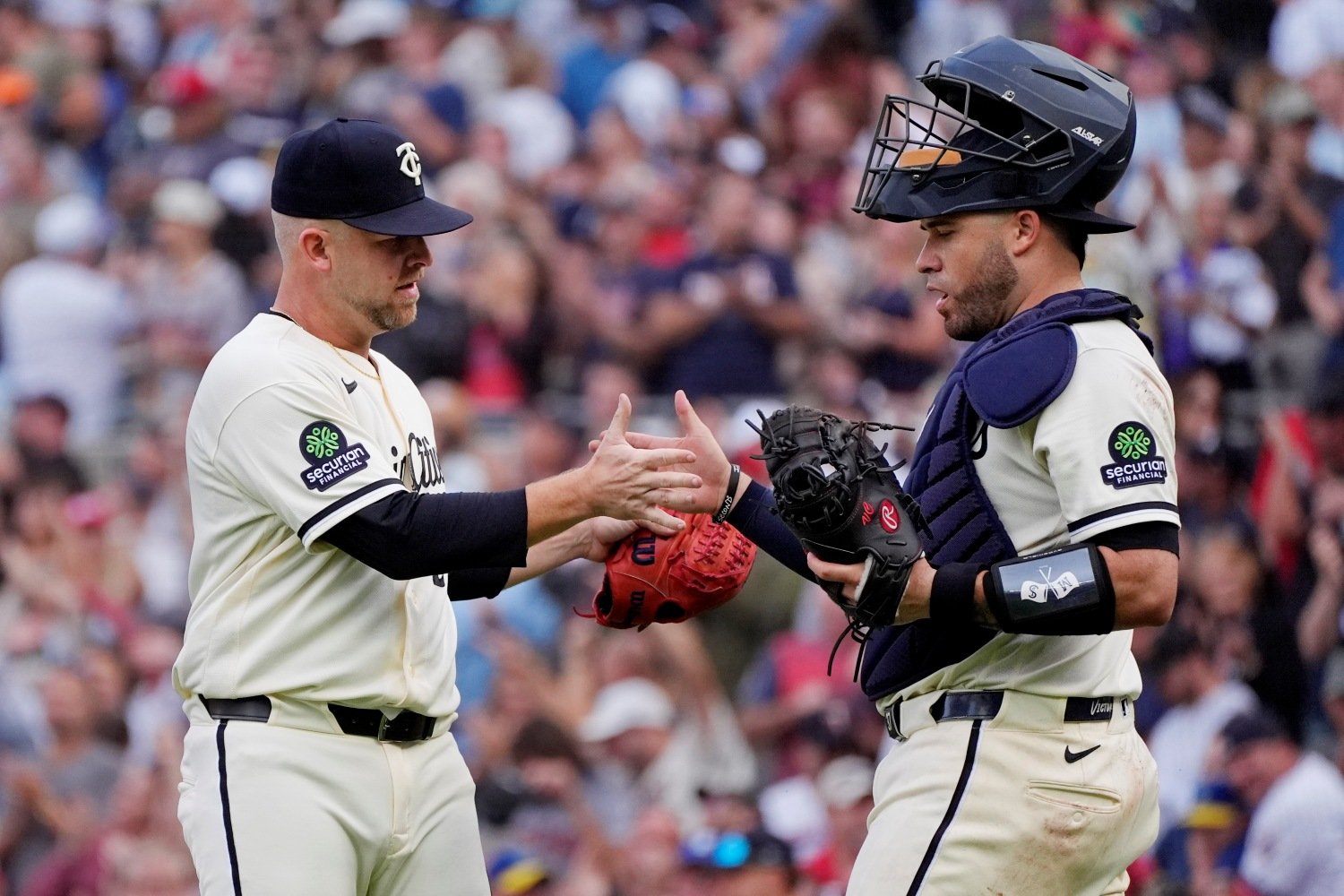 Realistically, there's very little chance that Ryan Jeffers remains with the Minnesota Twins in 2027. The team will get to decide, shortly after the end of the World Series, whether to extend him the qualifying offer (worth just over $23 million for one year), but even if they do, he might well reject it and seek a multi-year deal elsewhere. The way the organization values and deploys catchers makes a big expenditure to keep Jeffers unlikely. Watching Jeffers leave will be a somber experience for Twins Territory. The second-round draft pick developed into one of baseball’s best offensive catchers. He has also become a beloved personality for fans and media. These plus traits are why the Twins could be priced out of a reunion with the 29-year-old. Immense optimism surrounds the position for the team in the long term, with top prospect Vahn Lackey succeeding Jeffers as the club’s backstop as soon as next summer. Still, the club will need to bridge the gap between the Jeffers and Lackey Eras early next season, leaving team decision-makers in a bind. Victor Caratini is the most obvious bridge. He's entering the second half of a two-year, $14-million deal signed last offseason. The 33-year-old hit .220/.312/.315 with seven home runs and a 79 wRC+ over 382 plate appearances in 2026. He was also a plus receiver behind the plate, sporting plus blocking and framing metrics, while netting 2.2 Runs Above Average on challenges. However, he was one of the weakest backstops in baseball against the running game, with an abysmal 2.04-second average pop time that led to six fewer runners being caught than expected. Jeffers was similarly atrocious at stopping runners. It often felt like basestealers could run freely against the Twins. (Indeed, only two teams allowed more steals, and no team caught a lower percentage of runners in the attempt.) This was one of Minnesota’s more glaring shortcomings last season, functioning as a significant hindrance to the club’s ability to suppress runs. Caratini has never been able to effectively suppress base-stealing efforts. There’s no reason to believe he will suddenly be able to in 2027. As noted earlier, he’s also an offensive liability, but given his plus receiving skills, knack for reversing balls into strikes, and (arguably most importantly) $7-million price tag, the switch-hitting veteran is all but guaranteed to be the club’s primary catcher next Opening Day. Caratini catching four or five days a week is not ideal, particularly if he hits at a rate like last season's. (But things could be worse. At least they’re not paying J.T. Realmuto $15 million next season, right?) As things stand, Caratini will soon be the only catcher on Minnesota’s 40-man roster. Alex Jackson is still with the organization and under team control next season, but only if they take the proactive step of putting him back on the 40-man by the end of this month. I’d be content with the club entering next season with Jackson as Caratini’s backup. He performed well at the plate in 2026, hitting .304/.342/.406 (good for a 112 wRC+) over 73 plate appearances. The 30-year-old also had one of the best pop times last season, resulting in him being far better at suppressing the run game than Jeffers and Caratini. Caratini is far better at receiving, framing, and challenging than Jackson is. In theory, the tandem could function as counterbalances for one another. The damage of Caratini’s inability to suppress base runners is mitigated by that being Jackson’s strength, and vice versa. Unfortunately, that’s not how the sport works, in practice. Starting Caratini only against teams who don't run isn't realistic, and the Twins don't have enough pitchers who can live with a lesser receiver to lean on Jackson more often. (Nor, in all likelihood, would Jackson hit as well in a more regular, exposed role.) Caratini’s and Jackson’s shortcomings will remain on display until Lackey (an elite all-around catcher) takes over the position full-time. They're a tolerable stopgap, but the team could still aim higher. The only desirable non-Jeffers impending free agent catchers are Carson Kelly and Tyler Stephenson. Kelly is a far better option, but he will likely demand a multi-year contract, similar to what Caratini got last season. Stephenson is a better hitter than Caratini and Jackson and might be available on a one-year deal, or at least a low-risk, high-reward two-year pact. However, he's arguably the worst defender of the four, diminishing the impact of his just-above-average bat. I wouldn’t be against Minnesota pairing Stephenson with Caratini. He or Kelly could come in on a two-year deal and be the bridge's bridge, as it were, working in tandem with Caratini for 2027 and alongside Lackey in 2028, when Caratini's contract is up. Austin Hedges, James McCann, and Kyle Higashioka are also likely to be available, but the Twins might as well roll with Jackson, if they're considering any of those options. Five years after being the No. 1 overall pick in the MLB Draft, Pirates catcher Henry Davis could be available via trade. Of course, he has a Derek Shelton connection, having played under him for three seasons in Pittsburgh. Davis has yet to meet expectations at the plate, generating a career 55 wRC+ over 958 plate appearances. In fact, 2026 was his first positive-fWAR season in the majors, generating 0.6. The driving factor in his progression was that the 27-year-old was one of the best defensive catchers in baseball, being a plus receiver and near-elite run game suppressor. (He was slightly below-average at challenging.) His polished defensive skills make him an interesting target who could benefit from a change of scenery. Under team control until the end of the 2029 season, Davis could also tandem with Lackey, solidifying the position for years to come. The Twins probably wouldn’t have to surrender much prospect capital to acquire Davis, given his lackluster performance at the plate. Pittsburgh appears set at the position long-term, with Rafael Flores Jr. and Endy Rodriguez. Between veteran options in Kelly, Stephenson, Hedges, McCann, and Higashioka or team-controlled trade candidates in Davis, Luis Torrens, Carlos Narváez, or Austin Wells (especially if Jeffers signs with the Yankees), there are plenty of external options Minnesota could acquire. The Twins would be wise to invest in a higher-upside partner for Caratini than Jackson. Twins Territory should prepare for Caratini to make the bulk of starts behind the plate until Lackey’s highly-anticipated arrival. Maybe the wait will make the payoff a bit sweeter.
- 31 comments
-
- 6
-
-
- victor caratini
- ryan jeffers
- (and 5 more)
-
nclahammer reacted to an article:
The Minnesota Twins Pitching Revolution Will Be Televised
-
ashbury reacted to a post in a topic:
The Minnesota Twins Pitching Revolution Will Be Televised
-
 ashbury reacted to a post in a topic:
The Minnesota Twins Pitching Revolution Will Be Televised
ashbury reacted to a post in a topic:
The Minnesota Twins Pitching Revolution Will Be Televised
-
Nashvilletwin reacted to a post in a topic:
The Minnesota Twins Pitching Revolution Will Be Televised
-
Image courtesy of Durham Bulls Last Wednesday, the Minnesota Twins named Brian Reith as their new pitching coach, replacing long-time predecessor Pete Maki. Operating under the same title for the Durham Bulls (Tampa’s Triple-A affiliate) for the past five seasons, Reith draws little fanfare himself. As a minor league pitching coach over the past half-decade, he is not well known among those who primarily follow the majors. Instead, his appeal lies entirely in the parent club he developed pitchers for, with many having a Pavlov’s dog-type positive reaction to seeing “Rays.” Justifiably so. Tampa has been a pioneer in the analytical revolution, often assembling competitive rosters with one of the lowest payrolls in baseball. There is a particular shine around the organization as they just clinched a World Series berth, operating as one of the final three clubs remaining alongside other small-market darlings in Cleveland and Milwaukee. The Rays have been particularly keen on maximizing their pitching talent, deploying the AL’s second-best pitching staff of the 2020s, according to FanGraphs' Wins Above Replacement (fWAR). Despite the stereotype that small-market teams maximize pitching talent through international free agency and the draft, Tampa’s success stems from being hyperactive in the trade market. For example, their best starting pitcher (Drew Rasmussen) was acquired from Milwaukee in 2021. The rest of their four-pitcher starting rotation (Freddy Peralta, Griffin Jax, and Nick Martinez) were also acquired through trade or free agency in the past year-and-a-half. Also, elite closer Bryan Baker was acquired in a trade with Baltimore in July, 2025, with the rest of the bullpen being entirely comprised of external additions, sans 2020 draft selection Ian Seymour. This level of hyperactivity on the trade market is the product of the club’s president of baseball operations, Erik Neander, and the front office. It is impossible to know whether Twins top baseball executive Jeremy Zoll will operate similarly this offseason. If he does, however, his new pitching coach will be equipped to maximize those additions' strengths, having played an integral role in Tampa’s pitching development the past half-season. As I’m sure you’ve heard countless times, Joe Ryan and Taj Bradley worked with Reith in Durham. Again, it is impossible to know what impact he will have on their respective 2027 campaigns. Bradley thrived under Maki’s guidance in 2026, so there’s no guarantee he will take another step forward based on familiarity alone. Yet what Reith will bring to Minnesota was best summed up by another former Durham Bull, Garrett Acton, whom I spoke with in early August when Minnesota was at Rate Field facing the Chicago White Sox. Acton repeatedly referred to the concept of “2K” and “pre-2K,” like in the following quote: “(We prioritized) tightening up the arsenal," Acton noted when discussing what changes Maki and former assistant pitching coach Luis Ramirez made to his arsenal upon joining the Twins last season. "But the emphasis was still the same. Dominate the strike zone pre-2K, be able to expand, and use my best pitch 2K.” So, “Dominate the strike zone pre-2K” means attacking the strike zone before reaching two strikes. Subsequently, “2K” means a pitcher has reached two strikes and is trying to strike out the hitter. Again, Acton noted this was Maki’s and Ramirez’s preferred approach. Yet, he likely first developed this approach when Reith was his pitching coach in 2025. Counts are the most important element of baseball. There is a meaningful advantage to a pitcher starting an at-bat with an 0-1 count rather than a 1-0 count. Attacking the zone pre-two-strike counts and using your best pitch in two-strike counts have been Tampa’s organizational modus operandi for pitching over the past half-decade, and there’s no doubt Reith will bring that philosophy to Minnesota. On the surface, throwing strikes early and often is a simple concept. Every pitcher and pitching coach knows what they should be doing. But the first strike needs to be executed—easier said than done. Again, Twins pitchers knew they needed to throw strikes last season. There’s no doubt Maki communicated that. Yet, the club surrendered the fifth-most walks, playing a primary role in the Maki-led unit being one of the worst pitching staffs in baseball last season. What Reith is expected to be better at than Maki is deciding what arsenal changes need to be implemented and how and when to communicate them effectively. Tampa’s success is largely rooted in encouraging pitchers to take the path of least resistance, opting for simplicity over over-complication. They are transcendentalist pitching developers, inspired by Henry David Thoreau: simplify, simplify. For example, this will look like Bradley leaning heavily on his elite cutter; Ryan trusting his fastball even more; and Jeff Hoffman spamming his slider. Not every pitcher needs to tinker with a fastball variant all the time—Reith knows that. Don't be mistaken. Tampa’s simplicity isn’t rooted in being luddites. They have embraced advanced metrics and cutting-edge pitching technology. However, they communicate their desired results in an exceptionally simple manner and reduce the threat of miscommunication. For example, Tampa catchers place their glove in the middle of the strike zone for every pitch. One can expect Victor Caratini and whichever backstop joins him in 2027 to do the same. Instead of scrambling pitchers' brains with stringent location zones, they are encouraged to throw at the glove, leaning into their strengths. If Reith can effectively bring Tampa’s pitching philosophy, he could immediately drastically improve Minnesota’s pitching staff, potentially unlocking newfound success for the club’s top starters in Ryan, Bradley, and Pablo López while helping young starters Connor Prielipp and Zebby Matthews develop into steady, above-average arms. The same goes for the bullpen, which will again rely heavily on Hoffman, Andrew Morris, and another former Reith prodigee (Yoendrys Gómez) in high-leverage situations. Maximizing these arms could be the most consequential factor in Minnesota’s ability to earn its first postseason berth since 2023. View full article
-
The Minnesota Twins Pitching Revolution Will Be Televised
Cody Schoenmann posted an article in Twins
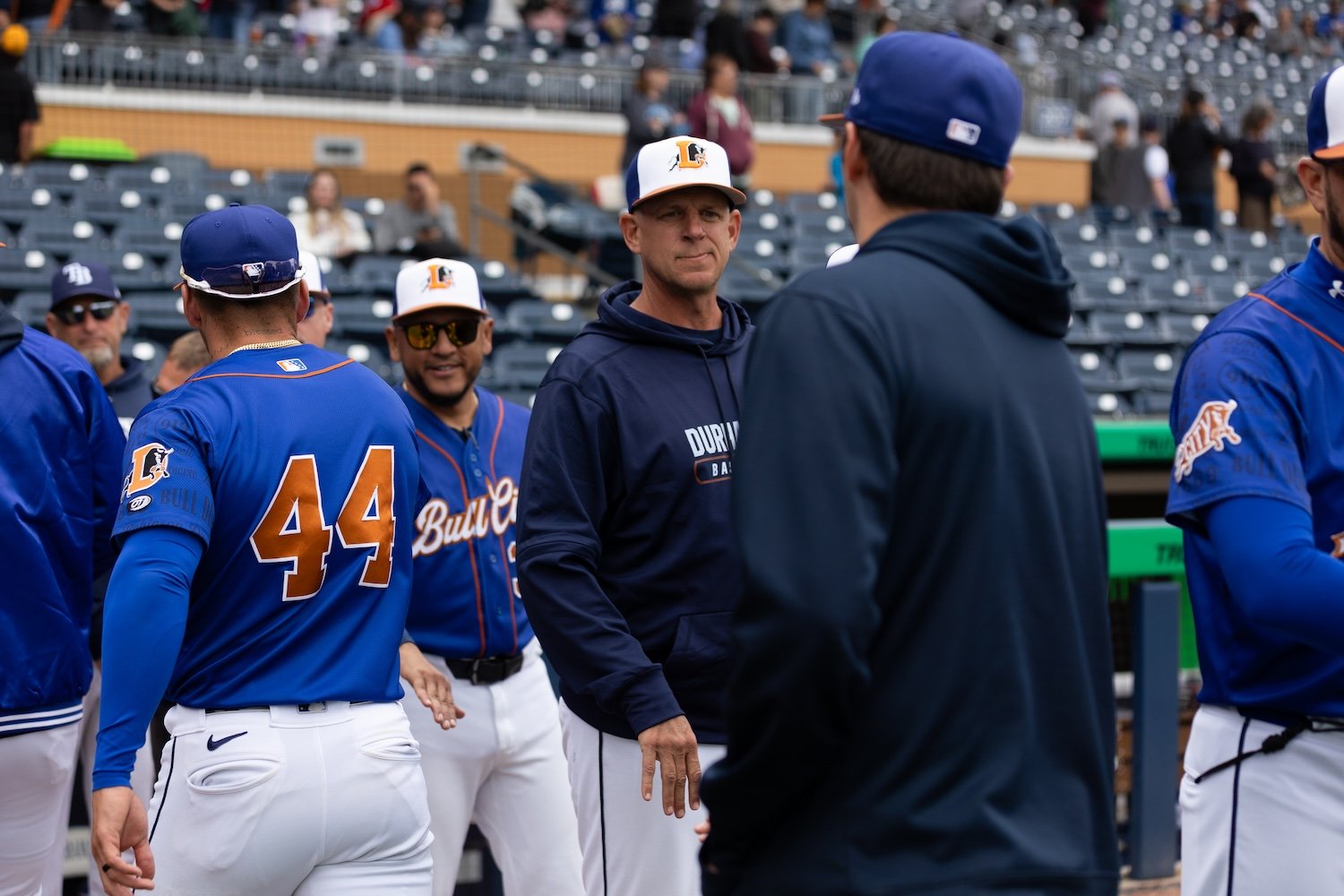 Last Wednesday, the Minnesota Twins named Brian Reith as their new pitching coach, replacing long-time predecessor Pete Maki. Operating under the same title for the Durham Bulls (Tampa’s Triple-A affiliate) for the past five seasons, Reith draws little fanfare himself. As a minor league pitching coach over the past half-decade, he is not well known among those who primarily follow the majors. Instead, his appeal lies entirely in the parent club he developed pitchers for, with many having a Pavlov’s dog-type positive reaction to seeing “Rays.” Justifiably so. Tampa has been a pioneer in the analytical revolution, often assembling competitive rosters with one of the lowest payrolls in baseball. There is a particular shine around the organization as they just clinched a World Series berth, operating as one of the final three clubs remaining alongside other small-market darlings in Cleveland and Milwaukee. The Rays have been particularly keen on maximizing their pitching talent, deploying the AL’s second-best pitching staff of the 2020s, according to FanGraphs' Wins Above Replacement (fWAR). Despite the stereotype that small-market teams maximize pitching talent through international free agency and the draft, Tampa’s success stems from being hyperactive in the trade market. For example, their best starting pitcher (Drew Rasmussen) was acquired from Milwaukee in 2021. The rest of their four-pitcher starting rotation (Freddy Peralta, Griffin Jax, and Nick Martinez) were also acquired through trade or free agency in the past year-and-a-half. Also, elite closer Bryan Baker was acquired in a trade with Baltimore in July, 2025, with the rest of the bullpen being entirely comprised of external additions, sans 2020 draft selection Ian Seymour. This level of hyperactivity on the trade market is the product of the club’s president of baseball operations, Erik Neander, and the front office. It is impossible to know whether Twins top baseball executive Jeremy Zoll will operate similarly this offseason. If he does, however, his new pitching coach will be equipped to maximize those additions' strengths, having played an integral role in Tampa’s pitching development the past half-season. As I’m sure you’ve heard countless times, Joe Ryan and Taj Bradley worked with Reith in Durham. Again, it is impossible to know what impact he will have on their respective 2027 campaigns. Bradley thrived under Maki’s guidance in 2026, so there’s no guarantee he will take another step forward based on familiarity alone. Yet what Reith will bring to Minnesota was best summed up by another former Durham Bull, Garrett Acton, whom I spoke with in early August when Minnesota was at Rate Field facing the Chicago White Sox. Acton repeatedly referred to the concept of “2K” and “pre-2K,” like in the following quote: “(We prioritized) tightening up the arsenal," Acton noted when discussing what changes Maki and former assistant pitching coach Luis Ramirez made to his arsenal upon joining the Twins last season. "But the emphasis was still the same. Dominate the strike zone pre-2K, be able to expand, and use my best pitch 2K.” So, “Dominate the strike zone pre-2K” means attacking the strike zone before reaching two strikes. Subsequently, “2K” means a pitcher has reached two strikes and is trying to strike out the hitter. Again, Acton noted this was Maki’s and Ramirez’s preferred approach. Yet, he likely first developed this approach when Reith was his pitching coach in 2025. Counts are the most important element of baseball. There is a meaningful advantage to a pitcher starting an at-bat with an 0-1 count rather than a 1-0 count. Attacking the zone pre-two-strike counts and using your best pitch in two-strike counts have been Tampa’s organizational modus operandi for pitching over the past half-decade, and there’s no doubt Reith will bring that philosophy to Minnesota. On the surface, throwing strikes early and often is a simple concept. Every pitcher and pitching coach knows what they should be doing. But the first strike needs to be executed—easier said than done. Again, Twins pitchers knew they needed to throw strikes last season. There’s no doubt Maki communicated that. Yet, the club surrendered the fifth-most walks, playing a primary role in the Maki-led unit being one of the worst pitching staffs in baseball last season. What Reith is expected to be better at than Maki is deciding what arsenal changes need to be implemented and how and when to communicate them effectively. Tampa’s success is largely rooted in encouraging pitchers to take the path of least resistance, opting for simplicity over over-complication. They are transcendentalist pitching developers, inspired by Henry David Thoreau: simplify, simplify. For example, this will look like Bradley leaning heavily on his elite cutter; Ryan trusting his fastball even more; and Jeff Hoffman spamming his slider. Not every pitcher needs to tinker with a fastball variant all the time—Reith knows that. Don't be mistaken. Tampa’s simplicity isn’t rooted in being luddites. They have embraced advanced metrics and cutting-edge pitching technology. However, they communicate their desired results in an exceptionally simple manner and reduce the threat of miscommunication. For example, Tampa catchers place their glove in the middle of the strike zone for every pitch. One can expect Victor Caratini and whichever backstop joins him in 2027 to do the same. Instead of scrambling pitchers' brains with stringent location zones, they are encouraged to throw at the glove, leaning into their strengths. If Reith can effectively bring Tampa’s pitching philosophy, he could immediately drastically improve Minnesota’s pitching staff, potentially unlocking newfound success for the club’s top starters in Ryan, Bradley, and Pablo López while helping young starters Connor Prielipp and Zebby Matthews develop into steady, above-average arms. The same goes for the bullpen, which will again rely heavily on Hoffman, Andrew Morris, and another former Reith prodigee (Yoendrys Gómez) in high-leverage situations. Maximizing these arms could be the most consequential factor in Minnesota’s ability to earn its first postseason berth since 2023.
- 40 comments
-
- 2
-
-
- brian reith
- joe ryan
- (and 3 more)
-
Three Seasons In, I Still Have No Idea What to Make of Brooks Lee
Cody Schoenmann posted an article in Twins
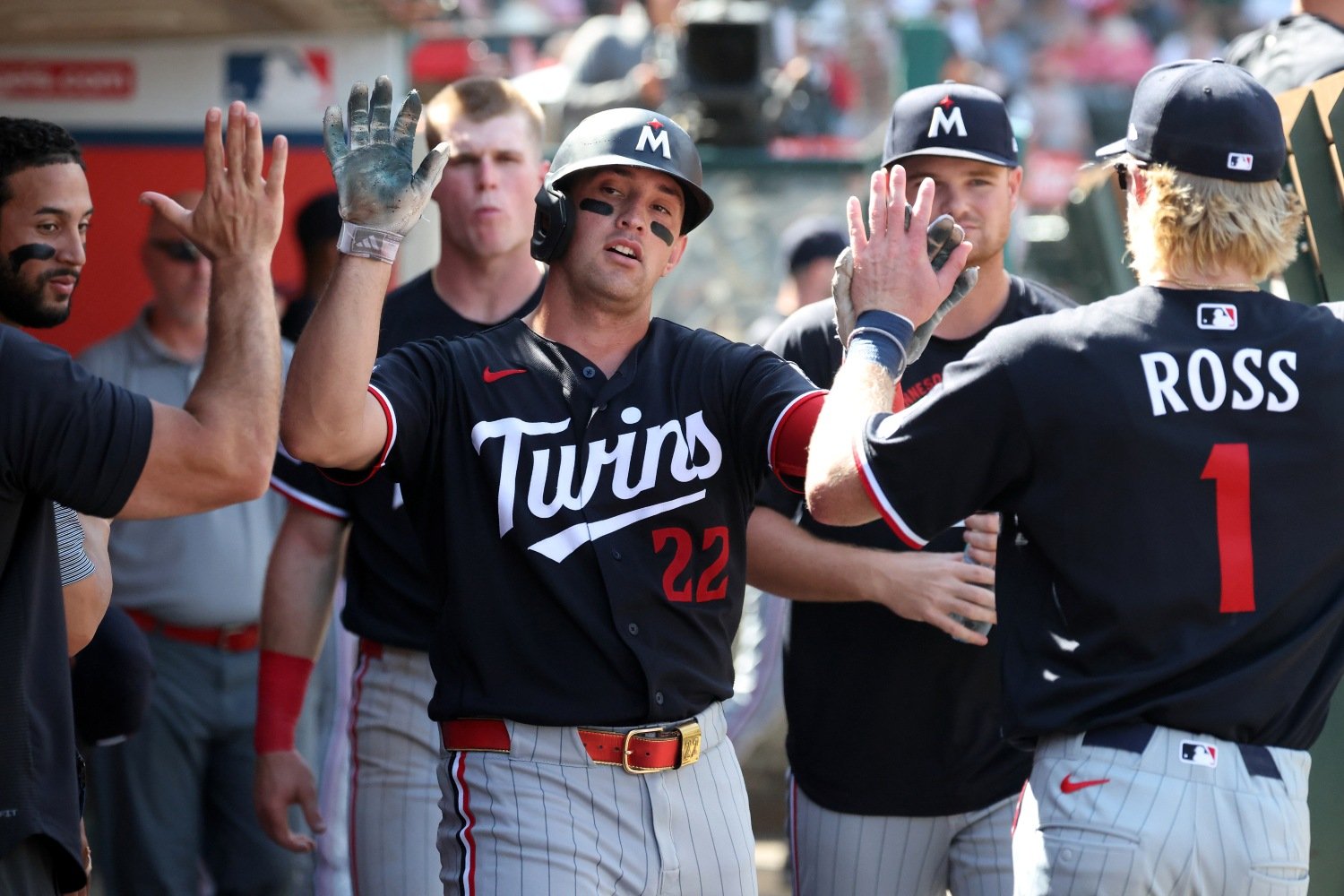 Brooks Lee broke out in 2026. There’s no debate around that. There is, howev debate about what qualifies as a “breakout campaign,” yes, but Lee’s case is clear-cut. Over his first 712 plate appearances, Lee managed only a 71 wRC+, where 100 is average and higher is better. He was similarly dreadful in the field, netting -6 Outs Above Average (OAA) while splitting his time between second base, third base, and short. As a result, the former first-round pick was worth 0.0 Wins Above Replacement at FanGraphs (fWAR) over 189 games. Despite being an offensive and defensive liability in his first two seasons in the majors, Lee flashed the raw talent that led to him getting selected eighth overall in the 2022 MLB Draft and to his rapid progression through the minors, showing plus power and plate discipline. His skill set was realized in 2026, with the 25-year-old hitting .253/.300/.407 with 24 home runs and a 101 wRC+ over 631 plate appearances. The driving factor behind Lee’s offensive turnaround was the switch-hitter’s ability to produce while hitting left-handed, earning a 120 wRC+ over 424 plate appearances in 2026 (compared to a combined 69 wRC+ over 482 plate appearances the prior two seasons). He regressed from the right side of the plate (63 wRC+ in 2026, compared to a combined 77 wRC+ the prior two seasons), but that failure is less consequential because he took roughly 200 fewer plate appearances from the right-handed batter’s box—no coincidence, of course, since most pitchers are right-handed. He also significantly improved defensively, transitioning from the primary shortstop to full-time third baseman in late May. Lee went from being one of the worst shortstops in baseball to an elite third baseman, netting 6 OAA over 284 attempts. Taking everything into account, Lee generated his first positive season at the plate and in the field, netting 2.9 fWAR. Lee generated the second-most fWAR on the Twins, second only to Luke Keaschall, who earned 3.0. If we strip away all context and analyze Lee’s performance by strictly looking at the metrics, he was the Twins' second-best player. Of course, that doesn’t feel true, and it probably isn’t. Byron Buxton is better than Lee, but he was hurt for a significant portion of the season. The same goes with Ryan Jeffers. Also, Joe Ryan is a better starting pitcher than Lee is a position player. However, injuries and a late-season collapse derailed his fWAR totals, placing him below Lee. Still, Lee was almost Minnesota’s most productive player this season. Yes, the club was bad, but that doesn’t happen by accident. He had to make meaningful improvements to take such a pronounced step forward—and he did, defensively. Yet, his underlying hitting metrics suggest he was largely the same player as in 2024 and 2025, making his 20-point jump in wRC+ feel unsustainable. He had poor bat speed again. He kept chasing pitches outside the zone. He rarely walked, and he made a ton of weak contact, similar to his first two seasons in the majors. So, what changed? Why was he a dramatically better hitter in 2026 than in 2025 and 2024? Despite most of his underlying metrics remaining unimpressive, he made a monumental shift in hitting philosophy in 2026, prioritizing quality of contact over contact itself. He matured into a quality-over-quantity bat. He was able to hit strikes in the air far more often in 2026 than the prior two seasons, resulting in more doubles and home runs (49) in 2026 than 2024 and 2025 combined (40). By seasoning his raw skills with a maturing approach at the plate, Lee became the hitter Twins Territory had long yearned for him to become. Combining that with an elite defensive profile, there’s no surprise he was almost a 3-WAR player. That said, his underwhelming underlying metrics shouldn’t be ignored. If his approach reverts to his pre-2026 form, he'll regress to a sub-replacement-level bat in 2027; that is a reality we must confront. And if that happens, there's a real chance he could hit his way out of being a full-time player. Moving to third and excelling at the position raises his floor, but still, a postseason-contending team can’t play a 69 wRC+ hitter every game. Alternatively, Lee could build off his breakout 2026 campaign, playing at an All-Star-caliber level early next season, solidifying himself as a core member of the next good Twins team. Either outcome is well within reason. Yes, this level of variance is (theoretically) possible for every major-league player. We just watched Cal Raleigh regress from an MVP-caliber catcher to one of the sport’s worst hitters in one season. Yet, Lee feels like one of the most volatile position players in baseball. Again, I say "feels" because this is largely a vibes-based analysis, but his underlying metrics make these doubts reasonable. Three seasons in, I don’t know what to make of Lee. He could regress into a bench bat; continue his current slightly above-average pace; or be the AL’s starting third baseman in the 2027 All-Star Game. None of these outcomes would shock me. That's not great news for the Twins, because it means one of their most-improved players this year can't be counted on to sustain that improvement next year. But it also underscores the upside of the roster, in microcosm.
 -
Brooks Lee broke out in 2026. There’s no debate around that. There is debate about what qualifies as a “breakout campaign,” yes, but Lee’s case is as clear-cut. Over his first 712 plate appearances, Lee manufactured a 71 wRC+, 29 points below league-average. He was similarly dreadful in the field, netting -6 Outs Above Average (OAA) mixing between second base, third base, and short. As a result, the former first-round pick netted 0.0 Wins Above Replacement at FanGraphs (fWAR) over 189 games, performing at a replacement-level rate. Despite being an offensive and defensive liability in his first two seasons in the majors, Lee flashed the raw talent that led to him getting selected eighth overall in the 2022 MLB Amateur Draft and his accelerated progression through the minors, showing plus power and plate discipline. His skill set was realized in 2026, with the 25-year-old hitting .253/.300/.407 with 24 home runs and a 101 wRC+ over 631 plate appearances. The driving factor behind Lee’s offensive turnaround was the switch-hitter’s ability to produce while hitting left-handed, earning a 120 wRC+ over 424 plate appearances in 2026 compared to a combined 69 wRC+ over 482 plate appearances the prior two seasons. He regressed from the right side of the plate (63 wRC+ in 2026 compared to a combined 77 wRC+ the prior two seasons). Yet, his regression is less consequential when he’s netting roughly 200 fewer plate appearances from the right-handed batter’s box. He also significantly improved defensively, transitioning from the primary shortstop to full-time third baseman in late May. Lee went from being one of the worst shortstops in baseball (netting -6 OAA over 167 attempts) to quickly becoming an elite third baseman, netting 6 OAA over 284 attempts. Undergoing a 12-point OAA swing, Lee generated his first positive season at the plate and in the field, netting 2.9 fWAR. Again, he accumulated 2.9 more fWAR in 2026 than his first two seasons in the majors: he underwent one of the more pronounced breakout 2026 campaigns in the sport. Lee generated the second-most fWAR on the Twins, second only to Luke Keaschall, who earned 3.0. If we are to strip all context and analyze Lee’s performance by strictly looking at the metrics, he was the Twins' second-best player. Of course, that doesn’t feel true, and it probably isn’t. Byron Buxton is better than Lee, but he was hurt for a significant portion of the season. The same goes with Ryan Jeffers. Also, Joe Ryan is a better starting pitcher than Lee is a position player. However, injuries and a late-season collapse derailed his fWAR totals, placing him below Lee. Still, Lee was almost Minnesota’s most productive player this season. Yes, the club was bad, but that doesn’t happen by accident. He had to make meaningful improvements to take such a pronounced step forward—and he did defensively. He is actually one of the best defensive third basemen in baseball now. Yet his underlying hitting metrics suggest he was largely the same player as in 2024 and 2025, making his 20-point jump in wRC+ feel unsustainable. He had poor bat speed again. He kept chasing pitches outside the zone. He rarely ever walked, and he made a ton of weak contact, similar to his first two seasons in the majors. So, what changed? Why was he a dramatically better hitter in 2026 than in 2025 and 2024? Despite most of his underlying metrics remaining unimpressive, he made a monumental shift in hitting philosophy in 2026, prioritizing quality of contact over contact itself. He matured into a quality-over-quantity bat, laying off pitches outside the zone less and making better contact on pitches in the zone. He was able to hit strikes in the air far more often in 2026 than the prior two seasons, resulting in him hitting more doubles and home runs (49) in 2026 than 2024 and 2025 combined (40). Maturing his plate approach with elite raw skills, Lee became the hitter Twins Territory had long yearned for him to become. Combining that with an elite defensive profile, there’s no surprise he was almost a 3-WAR player. That said, his underwhelming underlying metrics shouldn’t be ignored. If his approach converts back to his pre-2026 form, he will regress to a sub-replacement-level bat in 2027; that is a reality we must confront. And if that happens, there is a real chance he could hit his way out of being a full-time player. Moving to third and excelling at the position raises his floor, but still—a postseason-contending team can’t play a 69 wRC+ hitter every game. Alternatively, Lee could build off his breakout 2026 campaign, playing at an All-Star-caliber level early next season, solidifying himself as a core member of the next good Twins team. Either outcome is well within reason. And yes, this level of variance is possible for every major league player. We just witnessed Cal Raleigh regress from an MVP-caliber catcher to one of the sport’s worst hitters in one season. Yet, Lee feels like one of the most volatile position players in baseball. Again, I say feel because this is largely a vibes-based analysis, but his underlying metrics make these doubts reasonable. Three seasons in, I don’t know what to make of Lee. He could regress into a bench bat; continue his current slightly above-average pace; or be the AL’s starting third baseman in the 2027 All-Star Game—None of these outcomes would shock me. View full article
-
next time you talk about the GOAT fred durst make sure to....
- 47 replies
-
- 1
-
-
- ryan jeffers
- kody clemens
- (and 8 more)
-
remember when tracy porter picked Favre in the ‘09 nfc championship game? twins haven’t rebounded since
-
A Way-Too-Early Minnesota Twins 2027 Opening Day Roster Projection
Cody Schoenmann posted an article in Twins
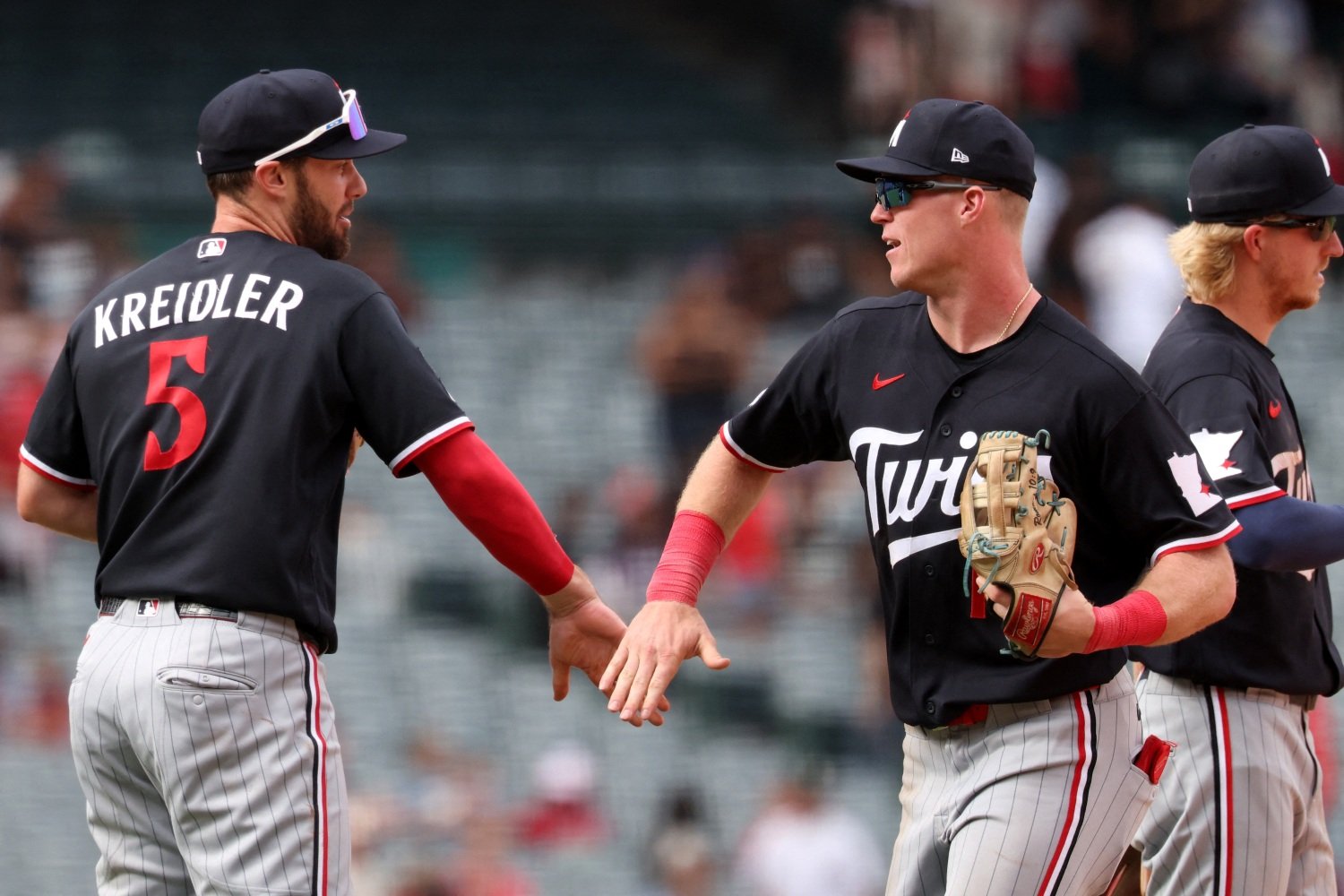 This 2026 Twins team makes me sad. The AL Central was more than winnable this year. But here we are, on track for another sub-.500 season. The vibe is much different, however, with top prospects Kaelen Culpepper, Walker Jenkins, and Emmanuel Rodríguez finally with the parent club, looking to guide them toward sustained postseason contention. Actually, yeah, let’s keep talking about the future. I don’t want to talk about the 2026 Twins anymore. Not even fluoxetine helps with my Twins-induced angst. Let’s get into projections! (Author’s note: Yes, yes, I know. Lockout, and all that. Still, baseball will happen in 2027. As Fred Durst so eloquently said, "You gotta have faith!") Catchers (2): Ryan Jeffers, Victor Caratini At this point, the consensus is that Minnesota will extend the qualifying offer to Jeffers, which will be around $23 million. Many believe he will decline it and pursue a more lucrative, long-term deal in free agency, which I understand. In fact, it’s what I think Jeffers should do. The Yankees could give him soooooooooooo much money. Still, I wouldn’t be shocked if he accepted the one-year qualifying offer, given the unique predicament players face this offseason. Admittedly, it would be a little anticlimactic for the Twins’ most substantial offseason investment to be a player already on the club. But there are worse things than rostering one of the best-hitting catchers in the sport on what is functionally a one-year, $23-million deal. If Jeffers returns, Caratini will again be his backup, completing the second season of a two-year, $14-million deal he signed last offseason. That’s fine. There are much, much worse tandems in the sport. Hey, at least the Twins aren’t paying J.T. Realmuto $15 million next season, right?! Regardless, one more season of Jeffers as the club’s primary catcher would be an ideal segue to Vahn Lackey taking over as the club’s long-term answer at the position. Infielders (6): Kody Clemens, Xavier Edwards, Brooks Lee, Kaelen Culpepper, Ryan Kreidler, Gabriel González The Twins can’t march into a 162-game season with Royce Lewis and Kody Clemens penciled in as the primary starters on the right side of the infield and expect to be serious postseason contenders—particularly Lewis. He’s been a below-average hitter for three seasons and is a defensive liability at every infield position, including first base. That being the case, I predict Minnesota will non-tender Lewis, redirecting the roughly $6 million he would have received in arbitration elsewhere. Minnesota could sign a free-agent first baseman (Jake Bauers, Ty France or Luis Arraez?) or trade for a high-ceiling option in St. Louis’s Alec Burleson. However, I’m predicting the club will acquire switch-hitting, speedy, high-OBP second baseman Xavier Edwards from the Miami Marlins to take over the position full-time, while shifting the power-hitting Clemens back down the defensive spectrum. Lee and Culpepper are the most exciting young left side of the infield since Miguel Sanó and Jorge Polanco in the late 2010s. Lee will be the primary third baseman, with Culpepper at short. Despite struggling at the plate, Kreidler is a plus defensive third baseman and shortstop, who will continue to mix in at second and in the outfield. He will also be out of minor-league options next season, giving him the inside edge over fellow utility infielder Ben Ross. González could mix in as a platoon partner with Clemens at first base, starting against left-handed starting pitchers, while also playing occasionally in the corner outfield spots. He'd probably be the 13th position player, seeing very little action and constantly at risk of being demoted to Triple-A St. Paul—unless the Twins wise up and learn how to use their whole bench, instead of just part of it. Outfielders (5): Byron Buxton, Walker Jenkins, Emmanuel Rodríguez, Luke Keaschall, Austin Martin There has never been a better opportunity to slide Buxton to a corner outfielder/designated hitter role. Both Rodríguez and Jenkins are viable major-league center fielders, with club decision-makers preferring Jenkins over Rodríguez at the position. Both are better defensive center fielders than Buxton at this point in their respective careers. Buxton will be on the other side of hip surgery by then, anyway; his days in the outfield might be numbered. Until (or if) that happens, however, the primary outfield configuration entering next season will probably be Jenkins, Buxton, and Keaschall, with Rodríguez mixing in at all three positions. This level of flexibility permits Twins decision-makers to move on from Trevor Larnach, non-tendering him this offseason. Martin could retain a similar platoon role as this season, starting in either corner outfield spot against left-handed pitching. As with Buxton, I’d prefer Keaschall receiving more DH opportunities, potentially taking over as the club’s primary option there with Josh Bell expected to depart. Being able to keep Keaschall’s bat in the lineup without worrying about defense would be a win-win for the player and the team. He will spend significant time in right field. However, it would be wise to give him and Buxton the majority of DH opportunities, thereby allowing Jenkins and Rodríguez to patrol two-thirds of the outfield almost every game. Starting Rotation (5): Pablo López, Joe Ryan, Taj Bradley, Dean Kremer, Mick Abel Much was made of the club’s inept bullpen and sluggish second-half offense. Yet, starting rotation woes were quietly the Twins' Achilles’ heel in 2026. So many games were quickly upended by early implosions from Bailey Ober, Zebby Matthews, Connor Prielipp, Mike Paredes, Kendry Rojas, Dean Kremer, and even frontline starters like Joe Ryan and Taj Bradley. Again, bad starts are a part of the sport. Every starter (not named Jacob Misiorowski) has them. Still, starting pitching needs to improve for Minnesota to return to the postseason in 2027. On paper, López, Ryan, and Bradley are a solid top of the rotation. At the same time, however, each could be viewed as an unknown quantity, with López returning from a torn UCL; Ryan undergoing another pronounced late-season fade; and Bradley having what is only his first above-average season as a major-league starter. Still, I'm confident these three can lead what could be a plus rotation. Abel impressed before undergoing arthroscopic surgery on his right elbow in July, and I'm optimistic he could thrive over a full, healthy season, potentially blossoming into a frontline starter. Despite having his worst season in the majors this year, Kremer has been steady since joining the Twins, all but guaranteeing the arb-eligible righty will be a member of Minnesota’s Opening Day 2027 starting rotation. Prielipp will probably be the organization’s sixth starting pitcher who could quickly join the parent club if performance concerns or injuries arise. (That is to say, he'll probably be in the rotation by Opening Day; I'm just not sticking my neck out as to which pitcher is going to get hurt.) Bullpen (8): Jeff Hoffman, Andrew Morris, Joe Jiménez, Yoendrys Gómez, Kody Funderburk, Tommy Nance, Anthony Banda, Zebby Matthews Beyond Jeffers returning and trading for Edwards, the bullpen is where the majority of Minnesota’s offseason activity could occur. Alternatively, it could look almost identical to how it does now. I’m predicting the latter will happen, with a few substantial shakeups. Twins decision-makers will make a splashy reliever addition this offseason, which I predict will be the club signing Joe Jiménez to a one-year deal. To preface, yes, I know Jiménez hasn’t pitched in the majors since 2024. However, his injury was leg-related, with him undergoing left knee articular cartilage surgery in November 2024. He missed this season with the same injury. However, he is now on a rehab assignment with Atlanta’s Triple-A affiliate, meaning he could be ready to pitch this postseason. When Jiménez last pitched, he was one of the best relievers in baseball. He also has the platonic ideal Twins reliever arsenal, throwing his four-seamer and slider a combined 96% of the time. I think Hoffman will enter next season as the club’s closer, given Gómez’s late-season struggles. Morris should continue operating in a high-leverage role, with the aforementioned Gómez also occupying a late-inning role early next season. Funderburk (out of minor-league options) and Banda could serve as a viable left-handed relief tandem, with Nance working in a mid-leverage role. Also, I project Matthews to earn the eighth and final bullpen spot. However, I expect Minnesota will continue to stretch him out as a starter, with him shuttling between Triple-A and the parent club as ever-important starting-pitching depth. Rojas, Paredes, David Festa, and Ryan Gallagher could occupy a similar role, with Travis Adams, Garrett Acton, Marco Raya, and potential offseason additions as priority Triple-A short-relief depth.
- 47 comments
-
- 8
-
-

-
- ryan jeffers
- kody clemens
- (and 8 more)
-
This team makes me sad. The AL Central was more than winnable this year—But here we are, on track for another sub-.500 season. The vibe is much different, however, with top prospects Kaelen Culpepper, Walker Jenkins, and Emmanuel Rodriguez finally with the parent club, looking to guide the club toward sustained postseason contention. Actually, yeah, let’s keep talking about the future. I don’t want to talk about the 2026 Twins anymore. Not even fluoxetine helps with my Twins-induced angst. Let’s get into projections! (Author’s note: Yes, yes, I know. Lockout, all that. Still, baseball will happen in 2027. As Fred Durst so eloquently said, "You gotta have faith!") Catchers (2): Ryan Jeffers, Victor Caratini At this point, the consensus is that Minnesota will extend the qualifying offer to Jeffers, which will be around $23 million. Many believe he will decline it and pursue a more lucrative, long-term deal in free agency—which I understand. In fact, it’s what I think Jeffers should do. The Yankees could give him soooooooooooo much money. Still, I wouldn’t be shocked if he accepted the one-year qualifying offer, particularly given the unique predicament players face this offseason. Admittedly, it would be a little anticlimactic for the Twins’ most substantial offseason investment to be a player already on the club. But there are worse things than rostering one of the best-hitting catchers in the sport on what is functionally a one-year, $23 million deal. If Jeffers returns, Caratini will again be his backup, completing the second season of a two-year, $14 million deal he signed with Minnesota last offseason—That’s fine. There’s much, much worse tandems in the sport. Also, I mean, hey, at least the Twins aren’t paying J.T. Realmuto $15 million next season, right!? Regardless, one more season of Jeffers as the club’s primary catcher would be an ideal segue to Vahn Lackey taking over as the club’s long-term answer at the position. Infielders (6): Kody Clemens, Xavier Edwards, Brooks Lee, Kaelen Culpepper, Ryan Kreidler, Gabriel Gonzalez The Twins can’t march into a 162-game season with Royce Lewis and Kody Clemens penciled in as the primary starters on the right side of the infield and expect to be serious postseason contenders—particularly Lewis. He’s been a below-average hitter for three seasons and is a defensive liability at every infield position, including first base. That being the case, I predict Minnesota will non-tender Lewis, redirecting the roughly $6 million he would have received in arbitration elsewhere. Minnesota could sign a free agent first baseman in Jake Bauers or Ty France or Luis Arraez or trade for a high-ceiling option in St. Louis’s Alec Burleson. However, I’m predicting the club will acquire switch-hitting, speedy, high-OBP second baseman Xavier Edwards from the Miami Marlins to take over the position full-time while shifting the power-hitting Clemens down the defensive spectrum to first, a position he has excelled at since joining the Twins. Lee and Culpepper are the most exciting young left side of the infield since Miguel Sano and Jorge Polanco in the late-2010s. Lee will be the primary third baseman with Culpepper at short. Despite struggling at the plate, Kreidler is a plus defensive third baseman and shortstop, who will continue to mix in at second and in the outfield. He will also be out of minor league options next season, giving him the inside edge over fellow utility infielder Ben Ross. Gonzalez could mix in as a platoon partner with Clemens at first base, starting against left-handed starting pitchers, while mixing in at the corner outfield. Yet he would likely serve as the 13th-position player, seeing very little action and constantly at risk of being demoted to Triple-A St. Paul. Outfielders (5): Byron Buxton, Walker Jenkins, Emmanuel Rodriguez, Luke Keaschall, Austin Martin There has never been a better opportunity to transition Buxton into a corner outfielder/designated hitter. Both Rodriguez and Jenkins are viable major league centerfielders, with club decision-makers preferring Jenkins over Rodriguez at the position. Still, both are likely better defensive center fielders than Buxton at this point in their respective careers. Also, the club would be wise to move Buxton down the defensive spectrum to the corner outfield while spending more time at designated hitter. Until (or if) that happens, however, the primary outfield configuration entering next season will likely be Jenkins, Buxton, and Keaschall, with Rodriguez mixing in at all three positions. Also, this level of flexibility permits Twins decision-makers to move on from Trevor Larnach, not tendering him this offseason. Martin could also retain a similar platoon role as this season, starting in either corner outfield spot against left-handed pitching. Like Buxton, I’d prefer Keaschall receiving more DH opportunities, potentially taking over the club’s primary option there with Josh Bell expected to depart this offseason. Being able to keep Keaschall’s bat in the lineup without worrying about defense would be a win-win for the player and the team. He will spend significant time in right field. However, it would be wise to give him and Buxton the majority of DH opportunities, thereby allowing Jenkins and Rodriguez to patrol two-thirds of the outfield almost every game. Starting Rotation (5): Pablo López, Joe Ryan, Taj Bradley, Dean Kremer, Mick Abel Much was made of the club’s inept bullpen and sluggish second-half offense. Yet, starting rotation woes were low-key the Twins' Achilles’ heel in 2026. So many games were quickly upended by early implosions from Bailey Ober, Zebby Matthews, Connor Prielipp, Mike Paredes, Kendry Rojas, Dean Kremer, and even frontline starters like Joe Ryan and Taj Bradley. Again, bad starts are a part of the sport. Every starter not named Jacob Misiorowski has them. Still, starting pitching needs to improve for Minnesota to return to the postseason in 2027. On paper, López, Ryan, and Bradley are a solid top of the rotation. At the same time, however, each could be viewed as an unknown quantity, with López returning from a torn UCL, Ryan undergoing another pronounced late-season regression, and Bradley manufacturing his first above-average season as a major league starter. Still, I am confident these three can lead what could be a plus rotation. Abel impressed before undergoing arthroscopic surgery on his right elbow in July, and I am optimistic he could thrive over a full-season sample, potentially blossoming into a frontline starter. Also, despite netting his worst season in the majors, Kremer has been steady since joining the Twins, all but guaranteeing the arb-3 eligible righty will be a member of Minnesota’s Opening Day 2027 starting rotation, which also happens to be his final season of team control. Prielipp will likely be the organization’s sixth starting pitcher who could quickly join the parent club if performance concerns or injuries arise. Bullpen (8): Jeff Hoffman, Andrew Morris, Joe Jiménez, Yoendrys Gómez, Kody Funderburk, Tommy Nance, Anthony Banda, Zebby Matthews Beyond Jeffers returning and trading for Edwards, the bullpen is where the majority of Minnesota’s offseason activity could occur. At the same time, it could look almost identical to how it does now. I’m predicting the latter will happen with a few substantial shakeups. I think Twins decision-makers will make a splashy reliever addition this offseason, which I predict will be the club signing Joe Jiménez to a one-year deal. To preface, yes, I know Jiménez hasn’t pitched in the majors since 2024. However, his injury was leg-related, with him undergoing left knee articular cartilage surgery in November, 2024. He missed this season with the same injury. However, he is undergoing a rehab assignment with Atlanta’s Triple-A affiliate, meaning he could be ready to pitch this postseason. When Jiménez last pitched, however, he was one of the best relievers in baseball. He also has the platonic ideal Twins reliever arsenal, throwing his four-seam and slider a combined 96% of the time. Regardless, I think Hoffman will enter next season as the club’s closer, given Gómez’s late-season struggles. Morris should also continue operating in a high-leverage role, with the aforementioned Gómez also likely occupying a late-inning role early next season. Funderburk (out of minor league options) and Banda could serve as a viable left-handed relief tandem with Nance working in a mid-leverage role. Also, I project Matthews to earn the eighth and final bullpen spot. However, I expect Minnesota will continue to stretch him out as a starter, with him shuttling between Triple-A and the parent club as ever-important starting-pitching depth. Rojas, Paredes, David Festa, and Ryan Gallagher could occupy a similar role, with Travis Adams, Garrett Acton, Marco Raya, and potential offseason additions as priority Triple-A short-relief depth. View full article

