


Twins Video
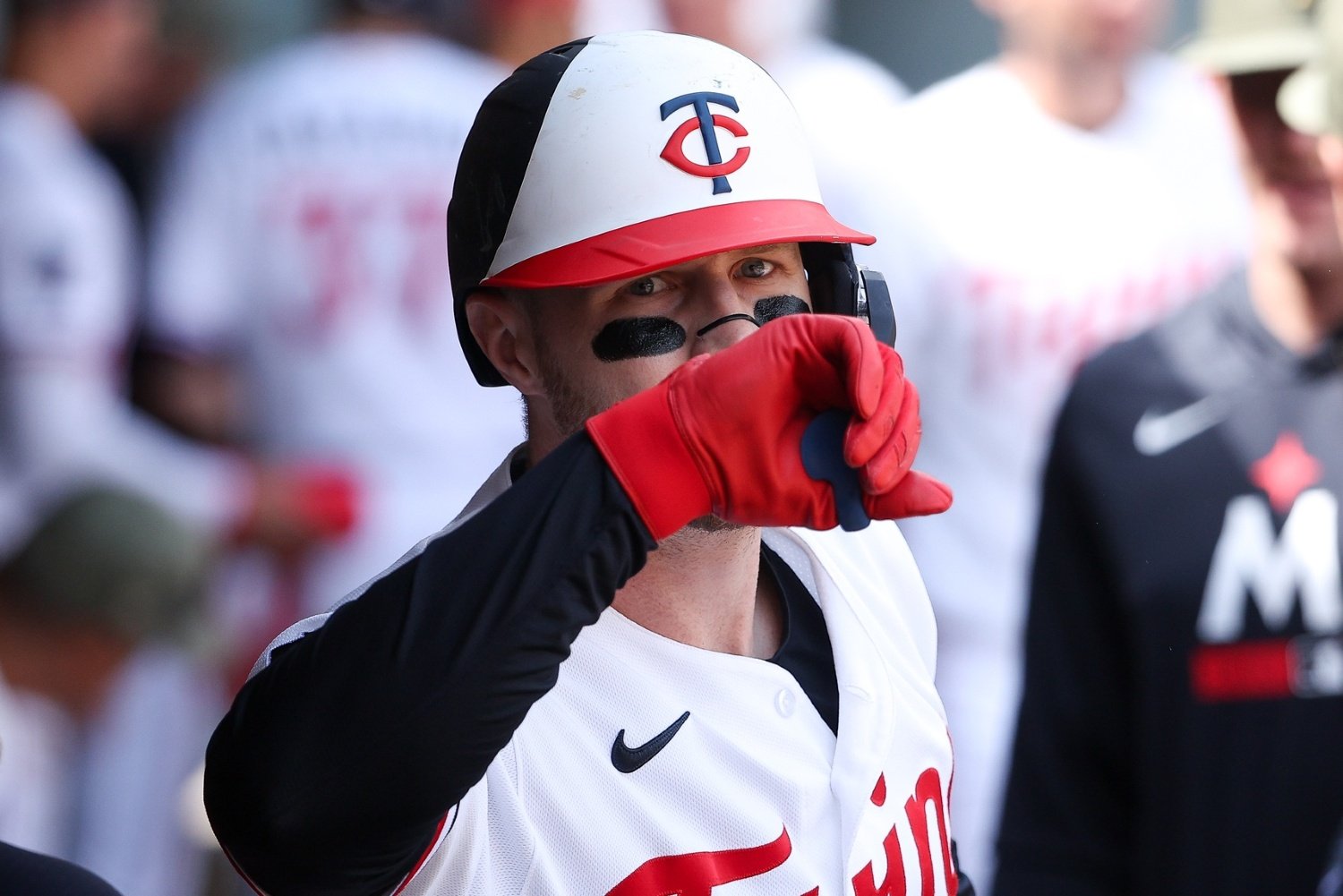
Ryan Jeffers was the best player on the Twins through the first quarter of the 2026 season. In 37 games, he slashed .295/.408/.541, with a .949 OPS about 60% above league average. That OPS is the best in the league among primary catchers with at least 140 plate appearances, and by fWAR, he ranks fifth, despite not playing since May 18. He’s also graded out as an average defender behind the plate, and he was on track to play about 120 games between catcher and DH. Simply put, he was playing like one of the premier catchers in baseball.
Due to Jeffers’s broken hamate bone, he will remain out of commission for another 4-6 weeks, by most estimates. He struck an optimistic tone when he met with reporters this week, but even he noted that he can't predict how things will go, and that he was advised not to rush it.
The Twins sorely miss him, as his backups Victor Caratini and Alex Jackson have combined to hit just over .200 and have not provided even average defense behind the plate. Jeffers is eligible for free agency this offseason. Let’s break down the case and context for him to receive a qualifying offer. There are a lot of moving pieces here, so buckle up.
What is a qualifying offer?
Per the current CBA, free agents are eligible to receive a qualifying offer from their current team once in their career. Since this is Jeffers's first time eligible for free agency, the Twins can give him the qualifying offer. The qualifying offer is a one-year contract worth the average yearly salary of the 125 highest-paid players the previous year. For the 2026 season, that was approximately $22 million, and for 2027, it will likely be slightly higher. Let’s conservatively call it $23 million.
If the player accepts the offer, they will return to their team for one more year. If they reject the offer, they will be a free agent. However, other teams are disincentivized from signing the player because they will lose a draft pick (or two, depending on their payroll) the following season. The original team will receive an additional draft pick between the first and fourth rounds as compensation for losing the player, varying based on their revenue-sharing status.
Of note, the ongoing CBA negotiations ahead of the 2027 season will (probably) not affect the qualifying offers at the end of the 2026 season. Even if the entire system were removed in the 2027 CBA, the 2026 qualifying offers will be grandfathered in because they occurred before the current CBA expires.
Why would the Twins extend a qualifying offer to Ryan Jeffers?
Well, obviously, the primary reason would be that Jeffers is a good catcher. It’s unlikely that Jeffers is truly the best offensive catcher in baseball, but he has been a good hitter over the past four seasons—about 20% better than league average—at a position where the average hitter is below league average. His defense is not outstanding, or potentially even good, but it’s average, and good enough that he’s not a disaster at the most difficult position to play.
Furthermore, the alternatives are not appetizing. Caratini and Jackson are both under contract for 2027 (with Caratini owed $7 million), but neither has given much reason to have confidence they will be dependable everyday options. The Twins have a handful of high-minors catchers, such as Noah Cardenas and David Bañuelos, but none of them have starting catcher potential. Eduardo Tait is their top catching prospect, but he’s a 19-year-old at High-A. They might draft Georgia Tech catcher Vahn Lackey, but even if he’s fast-tracked to the majors, he shouldn’t be counted on to be the everyday catcher in 2027.
There's also the subject of Jeffers's trade value. If the Twins are not in contention around the trade deadline, Jeffers is a player teams will be calling about. However, he's projected to return to action just weeks before the deadline, giving teams limited time to evaluate him in a trade. Whatever packages he may have netted two weeks ago have probably been reduced since his injury, which makes the prospect of keeping him around more valuable. The return may even be less valuable than the draft-pick compensation the Twins would receive (and by next year's trade deadline, he would be eligible to be traded again, should he accept the qualifying offer).
Is Jeffers worth a qualifying offer?
At $23 million, Jeffers would be the highest-paid catcher in the world, by a wide margin. The top-paid catchers projected for 2027 are Atlanta’s Sean Murphy and Philadelphia’s J.T. Realmuto, at $15 million each. Jeffers would make about 50% more.
Put simply, even if Jeffers maintained his 2026 performance upon his return from injury, he’s not worth $23 million a year in his 30s. However, he might be worth $23 million for one year. Teams are much happier to overpay for a short contract (see Kyle Tucker’s deal with the Dodgers) than they are to cut a long deal for less money per year. There’s a cliché that goes “there’s no such thing as a bad one-year deal,” and there’s some truth to that.
The Twins might be in a position in which their best option for having a starting-caliber catcher in 2027 is to overpay Jeffers in the short term. Other free-agent options would be Tyler Stephenson and Jonah Heim. The Twins extended Jake Odorizzi a qualifying offer in 2019 in a similar situation. Odorizzi didn’t command an annual contract of $18 million, but to keep the rotation stocked, they were willing to overpay to keep him for one more year.
Furthermore, if Jeffers rejects the qualifying offer, the Twins could receive that compensatory draft pick, likely between the first and second rounds of the 2027 MLB Draft. Which raises another question:
Would Jeffers accept the offer? (and also, why not just extend him?)
It’s unclear whether Jeffers would even accept the offer, though I would probably bet yes, if I were forced to take a side. He's a Scott Boras client, but he's never been thought of as this caliber of player before this season, and he's hurt right now. Even Boras's aggressiveness has limits.
However, there have not been many catchers who have hit the open market to base this discussion on. Most free-agent catchers are of the backup variety. Since the 2019-2020 offseason, there have been seven contracts signed by catchers for more than $23 million total: Yasmani Grandal (4/73M), James McCann (4/40.6M), Realmuto (5/115.5, 3/45M), Willson Contreras (5/87.5), Christian Vázquez (3/30M), Mitch Garver (2/24M).
That being said, Jeffers is certainly in a position to join that group, and, like Contreras, his bat is insurance against potentially moving off the catcher position. Contreras now plays first base, but in the four seasons leading up to his $87.5 million contract with St. Louis, he had a similar 118 OPS+, albeit with more plate appearances.
Jeffers could be in line for a big, multi-year payday. His estimated contract might be enough to allow him to opt out of a one-year, $23 million deal. There’s risk to signing a short deal, especially for a catcher on the wrong side of 30. Should Jeffers have a down 2027, those multi-year deals might dry up, and as a Boras client, Jeffers is likely to try to maximize his lifetime earnings rather than take the guaranteed money—hich I suppose could be twisted to support either side of this question.
This bit also explains why the Twins are unlikely to offer Jeffers a long-term deal. Paying Jeffers in eight figures a year for three or more years is quite risky, especially for a team that might have its catcher of the future debuting in the next couple of seasons. And especially for a team whose low payroll has been an unending topic of conversation for three years now. Speaking of which:
Would Tom Pohlad allow the Twins to pay Jeffers $23 million next season?
Yeah, probably.
The Twins are running a minuscule payroll right now. They’re projected to have an approximately $70-80 million payroll after arbitration in 2027, which includes the money owed to Carlos Correa. If they part with Joe Ryan, Bailey Ober, Trevor Larnach, or Royce Lewis either at the trade deadline or the beginning of the offseason, that figure will be even lower.
Players like Walker Jenkins, Emmanuel Rodriguez, Kaelen Culpepper, and Gabriel Gonzalez are likely to be filling roster spots on minimum-salary contracts. There’s a case to be made that even if the Twins are returning to a $105 million payroll, they’d have room for Jeffers to be paid $16 million more than his current $6.7 million salary next year.
If the Pohlad family indeed intends to increase payroll (as Tom has suggested would have been the case this year, had he taken the reins earlier) to even $130 million, they have more than enough room to bump up Jeffers’s contract for a single year.
When my co-host on the Twins Off-Daily Podcast (no free ads), @Lou Hennessy, proposed this idea earlier in the season, I initially scoffed a bit. But the combination of Jeffers’s performance, team needs, and room to spend, might make this a worthwhile endeavor.
Do you approve of the job the Twins front office is doing?

Follow Twins Daily For Minnesota Twins News & Analysis



- Hrbeks Divot, Dman, Mia Bednar and 2 others
-
 5
5


Recommended Comments
Create an account or sign in to comment
You need to be a member in order to leave a comment
Create an account
Sign up for a new account in our community. It's easy!
Register a new accountSign in
Already have an account? Sign in here.
Sign In Now