


Twins Video
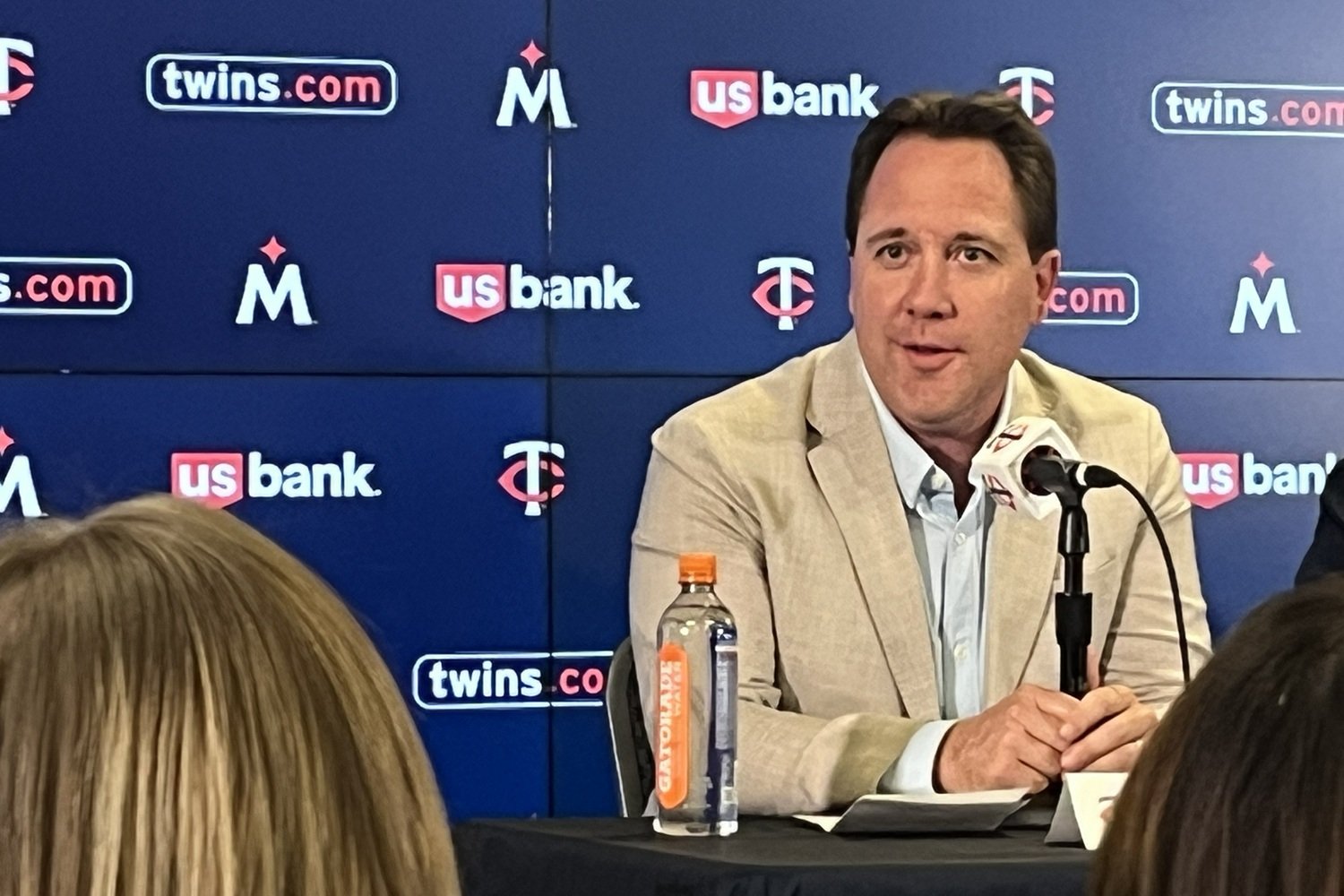
This is the continuation of my takeaways from a 90-minute conversation between Derek Falvey and the MLB Fan Council, of which I am a member. For part one, in which I walked through the timeline of an MLB trade deadline, check out my piece from Thursday.
Today, I want to share a wide array of topics that were discussed during our call that don’t really fall into a cohesive narrative. More of a list of fun facts, answers to questions, and potpourri. Or, in Falvey’s case, maybe POBOABOpourri.
What does shopping a player look like?
No, GMs rarely call each other and ask “Would you like one lightly-used Matt Wallner?”
The conversations are much more coy. As I mentioned in the last article, there are a dozen or so conversations between teams before a trade is finalized. Instead, they start by asking “Are you looking for anything” and attempt to steer the other team into the direction of a player they’re trying to shop. Why? Because it helps define what the other team likes and how they evaluate. It’s data that they can use in the future.
And hey, they might even be interested in a player you have even less interest in holding on to, or maybe they’ll start courting you for a player you hadn’t previously considered moving, but would for the right price. You wouldn’t know that if you just led with the guy you’re wanting to get rid of.
These coy conversations also set up three-way trades, because there might be a player type you can’t provide, but if a third team was involved, both parties could leave satisfied. Falvey also stressed that when talks started to heat up in this way, he’d try to let the player or their agent know that they were being discussed, even in somewhat preliminary discussions.
Is it different making trades as a small market club?
Falvey worked for bottom-half payroll teams in both Cleveland and Minnesota. For the most part, small-market teams rely more heavily on their prospect pool, because it’s cheap, controllable talent. It’s harder to pry prospects away from those clubs than it is for a big-market club that is more readily able to fill in holes in their roster in free agency. This isn’t always true, but on average, that’s a big difference between small- and large-market clubs.
Do you start your offer pie-in-the-sky and hope the other team bites?
Sure, if your player is in high demand. But if he’s not in high demand, or no one wants to swim in those waters, you best bring it down. Setting the bar too high can close off some discussions, and other teams might look at your lofty asking price and send a package you might have taken to some other team for a lower return.
I mentioned this in the first piece, but Falvey noted a few times that one of the keys to making trades is recognizing the cadence of other teams’ approaches. Some other GMs are known to set the bar very high and be willing to drop it, but others set the bar at a more reasonable level and do not budge.
One fun tidbit that Falvey shared regarded the discrepancy between second-place offers. In some trades, the second best offer was very comparable to the winning offer, and a GM is essentially picking which flavor of ice cream he likes best. Other times, the gap between the winning offer and the runner-up is enormous. He chuckled, recalling some trades (none identified) that fans reacted to with a “that’s it?” manner, to which he’d say “You should have seen the other offers.”
How do GMs communicate with each other?
Mostly via text. Rarely does anyone call each other anymore, though some GMs only talk by phone. On the other side of the spectrum, GIFs and emojis have been known to find their way into trade discussions. Falvey specifically recalls being hit with a simple “☹” in response to a trade he proposed, and once when he forgot to reply to a fellow GM, he received a GIF of a prairie dog sticking its head out of a hole.
Most clubs have similar player evaluation systems. How do you navigate trades when both teams are working from the same data?
Falvey confirmed that most clubs are working with a lot of the same data. Furthermore, every club has access to previous trade data. There’s a figurative book in every front office that shows the value of previous trades, so anyone can figure out the answer to “What is a #2 starter with 2.5 years of control worth?” based on trades from past years. If that’s worth an A prospect and two B prospects, that’s the price.
But clubs do differ in their evaluation of players nonetheless. From a prospect perspective, consider top 100 lists from MLB Pipeline, Baseball America, ESPN, and The Athletic. There’s a lot of similarities between those lists, but there’s certainly disagreement on some names. The further down the minor league system, or the further down the list you go, the more disagreement there is. In the one A and two Bs example, you might be able to find a team that sees two of your C-level prospects as B-level. But with MLB players, the evaluation is more straightforward and concerned with years of control. Furthermore, teams are more likely to spend from areas of strength, and teams value players who address their weaknesses, which is effectively a difference in player valuation between organizations.
Falvey also noted the role of player development in this process. Part of choosing the right prospect is knowing what your player development system can do. If there are specific weaknesses in a player’s game that your organization is competent in improving, that player is more valuable to you. Likewise, if your player development system struggles to develop certain skills, a player who needs that emphasis is less valuable.
Scouts and analysts are both in the war room. How much disagreement is there between them?
The ol’ Moneyball movie conundrum.
Falvey stressed that this rivalry just isn’t what it’s made out to be. He’d ensure that scouts and analysts, on both the pro and amateur side, were in contact with each other frequently, not just during decision-making time. It’s important for everyone in the room, the war room here specifically, to understand the perspectives of people from different areas, even when they disagree.
And they should disagree, he noted. Early in his career, he was consensus-seeking. But as he matured, he realized that there would never be consensus in any room where a real decision was being made. Silence probably meant someone was scared of speaking up.
How is a Player to be Named Later (PTBNL) determined?
Generally, PTBNLs are added to trades because the team needs to spend a little more time scouting the players in question. A list is submitted of players who can potentially be named later, and the team has a few weeks or months to continue scouting from that list before determining which player they would like to receive.
PTBNLs can range in importance from the main piece of the return to a throw-in. As noted in the previous piece, many trades are agreed to close to the deadline, and a PTBNL can allow a team that didn’t have the time to fully scout the potential returns the weeks they need before completing a trade. These players can be chosen after the deadline.
How do trades with players who have no-trade clauses (NTC) work?
Players can work provisions into their contracts preventing them from being traded without their consent. Sometimes this is to any team; other times players will submit a limited list. But these guys still get traded.
GMs keep in contact with agents to probe interest, because (as Twins fans know) teams can still call about guys with NTCs. Players are free to change their minds, or they might have strategically chosen teams that they know they might get traded to so they have a little leverage in an eventual move.
Agents are pretty forthcoming with the players’ stances. Sometimes the conversation is between the player and GM as well. Falvey stressed that whenever something like this happened, he’d try to reach out to the player or their agent early, so as not to spring it on them at the end of negotiations, only for them to block the move.
Leaks. Let’s talk about leaks
Why do they happen? Members of front offices like to curry favor with reporters and will treat information like a commodity. Or they’ll use it to trade information with other clubs, and once another club has it, who knows where it goes. Or maybe they just want to feel important.
Falvey noted that when a leak happened in his front offices, which was pretty uncommon, the circle who got to know things would shrink. Not only is it annoying, but it can also have negative consequences.
Falvey mentioned that sometimes players would learn they were being traded before he had a chance to inform them. Or, perhaps worse, a trade would be reported as close to final when it never actually happened. Sometimes news would leak that a player was close to being traded to Team X, and he’d get messages from the GM of Team Y - who the player was actually going to - asking what happened to the deal they agreed to. Messes all around.
Did you ever write a lineup card?
Haha, no. If asked for an opinion, Falvey would put his hands up and shake his head.
The closest Falvey ever got to writing a lineup card was in daily discussions between the manager and the medical staff, discussing which relievers were showing signs of injury or fatigue. Rarely, if ever, did a manager insist on using a player that the medical staff encouraged him to keep off his feet for the day if at all possible.
Why would anyone trade with the Tampa Bay Rays?
Someone asked a version of the question, “Why would you trade with a good organization? Don’t they know something you don’t?” which prompted someone to quote the Sam Miller tweet “LOVE this trade for the Rays. Who'd they give up? And who'd they get?”
Falvey had a chuckle, and I reminded everyone of the Twins’ trades with the Rays for Joe Ryan, Taj Bradley, Yoendrys Gómez, and Jake Odorizzi. But it’s a good question.
Falvey indicated that you can’t be scared of trading with anyone, though if a respected organization starts asking about a player far down your system’s internal list, your ears might prick up. In the same way, it sometimes happens that several teams will ask for a specific player in your organization in a way that might also change your evaluation of that player, or at least reconsider his case.
Once again, Falvey brought up the cadence point and referred to the playbook that front offices build around rival teams. If you know how they approach discussions or how they conduct business around the trade deadline, you can anticipate their moves and act in a way that sets you up for success at the negotiation tables.








Recommended Comments
Create an account or sign in to comment
You need to be a member in order to leave a comment
Create an account
Sign up for a new account in our community. It's easy!
Register a new accountSign in
Already have an account? Sign in here.
Sign In Now