

Twins Video
1. A best-of-three series, all at home, is a big advantage.
I know it can be easy to dismiss, given how everything went for the Twins last time around (2020), but the new MLB playoff format fundamentally shifts the scales toward the higher seed in the Wild Card round matchup. Three games, all in one ballpark.
Beyond the energy and backing of the local crowd, baseball's fabric is designed to favor the home team, providing the key advantage of batting last. Throughout MLB history, home teams have won 54% of their games. The Twins made hay at Target Field this year, where they went 46-33 (.582).
2. The Twins got to set themselves up; their opponents didn't.
By virtue of clinching so early, the Twins have had the luxury of handling all of their players and planning with an eye toward the postseason. That is not true of the Blue Jays, who had to fight and claw through a tight wild-card race all the way down to the final day.
Not only does this mean Toronto's key players have all been playing and pushing through the final week of the season, but it also impacts pitching layouts in significant ways. Twins starters and relievers are all rested up.
3. Sonny Gray is a DAWG.
The last time the Twins had a playoff pitcher with a fWAR as high as Gray's this year (5.2) was Francisco Liriano in 2010 (5.6) and the last time before that was Johan Santana back in 2006 (6.7). Ranking third in the major leagues in ERA, Gray is an elite No. 1 starter who will arguably be the best starting pitcher from the AL in the postseason, based on performance.
Beyond the numbers, Gray just seems like the kind of bulldog you want on the mound in a game with this kind of pressure and stakes. He's confident, competitive, and fierce. It's no surprise he's been extremely successful in postseasons past, with a 2.95 ERA in four career playoff starts.
4. It looks like Royce Lewis is giving it a go.
Lewis is special, and he made that very clear as a rookie this year, putting forth a strong case for team MVP despite playing in just 58 total games. That'll happen when you hit .385/.452/.785 with runners in scoring position with a record-shattering four grand slams.
Emanating pure Derek Jeter qualities, Lewis seems like a player who was built for the October spotlight. This makes it all the more gutting he suffered a hamstring injury just two weeks before the start of the playoffs, a development that threatens to hamper his effectiveness. But if any player has given reason to believe he can overcome adversity and deliver, it's Royce Lewis.
5. Carlos Correa is an all-time October producer.
There is no individual player in the hunt with a more accomplished postseason track record than Correa. He is the active leader in postseason RBIs, and sixth all-time. He's slashed .272/.344/.505 with 18 homers in 79 playoff games. He won a World Series* in 2017.
As we all know, Correa hasn't played up to his standards for most of this campaign, hobbled by a bad case of plantar fasciitis. But he's gotten a little rest ahead of October, which is historically where he's been most in the zone. This is what the Twins signed him for.
6. Jorge Polanco has the clutch factor.
Correa's clutchness on the big stage is legendary, but Polanco has an overlooked reputation of his own in this regard. In his career, Polo has a .909 OPS with runners in scoring position – 190 points higher than with bases empty. He hit .300/.380/.467 this year in "high leverage" spots.
Polanco's got the kind of makeup you want on the big stage, and he's a matchup-proof switch-hitter, effective from both sides. Assuming the ankle soreness that sidelined him in Colorado is not a major issue, Polanco is an underrated potential difference-maker for the offense.
7. Max Kepler is healthy and playing the best ball of his career.
The only other time Kepler has approximated his production from this season was 2019. He was a force to be reckoned with that year, to be sure, but as you may recall Kepler was extremely banged up heading into the playoffs; he missed a bunch of time in September and only hit .171/.293/.200 with one extra-base hit that month. The right fielder's fruitless ALDS performance (0-for-10) was a mere continuation of that trend.
This year we'd love to see Kepler continue his trend from the second half, where he's slashing .292/.364/.529. He appears fully healthy as the playoffs arise and he looks to improve upon his .056 lifetime average there.
8. Jhoan Duran instills fear in opposing hitters.
We all know how important power arms near the back end of the bullpen are for postseason success. These are the moments that separate the greats – the true dominators who are able to handle the pressure and win pressure-packed match-ups.
Duran hasn't been perfect this year but he's been damn good and he's got the kind of premium stuff that overpowers in the playoffs. He's also, importantly, been able to rest up a bit over the past couple of weeks.
9. Rocco Baldelli is a master tactician.
People will probably dispute this one. Whatever. Baldelli navigated his team to an 87-season and easily clinched a division title despite receiving very little value from franchise cornerstones Correa and Byron Buxton. For all the complaints about his pitching staff management, Baldelli's team allowed the fewest runs in the American League. He has the best career winning percentage of any Twins manager since the 1970s.
Say what you will about Rocco Baldelli: he's a winner. He hasn't been one in the playoffs, yet, but then, he's never had quite so many healthy and high-caliber tools at his disposal.
10. Donnie Barrels is lurking.
Doesn't Donovan Solano just seem like the kind of guy who will delight us with a few unforgettable postseason moments? The veteran has been rock-solid for the Twins all year, consistently coming through with quality at-bats and key hits.
When the moment is big, Solano answers the call. With RISP this year he hit .346/.490/.500 and in high-leverage situations, .303/.448/.434.
11. Willi Castro is a premier postseason bench weapon.
The minor-league signing made a major impact for the Twins all year long thanks to his versatility, athleticism, solid switch-hitting bat, and elite base-stealing ability. These same qualities make him a dynamic asset off the bench for postseason play, flexibly capable of fulfilling a variety of important in-game functions.
Castro leads a bench that is, on balance, an under-discussed strength for the postseason Twins, and far better equipped than past units.
12. Pablo Lopez is a strikeout machine.
Strikeout pitchers tend to be more reliable performers in the playoffs – they are less susceptible to the whims of fate on batted balls – and Pablo's been one of the best in this regard.
One of the best in baseball this year, and one of the best in Twins history.
Lopez's 234 strikeouts this year rank him second in the American League and his 10.8 K/9 rate is tops for any Minnesota starter ever. When on his game, he's shown the ability to straight-up mow through opposing lineups, who are helpless against an arsenal with three different pitches registering 30%+ whiff rates.
13. Brock Stewart is back!
Like a disappeared Avengers character, Stewart has returned just in time for the climactic end game, as the Twins welcome him back with open arms. Firing upper-90s filth with precision, the reinvented veteran reliever left opponents helpless during his splashy debut in May and June, rising near the top of the bullpen hierarchy. He out-pitched every Minnesota reliever, including Duran.
Stewart was sidelined midseason by elbow soreness, and as he experienced multiple setbacks in his recovery, it looked like a return wasn't in the cards this year. But he made it, one week ahead of the playoffs. He adds critical high-leverage firepower in front of Duran.
14. Kenta Maeda is a proven postseason weapon.
He gets overlooked with all the hype around Lopez and Gray, and even No. 3 starter Joe Ryan, but Maeda has more experience and success in the playoffs than any other pitcher on this team. He started Game 1 of the ALWC series for Minnesota in 2020, hurling five shutout innings, and was previously used by the Dodgers as a high-performing relief fixture during several deep postseason runs.
Maeda heads into October looking very sharp, with a 2.82 ERA in his four September starts and a strong first relief outing.
15. Bullpen boasts multi-inning relievers who can shove.
Relief pitchers who can reliably come in and pitch well over multiple innings – bridging from a short-ish start to the top arms in the bullpen – are incredibly valuable in the playoffs. Maeda figures to be one of at least three such candidates that Baldelli will have at his disposal.
Louie Varland has looked spectacular since assuming this new role for the first time, bumping up the quality of his stuff and blowing hitters away with a 1.50 ERA and 17-to-1 K/BB rate in 12 relief innings. Chris Paddack has entered the fold with premium high-90s stuff, adding a third power/length hybrid to this suddenly deep relief corps.
16. The youth wave seems unfazed by pressure.
It's too soon to say how the Twins' historic rookie hitting class will handle the big lights in October, but they've certainly handled the stakes of transitioning to the big leagues with aplomb, which bodes well. We've already covered Lewis, but Edouard Julien and Matt Wallner have also played huge roles in the offense's second-half surge, and will be counted on to spark the postseason lineup. They're gonna give right-handed pitchers nightmares.
17. Alex Kirilloff is a sleeping giant.
He's not been talked about as much, with all the attention to Lewis and the rookies, but it's worth remembering that a healthy Kirilloff is perhaps the most talented hitter in this lineup. Right now he looks healthy. In his final 10 games, AK slugged three homers as appeared to dial in his power stroke at just the right time.
18. The Twins team heading into the playoffs is not the same one from the first half.
The biggest reason people are inclined to dismiss the Twins, aside from the general postseason reputation the franchise has earned: they were an 87-win team out of a bad division. Good enough to make the playoffs, sure, but good enough to hang with the true juggernauts of the American League?
Absolutely. Minnesota's underwhelming final record is heavily influenced by their perpetual mediocrity in the first half, and it's hardly pollyannaish to declare that it was a simply a different team back then. Since the All-Star break, they've played at a 96-win pace, with the best record of any AL team other than No. 1 seed Baltimore.
The Twins, in their current form, should absolutely be viewed as one of the best teams in the league. Will they play up to that standard in the next two or three days? That remains to be seen. But there are a whole bunch of reasons to believe that this is the year Minnesota snaps its ignominious streak and doesn't stop there.
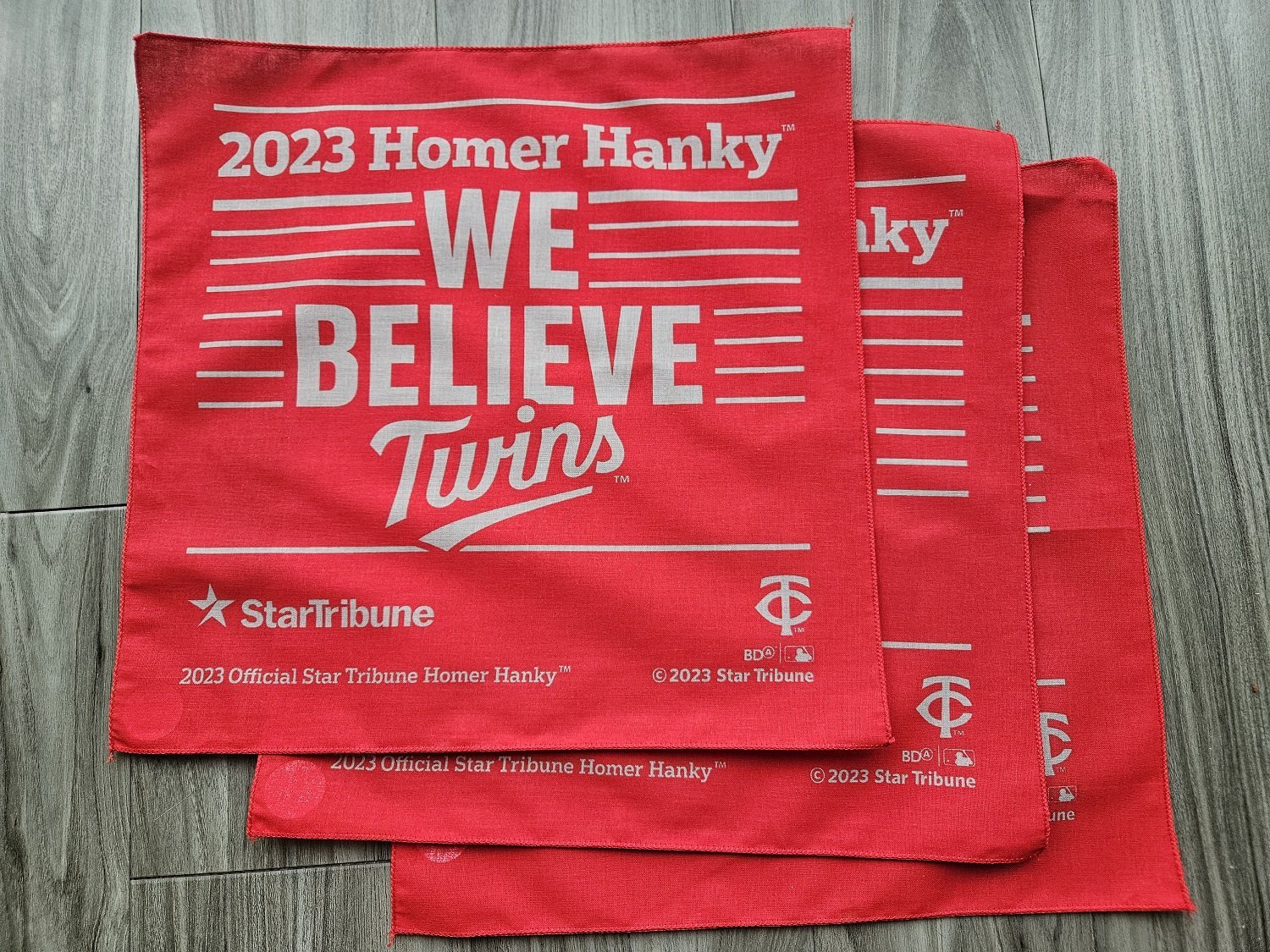
I believe. We believe. Now let's go do it.








Recommended Comments
Create an account or sign in to comment
You need to be a member in order to leave a comment
Create an account
Sign up for a new account in our community. It's easy!
Register a new accountSign in
Already have an account? Sign in here.
Sign In Now