


Twins Video
I want to start by saying that, at long last, a lot went RIGHT for the Twins in these playoffs. They snapped a 19-year losing streak, they triumphantly swept the Blue Jays at home, and they made the defending champs sweat in the ALDS. You're not going to catch me calling this year a failure.
But at the end of the day, the Twins did come up short. And they did so in rather painful fashion, after Sunday night's victory set them up in very favorable position to come home and take control against the Astros.
So here in this postmortem, we'll dissect four key things that went wrong for the Twins and led to their exit in the second round of the playoffs.
1. Legitimate fears came to fruition.
This is the banner headline that encapsulates several different subplots. The frustrating thing about Minnesota's most fatal flaws in the postseason is that, in many cases, they weren't that hard to see coming. These were concerns that long loomed in our minds, and caused apprehension as we looked ahead to the high stakes of October.
In particular, these are three striking examples of how our fears turned into reality.
The offense goes back into its shell: Performances like Tuesday and Wednesday were the team's calling card in the first half, as they compiled strikeouts at a historic rate and frequently no-showed in the runs column. Even with all the improvement in the second half, those kinds of games were still mixed in -- the byproduct of a lineup prone to striking out in bunches, and shriveling up in damage spots.
Regression slaps Sonny Gray in the face: There were clear signs of unsustainability in the 33-year-old's phenomenal regular season numbers. Namely: Gray's penchant for wriggling out of jams and limiting home runs to an extreme degree. All that regression pretty much came to a head on one devastating pitch to Jose Abreu with two runners on in Game 3.
Alex Kirilloff playing hurt: The oft-injured first baseman missed all of August with a shoulder issue that seemed pretty serious, but made it back to play 19 games in September. His numbers were fine (.766 OPS) but Kirilloff hardly looked like he was at his best, and the team noticeably took it easy with his usage. Fears that his shoulder might still be bothering him were confirmed when AK exited Game 3 and was removed from the roster afterward.
2. Ryan Jeffers failed to live up to the team's hopes.
The Twins really put their eggs in the Jeffers basket, and understandably so. He had a tremendous season, ranking second among MLB catchers in wOBA and second among all Twins position players in fWAR. Rocco Baldelli figured he had a big advantage in being able to run out that kind of bat behind the plate, so he did so in all six games.
Unfortunately, Jeffers did not deliver, managing just two singles and two walks in 25 plate appearances.
The decision to use Jeffers exclusively meant, in turn, that Christian Vazquez saw zero action in the entire postseason. Again, it's justifiable given how bad his bat was all season, but Vazquez was signed in large part for his seasoning on the big stages of Boston and Houston. He's battle-tested, but never got tested in this losing battle.
3. The lefty bats couldn't capitalize or cash in.
One of the biggest reasons for optimism around the Twins in these playoffs was how well their lefty-powered lineup was set up for success based on match-ups. Minnesota's ALWC opponent, the Blue Jays, threw two right-handed starters. The Astros brought a bullpen devoid of lefty arms into the ALDS.
Players like Kirilloff, Edouard Julien, Max Kepler and Matt Wallner were in a position to shine after hammering right-handed pitching all year long. With the exception of Julien, none did.
Kirilloff went 0-for-9 while playing hurt. Wallner was 0-for-8. Kepler went 5-for-23 (.217) with 10 strikeouts, one walk, one run scored, and zero batted in. He struck out looking at strike three to end the Twins' season on Wednesday, exploding into frustration as his lifetime playoff average dropped to .146.
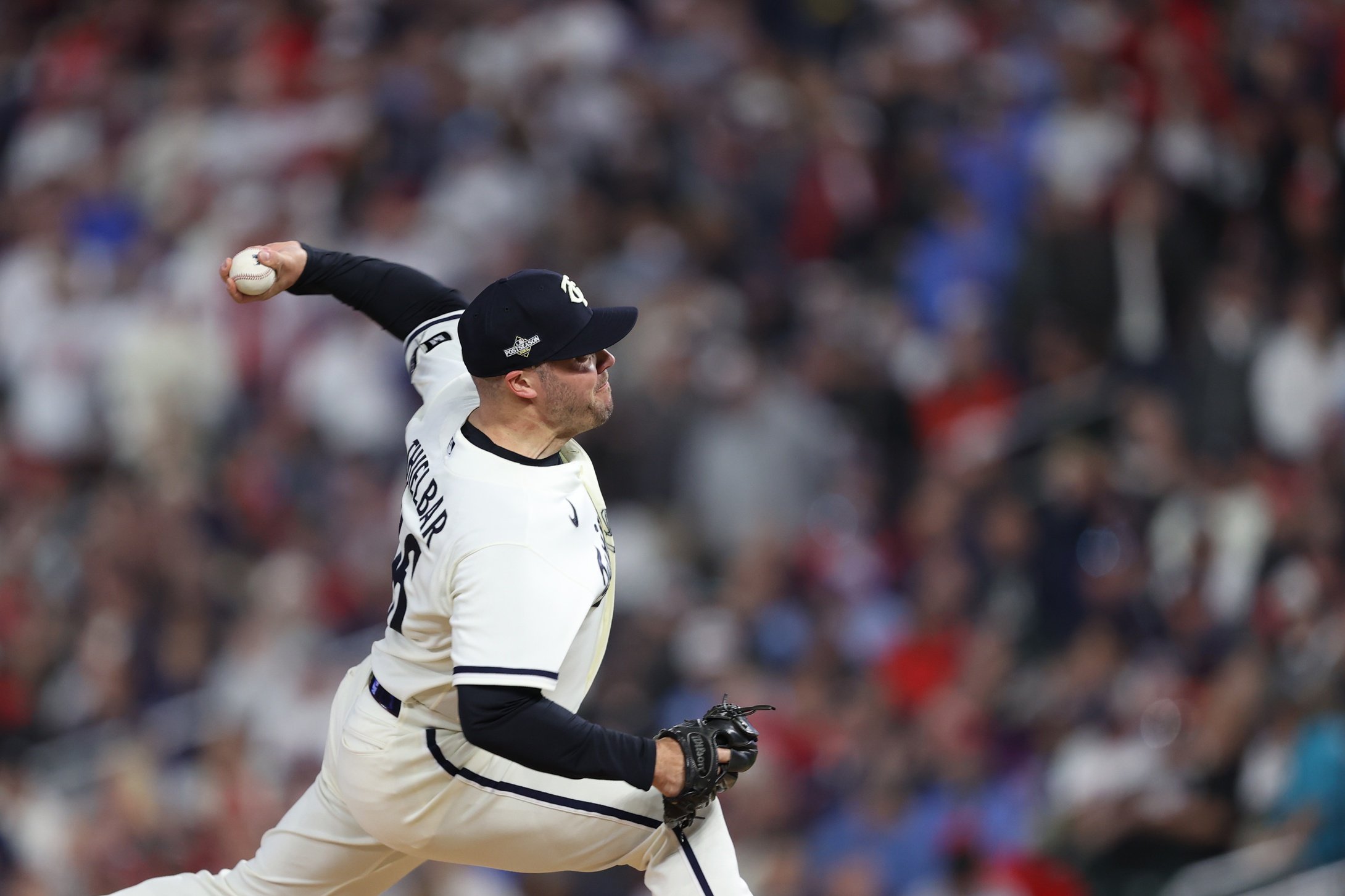
4. Caleb Thielbar's biggest weakness came to bite him.
Thielbar has been a spectacular performer and awesome story in the Twins bullpen. Returning from pseudo-retirement in his mid-30s, he's put together one of the better multi-year stretches for a reliever in Twins history, posting a 3.21 ERA since 2020.
He was really good once again this year, despite missing time with an oblique injury, but one issue haunted the left-hander: home runs. He gave up seven this year in just 30 ⅔ innings, with his fastball victimized most frequently.
Here, in contrast to Sonny Gray, you'd hope for a little positive regression; home runs had never really been a big problem for Thielbar in the past, and 30 innings is a small sample size. But the long ball was most definitely a problem for Thielbar in this ALDS.
In Game 1 he gave up a homer to Yordan Alvarez, extending Houston's lead from one to two in the seventh inning. That one hurt, coming immediately after Minnesota's offense narrowed the deficit in the top half. But it didn't hurt as much as the next one.
On Wednesday, Jose Abreu got hold of a 1-0 pitch from Thielbar -- a fastball -- and drove it over the fence in right for a tie-breaking (ultimately game-winning) home run. According to Baseball Reference it was the single most pivotal play of the series.
Mistakes and missed opportunities are magnified on the big stage in October. These are the ones that will have an outsized impression in my mind as I look back at this run and what could've been.







Recommended Comments
Create an account or sign in to comment
You need to be a member in order to leave a comment
Create an account
Sign up for a new account in our community. It's easy!
Register a new accountSign in
Already have an account? Sign in here.
Sign In Now