


Twins Video
As will be true for many teams this season and in the few ahead, the coming of Twins.TV brings a new viewing dynamic to Minnesota Twins baseball. Finally free from cable carrier deals, the Twins are free to produce their games however they want and avoid blackouts. For many, the Twins’ decision to bring back its entire broadcast crew—including fan favorite Audra Martin—is a welcome surprise. More so, the Twins are introducing new cameras, which translates to good union jobs, in their attempts to modernize the show.
But buried in the new details of the new streaming-forward broadcast, new details suggest that the Twins are finding ways to cut their broadcast costs down. As Dan Hayes reports, “When the team is home, the Twins will continue to air 30-minute pregame and postgame shows. But the move to Twins.TV means pregame shows on the road have been eliminated, while postgame shows are limited to 15 minutes.”
I’m not necessarily a pre- and post-game obsessive, but I find them enjoyable and a good mood setter. The Twins have found a great team in Katie Storm, Tim Laudner, and Martin, and some of the pre-recorded segments can be the place where the players’ personalities can shine. If you haven’t checked out a game in a given week, the pregame can be the place to discover the current “vibe” of the team.
Part of the driving force behind these choices is the distinction between which parts of the broadcast are union-made vs. non-union. Twins broadcasts are part together by the crew of the International Alliance of Theatrical Stage Employees (IATSE) Local 745. However, they actually don’t negotiate with the Twins. Instead, they work with a company colloquially known as a “crewer” called Program Productions Inc. (PPI), which works with broadcast groups all over the nation. PPI ensures a good crew is available for not just local broadcasts, but also visiting teams and national broadcasts, depending on the needs of the broadcasting partner.
When PPI negotiated their contract with IATSE last year (which runs through 2029), it was officially before the Twins left their contract with Diamond Sports Holding (aka Ballys, now Main Street Sports Group presents FanDuel... you don't need to care anymore). But the Twins, just as other teams have done when partnering with MLB, have kept the same crewers, to ensure continuity with broadcast workers who know the ins and outs of shooting Target Field.
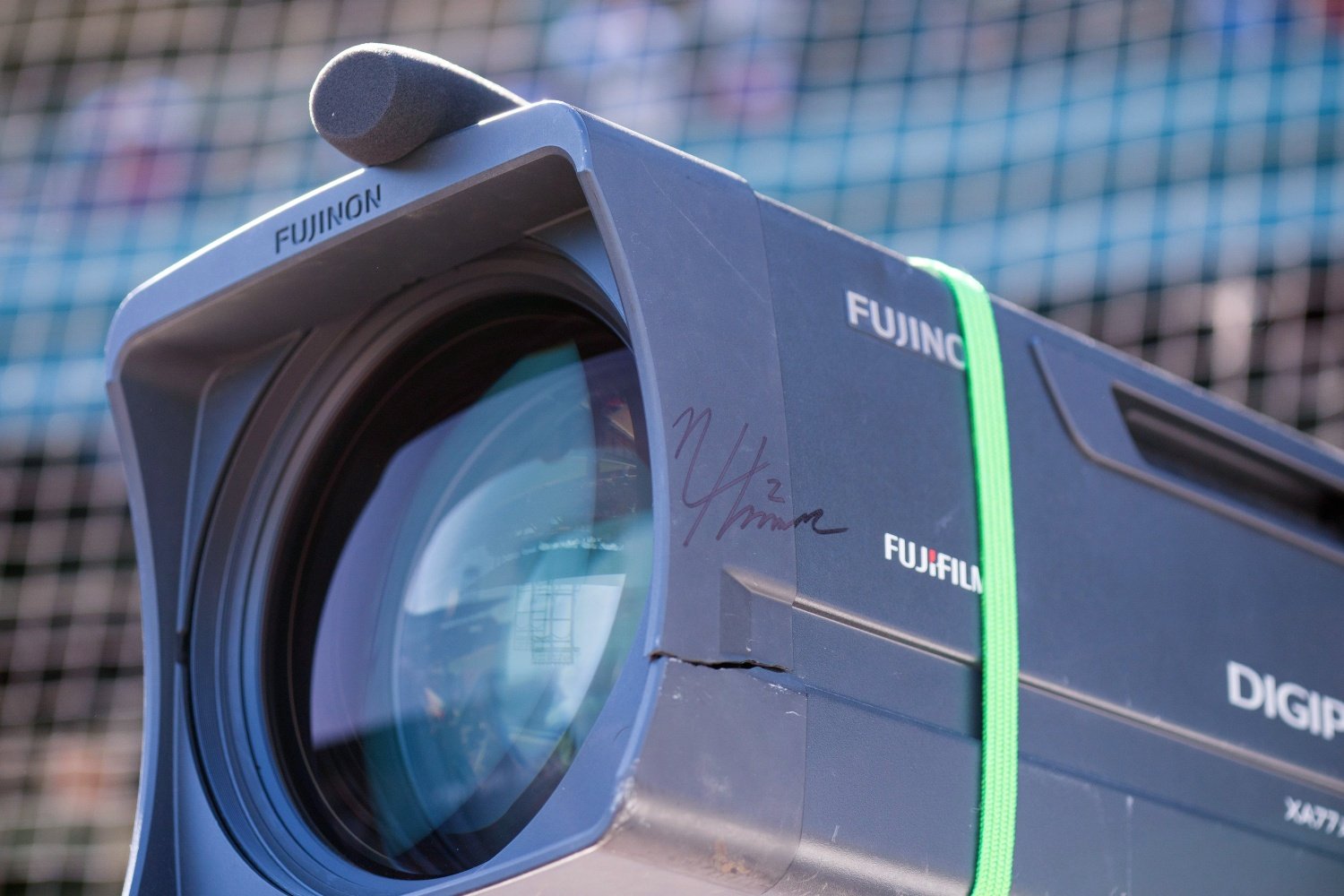
For both the union and fans, the new cameras are a huge win. These include, as Cory Provus revealed at the Winter Meltdown and shared with The Athletic, a wire camera that has been a staple at T-Mobile Park in Seattle for some time, as well as what cinematographers call the “Megalodon,” which gives a high resolution, shallow focus shot of players after they return to the dugout from a home run. According to Dustin Wasserman, Business Agent for Local 745, "The local is excited that with MLB being in charge of production of the games, the broadcast has added back some camera positions lost in previous years, along with the new cable camera system." While unions often have to fight a scaling-back in jobs, IATSE workers are getting a nice boost as the Twins look to upgrade the look and feel of the games.
However, the union doesn’t cover the pre- and post-game shows, giving MLB the flexibility to make changes and create job loss. Those are usually done by in-house staff members. Sources suggest that many of the same crew behind the scenes are being brought from Ballys/FanDuel to MLB, but the cuts in hours will certainly hamper the living wage of those who return.
The choice is simple: the Twins do not have a dedicated broadcast space, and bringing in a whole crew for pre- and post-game coverage is considered onerous. MLB dictates the choices, so the Twins will follow in the same style that the Rockies and Padres have pursued. As for the 15-minute post-game show, those will only feature a wrap-up by Cory Provus and the analysts, as well as a brief clip of a post-game interview if available.
Fans might go over a week barely hearing from the broadcast, beyond what is provided during the game. More so, fans of teams with MLB producing the broadcasts last year often experienced issues such as the broadcast beginning just seconds before first pitch, and because of the imprecision of technology, they sometimes actually came in after the at-bat had already begun. A little lead time as the teams take the field (and thus a better fan experience) should not be seen as burdensome. But it seems clear the Twins have done what the Pohlads do best: trying to cut every corner. As Provus joked at the Winter Meltdown, when you lose $60 million in television revenue, a lot of choices get made.
The Twins have the opportunity to change things up, and should take advantage of the chance to reach new blocs of fans, but it also seems like a good opportunity to do more. Making fans care about the players, learning about their background, seeing Rocco Baldelli talk about the team—these are not just “niceties” in the baseball world. They're what connect us to the team.
Some of this might be growing pains, and in a world where switching off cable can create so many new possibilities, let's hope the Twins see the value beyond the first and last innings, eventually.







Recommended Comments
Create an account or sign in to comment
You need to be a member in order to leave a comment
Create an account
Sign up for a new account in our community. It's easy!
Register a new accountSign in
Already have an account? Sign in here.
Sign In Now