


Twins Video
"I've always bought and sold things. It's what I've done all my life. "
—Carl Pohlad, 1989
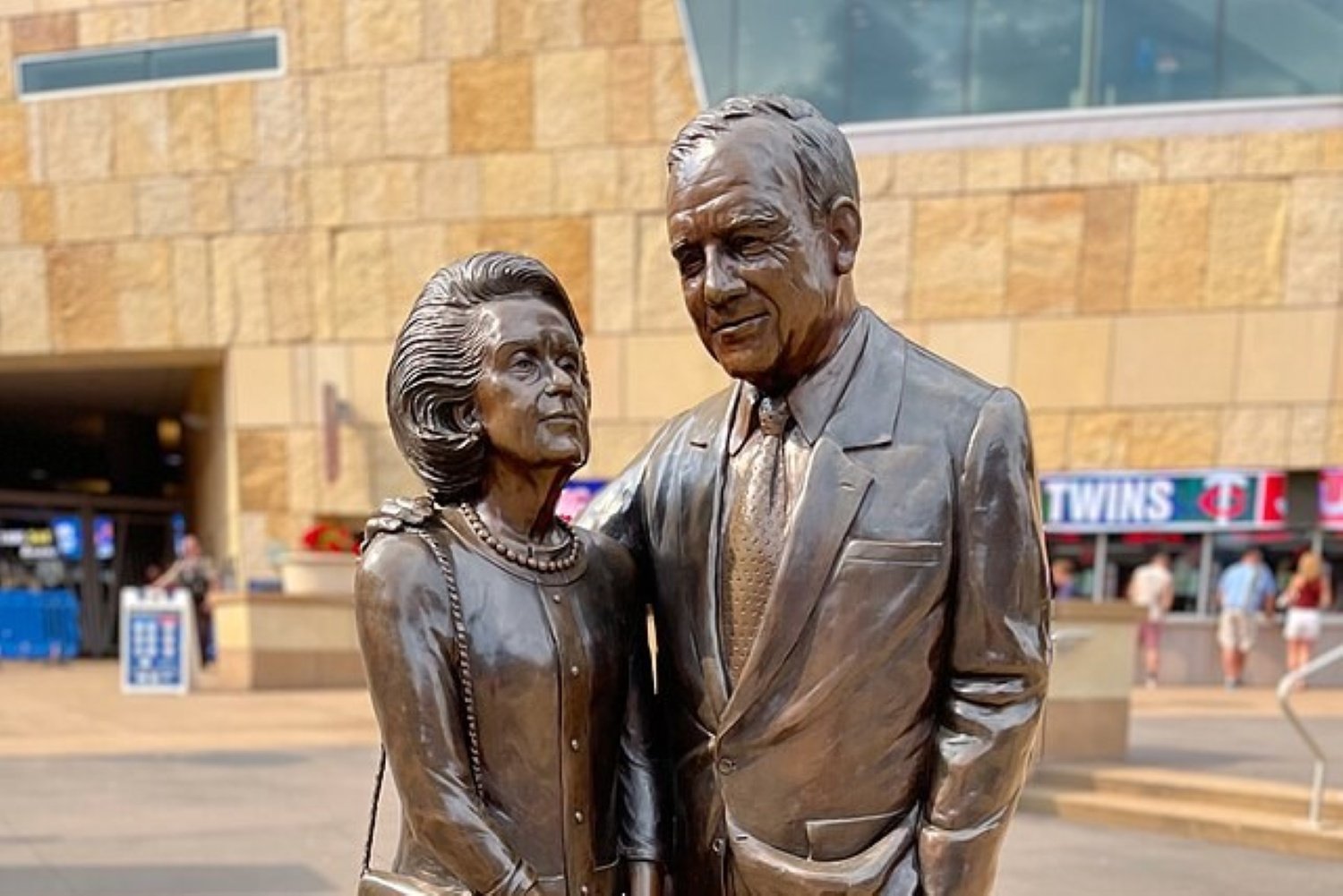
Carl Pohlad could have bought any number of teams. He looked into buying the San Francisco Giants in the 1970s. He put down a bid to buy the Philadelphia Eagles in 1983. He later tried to buy Churchill Downs, the home of the Kentucky Derby. Instead, he ended up with a baseball team for the bargain price of $32 million.
But why the Minnesota Twins? After all, Carl admitted he had “no particular interest in baseball.” Instead, like many things in his portfolio, it was seen as a savvy investment. As he told the press, “I think there is a good baseball market here and we can turn it around. In fact, I think we may already have.''
Cut to 40 years later, and baseball in Minnesota is in trouble. While almost every team in the league saw a notable increase in attendance in 2024, the Minnesota Twins saw their numbers dip. The causes are manifold, but the buck stops at the Pohlad Family, who have owned their baseball team longer than almost every other team in the league. That will likely come to an end this year, but before that, we need to understand how and why the Pohlads made the decisions they made. Baseball, the way it has been played at the major-league level for decades, is a business. And if it’s just one business among many for the owners of the local nine, we need to understand the other cogs in the machine.
For more on the history of the Pohlad family and their business interests, please see Part 2, Part 3, Part 4, and Part 5 of this series.
This week on Twins Daily, we’re diving into the financial history of the Pohlads. If they are indeed on their way out—whether in favor of the Ishbia brothers, or elsewhere—we need to understand the origins of these frustrations. Baseball owners do not simply walk into the job (unless they are handed it on a silver plate). And the way they make their decisions needs to be understood in the context of their financial dealings.
Over five parts, I’ll be tackling different aspects of the Pohlad empire: the successes, the failures, the swindles, the alternative paths. In many ways, the stories that pepper Pohlad’s non-baseball past are no different than those you might find in any owner’s past. But the lessons along the way here include this one: the Pohlads have never necessarily run any business in a typical manner. Seeing their actions in other businesses often reveals why the Twins have been run the way they were.
Let’s get one story out of the way. It has become almost common lore that Carl Pohlad began his foray into business by, as many sources say, foreclosing on homes during the Great Depression. As much as naysaying Twins fans would love to believe such a story, there’s no evidence for that, beyond the slow accretion of repeated hearsay.
Carl was born in 1915, making him only 14 when the stock market crashed in 1929. He was from a small town in Iowa and grew up poor; his father worked the railroad and attempted to support eight children.
Young Pohlad did work for a bank, first on his farm, milking cows. By the mid-1930s, as ESPN’s Jim Caple reported, “He went on to deliver collection and foreclosure notices.” If Pohlad played the role of “muscle” for that banker, it's buried deeper than anyone has been able to reach for real proof; that idea has taken root purely through grapevine gossip. But even if it only included delivering notices, it certainly meant having people leave the same kind of farms his own family lived on. That said, there were very few honest dollars to go around. It was a hard time to live in a community (or thrive in a business) dependent upon agriculture.
But Pohlad escaped, thanks to his body. He moved to Los Angeles where he played football at a junior college, while selling repossessed cars and boxing in his spare time. After being spotted by Bing Crosby, we went on to play for Gonzaga. Before he could go any further in any career, however, he was drafted in 1943. He fought in the European theater of World War II, and was eventually decorated with three Purple Hearts and two Bronze Stars.
When he got home, Pohlad needed to get his money somewhere, so he did what all the best and brightest Americans do: he married into it, in 1947. His new brother-in-law Russell Stotesbury operated a business in Iowa that essentially taught banks how to manage their money better. Understandably, that was a hot consulting business, with the Great Depression only a few years in the rearview and a postwar boom changing the landscape rapidly.
By 1949, the Pohlads relocated to Edina. Stotesbury passed away in 1955; Pohlad took full control of several banks, including Marquette Bank. Only a year later, Pohlad began participating in meetings across athletic clubs, yacht clubs, country clubs, all with the other bankers of the state. These meetings had a goal: to set standards across all banks to create a uniform way of doing things.
That’s the official, sanitized way to say it. A better way to say it is: the banks were engaging in illegal price fixing. They were able to set interest rates without the pressure of competition, ensuring high savings for the banks and low returns to customers. Farmers were particularly hard-hit by high rates. Checking accounts were burdened by onerous service fees. And because both small and large banks across the state participated, no one had anywhere else to turn to get a better rate.
Luckily, this was a time of aggressive antitrust action, and Robert F. Kennedy’s Department of Justice investigated the action in 1961. By that time, the 20 banks involved had grown to $392 million in assets (around $4.2 billion in 2024 dollars). In 1964, Pohlad and the other banks pleaded “no contest” to the case, resulting in fines of $253,000. Although Pohlad did not speak, another spokesman essentially admitted that banking was a special business, and the only way to actually make a profit and stay in business was to commit fraud. Pohlad himself later said, in a 1984 interview with Managing magazine, that “banks should be deregulated completely.”
Due in some part to the banks’ collusion, between 1954 and 1964, Minnesota lost over 20,000 farms, most gobbled up by larger corporations receiving more preferential loans. The average farm grew 18% in size over the same years. In Filmore County, the almost 200 family farms in 1958 all but disappeared, purchased by speculators. This is, directly though not solely, a part of the Pohlad family's legacy in the state.
There were many more possible indictments that loomed over the case, particularly on issues of discrimination. However, Congress had barred the Federal Trade Commission from pursuing further action when it came to this kind of discrimination. And if there were other skeletons, the creeping political conservative takeover of the 1970s would ensure they stayed in the closet. By the start of the 1980s, deregulation was in, and antitrust was out. Big Business was good.
Through all of this, Pohlad found a way to continue to grow. You can’t commit illegal collusion with other bank owners if you own all the banks yourself.
Pohald soon became known as the “dean of chain banking” (or, as one article described him, the “Mickey Mantle of Chain Banking”). Rather than combining all the banks into one parent company (ie. Wells Fargo, Citibank), Pohlad simply owned several separate banks, which Minnesota law allowed. While holding banks were regulated by the Bank Holding Company Act of 1956, chain banks were not. As a 1977 study demonstrated, chain banking “results in poorer market performance – i.e., higher prices and a lesser quality of bank services.” Michael Pint, the Minnesota banking commissioner from 1978 to 1982, put it plainly: “If the legislators decide there’s a reason to control the multibank holding companies, there’s a reason to control the chains.”
There’s no evidence that Pohlad’s banks continued to participate in interest fixing as he swallowed banks whole. But he profited tremendously from a period of mass deregulation in the financial industry, in which adopting policies on both sides of the line between illegal and merely unseemly became the predominant way of doing business. By 1988, the 40 banks Pohlad owned accounted for around $4 billion in assets.
When Pohlad sold Marquette Bank in 1992, it held over $2.4 billion in assets. Though many others held shares in the bank, somehow, most of the profits went to Pohlad. The minority owners sued for a greater share, and a settlement for $5 million was eventually reached.
Pohlad’s last assets in banking were sold in 2001. The consolidation was considered so concentrated that the Bush administration required Wells Fargo to sell six branches across Minnesota and South Dakota so people could have access to competing banks.
When Pohald arrived at Marquette Bank, rules prevented banks from merging, thus promoting small businesses and combating consolidation. But as Pohlad worked with other banks, he saw opportunities for growth and increased profitability. Some of those opportunities involved loopholes; others involved fraud. Most involved enrichment for a few at the cost of many.
But that’s where Part One ends and Part Two will begin: What can we learn from Pohlad the businessman, rather than the banker? We’ll turn to how Pohlad has worked with the government to build something for the public. Spoiler Alert: It doesn't end well.








Recommended Comments
Create an account or sign in to comment
You need to be a member in order to leave a comment
Create an account
Sign up for a new account in our community. It's easy!
Register a new accountSign in
Already have an account? Sign in here.
Sign In Now