


Twins Video
“Never have I heard the expression ‘I.’ You understand how important it is to work as a team.”
—Carl Pohlad to Ronald Reagan, Twins World Series Visit to White House, 1988
Public transportation has never been much of a priority in the Minneapolis-St. Paul metro area. It’s a land of suburbs, and its explosive growth in the second half of the 20th century made it very car-friendly. When Target Field opened in 2010, its downtown area presented a problem for many: parking. If you were my dad, you drove about 10 blocks away and spent $10 to secure a spot. It was too crowded after the game to walk through the city, so we’d stop for a whiskey and a beer (soda for this teenager) before making our way back to the car.
But Target Field had a public transportation option beyond buses: the light rail Hiawatha Line, which dropped you mere steps away. When it debuted in 2004, it was the first such line in 50 years. The problem was that it connected so little of the metro area: Mall of America, the Airport, and downtown Minneapolis were really it. But why couldn’t there be something before 2004?
For more on the history of the Pohlad family and their business interests, please see Part 1, Part 3, Part 4, and Part 5 of this series.
In Part One, we covered how Carl Pohlad became something of an innovator in banking, or at least in backdoor bank consolidation—finding ways around regulatory efforts that allowed him to use a banking monopoly to amass fortune. But a bank is only as good as its investments.
A lot of Pohlad's investments were in bottling companies for Pepsi. PepsiCo bought out Pohlad in 1986 for $590 Million, but he almost immediately turned back around and bought the Mid-South Bottling Company for $180 million. There was nothing special about how he ran these companies—soda was a very good business from the 1980s to about 2010. Of course, Pohlad got out of the business in 2019, selling the last of his bottling empire to Pepsi for $8.7 billion.
Private investment is one thing; public investment is a very different story. That brings us to today’s subject: the (semi-accidental) creation of Metro Transit. Pohlad was meant to be the pioneer of modernizing transit for the Metro area. Instead, he left richer, while leaving the city with almost nothing to work with.
When Pohlad bought the Transit Rail Company, the numerous streetcars had already gone the way of the dodo, exiting the area in 1954. The demise of the trolleys was not inevitable, and was much accelerated by various organized crime syndicates who stripped the trolleys for precious metals while doubling prices over less than a decade. That still left a burgeoning bus system that could easily be expanded.
It’s unclear why Pohlad wanted to invest in the transit system. According to some reports, it was Governor Orville Freeman who asked Pohlad to buy it out from under the mafia. But he also kept himself in the distance, even after forming MEI Enterprises to run the company, listing himself as a Vice President. However, many have suggested he was consulted on every issue.
At the time, buses were critical to the metro area’s infrastructure. There was no reason a series of extensive bus investments couldn't at least make up a portion of what trolleys' disappearances left unserved. They required little infrastructure (which meant very little political capital). While I-94 and I-35 were built under the 1956 Interstate Highway Act, these were still small roads compared to the added lanes that you see today. That meant that something like owning a bus line could be lucrative. Transit ridership had declined with the end of the trolleys, but still stood at 60 million for the bus line in 1964, where it handled about 97% of the metro area.
Under Pohlad, the lines made a profit each year. In 1963, the company earned over $645,000. By the next year, it went over a million. The company took over $1 million in dividends a year.
This set up a prime opportunity. Expand the bus lines, create decent-paying jobs, serve the community, and increase your profits. After all, if you also run many of the banks in the state, ensuring people have a reason to spend in the state and work in the metro area is a great idea.
But this was not Carl’s plan. As the operator of the buses' parent company, MEI Enterprises, Carl was free to siphon any profits from the company elsewhere. The first stop was the Tropicana in Las Vegas, an aging hotel that had been run almost exclusively by the mafia since 1957. Pohlad claims to know nothing of the various dealings and thought “The Trop was the most legitimate” game in town. Within less than a decade, the casino went bankrupt. Pohlad sold to Del Gustafason, who allowed the mob to run wild. Gustafson would later serve 40 months in prison.
The second was Trans-Texas Airways, which was a joke within the industry known as "Tinker Toy Airlines” for the lack of quality compared to larger players in the market. However, enough capital would soon allow Pohlad to transform the airlines, a story we’ll catch up with in Part Three.
Overall, MEI would spend $16 million on acquisitions that had nothing to do with its original intention.
Soon enough, the citizens who relied on the bus lines were fed up. A 1965 study found “Travel time is too slow,” and “suburban service is too infrequent,” but the bus lines refused to make the recommended changes. The state soon realized the error in judgment of handing the keys to a critical city infrastructure to someone who had no interest in improvements, rather than profits.
Since the 1964 Urban Transportation Act (passed at the federal level) gave various municipalities essentially a two-thirds down payment if they wanted to buy out privatized transportation companies, Minnesota began looking at how to bring more public oversight into MEI. In 1967, the legislature created the Metropolitan Transit Commission, a nine-member board meant to oversee various transit companies and provide a voice for the public.
However, it might have been too late. MEI pushed for a five-cent fare increase in 1968, which amounted to a 20% increase for every ride. Meanwhile, 86 buses had been banned by the MTC for being too dangerous to operate on streets. A report came out listing MEI’s “record of long-term neglect” and advocating to end all private ownership.
Then came the strike.
On Oct. 31, 1969, the MTC finally approved MEI’s request for a fare raise, with various conditions that it use profits to improve the fleet and other services. It just happened to be the final day of a contract for Transit Union Local 1005, where drivers and mechanics were looking for a 51-cent-per-hour raise. MEI’s last, best, and final offer was around 8.5 cents, with only a six-month term. On Nov. 18, the 1,000-member union went on strike.
It was clear that MEI was not interested in trying to end the strike. Many believed that Pohlad had even orchestrated the creation of the MTC, so he could get out of the business while making a profit. After a month, Governor Harold LeVander called the parties to mediate not just the end of the strike, but the end of MEI. The drivers agreed to an immediate 11-cent raise, and an additional 29-cent raise with retroactive pay once the deal had been done. Members voted in favor at 447 to 150.
MTC quickly “condemned” the bus lines, in order to purchase them. At the time, “the bus garages were shot, and three-quarters of the fleet was worn out.” MEI argued it was worth $15 million. A separate commission came up with $6.51 million. A continued court case would linger all the way to 1975, when Pohlad would eventually get $7.5 million. By the time Pohlad got his check for the bus lines, he was knee-deep in developing other industries. The transit system—a core service for thousands of Minnesotans in their everyday experience—was simply an afterthought.
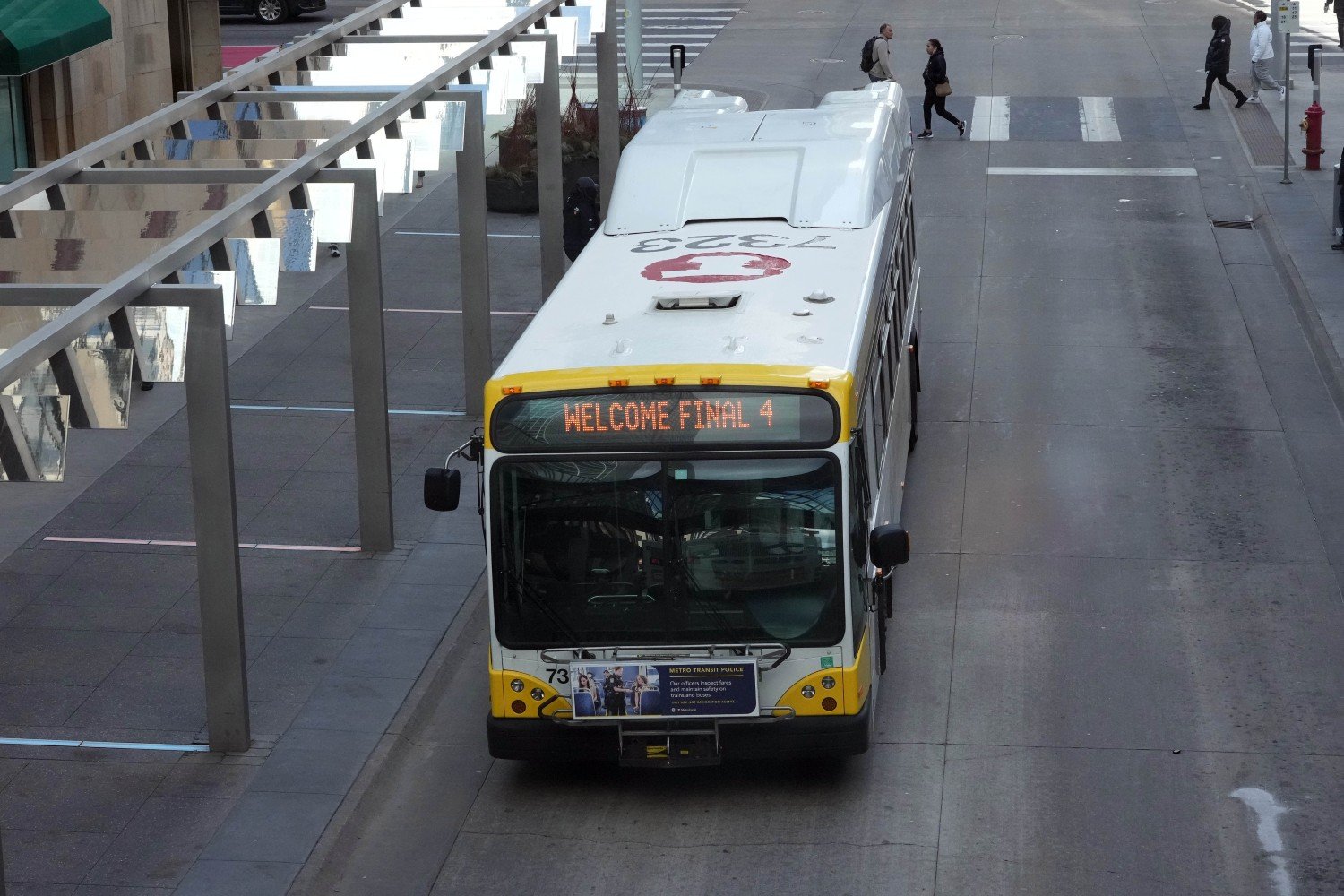
As MTC took over, they used federal funds to buy new buses and upgrade the lines. A new logo was chosen—the now iconic white T in a red circle. While the MTC also worked at the time to design and create new rail lines, pushback from other officials made sure those funds went to highway expansion instead. Offices went back and forth on the building of a light rail, until passage by the state in 1998 and the first opening in 2004.
By 1986, MEI Inc. had personally netted Pohlad over $160 million.
When MTC worked to expand the Light Rail across Target Field, the Pohlad-owned United Properties demanded a stake in the area, promising that public-private partnership was the best was forward for business and the public alike. The city gave the company $3.75 million.
In Part Three, we’ll see how Pohlad aimed to "reinvent" transportation across America, no matter the cost to anyone in his way—and despite proving to be awfully bad at managing that very sector of society on a local level, already.







Recommended Comments
Create an account or sign in to comment
You need to be a member in order to leave a comment
Create an account
Sign up for a new account in our community. It's easy!
Register a new accountSign in
Already have an account? Sign in here.
Sign In Now