


Twins Video
History, by nature, is an autopsical field. The great advantage of living after a thing occurs is the absolute judgment we can wield over it, overseeing the full extent of its effects while owning the ability to put it in its precise place. Order fulfills eventually. Conversations may alter interpretations—history is an ever-changing field, after all, despite its absolute coat of paint appearance—but the general, shared, casual understanding habitually stays static; singular, digestible, and easy for us to broadly understand.
We don't always earn the right to see things in their totality.
One of the challenges of understanding history is applying it to living, breathing, walking, contradicting things. We can understand and appreciate the great Tony Oliva, as his legacy came and went years ago, but how do we place current players into the historical conversation, especially when our view of those players may be clouded by our judgment in the now when our view is whole, and nuance is easier to capture? These individuals don't appreciate the soothing effects of calm interpretation.
Their mistakes are too recent, painful; we can more clearly remember them falling short in a big situation—as all humans do—as the older player enjoys the fortune of having his accomplishments tied to general stats and perhaps highlights, if they are so lucky.
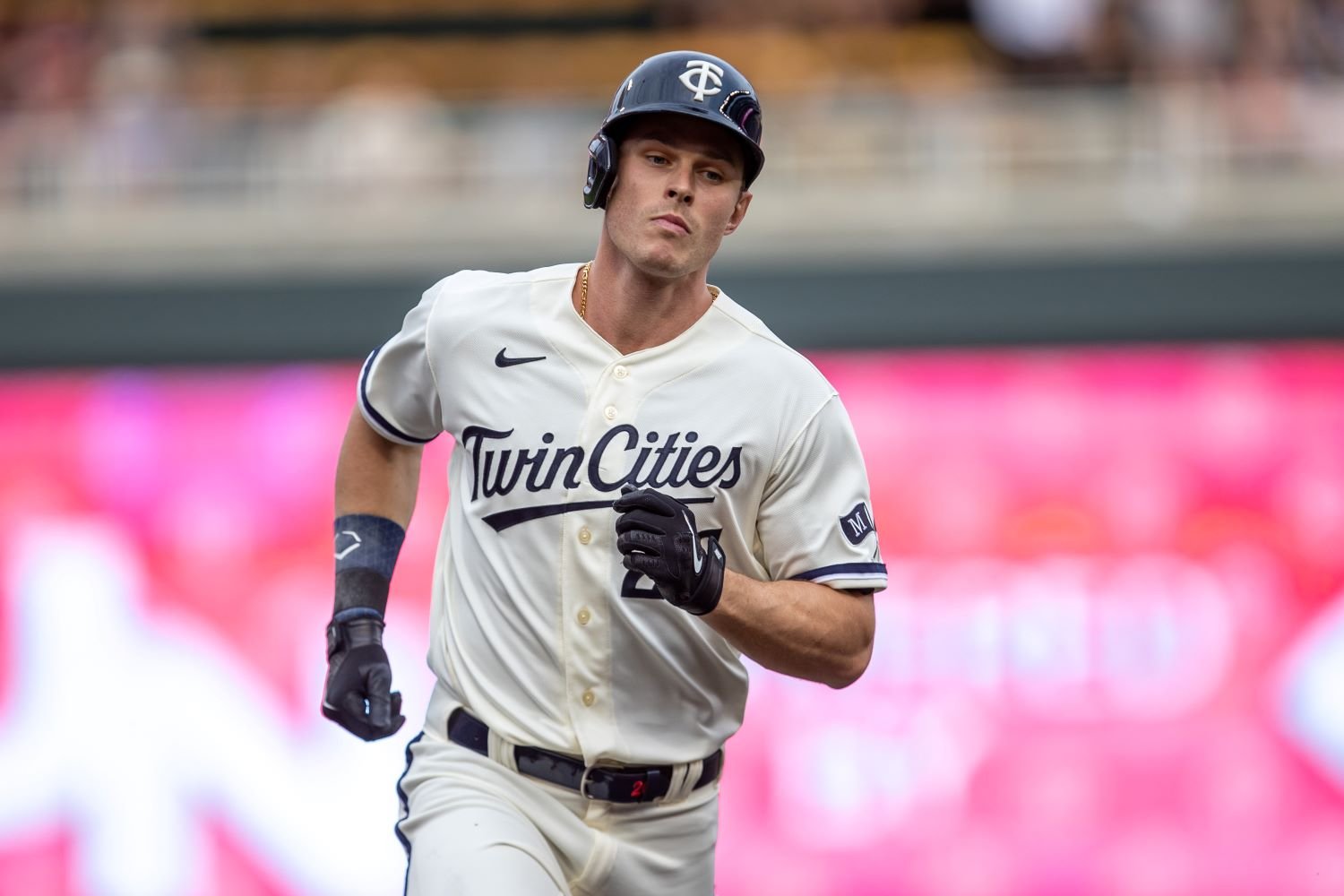
Through this lens, it becomes strange and nearly uncomfortable to tackle Max Kepler, one of the greatest outfielders in Twins' history. Above Denard Span, Michael Cuddyer, Jacque Jones, and Matt Lawton, the often critiqued and, maybe unfairly ridiculed German sits at 16.4 fWAR, holding strong onto the ranking as the eighth-best outfielder to wear a Minnesota uniform; even just a mediocre season will see him pass Shane Mack for the seventh spot.
But what odd feelings this truth elicits. How can it be that Kepler, he of disappointment; with offense worse than expected; with one true breakout season; with WAR totals filing in between 2.0 and 3.0 like blue-collared workers headed to the town industrial center, could possibly be one of the best outfielders in Twins history? His success feels meager and incapable of standing with some of the greatest to ever consistently don a Twins uniform.
Perhaps this is the convergence of a few feelings at once: "they'll love you when you're dead," they often say, maybe altering to fit in a sports context; the promise of potential—of more incredible exploits—never fulfilling, leaving a sour imprint onto the minds of those who expected more. Or, and what may be the ultimate correct answer, it's almost impossible to understand a player's history as it unfolds.
Save for the Mike Trouts of the world—those whose greatness is abundant and unquestioned—the rank-and-file must fight amongst themselves in the muck, occasionally achieving the highs so consistently reached by those better than them but still proving worth and ability. Their house is built on a great total of bricks laid over many summers, not stacked strongly in one go.
Just as well, specific to Kepler, is the shape of his production. Some may speak for the worthiness of a defensive ace in right field, but it will always be less than the exploits of an adept center fielder or a shortstop. Then, with stimulating bat, the more lumbering and offensively capable corner outfielders—played so to avoid their glove—bury Kepler with damage and extra-base ferocity that he has only known in one season. He cannot compete. It is not in his nature to. Yet he can equal them in total production, whether seen or not.
The fWAR list plays out as follows: Kirby Puckett takes the top spot, followed by Tony Oliva, Bob Allison, Torii Hunter, Cesar Tovar, Byron Buxton, Shane Mack, and then Kepler. Since the turn of the century, only Hunter and Buxton top his fWAR total.
We reach, then, the odd conclusion that Kepler is one of the best outfielders in Twins' history. Time may perhaps allow for those who never saw him play—or, indeed, can only remember small pieces—to accept this fully. It will probably not happen soon. Yet when Kepler's time as a player ends and he evolves into a Twins ambassador, returning for Twins festivals and reminding those of a time no longer present, all we will have is memories and numbers, both of which will favor him as an integral piece of Twins history.









Recommended Comments
Create an account or sign in to comment
You need to be a member in order to leave a comment
Create an account
Sign up for a new account in our community. It's easy!
Register a new accountSign in
Already have an account? Sign in here.
Sign In Now