


Twins Video
The word "seller" carries a negative connotation around the trade deadline. It signals surrender, rebuilding, and punting on the current season. That's why it's understandable that the Twins have shown little interest in waving the white flag while they remain in the American League playoff race. But what if there was another way to approach the deadline?
Over the last several years, the Milwaukee Brewers have built one of baseball's most sustainable organizations by refusing to let emotion dictate difficult roster decisions. They haven't traded stars because they were rebuilding. They've traded them because they understood the value of moving elite players before their trade value began to decline.
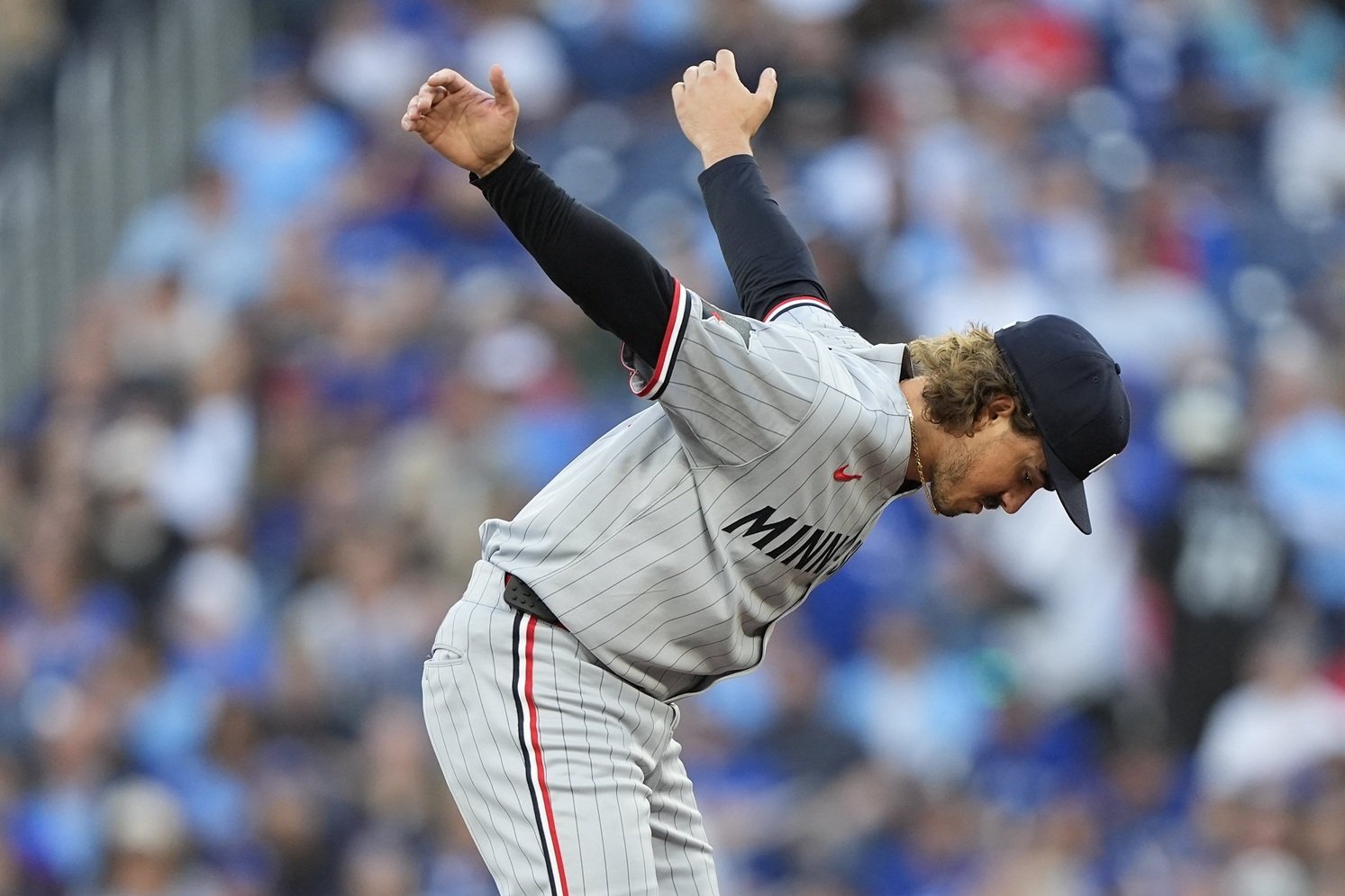
The Twins may soon face that same crossroads with Joe Ryan. Ryan has developed into one of the American League's best starting pitchers. Through 104 1/3 innings this season, the 30-year-old owns a 2.85 ERA with 122 strikeouts. He's pitching like a legitimate front-line starter, and has earned a second straight All-Star nod. He's also under club control through next season, giving any acquiring team two postseason runs to make the most of his upside.
That combination is incredibly valuable. It also means Ryan's value may never be higher. If Minnesota wants to maximize its long-term championship window, it should at least consider following Milwaukee's blueprint.
The Brewers Never Wait Too Long
Small-market teams rarely win by keeping everyone together forever. Instead, they maximize every asset before free agency forces difficult decisions. Milwaukee has mastered that philosophy.
Rather than allowing stars to walk away for draft-pick compensation, the Brewers have consistently identified the moment when a player's value peaked and turned those players into multiple years of affordable talent. That strategy hasn't pushed Milwaukee into rebuilding. Instead, it has helped the Brewers remain one of baseball's most consistent contenders.
Here's a look at how Milwaukee has handled similar decisions with some of its biggest arms. One detail immediately stands out: only one of these trades happened at the deadline. The others came during the offseason, when teams were willing to pay a premium for a full season of control.
Corbin Burnes
Trade Date: February 2024
After the 2023 season, Milwaukee traded Burnes with one year of club control remaining. Rather than settling for draft-pick compensation, the Brewers landed two players capable of contributing immediately in DL Hall and Joey Ortiz—and they picked up a competitive-balance pick from Baltimore to bolster their 2024 class.
Hall has transitioned into a bullpen role and taken a significant step forward this season, lowering his ERA to 2.03 while increasing his strikeout rate from 17.4% to 25.4%. Ortiz produced 2.8 WAR with a 102 OPS+ during his first season in Milwaukee before taking a step back offensively. Neither player has become a superstar, but Milwaukee turned one remaining season of Burnes into two controllable major leaguers while staying in contention. (Blake Burke, whom they took with that draft pick and on whom they also saved about $500,000 in bonus pool money to spend elsewhere, has an .846 OPS in his pro career and is likely to reach Triple-A this summer.)
Josh Hader
Trade Date: August 2022
Perhaps no Brewers trade was more controversial than dealing Josh Hader in the middle of a division race. At the time, fans questioned why Milwaukee would move arguably baseball's best closer while trying to reach the postseason.
The Brewers looked beyond the current standings. Milwaukee acquired Robert Gasser, Taylor Rogers, Dinelson Lamet, and Esteury Ruiz. Gasser has already become a capable big-league starter, despite a significant setback in the form of Tommy John surgery in 2024. Rogers added a lefty to the bullpen for the stretch run, and Ruiz was later included in the three-team trade that brought William Contreras to Milwaukee. In fact, he was all the Crew gave up to land Contreras, who has now made two All-Star teams for them.
Hader had limited club control remaining, and relievers rarely carry more value than as elite closers with a chance to anchor a playoff bullpen for multiple seasons. Milwaukee capitalized before that value began to decline. This one comes closest to being a cautionary tale, because that was the only time since 2017 that the Brewers have missed the postseason, and the front office was blamed for that, based on the vibes of a midseason trade of such magnitude. However, in the medium and long term, it looks like a brilliant maneuver.
Devin Williams
Trade Date: December 2024
Milwaukee repeated the process with Devin Williams. Rather than extending an expensive closer into his 30s, the Brewers again moved one of baseball's premier relievers while his value remained exceptionally high.
The Brewers received Nestor Cortes and infielder Caleb Durbin for Williams in the 2024-25 offseason. Cortes's injuries limited his impact before he was moved at the following trade deadline, while Durbin later became part of another multi-player deal that brought Shane Drohan, David Hamilton, and Kyle Harrison to Milwaukee. Once again, the Brewers turned one valuable reliever into multiple controllable assets, and got production even in the meantime.
Freddy Peralta
Trade Date: January 2026
Freddy Peralta represents the same type of decision the Twins may soon face with Ryan. After years of trade speculation, Milwaukee finally dealt Peralta to the Mets for top prospect Jett Williams and right-hander Brandon Sproat. Williams remains one of baseball's top prospects despite an uneven season at Triple-A, while Sproat immediately stepped into Milwaukee's major-league rotation.
Ryan fits a similar profile. As was true with Peralta, an acquiring club wouldn't simply be renting him for two months. Ryan would provide a postseason run this year and another full season of control in 2027. That dramatically increases the asking price.
Why Ryan Could Bring Even More
Ryan's combination of production, durability, and contract status makes him one of the most valuable pitchers who could realistically become available. He's not owed a massive contract, and he's pitching like a legitimate ace. That's exactly the type of arm contenders are willing to overpay to acquire. With the extra half-year of control baked in, he would have to fetch Minnesota more than what Burnes or Peralta got for Milwaukee.
The Twins already possess one of baseball's strongest farm systems after last year's deadline additions. Trading Ryan wouldn't signal the end of their competitive window—it could extend it. Imagine adding multiple top-100 prospects, upper-level pitching depth, and another high-upside position player to an organization that already features Walker Jenkins, Kaelen Culpepper, Emmanuel Rodriguez, Eduardo Tait, and several other premium young talents.
The Timing Matters
One lesson stands out from Milwaukee's recent history: only Hader was traded during the season. Burnes and Williams were moved during the offseason, while Peralta remained with the Brewers through another postseason run before they eventually cashed in. That's an important distinction for Minnesota.
The Twins don't have to make this decision before the trade deadline. If they believe this team can reach the postseason, Ryan can remain atop the rotation through October before the front office revisits trade discussions this winter. In fact, that could be the better path. Teams often pay a premium for a pitcher with a full season of control, rather than just two months, giving Minnesota the opportunity to compete now while preserving Ryan's long-term trade value. The Brewers have repeatedly shown that patience can be just as valuable as urgency.
It's About Extending the Window
The Brewers have shown there is a difference between selling and managing a championship window. They've remained annual contenders because they consistently make emotionally difficult decisions before circumstances force them into weaker ones.
The Twins don't have to trade Joe Ryan. If they believe they can sign him to a long-term extension, keeping him is the obvious choice. But if an extension isn't realistic, waiting until the final months of his contract could dramatically reduce his value. At that point, acquiring teams would receive only a few months of control, instead of another full season, shrinking both the number of interested clubs and the quality of offers.
Trading Ryan would undoubtedly be unpopular. It would also require tremendous confidence in Minnesota's scouting and player development departments. That's exactly the type of move successful small-market organizations make—though, we ought to note, the Twins are a small-market team more in self-image and by default than in fact.
Milwaukee has demonstrated that moving elite pitchers before free agency isn't waving the white flag—it's investing in sustained success. The Twins may not consider themselves sellers this summer, and they probably shouldn't. However, if another organization is willing to offer the type of franchise-altering package Milwaukee has repeatedly secured for its stars, Minnesota owes it to itself to listen.
Whether that decision comes in a few weeks or this winter, the Brewers have already provided the blueprint. Sometimes the hardest trade isn't the one that closes a championship window—it's the one that keeps it open for years to come.
Can Minnesota follow Milwaukee’s blueprint? Leave a comment and start the discussion.







Recommended Comments
Create an account or sign in to comment
You need to be a member in order to leave a comment
Create an account
Sign up for a new account in our community. It's easy!
Register a new accountSign in
Already have an account? Sign in here.
Sign In Now