


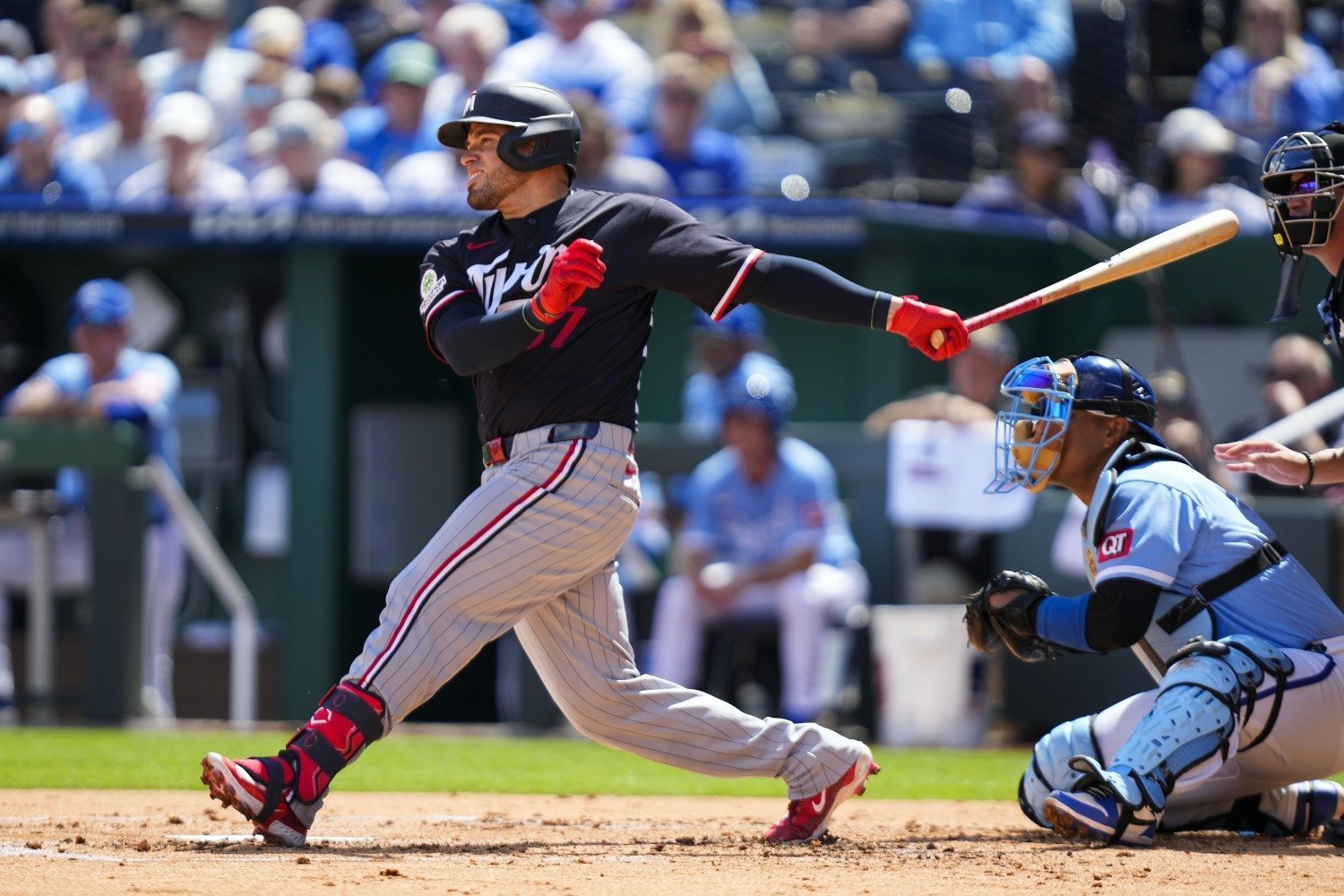
Twins Video
Before the trade deadline arrives, much of the focus (understandably) centers on the biggest names expected to change uniforms. For the Minnesota Twins, that conversation has almost exclusively revolved around Ryan Jeffers. He's an impending free agent; he's having the best offensive season of his career; and nearly every contender looking for catching help has been connected to him in one way or another. But what if the Twins found another way to capitalize on the catching market?
The market for catchers has only become more competitive in recent days. Multiple playoff contenders (including the Yankees, Rays, Red Sox, and White Sox) are searching for help behind the plate, and one of the biggest alternative options disappeared when Athletics All-Star Shea Langeliers suffered a season-ending torn meniscus in his right knee. With Langeliers off the board, the demand has only increased.
Jeffers has quietly assembled the finest offensive season of his career. Entering the stretch run, he's hitting .283/.390/.532 with nine home runs and a .922 OPS, establishing himself as one of baseball's best offensive catchers. His combination of power, patience, and ability to control the strike zone makes him an attractive fit for virtually any contender looking to upgrade behind the plate.
The timing couldn't be better from a trade-value standpoint. Jeffers is scheduled to become a free agent after the season, meaning the Twins must determine whether they view him as part of their long-term plans or whether now is the time to maximize his value. Losing him in free agency for nothing would be a difficult outcome. If another club is willing to pay a premium today, that merits at least some consideration. With Langeliers no longer available, Jeffers arguably becomes the best catcher realistically available at the deadline.
There are certainly bigger names floating around the rumor mill. Diamond Centric currently ranks Jeffers as the No. 42 overall trade candidate, while listing Adley Rutschman, Hunter Goodman, and Francisco Alvarez ahead of him among available catchers.
The difference, however, is years of club control. All three of those catchers remain under team control beyond 2026, making them significantly more expensive acquisitions. Teams would have to surrender considerably more prospect capital to pry them away. It also means their current clubs don’t need to be in a hurry to trade them away.
That scarcity could actually strengthen Minnesota's negotiating position. For clubs looking to improve immediately without emptying their farm system, Jeffers may represent the most realistic and impactful addition available.
The surprise trade candidate could be Victor Caratini, if the Twins decide they don't want to part with Jeffers, or if the offers fail to meet their asking price. Caratini isn't nearly the offensive force Jeffers has become, but he's an experienced switch-hitting catcher with postseason experience, who remains under contract next season.
Caratini is owed a $6.5-million base salary in 2027 and has a $12-million mutual option for 2028. As is often the case with mutual options, the far more likely outcome is the Twins paying the $3.5-million buyout, rather than both sides exercising the option. In effect, they owe the veteran backstop $10 million for next season.
Moving Caratini would accomplish more than simply addressing another team's catching need. It would also create additional payroll flexibility heading into next season. Those savings could potentially help Minnesota pursue a reunion with Jeffers, or simply provide more room to address other roster needs over the winter.
Caratini doesn't offer Jeffers's offensive upside. Through 78 games, he owns a .684 OPS and a 92 OPS+, making him a below-average hitter. However, contenders often prioritize reliability and versatility at catcher over offensive production alone, especially if they're looking for a second catcher or platoon option.
Defensively, Caratini has graded as an above-average framer and blocker, helping his pitchers steal strikes and limit damage on balls in the dirt. The biggest concern has been controlling the running game. He has been charged with -6 runs in caught stealing above average and owns one of the slowest pop times among major-league catchers, making him vulnerable against aggressive baserunning clubs. Still, experienced catching is one of the hardest commodities to acquire in late July, and Caratini checks enough boxes to draw interest from clubs needing dependable depth behind the plate.
Jeffers remains the obvious name to watch over the next several days, and for good reason. He's playing the best baseball of his career at precisely the right time, and the market for catching has only become thinner following Langeliers's injury. However, trading Caratini would give the Twins financial flexibility while still allowing them to keep one of the league's hottest offensive catchers for a potential stretch run or future extension. It would be a less headline-grabbing move, but one that could quietly position the organization for both the remainder of this season and next year. As a last resort, of course, they could trade Alex Jackson, instead. Moving Jackson wouldn't save them much money, but it would alleviate the crunch created by carrying three catchers and clarify some players' roles. At this point, trading Jeffers feels unlikely. Trading Jackson would be an extremely minor move, but it's probably necessary—unless the front office finds a happy medium by dealing Caratini.
Does it make sense to trade Caratini instead of Jeffers? Leave a comment and start the discussion.
Which team do you dislike the most in the AL Central?
Follow Twins Daily For Minnesota Twins News & Analysis



- Peter Gravett, Dman and Patzky
-
 3
3


Recommended Comments
Create an account or sign in to comment
You need to be a member in order to leave a comment
Create an account
Sign up for a new account in our community. It's easy!
Register a new accountSign in
Already have an account? Sign in here.
Sign In Now