


Twins Video
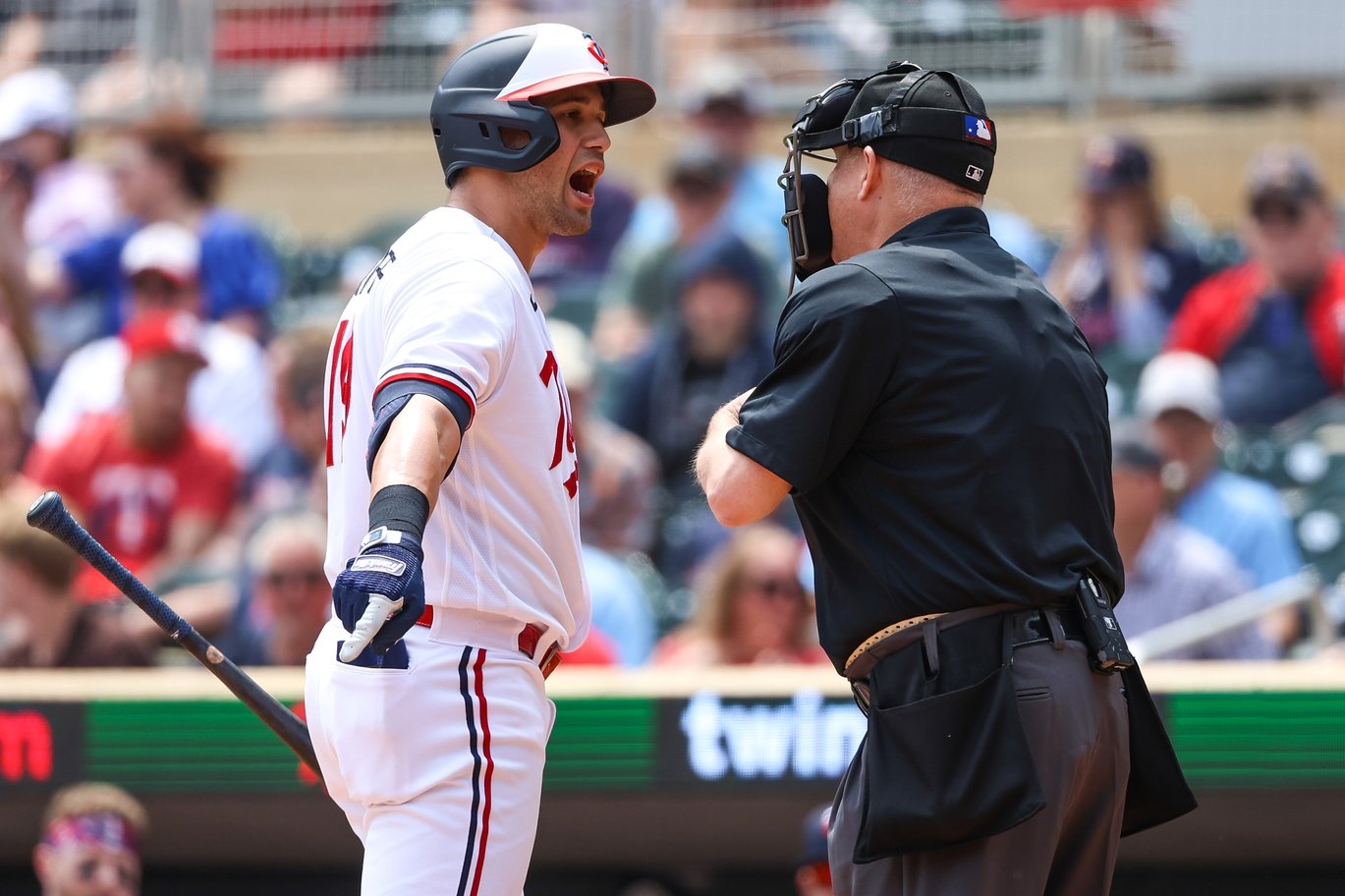
Fans were understandably exasperated by the amount of whiffing they witnessed from Twins hitters this year. Minnesota set Major League Baseball's all-time strikeout record in the regular season, and the team's playoff run ended with a parade of punchouts as they scrambled futilely to get a runner on base and mount a threat. If you asked random local baseball fans what they'd like to see from next year's club, "fewer strikeouts" would probably be a common refrain.
That's why it's interesting that Twins leadership is making no bones about their intention to stick with the same basic philosophy that guided them in 2023, even if it means plenty more strikeouts are in the cards.
In mid-October, shortly after the team was eliminated by Houston, Bobby Nightengale wrote a piece for the Star Tribune titled, "Strikeouts or not, Twins will not stop swinging for the fences." More recently, MLB.com beat writer Do-Hyoung Park echoed a similar sentiment with last week's headline, "Do Twins need to cut down on strikeouts? Not necessarily." Both articles include quotes from Derek Falvey and Rocco Baldelli firmly vouching for the controversial approach spearheaded by David Popkins and the hitting group. Our Matthew Trueblood looked at the same subject back at the beginning of the team's playoff run, for Twins Daily Caretakers.
"Of course, it’s a very easy blinking light that everyone can look at and talk about,” Baldelli said of the strikeouts. “There are certain points in every game where you do want to find a way to put the ball in play. But in the vast majority of at-bats, that’s not part of the conversation. I would rather have a guy have a great at-bat and go deep into a count and possibly strike out, but give us a chance to actually give us a baserunner or actually look for a ball in the middle of the zone and pulverize it."
As Baldelli outlines, the strikeout isn't any kind of aspiration, but rather an accepted risk to achieve the kinds of outcomes they want: walks and home runs. The Twins ranked second among AL teams in walks and tied for first in homers.
“We weren’t trying to strike out more,” said Falvey. “But at the same time, we were trying to find ways to get to more power. We’ve all observed these playoffs to this point. What’s mattered most is power, the ability to hit for power. The reality is that striking out less this postseason has not led to more wins.”
According to Park, Falvey is fond of pointing out that statistically, hitting home runs in the playoffs has proven to be more beneficial than striking out is detrimental. In 2023, postseason, teams that out-homered opponents went 29-7; those who struck out less went 17-19.
Obviously, it would be ideal to have players throughout the lineup who can hit for power and draw walks without striking out frequently. But guess what? Those hitters are among the most valuable in baseball. They're really hard to find and really expensive to sign or acquire via trade. For a team in Minnesota's position, scaling back an already limited payroll, attempting to assemble an elite lineup through this means is essentially a non-starter. They can try to develop bats like that from the top of the draft (and hopefully have a couple on the way, in Brooks Lee and Walker Jenkins), but otherwise, they have to take the bad with the good.
How bad are strikeouts, really? That's the question that folks like Falvey and Baldelli would pose, and challenge you to think more deeply about. It does seem telling that Minnesota's offense was well above average, in terms of runs scored and OPS, despite striking out more than any other club in baseball history. Maybe it's also noteworthy that, despite this ignominious distinction, these Twins were the ones to finally break through in the playoffs.
Meanwhile, if you want to see the opposite end of the spectrum, look no further than across the division to the rival Cleveland Guardians. They struck out fewer times than any other team in the majors this year, and their offense was completely punchless and ineffectual. Cleveland hit the fewest homers in the American League, had the second-lowest slugging percentage, and scored the fourth-fewest runs.
No matter how annoyed you were watching the Twins offense hack through one of its sleepy stretches of nonstop strikeouts, it was better than watching the Guardians feebly tap into an endless parade of groundouts and weak fly balls, all year long. Cleveland produced the lowest Barrels per plate appearance, lowest Hard Hit rate, and lowest average exit velocity of any major-league team this year. Now THAT is an unwatchable lineup.
Yes, the Twins need to cut back the strikeouts to some extent. That's bound to happen organically, with the departure of Joey Gallo and his 300-plus plate appearances moving the needle on its own. But the coaching staff and front office is making it clear: we should not expect the team to fundamentally pivot away from a philosophy that prioritizes power at the expense of contact.
And if we're taking an honest look at the evidence, I'm not sure we should want them to.








Recommended Comments
Create an account or sign in to comment
You need to be a member in order to leave a comment
Create an account
Sign up for a new account in our community. It's easy!
Register a new accountSign in
Already have an account? Sign in here.
Sign In Now