


Twins Video
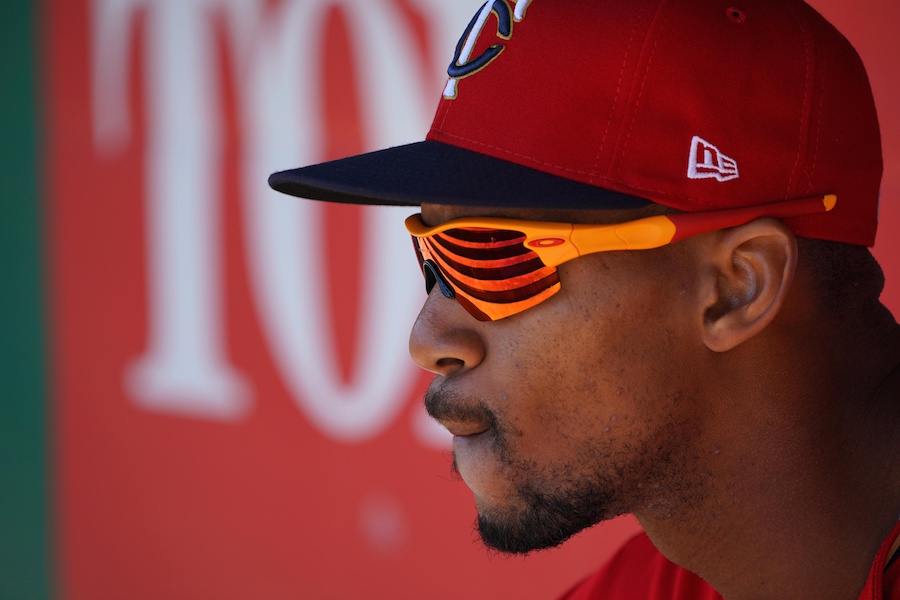
The Twins have a bevy of tasks in front of them, but none are more important to their short-term outlook than getting Byron Buxton back on track. His game-changing ability makes him an elite difference-maker in the game, and Buxton's total lack of contribution in 2018 was one of the biggest reasons Minnesota went nowhere.
“When you have a staff that can relate to different players in different ways, I think you have a much better chance of touching these guys and helping them in their careers and getting them where they need to be," said Baldelli during his introductory press conference at Target Field on Thursday.
Buxton's career up to this point has been one of huge upside, sky-high expectations, and physical setbacks. In all three of those areas, his new manager can provide an empathetic perspective and relate in some unique ways.
Rocco Baldelli Knows About Being Gifted with Incredible Talent
Like Buxton, Baldelli was a nationally recognized talent from a young age, and became a Top 10 draft pick out of high school. Both quickly developed into elite prospects and reached the major leagues at age 21. As players, they were of a similar mold: spectacular defensive center fielders and aggressive right-handed swingers with power.
Few people throughout the game's history have been blessed with the kind of pure athleticism and ability Buxton has. I'm not sure even Baldelli makes that cut, but he's closer than most.
Rocco Baldelli Knows About Dealing with Pressure and Expectations
Of course, being a top draft pick (Buxton was second overall in 2012, Baldelli sixth overall in 2000) brings with it a burden of its own. These two blue-chip studs were subject to extreme levels of pressure and expectation, which only grew as they dominated the minors and rocketed to early big-league debuts.
Buxton's perpetual stumbles and regressions have been made ever more frustrating by the Hall of Famer we all know resides within him. We've seen glimmers at times, but for various reasons, it just hasn't all fully come together. And that clearly weighs on him – why wouldn't it?
Baldelli's been there. As a Rookie of the Year candidate in 2003, there was hoping he'd help lift a still-fresh Tampa Bay franchise – last-place finisher in each of its first six years – out of the cellar. He knows that level of scrutiny, which can often be fiercest from oneself.
And that leads us to the most important thing:
Rocco Baldelli Knows About Being Derailed by the Uncontrollable
In a career that was sabotaged by physical breakdown, Baldelli faced maladies of all manners. He tore his ACL playing basketball during his third offseason. While rehabbing, he injured his elbow and required Tommy John surgery. Once he made it back he started experiencing chronic fatigue.
Upon undergoing tests, he was diagnosed with "metabolic and/or mitochondrial abnormalities." Doctors attempted to work out a plan to manage it, but the inexplicable ailment sapped and drained him. He battled on for years, participating in Tampa's first World Championship in 2008, but was finished as a player by age 29.
Which brings us to Buxton. He's had it bad up to this point, with major injuries scattered throughout his ascent and now casting doubt on his once brilliant outlook. But he's a long way from going down Baldelli's road.
It's often said that great players don't make great coaches, because they can't empathize with the adversity and tribulations experienced by lesser talents. In a way, that dynamic is at play with this managerial transition.
As a legendary ballplayer and No. 3 overall draft pick back in 1974, Paul Molitor shares the first two commonalities mentioned above, but not this one. His career wasn't without speed bumps but over 21 years of playing, he stayed mostly healthy and forever productive en route to the Hall of Fame.
Buxton is currently at a crossroad between the best-case scenario where he turns it around and realizes his potential as a top player in the game for many years (the Molitor path), or the worst-case scenario where that potential is squashed by endless time spent in the trainer's room (the Baldelli path).
To a large extent, it's out of his hands. And who better than Baldelli to get that message across? Focus on the big picture, manage what you can control, and don't let the setbacks get you down.
Buxton doesn't need more heart, or determination, or motivation. That's all there. But he might benefit from a fresh perspective and a new type of mentorship that Baldelli can seemingly provide.





Recommended Comments
Create an account or sign in to comment
You need to be a member in order to leave a comment
Create an account
Sign up for a new account in our community. It's easy!
Register a new accountSign in
Already have an account? Sign in here.
Sign In Now