


Twins Video
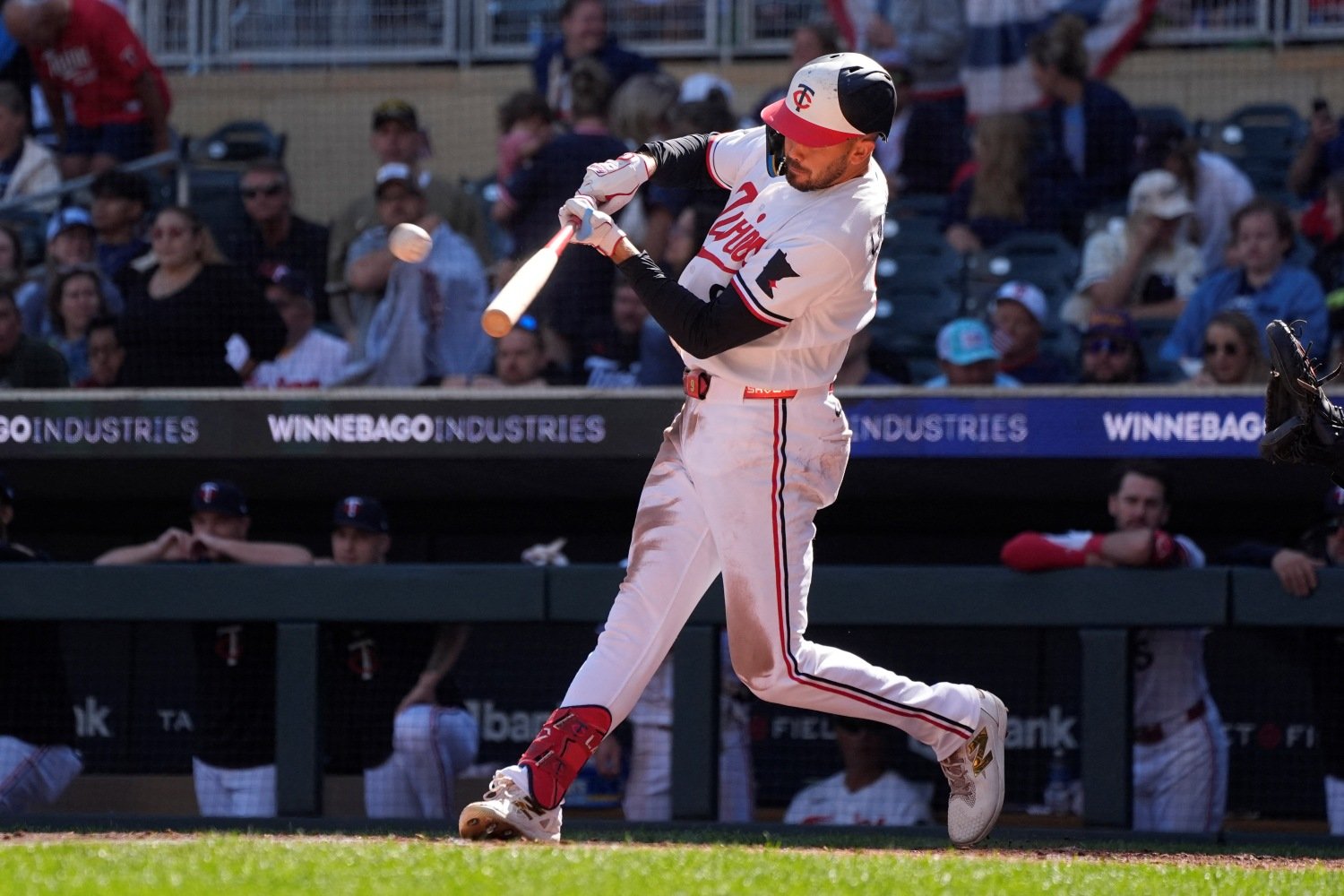
The Minnesota Twins are officially in offseason mode, and that means it’s time to start making some decisions. One of those decisions will be about outfielder Trevor Larnach, who's coming off a career year offensively. A resurgent 2026 makes his future with the Twins an interesting question heading into the offseason. There are a few different factors that could play into Minnesota’s decision, and there’s certainly a case to be made for either keeping him or moving on.
So, what should the Twins do? Let’s break it all down.
Pros of Bringing Him Back
As I noted, Larnach is coming off the best offensive season of his career. The 29-year-old slashed .269/.352/.436, setting career highs in all three departments of the slash line. For a Twins team that could certainly use some consistency in the lineup, it’s easy to see why keeping his bat around would be appealing. While he might not be the type of hitter who completely transforms a lineup, a player who can post an OPS approaching .800 certainly has value, particularly at a relatively affordable salary.
This year, the Twins and Larnach avoided arbitration by agreeing to a one-year, $4.475-million contract. His salary for 2027 is projected to land around $6.3 million, which would be a noticeable increase but hardly an outrageous figure for a hitter coming off the season he just had. The Twins aren't in a position where they should be giving away productive major-league bats, and there's a legitimate argument for keeping him around if the financial commitment makes sense.
From a pure ability standpoint, Larnach's bat is worthy of being in the lineup next season. The question is whether Minnesota can find a way to give him enough opportunities to make that investment worthwhile, without being overly reliant on him repeating what might be the best season he'll ever have. That's where things start to get a little more complicated.
Cons of Bringing Him Back
The biggest issue with bringing Larnach back is the Twins' current roster construction. Barring a shocking trade this winter, Minnesota figures to have Byron Buxton, Luke Keaschall, Walker Jenkins and Emmanuel Rodriguez in the mix for outfield playing time in 2027. Considering the organization will (presumably) want to give their young players opportunities to establish themselves at the major-league level, there might not be enough consistent playing time to go around.
Even if Minnesota decided to move Keaschall back to the infield to open up some additional opportunities, that would create its own set of questions. There are only so many ways to shuffle the roster before another position becomes crowded, and bringing Larnach back would make those decisions even more difficult. Of course, the Twins could always use Larnach primarily as their designated hitter. That would allow his bat to remain in the lineup without requiring a regular spot in the outfield, but it would also limit the flexibility of the DH position and potentially take opportunities away from other players.
It's worth remembering that Minnesota nearly traded Larnach during the 2026 season. The Twins reportedly had a deal in place with the Houston Astros that would have sent Larnach to Houston in exchange for reliever Bryan Abreu, but the trade fell through at the last minute. While there's no guarantee the Twins will revisit those discussions this winter, the situation certainly suggests they were willing to move him for the right return.
It seems to reflect the roster crunch Minnesota is facing. If the organization decides someone needs to go to make room for younger players, Larnach is definitely a far more realistic candidate than Buxton or one of the prospects the Twins are hoping will become important pieces of their future. That doesn't mean the Twins should simply give him away. His offensive production has value, and if another team is interested, Minnesota should look to get something worthwhile in return. Still, the combination of a crowded outfield and a rising arbitration salary makes Larnach a logical trade candidate.
Timeline
So, what does the timeline for all of this look like? The first major decision point comes on November 20, when the Twins will have to decide whether to offer Larnach a contract for the 2027 season or non-tender him.
If Minnesota is comfortable paying Larnach roughly $6.3 million, then this decision is pretty straightforward. Offer him a contract, and figure out how to fit him into the lineup consistently. If the Twins aren't comfortable with that salary, however, they'll need to figure out whether Larnach is viewed as an asset by other teams at that price. That means exploring the trade market. If Minnesota can find a team willing to take Larnach on at his projected salary while giving up something good in exchange, it might make the decision much easier.
If the Twins can't find a meaningfully interested trade partner, though, they'll have to weigh a more tangled set of considerations. Do they offer Larnach a contract anyway, since ownership is (at least nominally) committed to expanding the payroll in 2027? Or do they decide the salary is too much for the role they expect him to have and non-tender him, making him a free agent?
There's an added wrinkle here, because with the Collective Bargaining Agreement ending on December 1, a lockout is likely to begin just 10 days after the non-tender deadline. If that leads to an accelerated spring training or a shortened window to make roster moves, the Twins might not have much time to explore a trade later in the offseason if they decide they don't want Larnach after all. On balance, moving on from him seems the wiser course—but they might need to accept less than the absolute maximum possible trade value in order to get that done on a schedule that keeps their offseason on track.





Recommended Comments
Create an account or sign in to comment
You need to be a member in order to leave a comment
Create an account
Sign up for a new account in our community. It's easy!
Register a new accountSign in
Already have an account? Sign in here.
Sign In Now