


Twins Video
Within a couple hours of one another, right-handed hurlers Michael Lorenzen ($7 million, with $5.5 million paid in 2025 and $1.5 million as the buyout on a mutual option for 2026, with the Royals) and Chris Martin ($5.5 million, with the Rangers) signed one-year free-agent deals Monday. Lorenzen will, presumably, be a starter for the Royals, while Martin is a career reliever who took slightly less money than he was offered elsewhere in order to land close to home and pitch for Texas.
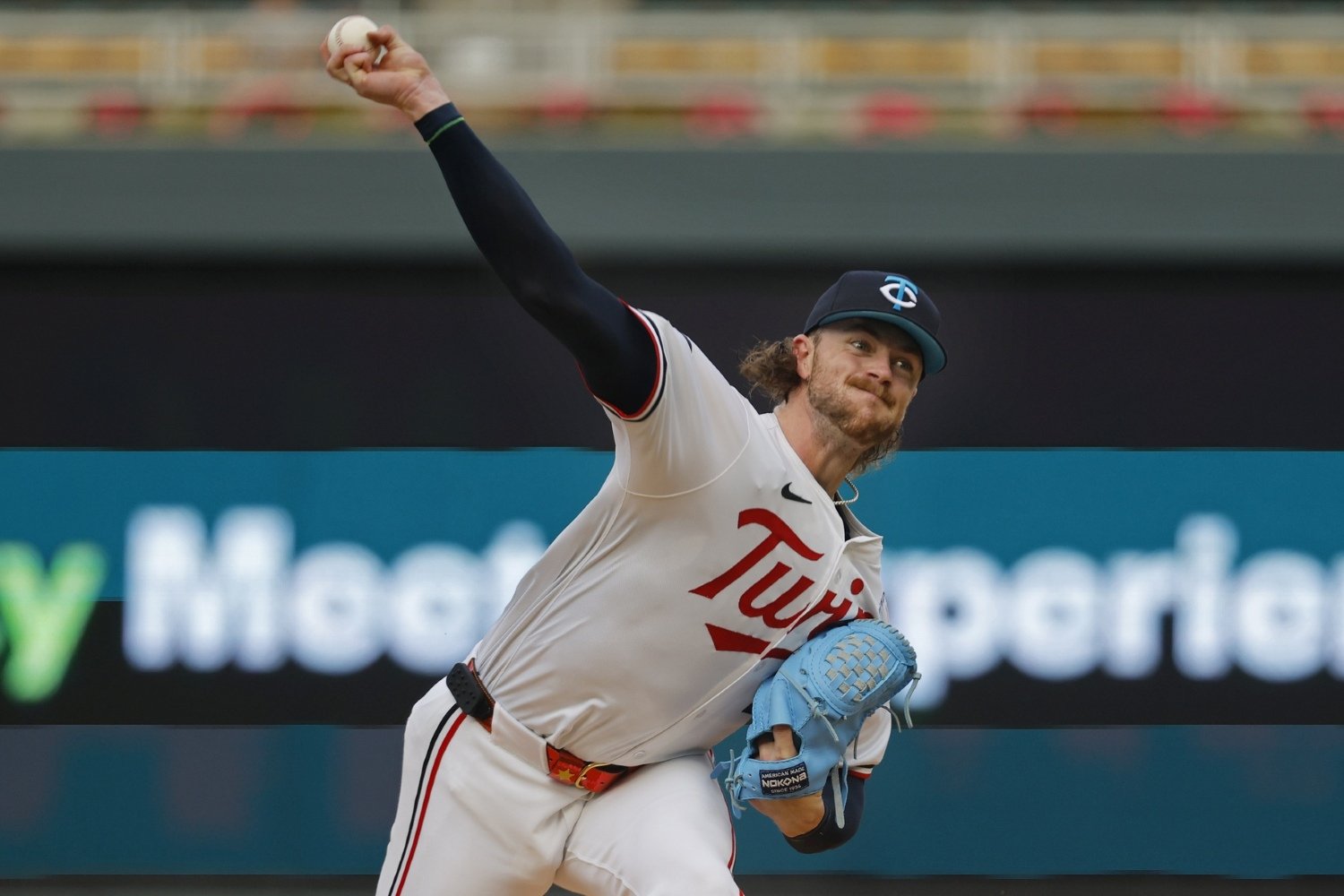
Those were important moves for the Twins, because it's already Jan. 7, and they still need to clear at least a chunk of the $7.5 million they owe to Chris Paddack for 2025. Paddack is crowded out of the team's starting rotation (which consists, at the moment, of Pablo López, Bailey Ober, Joe Ryan, David Festa, and Simeon Woods Richardson, with Zebby Matthews and others waiting in the wings), and while he profiles better as a streamlined-repertoire reliever, the money the Twins owe him on the teams of the extension the two sides struck in early 2023 is more than they can afford to pay to fill a middle-relief role under their ownership-friendly budgetary constraints for the coming season.
Thus, trading Paddack is the only sensible thing to do. Ideally, the Twins will spend some money to upgrade first base and their outfield mix, and to find a left-handed reliever to round out their bullpen, but as things stand, they have to move significant money just to hit the number set by the miserly Pohlad family. Waiting out the market a bit has given the Twins time to let demand and supply balance one another, but the Lorenzen and Martin deals have also given them some insight into what marginal value Paddack has on the trade market.
That answer is blessedly simple, too, though not exciting: it's zero. Paddack is very close to equal in value to the likes of Lorenzen and Martin. The first run of Baseball Prospectus's PECOTA projections for 2025 list Lorenzen at a 111 DRA- (where 100 is average and lower is better); Paddack at 99, but in fewer innings; and Martin at 86, but in several fewer innings than Paddack. He's capable of either starting or relieving, but either way it breaks, one of his easiest comparators just signed—and they signed for almost exactly what he'll make in 2025.
Unfortunately, that probably means that the Twins will have to kick in something whenever they trade Paddack. In theory, the implication of these deals would be that he could be traded straight-up for nothing, but that's not really how baseball transactions work. It's more likely, for reasons personal and logistical and on-field, that the Twins will trade Paddack and some amount of money to offset his salary for a player who addresses one of their needs, even if it be in a fairly unsatisfying way. They could always trade him for a couple of far-off prospects and simply attach $1-2 million, but that would leave them stuck: they still wouldn't have spending power, and their list of needs would not get shorter.
Instead, we could see them attach $2-3 million and target a player like Sacramento's Hogan Harris or T.J. McFarland (two lefty relievers) or a similarly low-level bat. Paddack doesn't seem to have any marginal value, but these deals suggest that he is tradable. It will just have to take the form of patching a minor hole and achieving minor savings, rather than deriving any major value from the move.







Recommended Comments
Create an account or sign in to comment
You need to be a member in order to leave a comment
Create an account
Sign up for a new account in our community. It's easy!
Register a new accountSign in
Already have an account? Sign in here.
Sign In Now