


Twins Video
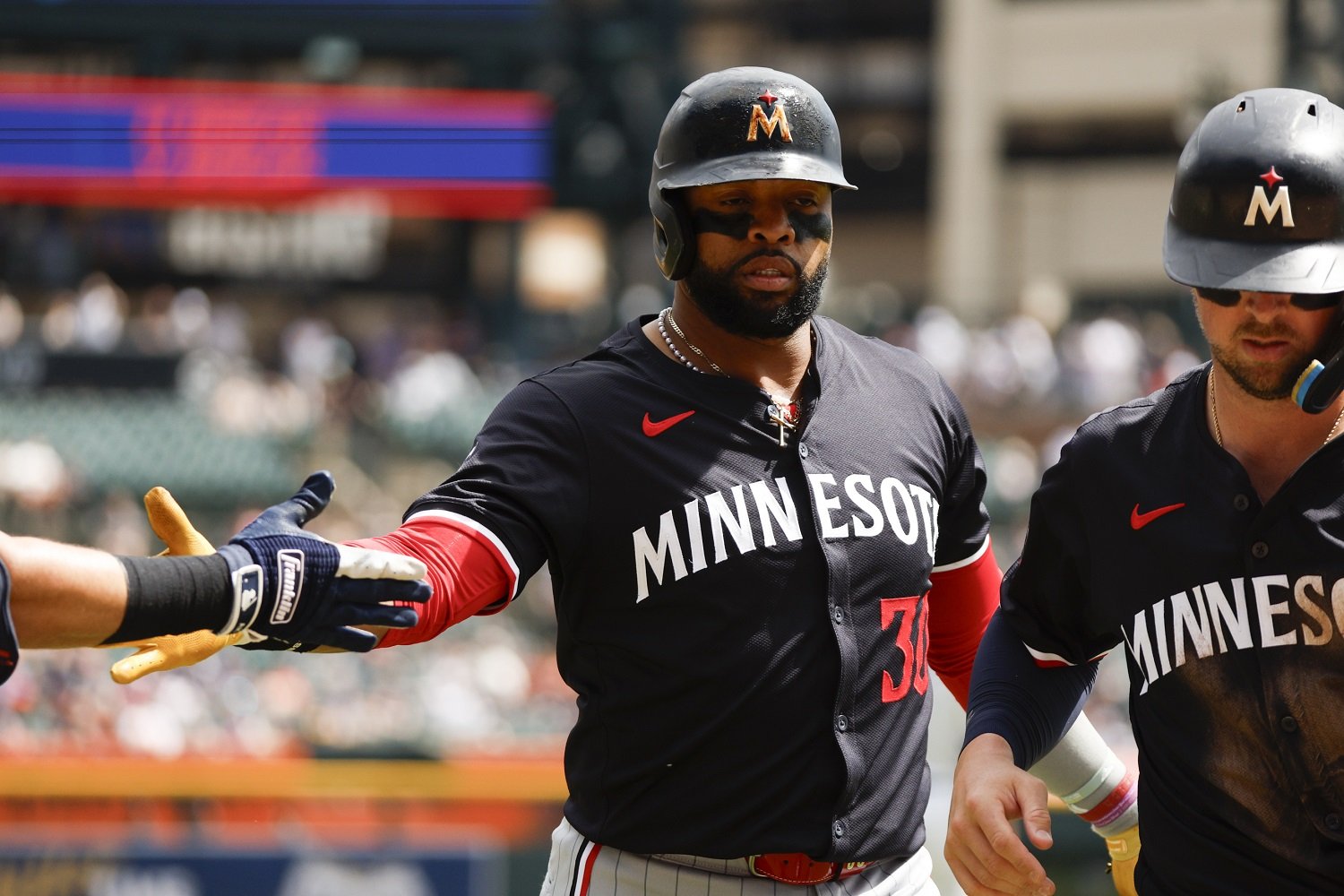
One of the holes the Minnesota Twins were expected to fill over the offseason was the role of a right-handed hitter to pair with corner players like Alex Kirilloff, Max Kepler, Matt Wallner, and Trevor Larnach. The Twins opted to sign Carlos Santana to a smooth $5.25-million contract for his age-38 season. They also turned the starting first baseman's mitt over to the former All-Star and Silver Slugger.
Being the everyday first baseman was a larger role than many fans had anticipated for the aging player. Over the first 10 years of his career (2010-2019), he was a hitter 21 percent above average by OPS+. From 2020 to 2023, he was 6 percent below average (94 OPS+), hitting just .218. Even then, though, he drew walks and hit with a little pop.
Last year was a bit of a renaissance, as he had his first season since 2019 with an OPS+ above average (104), though that’s still not what a team hopes for out of a bat-first position. His elite defense offset this deficiency, as he led MLB first basemen in 2023 with 11 Defensive Runs Saved.
It’s not an ideal everyday first baseman, especially as Santana has not hit right-handed pitching well in several years, but if he’s on the roster, he will play. Unfortunately, the Twins' confidence in him being an everyday contributor has not been rewarded.
Through Sunday, April 21, Santana had played 17 of the Twins’ first 20 games, slashing an abysmal .133/.224/.150 as a first baseman and designated hitter, the two most bat-forward positions on the field. He’s also not getting any younger. He’s also striking out at a career-worst 21 percent clip.
No matter how good a player was in his 20s, Father Time comes for everyone, and Santana just turned 38 two weeks ago, far past the expiration date for most MLB players. So, what’s the outlook for a player like this? What are the odds that a player at this age can turn his season around? It’s still early, right? He has plenty of time to find his groove.
The turnaround I’m describing here has rarely happened in recent baseball history.
I dug up the 50 worst 17-game starts (10% of a season) to a season for players 37 and older by OPS since 1995. I threw some out if they didn’t regularly play (e.g., backup catchers, like 1999 Charlie O'Brien, 2014 José Molina, 2012 Henry Blanco, 2019 Erik Kratz, and 2004 Pat Borders; or those affected by injuries--like 2014 Jason Giambi, who played 17 games between April and September), leaving me with 36 players.
Among those players, Santana is off to the fifth-worst start in the last 30 years (even including the non-everyday players, he’s seventh-worst). The list has many aging corner outfielders, first basemen, and designated hitters, a few catchers—not known for their batting—and a sprinkling of center fielders and infielders.
Of the 36, 16 were beginning their last season in the majors. Eighteen played another year (though Gary Gaetti and So Taguchi only played 5 and 6 games, respectively, in their following seasons before retiring). Two—Santana and José Abreu (whose 2024 is the worst start on the list) are currently playing.
Of course, many players do retire after their age-37 season, even if it was moderately successful, so those numbers aren’t surprising. However, it’s worth checking to see how many players managed to turn their seasons around after their disastrous starts. What hope do Twins fans or Santana have for a turnaround?
Only five of the 34 players we have final results for ended the season with a league-average OPS or better (2015 Marlon Byrd, 100; 2015 Carlos Beltrán, 119; 2007 Gary Sheffield, 119; 2022 Justin Turner, 120; 2013 Raúl Ibañez, 123). A few also reached an OPS+ in the 90s: 2009 Gregg Zaun, 2006 Bernie Williams, 2021 Miguel Cabrera, 2002 Julio Franco, and 2017 Chase Utley.
Santana getting to a 90 OPS+ would be a victory. Perhaps I buried the lede a bit here: as of Sunday, he had a 13 OPS+ at .374. It’s hard to dig out of an early pit. Some of the above players—Byrd, Utley, and Cabrera—started in that range, so it could be possible.
However, most players were unable to dig themselves out. Half (17) ended their seasons with an OPS+ below 80, which is a complete impediment at first base. Eleven of those 17 retired (plus Gaetti and Taguchi, who were essentially done, which makes it 13). Among those players are Harold Baines, Hideki Matsui, Otis Nixon, Brady Anderson, Johnny Damon, and Wally Joyner.
Some of those players were coming off good years, too; aging is inevitable. Brian Giles went from an OPS+ of 138 to 52 from 2008 to 2009, then retired. Gaetti went from 121 in 1998 to 52 in 1999. Magglio Ordóñez fell from 129 in 2010 to 73 in 2011. Santana doesn’t have so lofty a starting point to lean on—it’s hard for fans to hope he regains his form when his form last season was four percent above average.
And so, how much time does he have? It partially depends on the context. Kirilloff is off to a good start this season, and José Miranda is showing a bit of life. But beyond that, the Twins’ other internal options at first base are players like Yunior Severino, Chris Williams, or Alex Isola--aging minor leaguers with no MLB experience.
Upon a player like Carlos Correa or Royce Lewis returning from injury, a roster crunch could threaten Santana’s job. There’s little precedent for a player rebounding from a start like this at his age, but the Twins have also been slow in recent years to move on from veteran depth. How much space to bounce back will he get? Only time will tell, but it’s not looking pretty for the player on the wrong side of 35.







Recommended Comments
Create an account or sign in to comment
You need to be a member in order to leave a comment
Create an account
Sign up for a new account in our community. It's easy!
Register a new accountSign in
Already have an account? Sign in here.
Sign In Now