Jump to content
Twins Daily
  • Create Account

Recommended Posts

Posted
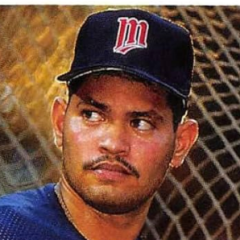
Image courtesy of © Jordan Johnson-Imagn Images

The Twins have several important decisions to make as they prepare for the 2027 season. Payroll expectations, roster construction, and the future of several key players will shape the offseason. However, another factor could influence how the front office approaches free agency: Major League Baseball’s qualifying offer system.

The qualifying offer can affect a team’s draft position, a free agent’s contract negotiations, and the cost of signing players from other organizations. For the Twins, Ryan Jeffers represents the most significant question on the qualifying offer front. Depending on how that situation unfolds, Minnesota could also have opportunities to use the system to its advantage when pursuing outside talent.

There is another wrinkle this winter. MLB’s current collective bargaining agreement expires on December 1, potentially making this the final offseason in which the qualifying offer system operates under its current rules. With a potential lockout looming, both teams and players must weigh some additional uncertainty.

How MLB’s Qualifying Offer System Works

The qualifying offer process begins shortly after the World Series concludes. Teams have five days after the end of the Fall Classic to extend a one-year contract to eligible free agents. This winter’s qualifying offer is worth $23.15 million.

To qualify, a player must have spent the entire 2026 season with his current team and cannot have received a qualifying offer previously. Players who receive an offer must decide whether to accept the one-year contract or decline it and pursue free agency.

Accepting the offer guarantees the player a substantial salary for the upcoming season while keeping him with his current organization. Rejecting it allows the player to negotiate with other teams, but it also means his former club could receive draft-pick compensation if he signs elsewhere.

That compensation depends on the financial circumstances of the team losing the player and the guaranteed value of the contract he signs. Teams that sign qualifying-offer free agents must also surrender a draft selection, with the specific penalty determined by their status under MLB's rules.

The timing of this year's process adds another layer of uncertainty. The collective bargaining agreement expires on December 1, and a lockout could disrupt the offseason. A player concerned about an uncertain free-agent market or a prolonged labor stoppage might view a qualifying offer more favorably than usual. Conversely, teams could hesitate before extending an offer to a player whose market value is difficult to predict. Those factors could make the qualifying offer decisions more complicated for Minnesota and the rest of MLB.

Ryan Jeffers and the Twins' Qualifying Offer Decision

Ryan Jeffers is the most obvious player to watch as Minnesota considers its qualifying offer options. The Twins reportedly turned away significant trade interest in Jeffers before the 2026 trade deadline. That decision appeared to signal a commitment to keeping him through the end of the season and potentially extending him a qualifying offer before he enters free agency.

However, Minnesota has not officially committed to making that move. At the team’s end of season press conference, Twins general manager Jeremy Zoll said the organization had not made a final decision on Jeffers but indicated that he had no doubt ownership would give the front office the necessary clearance if extending the offer proved to be the right baseball decision.

A qualifying offer worth approximately $23.1 million would be a substantial investment in a catcher for one season, even if it ultimately proved to be a short-term arrangement. Jeffers could accept the offer and return to Minnesota on a one-year deal. That would give the Twins another season with an established catcher while postponing the question of his long-term future.

Alternatively, Jeffers could reject the offer and explore a market that could be especially favorable to him. He figures to be one of the more sought-after catchers available, and Minnesota would receive draft-pick compensation if he signed elsewhere.

The likelihood of the Twins retaining Jeffers through a traditional free-agent contract appears considerably lower. He could command a multiyear deal, and it would be surprising to see Minnesota outbid the rest of the market to sign a 30-year-old catcher to a sizable long-term contract. The qualifying offer provides a middle ground. Minnesota could make a competitive one-year offer without committing to several seasons, while also protecting the organization if Jeffers decides to pursue a larger contract elsewhere.

Still, the decision comes down to whether the Twins believe the possibility of Jeffers accepting the offer is worth the financial commitment. If the front office expects him to decline, the offer could become a relatively straightforward way to secure compensation for his departure.

What Happens If the Twins Lose a Qualifying Free Agent?

If Minnesota extends a qualifying offer to Jeffers and he declines it before signing elsewhere, the Twins would receive a compensatory draft pick. As a revenue-sharing recipient, Minnesota benefits from a more favorable compensation structure than clubs that do not receive revenue-sharing funds.

The exact location of that selection depends on the value of the contract Jeffers signs. If a qualifying-offer free agent signs elsewhere for more than $50 million in guaranteed money, a revenue-sharing recipient receives compensation after the first round of the following year's draft. That could be a valuable selection for Minnesota if Jeffers attracts the type of contract many expect.

There is a recent example of how this system can work. During the 2024-25 offseason, Baltimore received the 30th and 31st overall selections in the 2025 draft after Corbin Burnes and Anthony Santander each signed contracts worth more than $50 million in guaranteed money with new teams.

If Jeffers signs a contract worth less than $50 million in guaranteed money, Minnesota's compensatory selection would fall between Competitive Balance Round B and the beginning of the third round. That selection would generally land around the 70th to 75th overall pick.

Either outcome would give the Twins additional draft capital as they work to replenish their farm system and develop the next wave of major league talent.

Could the Twins Sign a Qualifying-Offer Free Agent?

The qualifying offer system could also influence Minnesota's pursuit of outside talent. Teams that sign a free agent who rejected a qualifying offer must surrender a draft selection. For revenue-sharing recipients such as the Twins, that penalty is generally the club's third-highest selection in the upcoming draft.

That does not necessarily mean Minnesota would automatically forfeit its third-round pick. Teams that participate in the Competitive Balance bonus rounds have additional selections that factor into their draft order, and the exact selection surrendered can depend on the club's draft position and whether it has traded eligible picks.

Competitive Balance selections are the only MLB draft picks that can be traded. In the 2026 draft, six selections across the two Competitive Balance rounds were made by teams that had acquired those picks in trades before draft day.

For a team like Minnesota, the qualifying-offer penalty creates another consideration when evaluating free agents. A player might fit the club's roster needs and financial plans, but the cost of acquiring him would include both his contract and the loss of draft capital.

The Twins are planning to contend in 2027, which could make them more willing to accept those costs. If ownership gives Zoll additional payroll flexibility, Minnesota might be willing to surrender a draft selection to land a player who can help the club compete immediately.

The potential Jeffers situation could make that calculation more appealing. If Minnesota extends a qualifying offer and Jeffers declines it before signing elsewhere, the Twins would receive a compensatory selection. That additional pick could help offset the selection lost by signing another qualifying-offer free agent.

The two transactions would not necessarily cancel each other out perfectly, since the selections could fall in different parts of the draft. However, the added draft capital could soften the impact of signing a player who carries compensation penalties.

This approach would also depend on the available free-agent market. The Twins would need to identify a player whose projected production justified the salary and draft cost. If the front office believes a qualified free agent could help stabilize the rotation, improve the lineup, or strengthen the bullpen, the qualifying offer penalty might not be enough to keep Minnesota away.

The Qualifying Offer Could Shape Minnesota's Offseason

The qualifying offer system is more than a procedural step in the MLB offseason. It can influence contract negotiations, determine where teams select in the draft, and affect which free agents organizations pursue.

For the Twins, Jeffers is the central piece of the puzzle. Extending him a qualifying offer could provide Minnesota with another season of his services or compensation if he leaves. Either outcome has value, although the financial commitment would be significant if he accepts.

The system could also create opportunities for the Twins to pursue players who received qualifying offers from other teams. If Minnesota receives additional draft capital from Jeffers' departure, the front office may have more flexibility to absorb the cost of signing a qualified free agent. With the Twins hoping to return to contention in 2027, every offseason decision will matter. Payroll flexibility and roster needs will remain the primary considerations, but draft compensation could become another tool for building a competitive team.

The upcoming labor uncertainty makes the process even more interesting. Whether this is the final offseason under the current qualifying offer rules or simply the last before a new collective bargaining agreement, Minnesota must decide how aggressively to use the system.

The first major question is whether Jeffers receives the offer. The next is whether the Twins can turn the outcome into an advantage as they build their roster for 2027.


How will MLB’s qualifying offer system impact the Twins this winter? Leave a comment and start the discussion.


View full article

Posted

Great topic Cody and one we will be sure to return to several times before this all plays out.  There are many things to consider as you have effectively laid out:

In normal circumstances the Twins would never consider paying a catcher $23 million plus for a season unless that catcher was "Prime Joe Mauer."  But the weakest position the Twins have entering this off season is catcher.  It's a no-brainer to offer because the commitment is only for one year, fills our biggest need and will probably provide us with a compensatory pick at the end of round #1.  I think any FA contract Jeffers will be for 3 to 4 years and easily pass the $50 million mark.

Jeffers returning also provides one more full season of development for Vahn Lackey and our other catching prospects.  It's an effective bridge.

The idea that we could sign a 1B like Jake Bauers (assuming the Brewers also extend an offer) and only give up our #3 selection while essentially adding a late 1st round pick to go with our probable top 8 pick is an acceptable cost in light of filling our 2nd weakest position (1B) and strengthening our lineup.  That's good roster management and sets the Twins up to compete in a rather weak A.L. Central (despite the fact we've sent a team to the ALCS).  

So assuming Jeffers signs with the Yankees, we would still need an upgrade at catcher, but with assets to trade to further reshape the roster there is ammunition enough to find someone like Edgar Quero (CWS), Luis Campusano (SD) or Daniel Susac (SF) to fill the spot for 2027.  

Posted

I fail to see how an impending lockout by the owners could impact the qualifying offer.  As I understand it (and that is very questionable),  the QO must be offered and signed before the current agreement ends.  If Jeffers accepts the QO, he then would have a legally binding work agreement for the 2027 season.  If the new agreement does NOT include a QO, it would have to come into play after the 2027 season.  I don't believe there is any legal way to make the QO situation effective for contracts signed before December 1, 2026.  And if the new CBA continues but with significant changes to the QO, those changes can't be used on existing contracts.

Posted
7 minutes ago, terrydactyls said:

I fail to see how an impending lockout by the owners could impact the qualifying offer.  As I understand it (and that is very questionable),  the QO must be offered and signed before the current agreement ends.  If Jeffers accepts the QO, he then would have a legally binding work agreement for the 2027 season.  If the new agreement does NOT include a QO, it would have to come into play after the 2027 season.  I don't believe there is any legal way to make the QO situation effective for contracts signed before December 1, 2026.  And if the new CBA continues but with significant changes to the QO, those changes can't be used on existing contracts.

I don't think they could change offers that were signed, but they could in theory scrap the draft compensation/penalty piece as a part of a new agreement.  The 2027 draft would be subject to the new CBA.  Personally, I think that it's likely that they'd leave it in place to honor decisions made based on the rules at the time, but it's also possible the draft compensation could be scrapped by mutual agreement between the owners and players.

Posted

Just throwing this out there, do the Twins have any leverage at this point to trade Jeffers, similar to what we had at the trade deadline?

Posted
8 minutes ago, Coach said:

Just throwing this out there, do the Twins have any leverage at this point to trade Jeffers, similar to what we had at the trade deadline?

They can't trade Jeffers now.  The trade deadline was August 3rd.  MLB contracts can't be traded after the deadline.  They open 2 days after the end of the World Series. Jeffers will become a free agent the day after the world series ends.

Posted
3 minutes ago, Chembry said:

They can't trade Jeffers now.  The trade deadline was August 3rd.  MLB contracts can't be traded after the deadline.  They open 2 days after the end of the World Series. Jeffers will become a free agent the day after the world series ends.

Thanks!

Posted
16 minutes ago, Coach said:

Just throwing this out there, do the Twins have any leverage at this point to trade Jeffers, similar to what we had at the trade deadline?

I don't think they do. If a player is traded during their final year of control the cannot get a QO.

Posted

1st off great article.

It's an interesting situation. I don't see many soon-to-be free agents (who may get a QO) that make sense for the Twins to go after. But it's still a possibility. Looking at the Twins starting roster...Draft picks are a big thing to part with.

The Jeffer situation though...$23.1 mil is pretty steep for a catcher if he accepts. There is a real need to upgrade catcher for 2027. Probably the next best FA catcher is Stephenson (Reds). I doubt the Twins can sign him without a multi-year commitment. I don't care for that because of Diaw, Lackey and even Olivar. It may end up that an overpay for Jeffer is the best possible outcome.

Posted

An overpay for Jeffers needs to happen.   Lackey is a year or two away.  Tait isn't the prospect we thought, and should move to 1B.  Diaw is ????????

Posted

The QO offer needs to be made and accepted well before lockout.  The question is if it is rejected, what does that mean after the lockout?  What if a team signs someone as a FA before the lockout and the rules change after? My guess no team will sign a FA that turned down QO until after lockout, but it is a question. 

I know players have long been upset with the QO offer because they tried to use it as a starting point 1 year for X money for all other teams, but once it is rejected you cannot go back and take it.  You can go back to your original team, but they are not bound by the offer anymore. 

What started happening is every player rejected it, but some found teams were not willing to pay the price to sign them giving up the draft capitol.  Then they made the rules easier for teams to sign someone who had given the offer, but still teams have been hesitant, in part because the player tries to say this is the floor, but not every team agrees.

I have a feeling the QO will get a change again this CBA. 

Posted
58 minutes ago, Trov said:

I have a feeling the QO will get a change again this CBA. 

New negotiated QO rules (which would affect Joe Ryan) go into effect next offseason. These rules were already collectively bargained.

Posted

The QO, if we make it to Ryan Jeffers, will "probably" be declined by Jeffers. It's certainly an overpay for 1 year of his service. The Twins would be better off giving Jeffers a 3-4 year deal if it came without a NTC.

Posted

Jeffers will not take the QO for one more year with the Twins. Because he would be another year older and his value would be less. How many teams would offer a multi year contract for a 31 year old catcher. If he's looking for 3 years he will want that starting next year. Because the FO made the mistake of not trading him at the deadline they will have to offer him the QO to receive something for him. Next season will have to be a bridge season at catcher and hope that Tait or Lackey are ready in 28.

Posted

The qualifying offer does not guarantee a draft pick. The offer gets extended with 5 days of season ending after World Series. The player has 10 days to decide to accept or reject offer. In those 15 days timeline he can sign FA deal and twins are not guaranteed any compensation from what I am reading.

if a team who wants him bad enough and doesn’t want to lose a draft pick will push for any player to not accept or decline while negotiating in the time frame. Now I could be wrong on what I’m reading and interpretating

Posted
3 hours ago, David Maro said:

Jeffers will not take the QO for one more year with the Twins. Because he would be another year older and his value would be less. How many teams would offer a multi year contract for a 31 year old catcher. If he's looking for 3 years he will want that starting next year. Because the FO made the mistake of not trading him at the deadline they will have to offer him the QO to receive something for him. Next season will have to be a bridge season at catcher and hope that Tait or Lackey are ready in 28.

A lot of teams will offer a three year deal for a good hitter who catches. The Twins should be one since it allows him to split time with our young catchers and ease from C into a DH or 1B job in 2028-29. By 2029 the $18m or whatever won't be a burdensome amount of money if he's still an average hitter. 

Posted
5 hours ago, umterp23 said:

The qualifying offer does not guarantee a draft pick. The offer gets extended with 5 days of season ending after World Series. The player has 10 days to decide to accept or reject offer. In those 15 days timeline he can sign FA deal and twins are not guaranteed any compensation from what I am reading.

if a team who wants him bad enough and doesn’t want to lose a draft pick will push for any player to not accept or decline while negotiating in the time frame. Now I could be wrong on what I’m reading and interpretating

The moment the team extends the qualifying offer, the player has to choose to accept or decline it. They player has 15 days to decide, but there is no option to ignore it and sign elsewhere. The player can negotiate with other teams during the 15 days while the player decides to gauge their market value, but in order to sign elsewhere, the player must decline the qualifying offer.

Posted

I wouldn't be so sure that he turns down the QO. 

Nobody is paying 23 million for a catcher. Nobody is paying 23 million for a catcher. They are paying as much as 15. 

If he declines... You also attach draft pick compensation to his free agency. For a team that is over the tax threshold that draft pick compensation will be larger. That draft pick compensation has value and it could result in less dollars offered. 

Of course a new CBA is due and I'd guess that draft pick compensation is something MLB can give back to the players for other considerations. 

However until the new CBA is agreed upon.

A 3 year deal at 45 million sounds about right.  That could be a 1 year deal at 23 followed by a two or 3 year deal at? 

I think it's crazy to think that Jeffers will just turn down the QO. You offer it... you better be prepared to pay it. 

Posted

The Dodgers invested more in their catching than any major league team in 2026. They spend 18.8 million on the position. Paying Will Smith 18 million and they paid 1.2 million to Rortvedt and they have Feduccia and Rushing making the minimum. 

That's what the big boys with the big boy dollars are paying for the entire catching room. do we seriously expect to have a discussion about paying 30 million. 

23 million to Jeffers... 30 million for two catchers... would have a huge effect (or affect) on what we can spend on OTHER PLAYERS. Meaning... you want a decent 1B. We won't have the money because we spent it on catching... the money is spent... no matter how much Tom Pohlad promises to support this team. We have a budget. 

You would have to trade Caratini just to get the catching room expenditure down to 25 or 26 million. You would have Jeffers at 23 million... Plus, you would have to spend a million on Jackson or Rortvedt. Plus... we would probably have to throw in a million or two to trade CARATINI who signed with us at 7 million because we paid more than the other 29 teams to get him... this means we paid more than other teams were willing to pay.

I tend to believe that producing a .220/.312/.315 isn't going to make teams suddenly think that Caratini just proved them wrong. No team is thinking that it was foolish to not be willing to go beyond 2 years 14 million. The Twins exceeded his market value to get him. Having a crappy year makes the gap between his 7 million and what other teams are willing to pay for it... larger.  

A .220/.312/.315 performance is AVAILABLE FOR WAIVER WIRE PRICES.

I'm tired of over paying for catching and getting almost NOTHING out of the investment.  

We have people on this website who think it's a good idea to invest 30 million on Vazquez and then invest 14 million in Caratini and then invest 23 MILLLION in a QO for Jeffers. None of them are capable of 162 games. I shrug my shoulders and wonder if you all realize the rabbit hole that you are in. 

Rabbit Hole GIFs | Tenor

Jeffers should have been traded last off-season. 

Posted
6 hours ago, Riverbrian said:

I wouldn't be so sure that he turns down the QO. 

Nobody is paying 23 million for a catcher. Nobody is paying 23 million for a catcher. They are paying as much as 15. 

If he declines... You also attach draft pick compensation to his free agency. For a team that is over the tax threshold that draft pick compensation will be larger. That draft pick compensation has value and it could result in less dollars offered. 

Of course a new CBA is due and I'd guess that draft pick compensation is something MLB can give back to the players for other considerations. 

However until the new CBA is agreed upon.

A 3 year deal at 45 million sounds about right.  That could be a 1 year deal at 23 followed by a two or 3 year deal at? 

I think it's crazy to think that Jeffers will just turn down the QO. You offer it... you better be prepared to pay it. 

I think he's "likely" to turn it down. Jeffers will probably get 3-4 years (probably 4) at a similar AAV to Contreras. 3/50 to 4/65 or something. 1yr $23MM will look good, but he's a 30 year old catcher.

Tons of risk in that for him to accept a 1 year contract. He's one bad year away from a 1-2 year deal at $8-10MM per year or one nasty injury away from getting nothing.

Posted

There are probably no players who might get a qualifying offer from another team that the Twins would be interested in signing, so you could greatly shorten that part if you just listed the possible players.

Posted
1 hour ago, bean5302 said:

I think he's "likely" to turn it down. Jeffers will probably get 3-4 years (probably 4) at a similar AAV to Contreras. 3/50 to 4/65 or something. 1yr $23MM will look good, but he's a 30 year old catcher.

Tons of risk in that for him to accept a 1 year contract. He's one bad year away from a 1-2 year deal at $8-10MM per year or one nasty injury away from getting nothing.

Agreed

He has to consider the mitigation of that risk and this is his pay day. He did his time... he has earned this opportunity. 

No doubt that Injury and poor performance in 2027 could leave money on the table. 

However, if you are willing to bet on yourself. If we set 3 years and 45 million as the base line as the contract he signs. . 

After the 23 QO in 2027. Two years at 11 million breaks you even. Anything above that is gravy. A 3 year deal around 15 million afterwards. Now he is in gravy up to his knees. 

If he wants to limit that risk and if he truly wants to choose the team he plays for... for the first time in his career he is getting that choice and that alone would be important to me if I was in his shoes. He probably turns it down. 

But, If you offer it... You have to prepared for his agreeing to it and if he does then you are sitting with 30 million invested in catcher and very little money to address other holes. You would have to try and get 5 million back moving Caratini and I'm not sure if anyone would pay that so maybe it's 4... maybe it's 3. 

I'd love for Jeffers to remain a Twin. If they truly want him back. Pay the 3 years at 45 and pay off some of the Caratini deal so you can get him the hell out of town. That'll save about 8 million to spent elsewhere plus whatever you get for Caratini. 

If we don't sign Jeffers to an FA contract because he chose the Yankees.

Well... that problem was created last off-season when they decided to not trade him, go for it and then they watched his value shrink to nothingness. 

I'll forgive that mistake... I'll mention it often but I'll forgive it. However... compounding that mistake by making another mistake on the same player and I'll join you and ask for a new guy at the helm. 

There is no way I offer that QO unless I know for sure that he isn't taking it.

And if he has no intention of taking it... it would be a huge mistake for his agent to tell the Twins that he has no intention of taking it. Because if they tell the Twins that... they will surely offer it. Once offered... his compensation is immediately lowered because teams will have to factor in the draft pick compensation that is now attached to him. 

The safest thing to do... is just not offer it.   

Posted

Riverbrian,

You make very good points, and normally, I would never want to offer a career .243 hitting .758 OPS catcher $23 million for one season.  BUT...the Twins have a gaping hole at catcher and if the $23 million is only a 1-year commitment, and it provides a valuable bridge to Vahn Lackey, then I almost think the Twins need to offer.  

It would severely hamstring the Twins in adding payroll to the roster beyond Jeffers, but even if 1B is an issue and they could use a couple more arms in the pen, having Caratini as your #1 catcher isn't going to enable them to be a realistic contender in the A.L. Central.  

The other interesting thing you point out is that if 3-years, $45 million in an extension/FA contract to sign Jeffers is the maximum you think the Twins or Yankees or anyone else would offer him, the Twins would not get an end of the 1st round compensation pick in next June's Amateur Draft.  The contract has to have at least $50 million guaranteed.  

I agree, it would have been a whole lot simpler if the Twins had just accepted the reality that they were not contenders and just traded Jeffers to the Yankees at the deadline for someone like LHP Carlos LaGrange. I will most certainly complain about that in future posts.  Instead, they find themselves in a very tenuous position. 

And hopes of adding a 1B like Jake Bauers are all but gone with the Brewers headed to the World Series.  I could see Milwaukee making a strong bid to keep him and other 1B/OF/DH needy teams easily outbidding the Twins.  The Twins under Pohlad ownership simply don't win a battle for a truly prized FA.  They get guys like Correa or Donaldson who have major injury issues that ultimately make them poor long-term FA acquisitions.   

Posted

Damn if you do Damn if you don’t offer the QO.  A lot of comments are presuming it is a one year gap for Lackey be called up in 2028. I’m or so sure he gets that call in 2028.  He has 3 levels to jump past and I don’t see that happening in 2027 year

Posted
12 hours ago, TopGunn#22 said:

Riverbrian,

You make very good points, and normally, I would never want to offer a career .243 hitting .758 OPS catcher $23 million for one season.  BUT...the Twins have a gaping hole at catcher and if the $23 million is only a 1-year commitment, and it provides a valuable bridge to Vahn Lackey, then I almost think the Twins need to offer.  

It would severely hamstring the Twins in adding payroll to the roster beyond Jeffers, but even if 1B is an issue and they could use a couple more arms in the pen, having Caratini as your #1 catcher isn't going to enable them to be a realistic contender in the A.L. Central.  

The other interesting thing you point out is that if 3-years, $45 million in an extension/FA contract to sign Jeffers is the maximum you think the Twins or Yankees or anyone else would offer him, the Twins would not get an end of the 1st round compensation pick in next June's Amateur Draft.  The contract has to have at least $50 million guaranteed.  

I agree, it would have been a whole lot simpler if the Twins had just accepted the reality that they were not contenders and just traded Jeffers to the Yankees at the deadline for someone like LHP Carlos LaGrange. I will most certainly complain about that in future posts.  Instead, they find themselves in a very tenuous position. 

And hopes of adding a 1B like Jake Bauers are all but gone with the Brewers headed to the World Series.  I could see Milwaukee making a strong bid to keep him and other 1B/OF/DH needy teams easily outbidding the Twins.  The Twins under Pohlad ownership simply don't win a battle for a truly prized FA.  They get guys like Correa or Donaldson who have major injury issues that ultimately make them poor long-term FA acquisitions.   

You make good points as well. Your opinion is fair. 

If they decide to go for it. They'll need serious investment elsewhere. Punt the catcher position so you can spend your resources elsewhere. Caratini and Jackson. Call a good game. Frame some pitches. Whatever they hit is gravy. Take your resources and get stronger with needle movers 1 through 8. 

You are probably right on Bauers. Although I don't think Milwaukee will be adding payroll. Milwaukee wouldn't be the team to worry about unless Bauers doesn't want to leave and take a deal to stay. Their payroll is as high as it as ever been. I can't see it going up. 

It's not a long list of 1B needy teams but the list does get longer when you add DH. Longer still if teams think he could play OF. But... if Tom Pohlad wants to show seriousness. This is where he can show it. Get a 1B who can hit the stuffing out of the ball. If not Bauers... someone. 

With Jeffers... it's not a guess at the maximum... I'm just using 15M AAV because that's what the top catchers make. I'm open to the Twins offering 3 years 50 million just to make other teams bid at least 51. 😉

Posted

I like the idea of 3 for $50 million !!  A pick at the end of round #1 could turn into a useful player, although Mike Piazza is a great example it doesn't have to be a high round pick that makes a difference.  Bauers would certainly be a priority target.  Otherwise, I had an idea in a previous post about targeting young 1B blocked by Major League Stars.  Some examples:

James Tibbs III-Dodgers:  Freddie Freeman just isn't slowing down in a major way and Dalton Rushing is a C/1B who also logged some innings in LF.  

Jonathan Long-Cubs:  Michael Busch owns 1B and DH is used by many teams as a rotational spot for rest.  Otherwise, Suzuki is the DH unless the Cubs move on from him.

Ralphy Velazquez-Guardians:  Cleveland has quite a logjam at present with Kyle Manzardo, Nate Lowe and Rhys Hoskins.  At least one of them will be gone and I doubt Cleveland gives away Velaquez who crushed at both AA and AAA last year and is the top rated 1B prospect in baseball.  Would division rivals work a deal?  Would the Twins ever consider packaging Joe Ryan to get the top rated 1B in the minor leagues?  What else would it take from the Twins...Edwardo Tait?  

Xavier Isaac-Tampa Bay Rays:  Arranda owns 1B and for now, Yandy Diaz is the DH and backup 1B.  Include Caminero as another corner IF and where does Isaac fit?  Isaac is a tremendous power bat who is the epitome of blocked in the upper minors.

These are the top choices but there are certainly others.  There is no obvious 1B prospect in the minor leagues for the Twins right now who could realistically compete for playing time.  And while I like Jake Bauers and would love to see the Twins compete hard to land him, a team with realistic pennant chances makes more sense for both the team and Jake Bauers. 

I like the timeline of a promising young hitter at 1B blocked by Major League talent and depth better for the Twins.  There is a much higher degree of risk in trading for a minor leaguer with no big league track record, but a young, affordable 1B in an infield that would have Gold Glove candidate Brooks Lee at 3B, future Gold Glove candidate Marek Houston at SS and a solid SS turned 2B in Culpepper looks like a good plan that allows more salary to be invested in SP and Bullpen.  


Create an account or sign in to comment

You need to be a member in order to leave a comment

Create an account

Sign up for a new account in our community. It's easy!

Register a new account

Sign in

Already have an account? Sign in here.

Sign In Now
The Twins Daily Caretaker Fund

You all care about this site. The next step is caring for it. We’re asking you to caretake this site so it can remain the premier Twins community on the internet.

×
×
  • Create New...