


Twins Video
The Twins have several important decisions to make as they prepare for the 2027 season. Payroll expectations, roster construction, and the future of several key players will shape the offseason. However, another factor could influence how the front office approaches free agency: Major League Baseball’s qualifying offer system.
The qualifying offer can affect a team’s draft position, a free agent’s contract negotiations, and the cost of signing players from other organizations. For the Twins, Ryan Jeffers represents the most significant question on the qualifying offer front. Depending on how that situation unfolds, Minnesota could also have opportunities to use the system to its advantage when pursuing outside talent.
There is another wrinkle this winter. MLB’s current collective bargaining agreement expires on December 1, potentially making this the final offseason in which the qualifying offer system operates under its current rules. With a potential lockout looming, both teams and players must weigh some additional uncertainty.
How MLB’s Qualifying Offer System Works
The qualifying offer process begins shortly after the World Series concludes. Teams have five days after the end of the Fall Classic to extend a one-year contract to eligible free agents. This winter’s qualifying offer is worth $23.15 million.
To qualify, a player must have spent the entire 2026 season with his current team and cannot have received a qualifying offer previously. Players who receive an offer must decide whether to accept the one-year contract or decline it and pursue free agency.
Accepting the offer guarantees the player a substantial salary for the upcoming season while keeping him with his current organization. Rejecting it allows the player to negotiate with other teams, but it also means his former club could receive draft-pick compensation if he signs elsewhere.
That compensation depends on the financial circumstances of the team losing the player and the guaranteed value of the contract he signs. Teams that sign qualifying-offer free agents must also surrender a draft selection, with the specific penalty determined by their status under MLB's rules.
The timing of this year's process adds another layer of uncertainty. The collective bargaining agreement expires on December 1, and a lockout could disrupt the offseason. A player concerned about an uncertain free-agent market or a prolonged labor stoppage might view a qualifying offer more favorably than usual. Conversely, teams could hesitate before extending an offer to a player whose market value is difficult to predict. Those factors could make the qualifying offer decisions more complicated for Minnesota and the rest of MLB.
Ryan Jeffers and the Twins' Qualifying Offer Decision
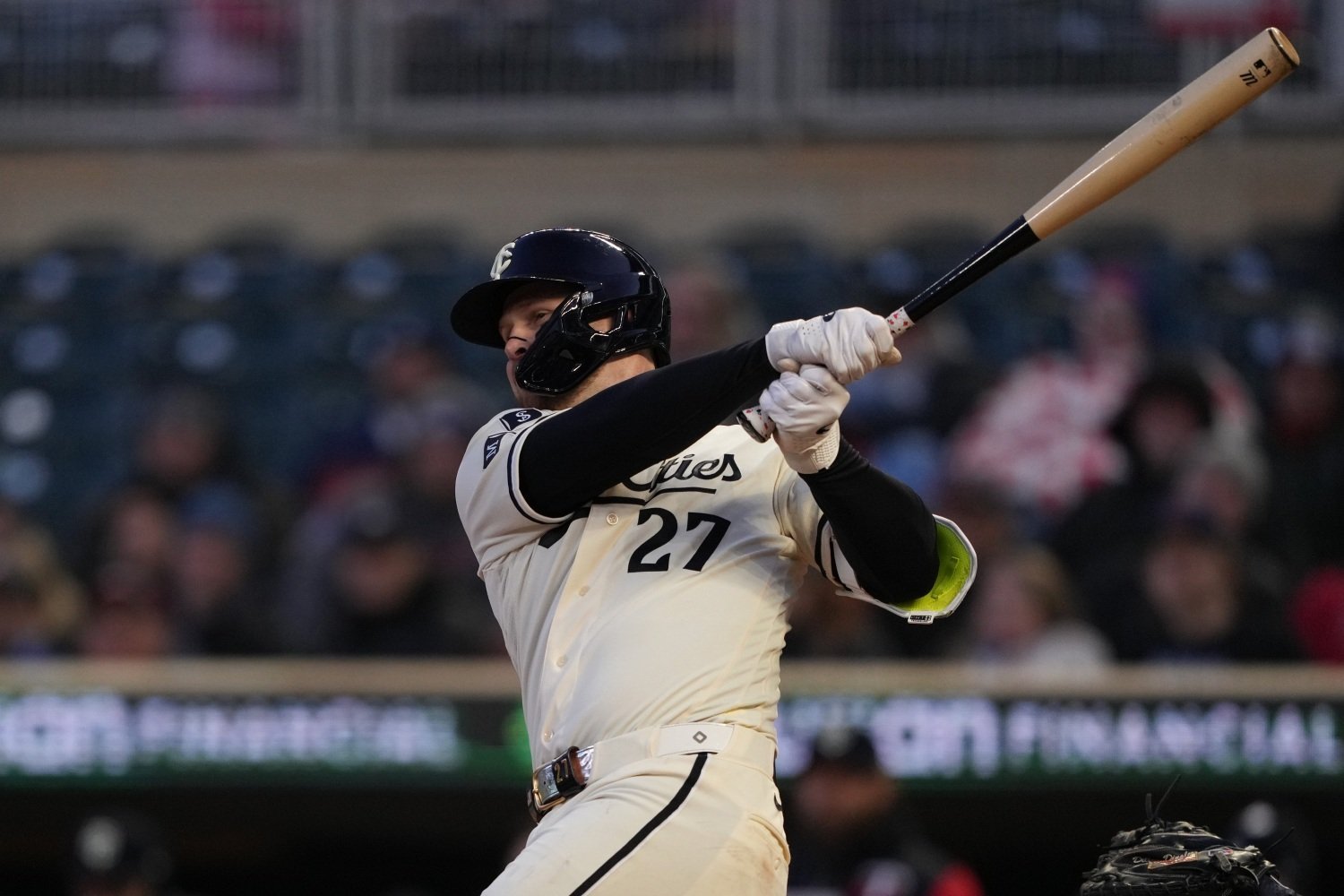
Ryan Jeffers is the most obvious player to watch as Minnesota considers its qualifying offer options. The Twins reportedly turned away significant trade interest in Jeffers before the 2026 trade deadline. That decision appeared to signal a commitment to keeping him through the end of the season and potentially extending him a qualifying offer before he enters free agency.
However, Minnesota has not officially committed to making that move. At the team’s end of season press conference, Twins general manager Jeremy Zoll said the organization had not made a final decision on Jeffers but indicated that he had no doubt ownership would give the front office the necessary clearance if extending the offer proved to be the right baseball decision.
A qualifying offer worth approximately $23.1 million would be a substantial investment in a catcher for one season, even if it ultimately proved to be a short-term arrangement. Jeffers could accept the offer and return to Minnesota on a one-year deal. That would give the Twins another season with an established catcher while postponing the question of his long-term future.
Alternatively, Jeffers could reject the offer and explore a market that could be especially favorable to him. He figures to be one of the more sought-after catchers available, and Minnesota would receive draft-pick compensation if he signed elsewhere.
The likelihood of the Twins retaining Jeffers through a traditional free-agent contract appears considerably lower. He could command a multiyear deal, and it would be surprising to see Minnesota outbid the rest of the market to sign a 30-year-old catcher to a sizable long-term contract. The qualifying offer provides a middle ground. Minnesota could make a competitive one-year offer without committing to several seasons, while also protecting the organization if Jeffers decides to pursue a larger contract elsewhere.
Still, the decision comes down to whether the Twins believe the possibility of Jeffers accepting the offer is worth the financial commitment. If the front office expects him to decline, the offer could become a relatively straightforward way to secure compensation for his departure.
What Happens If the Twins Lose a Qualifying Free Agent?
If Minnesota extends a qualifying offer to Jeffers and he declines it before signing elsewhere, the Twins would receive a compensatory draft pick. As a revenue-sharing recipient, Minnesota benefits from a more favorable compensation structure than clubs that do not receive revenue-sharing funds.
The exact location of that selection depends on the value of the contract Jeffers signs. If a qualifying-offer free agent signs elsewhere for more than $50 million in guaranteed money, a revenue-sharing recipient receives compensation after the first round of the following year's draft. That could be a valuable selection for Minnesota if Jeffers attracts the type of contract many expect.
There is a recent example of how this system can work. During the 2024-25 offseason, Baltimore received the 30th and 31st overall selections in the 2025 draft after Corbin Burnes and Anthony Santander each signed contracts worth more than $50 million in guaranteed money with new teams.
If Jeffers signs a contract worth less than $50 million in guaranteed money, Minnesota's compensatory selection would fall between Competitive Balance Round B and the beginning of the third round. That selection would generally land around the 70th to 75th overall pick.
Either outcome would give the Twins additional draft capital as they work to replenish their farm system and develop the next wave of major league talent.
Could the Twins Sign a Qualifying-Offer Free Agent?
The qualifying offer system could also influence Minnesota's pursuit of outside talent. Teams that sign a free agent who rejected a qualifying offer must surrender a draft selection. For revenue-sharing recipients such as the Twins, that penalty is generally the club's third-highest selection in the upcoming draft.
That does not necessarily mean Minnesota would automatically forfeit its third-round pick. Teams that participate in the Competitive Balance bonus rounds have additional selections that factor into their draft order, and the exact selection surrendered can depend on the club's draft position and whether it has traded eligible picks.
Competitive Balance selections are the only MLB draft picks that can be traded. In the 2026 draft, six selections across the two Competitive Balance rounds were made by teams that had acquired those picks in trades before draft day.
For a team like Minnesota, the qualifying-offer penalty creates another consideration when evaluating free agents. A player might fit the club's roster needs and financial plans, but the cost of acquiring him would include both his contract and the loss of draft capital.
The Twins are planning to contend in 2027, which could make them more willing to accept those costs. If ownership gives Zoll additional payroll flexibility, Minnesota might be willing to surrender a draft selection to land a player who can help the club compete immediately.
The potential Jeffers situation could make that calculation more appealing. If Minnesota extends a qualifying offer and Jeffers declines it before signing elsewhere, the Twins would receive a compensatory selection. That additional pick could help offset the selection lost by signing another qualifying-offer free agent.
The two transactions would not necessarily cancel each other out perfectly, since the selections could fall in different parts of the draft. However, the added draft capital could soften the impact of signing a player who carries compensation penalties.
This approach would also depend on the available free-agent market. The Twins would need to identify a player whose projected production justified the salary and draft cost. If the front office believes a qualified free agent could help stabilize the rotation, improve the lineup, or strengthen the bullpen, the qualifying offer penalty might not be enough to keep Minnesota away.
The Qualifying Offer Could Shape Minnesota's Offseason
The qualifying offer system is more than a procedural step in the MLB offseason. It can influence contract negotiations, determine where teams select in the draft, and affect which free agents organizations pursue.
For the Twins, Jeffers is the central piece of the puzzle. Extending him a qualifying offer could provide Minnesota with another season of his services or compensation if he leaves. Either outcome has value, although the financial commitment would be significant if he accepts.
The system could also create opportunities for the Twins to pursue players who received qualifying offers from other teams. If Minnesota receives additional draft capital from Jeffers' departure, the front office may have more flexibility to absorb the cost of signing a qualified free agent. With the Twins hoping to return to contention in 2027, every offseason decision will matter. Payroll flexibility and roster needs will remain the primary considerations, but draft compensation could become another tool for building a competitive team.
The upcoming labor uncertainty makes the process even more interesting. Whether this is the final offseason under the current qualifying offer rules or simply the last before a new collective bargaining agreement, Minnesota must decide how aggressively to use the system.
The first major question is whether Jeffers receives the offer. The next is whether the Twins can turn the outcome into an advantage as they build their roster for 2027.
How will MLB’s qualifying offer system impact the Twins this winter? Leave a comment and start the discussion.






Recommended Comments
Create an account or sign in to comment
You need to be a member in order to leave a comment
Create an account
Sign up for a new account in our community. It's easy!
Register a new accountSign in
Already have an account? Sign in here.
Sign In Now