


Twins Video
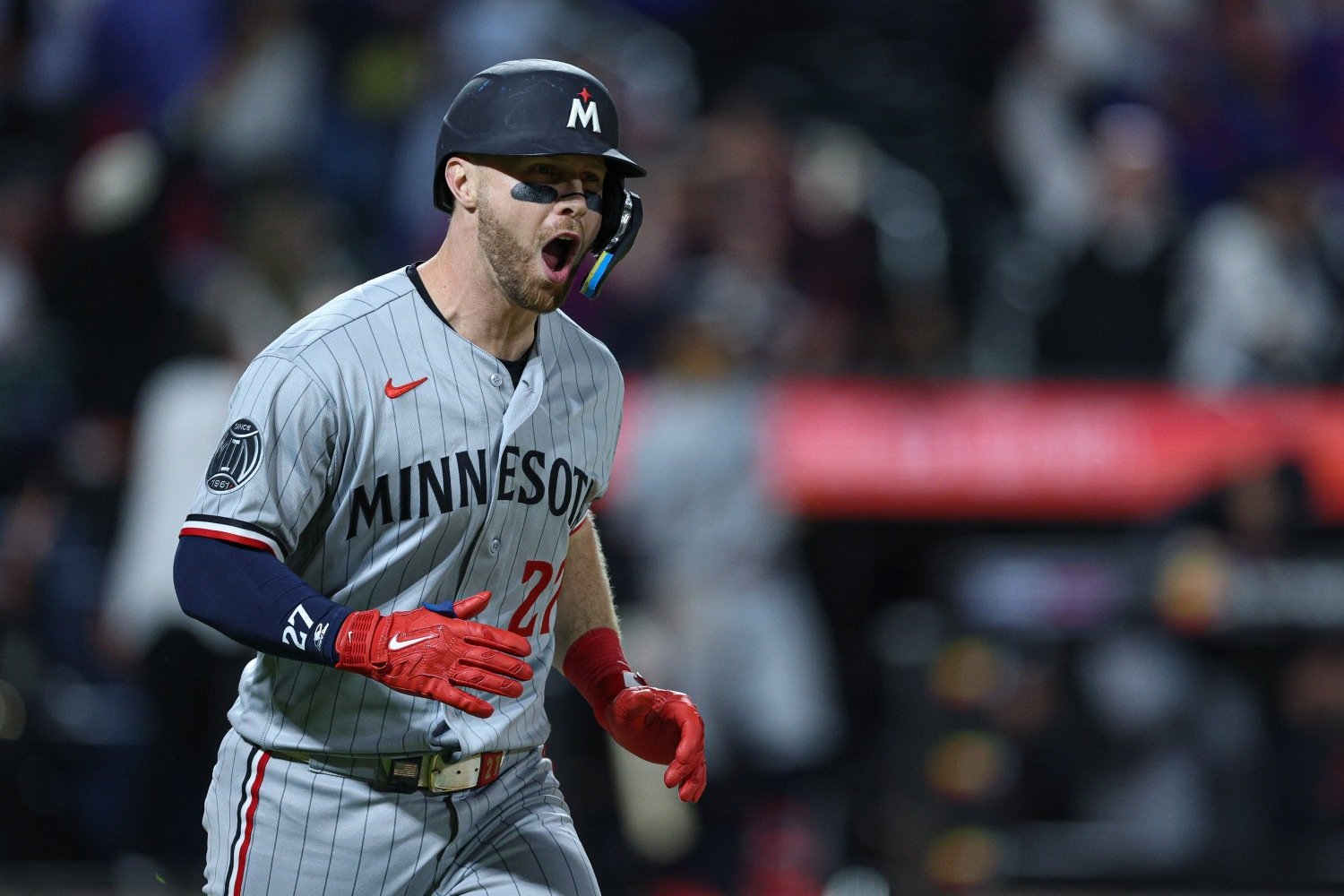
The Minnesota Twins have made their decision on Ryan Jeffers. Minnesota extended the veteran catcher a qualifying offer worth $23.15 million for the 2027 season, giving both sides an interesting decision as the offseason gets underway.
Jeffers is coming off one of the better offensive seasons of his career, and he enters free agency as one of the more intriguing catching options available. The Twins clearly don't want to lose him without receiving something in return. However, extending a qualifying offer comes with some financial risk, especially for an organization that has spent the last few seasons operating with a limited payroll.
Now, Jeffers has until November 17 to decide whether he wants to accept the one-year contract or decline it and explore the free-agent market.
Jeffers Earned His Opportunity
Jeffers has spent his entire professional career with the Twins after being selected in the second round of the 2018 MLB Draft. He made his big-league debut in 2020 and gradually developed into Minnesota's primary catching option.
His offensive production has seen inconsistencies throughout his career, but he has established himself as a productive hitter at a position where offense can be difficult to find. That was especially true during the 2026 campaign.
Jeffers finished the season hitting .256/.353/.461 (.814) with 14 home runs and with a career-best 12.5 BB% across 369 plate appearances. He also combined for a career-best 17.9 K%, demonstrating improved plate discipline while continuing to provide power from the right side of the plate.
His performance was particularly impressive when considering the offensive expectations for catchers around the league. Jeffers finished with a 128 wRC+, meaning he was 28% better than the league-average hitter. The average major-league catcher finished with a 91 wRC+, giving Jeffers a significant advantage offensively at his position.
There are still questions about his defensive ability. Jeffers has generally graded out as a below-average pitch framer, and his ability to control the running game hasn't been a major strength. However, he remains a capable offensive catcher who provides Minnesota with a legitimate middle-of-the-lineup threat.
The Twins also have plenty of familiarity with Jeffers. He has spent six seasons in the organization, experienced several different roster constructions, and established relationships with Minnesota's pitching staff. Losing that type of continuity would create another challenge for an organization already facing several offseason questions.
Why the Qualifying Offer Makes Sense
A qualifying offer gives Minnesota some protection against losing Jeffers without receiving anything in return. If he declines the offer and signs with another organization, the Twins will receive draft-pick compensation.
That is particularly important considering Minnesota's decision to keep Jeffers through the trade deadline. There was plenty of speculation about whether the organization would move its longtime catcher before he reached free agency. Instead, the Twins held onto him and maintained an important piece of their roster for the remainder of the season. Offering the qualifying offer gives the organization an opportunity to recoup some value if Jeffers decides to leave.
There is also a reasonable argument for keeping Jeffers around for another season even at a premium price. Victor Caratini remains under contract for 2027, but the Twins need more certainty behind the plate. Caratini provides a veteran presence, but he hasn't consistently demonstrated that he can handle a significant offensive workload.
Minnesota also has catching prospects working their way through the minor leagues. Eduardo Tait is one of the organization's most intriguing young players at the position, while Vahn Lackey, the third overall selection in the 2026 MLB Draft, represents another potential long-term option. Neither player should be expected to immediately take over as Minnesota's everyday catcher in 2027.
Jeffers would give the Twins a proven major-league option while those younger players continue developing. If Minnesota wants to compete in 2027, having a dependable catcher should be part of the equation.
The Risk of Jeffers Accepting
The biggest concern with extending a qualifying offer is that Jeffers could accept it. At $23.15 million, he would receive a significant salary increase and become one of the highest-paid catchers in baseball. That is a substantial investment for a player who has dealt with injuries and hasn't consistently handled an everyday workload.
Jeffers is also approaching his 30s, an important consideration for a position that takes a physical toll on players. Catchers frequently experience declining offensive production and defensive ability as they get older. The Twins have generally preferred having two capable catchers who can share responsibilities throughout the season. That approach helps keep both players fresh, but it also makes committing more than $23 million to one catcher a difficult decision.
Minnesota has other roster needs, particularly on the pitching staff. The organization needs to improve its bullpen and find additional rotation depth. Committing that much money to Jeffers would take away some financial flexibility, although the Twins have plenty of room to increase their payroll compared to recent seasons.
If Jeffers accepts, Minnesota would be getting a quality offensive catcher for another season. It wouldn't necessarily be a bad baseball decision, but the organization would be paying a premium for that production.
What Happens If Jeffers Declines?
Declining the qualifying offer is probably the more likely outcome. Jeffers has an opportunity to test free agency after establishing himself as one of the better offensive catchers available. A multiyear contract could provide more financial security than accepting a one-year deal, particularly as he enters his age-30 season.
However, the qualifying offer creates an additional obstacle for interested teams. Any organization signing Jeffers would have to surrender draft-pick compensation, potentially reducing his overall market.
The Twins could benefit from that situation in two different ways. If Jeffers declines and signs elsewhere, Minnesota receives a compensatory draft selection. If the qualifying offer makes other organizations hesitant, the Twins could potentially bring him back on a multiyear agreement at a lower annual salary.
Minnesota hasn't extended a qualifying offer to one of its players since Sonny Gray following the 2023 season. Gray declined that offer before signing with St. Louis, and the Twins eventually used their compensatory selection to draft infielder Kyle DeBarge. Now, Minnesota is hoping for a similar outcome with Jeffers.
The Twins Made the Right Decision
Extending Jeffers a qualifying offer is a logical move for an organization that needs to maintain some roster stability while continuing to develop its younger players. There is risk involved, especially if Jeffers accepts the offer. However, the Twins shouldn't be afraid to spend money on a productive player simply because the organization has other needs.
Jeffers has earned the opportunity to explore free agency, but Minnesota also deserves some protection after keeping him through the trade deadline. The qualifying offer provides that protection while leaving the door open for a reunion.
The next decision belongs to Jeffers. If he declines, the Twins can begin exploring their options behind the plate while potentially adding another draft pick. If he accepts, Minnesota retains one of its most productive offensive players for another season.
Either way, the qualifying offer gives the Twins some control over how this offseason unfolds. Now, everyone will be waiting to see what Jeffers decides.
Do you agree with the QO decision for Jeffers? Leave a comment and start the discussion.
Do you approve of Twins ownership?

Follow Twins Daily For Minnesota Twins News & Analysis



- Patzky, Cory Engelhardt, thelanges5 and 1 other
-
 4


Recommended Comments
Create an account or sign in to comment
You need to be a member in order to leave a comment
Create an account
Sign up for a new account in our community. It's easy!
Register a new accountSign in
Already have an account? Sign in here.
Sign In Now