


Twins Video
The Minnesota Twins have emphasized versatility when constructing their roster over the last few seasons. Players capable of handling multiple positions give manager Derek Shelton (or former manager Rocco Baldelli) more options when building his lineup, mixing and matching based on opposing pitchers, injuries, or late-game situations.
On paper, it makes plenty of sense. A flexible roster should maximize matchups, while allowing the Twins to maintain depth without sacrificing offense. But despite all that versatility, Minnesota has spent much of the 2026 season effectively operating with a 25-man roster. One player has consistently occupied the final bench spot while rarely receiving opportunities to contribute.
Why would the Twins do this? The answer, like in many aspects of life, is complicated.
James Outman Never Found His Opportunity
To open the season, that player was James Outman. Acquired from the Dodgers last July, Outman entered spring training without any minor-league options remaining. Rather than risk losing him, the Twins kept him on the Opening Day roster, hoping he could rediscover the tools that once made him one of baseball's most intriguing young outfielders.
That opportunity never materialized. Outman started only 17 games, despite appearing in 49 contests. Most of those appearances came as a late-inning defensive replacement or pinch-runner instead of meaningful offensive opportunities. It's difficult for any hitter to establish a rhythm under those circumstances, but Outman also failed to capitalize on the limited chances he did receive. He slashed just .156/.229/.250 with five extra-base hits in 70 plate appearances while producing -0.3 rWAR. The Twins eventually designated him for assignment in mid-June, and the Detroit Tigers claimed him off waivers. For Minnesota, the experiment quietly came to an end.
Kyler Fedko Followed the Same Path
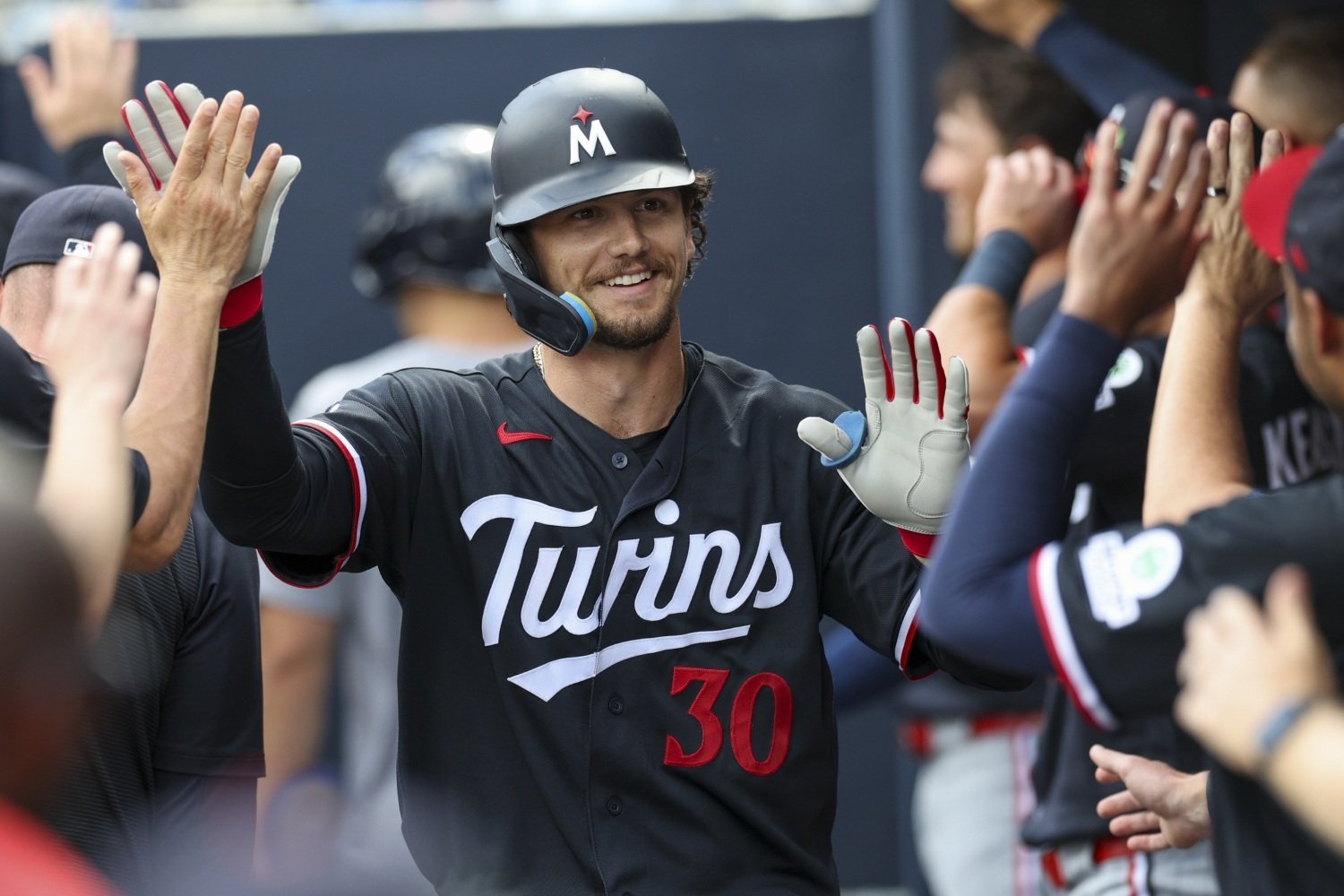
Outman's departure created an opportunity for Kyler Fedko. The Twins' 12th-round selection from the University of Connecticut in the 2021 MLB Draft has steadily climbed the organizational ladder and finally forced the club's hand with his production at Triple-A St. Paul.
Fedko hit .286/.372/.578 with a .950 OPS through 58 games with the Saints this season. He blasted 15 home runs, drove in 45 runs, scored 44 times, and added nine stolen bases. After swiping 38 bases across Double-A and Triple-A last season, he has continued to show the blend of athleticism and power that made him one of the organization's biggest breakout stories.
Yet, his first taste of the big leagues looked remarkably similar to Outman's stint. He started just four of the 14 games in which he played, but it's hard to blame the Twins for their lack of faith: he went hitless in 19 plate appearances.
More telling is how those opportunities came. Only three of his appearances included more than two plate appearances in a game. In seven games, he entered solely as a pinch-runner or defensive replacement and never stepped into the batter's box. For a player trying to prove he belongs in the majors, those scattered opportunities make an already difficult adjustment even more challenging.
Is This the Best Use of a Roster Spot?
The question isn't necessarily whether Fedko deserves everyday playing time. The Twins have Byron Buxton, Luke Keaschall, Trevor Larnach, and other established outfield options ahead of him. Finding consistent at-bats isn't easy for a contending club trying to win every night.
But if the coaching staff doesn't envision enough opportunities for Fedko to play, why did they carry him for even three weeks in the majors? As I wrote about earlier this season, the answer is likely that the front office doesn’t believe in Fedko.
Now, he's back in St. Paul, where regular at-bats will do more for his long-term development than sitting on the end of the major-league bench. However, at least for the final series before the All-Star break, Fedko's place on the roster was taken by a third catcher, as Ryan Jeffers returned from the injured list. Again, the team is going with a low-utility plan for that final spot.
A Familiar Pattern
This isn't simply about Outman or Fedko. It's about a roster construction strategy that has left one spot largely unused for much of the year. In previous years, the Twins have done this with players like DaShawn Keirsey Jr. and Carson McCusker. Whether the Twins are trying to preserve organizational depth, evaluate players, or simply avoid exposing someone to waivers, the result has been the same.
One player rarely plays. With the American League Wild Card race expected to remain tight throughout the summer, every roster spot becomes increasingly valuable. Injuries pile up, rosters get taxed, and bench depth can decide close games. If the final player on the roster isn't receiving meaningful opportunities, it's fair to wonder whether that spot could be better utilized elsewhere.
The Twins have built a roster around flexibility. Ironically, their handling of the final bench spot has been anything but.
Can the Twins continue to survive with a 25-man roster while one player gathers dust at the end of the bench? Leave a comment and start the discussion.








Recommended Comments
Create an account or sign in to comment
You need to be a member in order to leave a comment
Create an account
Sign up for a new account in our community. It's easy!
Register a new accountSign in
Already have an account? Sign in here.
Sign In Now