


Twins Video
After taking the opener of a three-game series against the Seattle Mariners on Friday night, the Twins looked poised to leave Seattle with another series victory. Instead, they suffered back-to-back walk-off losses on Saturday and Sunday, dropping the series in heartbreaking fashion.
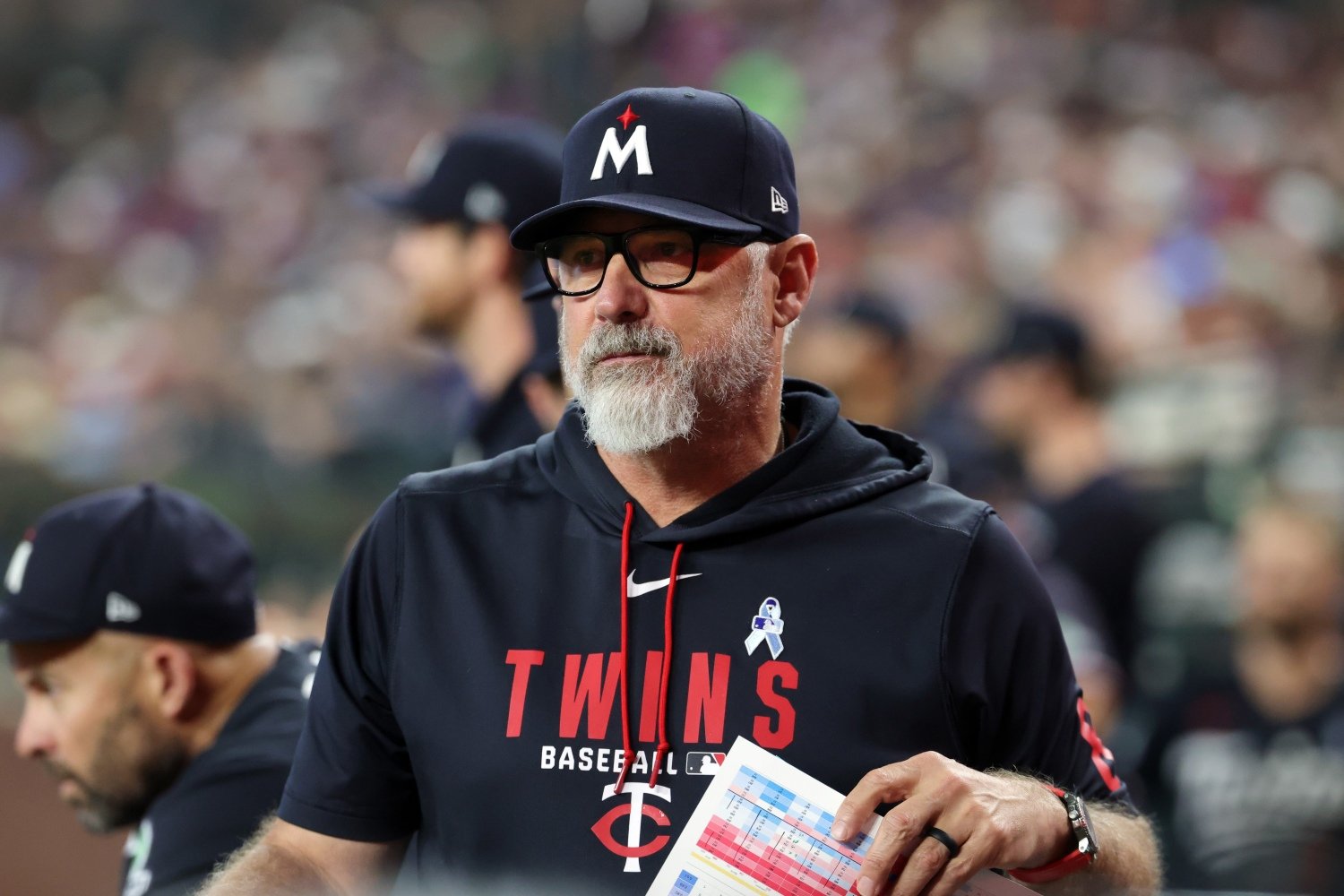
Those games featured remarkably similar situations in the bottom of the ninth inning. In each case, Derek Shelton had the opportunity to intentionally load the bases and create force outs at every base, and both times, he chose not to. While the decisions looked similar on the surface, they weren't equal. One was rooted in solid process. The other is much harder to defend.
Saturday's game presented the first opportunity. With one out in the bottom of the ninth and the score tied, Seattle had runners on first and third after the Twins intentionally walked Julio Rodríguez. That brought Cal Raleigh to the plate, leaving Shelton with a choice. He could intentionally walk Raleigh to load the bases and create force plays everywhere, or trust his closer (on that day, Andrew Morris) to get Raleigh out.
Given the circumstances, pitching to Raleigh wasn't an unreasonable decision. Before that at-bat, Raleigh was 0-for-4 with three strikeouts. Josh Naylor, a left-handed hitter, was waiting on deck, and Raleigh had looked overmatched all afternoon. It wasn't simply a matter of challenging one of baseball's premier (albeit struggling) sluggers. Shelton had reason to believe Raleigh wasn't seeing the ball well, and the matchup wasn't nearly as intimidating as it normally would have been.
Ironically, the Twins got exactly the result they were hoping for. Raleigh hit a routine ground ball to first base that should have ended the inning with a double play. Instead, Royce Lewis had a momentary brain freeze. After fielding the ball, he instinctively stepped on first base, eliminating all force plays, and then hesitated before attempting to throw home anyway. Because the runner now had to be tagged instead of forced out, Lewis's throw wasn't good enough, and the winning run crossed the plate.
It was a painful ending, but it doesn't necessarily mean the strategy was wrong. Shelton trusted his defense to make a routine play, and more often than not, they probably do.
Sunday's situation felt much different. Again, the game was tied in the bottom of the ninth, with one out. This time, the Mariners had runners on second and third with top prospect Colt Emerson due up against closer Yoendrys Gómez. Shelton once again had the option of intentionally loading the bases, creating force outs everywhere while bringing the No. 9 hitter, Leo Rivas, to the plate.
Instead, he elected to pitch to Emerson. That's where the decision becomes much harder to understand. Unlike Raleigh the day before, Emerson wasn't coming off an 0-for-4 afternoon with three strikeouts. He is one of Seattle's premier young hitters (though he's admittedly struggled to begin his major-league career), and he also held the platoon advantage against the right-handed Gómez. By putting him on first, the Twins not only would have set up force plays at every base, but also would have been facing Rivas, who entered the game hitting just .127.
Yes, there was always the possibility that Seattle would counter by pinch-hitting with Rob Refsnyder or Mitch Garver for Rivas. Even then, the Twins still would have had force plays at every base, and Refsnyder entered the game hitting just .140. Both Refsnyder and Garver are right-handed batters, so that also would have netted the Twins the platoon advantage, Minnesota still would have been in a favorable position to escape with a ground ball.
Instead, Shelton challenged Emerson. The result was exactly what the Twins feared. Emerson lined a game-winning single before Rivas ever had an opportunity to step into the batter's box.
Baseball strategy is always easier to criticize after the outcome is known, and intentional walks have burned plenty of managers over the years. The results alone shouldn't determine whether the process was sound. That's why these two games deserve to be evaluated differently.
Saturday's decision made sense. Raleigh had been shut down all game, and the Twins induced the exact contact they wanted. A defensive mistake, not the managerial decision, ultimately cost them the game.
Sunday, however, feels like a missed opportunity. The Twins had a chance to avoid pitching to one of Seattle's most dangerous young hitters, while setting up force plays all over the diamond against a struggling No. 9 hitter. Instead, they chose the more difficult path, and this time, it came back to bite them immediately. The outcomes may have looked the same, but the process certainly didn't.
What do you think? Was Shelton right to avoid the bases-loaded situation on Saturday and Sunday? Leave a comment and start the conversation!







Recommended Comments
Create an account or sign in to comment
You need to be a member in order to leave a comment
Create an account
Sign up for a new account in our community. It's easy!
Register a new accountSign in
Already have an account? Sign in here.
Sign In Now