


Twins Video
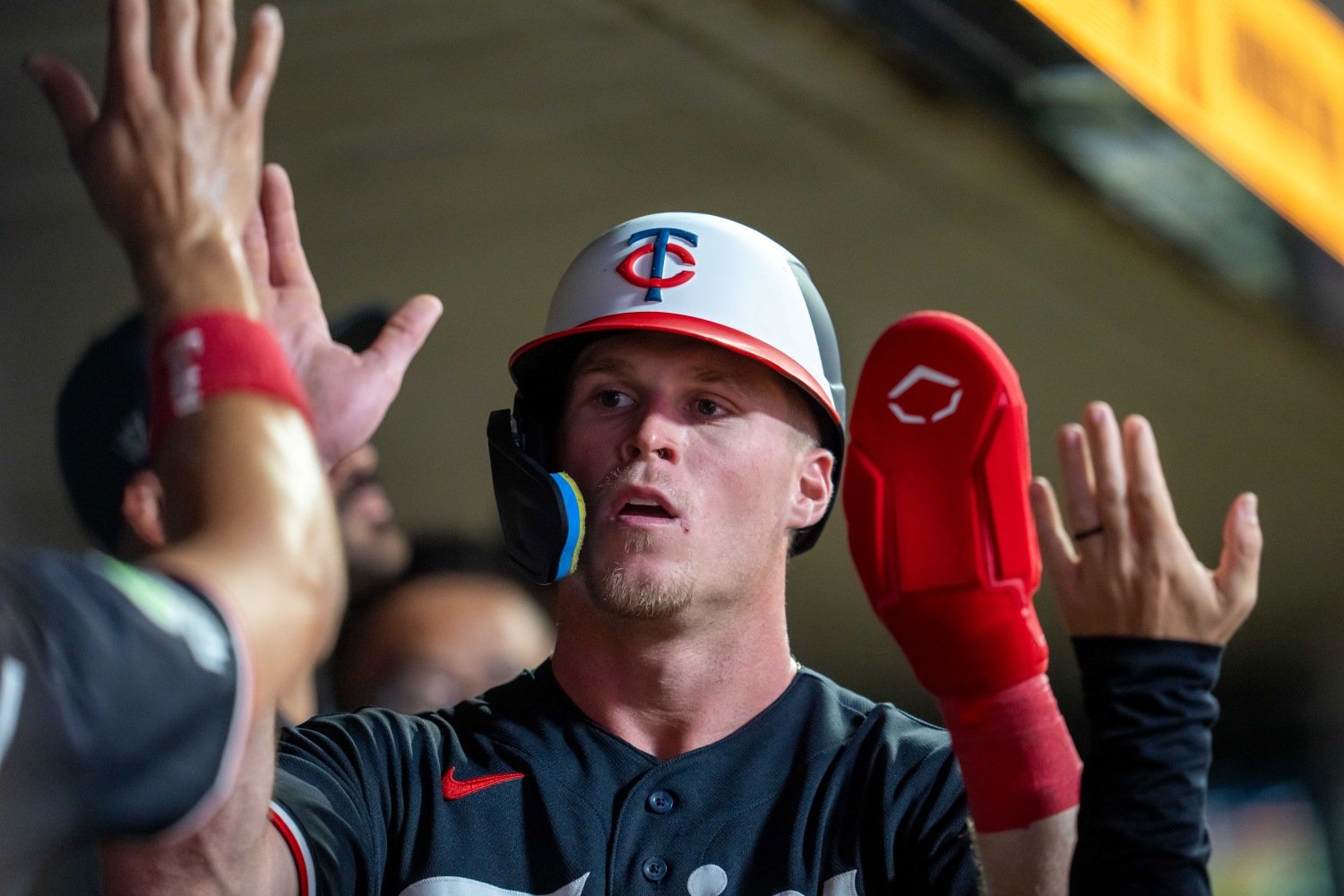
Walker Jenkins’s first handful of games in the big leagues have gone about as well as the Minnesota Twins could have hoped. The 21-year-old has shown the strong hit tool that made him one of baseball’s top prospects. He's looked comfortable at the plate, played solid defense, and even shown enough athleticism to steal his first base. There haven’t been many signs that the moment has been too big for him.
That doesn’t mean Jenkins has answered every question. September will provide a larger sample size and more opportunities for opposing pitchers to adjust to him. The Twins will also get a better idea of where Jenkins fits into their long-term plans. There are still some questions surrounding the former first-round pick, and these five will be worth watching closely over the final month.
Can Jenkins Stick in Center Field?
There is already an argument to be made that Byron Buxton should eventually move to a corner outfield spot. That doesn’t mean Jenkins will push Buxton out of center field immediately. At his peak, Buxton was one of the best defensive center fielders in baseball. Jenkins won't match that version of Buxton.
But Minnesota has to think about what its best defensive alignment looks like for 2027 and beyond. Jenkins has the athleticism to handle center field and has looked comfortable there early in his big-league career. If he proves that he can be an above-average defender at the position, the Twins will have an interesting decision to make.
A healthy Buxton moving to a corner could extend his career, while allowing Jenkins to take over center field for the long term. September won't answer this question definitively, but every inning Jenkins plays in center will give the Twins more information.
Can Jenkins Show His Power Potential?
This might be the biggest offensive question surrounding Jenkins. He showed flashes of above-average power during his hot stretch at Triple-A before receiving his promotion. There were stretches wherein Jenkins looked capable of doing damage against upper-level pitching.
Now, he has to show it against big-league pitching. Jenkins's ability to make consistent contact was never the primary concern. His hit tool has long been viewed as one of his greatest strengths. The question has been whether enough of that contact will turn into extra-base damage.
His first month in the majors will provide a glimpse of that answer. If Jenkins can combine his ability to control the strike zone with more authoritative contact, his offensive ceiling becomes significantly higher. The Twins don't need him to become a 40-home run hitter, but adding consistent gap power and home-run production would make him a much more complete offensive player.
Can Jenkins Pull the Ball More Regularly?
There is something familiar about Jenkins's swing. For Twins fans who watched Joe Mauer throughout his career, there are times when Jenkins's left-handed swing looks remarkably similar. Both players have the ability to stay on the baseball and use the opposite field.
That approach worked extremely well for Mauer. But Jenkins might need to pull the ball more often if he wants to tap into his power potential. At Triple-A this season, Jenkins pulled the ball 39.5% of the time. That's down from 47.6% in 2025. A player doesn't necessarily need to become pull-heavy, but Jenkins has enough strength to do more damage when he gets the ball out in front.
That could be one of the easiest ways for him to unlock more power without dramatically changing his overall approach. The Twins don't want to take away the all-fields approach that makes Jenkins such a talented hitter. They just want to see more of those well-struck balls find the pull side.
Can Jenkins Hit Fewer Ground Balls?
The other side of the power equation is Jenkins's launch angle. His ground-ball rate at Triple-A was 45.1% this season, up from 41.3% last year. At the same time, his average launch angle dropped from 14.9 degrees in 2025 to 12.4 degrees this season. He's hit the ball on the ground very frequently since coming to the majors.
That's important, because ground balls are rarely going to turn into extra-base hits. Jenkins doesn't need to sell out for launch angle, and there is always a danger in trying to artificially create more loft. His ability to make contact is a major part of what makes him special.
Still, finding a better balance could unlock another part of his offensive game. If Jenkins can keep his line-drive approach while reducing some of the ground-ball contact, more of his hard-hit balls could turn into doubles and home runs. That's something to monitor throughout September.
Can Jenkins End the Year Healthy?
Perhaps the most important question doesn't have anything to do with statistics. Jenkins has been limited by injuries in every professional season. That's made his journey to the majors a little more complicated than it otherwise might have been.
Now that he is finally here, the Twins would love nothing more than to see him finish the season healthy. September represents an opportunity for Jenkins to get his first extended taste of big-league baseball while also building toward the offseason. If he can stay on the field and finish strong, he'll enter spring training with a chance to claim a spot in Minnesota's Opening Day lineup.
He could even enter 2027 as an early frontrunner for American League Rookie of the Year. That's a long way down the road, but Jenkins' talent makes the possibility worth considering.
September is Just the Beginning
It's important not to read too much into a small sample size at the end of a season. Jenkins reached the major leagues at 21 years old. He's going to have stretches where he looks like one of the best young hitters in baseball, and there will be other nights when veteran pitchers make him look like a rookie.
Both are part of the process. The Twins aren't expecting Jenkins to answer every question during the final month of the season. They simply want to see how his tools translate against major-league competition and give him an opportunity to experience what life in the big leagues is like.
Still, he will be under the microscope. Every at-bat, every ball hit in the field and every game he finishes healthy will provide another piece of information for Minnesota's front office.
Jenkins has already shown why he was considered one of baseball's elite prospects. Now, September gives him a chance to show the Twins why he can be an important part of their next contender.
How will Jenkins answer these questions in the season’s final month? Leave a comment and start the discussion.
Which team do you dislike the most in the AL Central?
Follow Twins Daily For Minnesota Twins News & Analysis



- thelanges5, Patzky, tarheeltwinsfan and 2 others
-
 4
4
-
 1
1



Recommended Comments
Create an account or sign in to comment
You need to be a member in order to leave a comment
Create an account
Sign up for a new account in our community. It's easy!
Register a new accountSign in
Already have an account? Sign in here.
Sign In Now