Lucas Seehafer PT Twins Daily Contributor Posted June 23, 2022 Posted June 23, 2022 Twins top prospect Royce Lewis underwent his second ACL reconstruction surgery in as many years on Tuesday in Dallas. This time around his surgeons took a different approach to help make sure he doesn’t have to undergo a third. The anterior cruciate ligament, or ACL, is one of the most important structures in the knee as it pertains to athletics. It’s a robust structure comprised primarily of collagen—the compound that gives ligaments and tendons their strength and elasticity—that stabilizes the knee. When the ACL is compromised—either by a partial tear or a complete rupture—the knee becomes much more unstable, particularly with rotation and highly-athletic movements such as cutting and jumping. During a typical ACL reconstruction procedure, a portion of the athlete’s patellar or hamstring tendon is removed and inserted into the femur (i.e. thigh bone) and tibia (i.e. shin bone) in the location where the ligament was originally located. Over the span of 9-12 months, the tendon transforms structurally until it resembles a ligament—a process known as ligamentization—and the athlete gradually rehabs until they are strong enough to return to play. The majority of athletes will go on to rebound to their prior levels of success and will continue on with their careers without a hitch. But depending on the sport and type of tendon graft utilized, upwards of 6-31% will go on to either re-tear their ACL or rupture the one in their other knee. Such was the case, unfortunately, for Lewis. The reasons why ACL re-tear rates are so high are myriad, complex, and up for debate. However, one theory that has rise to prominence over the last handful of years involves the compromise of the anterolateral ligament (ALL). In terms of anatomical discoveries, the ALL is much like that of Big Foot, except if Big Foot was actually real. The ligament was first described in the 1870s by a French surgeon, but was not officially recognized as actually existing as an isolated structure until the early 2010s. While the ACL is the primary stabilizer against rotation in the knee, the ALL is believed to hold a role in rotational stabilization as well. It has been theorized that the ALL likely ruptures along with the ACL and that individuals who do not have their ALL repaired will continue to suffer from some rotational instability in the knee and, thus, be at a greater risk for re-injury. Now, I don’t know for sure that this is exactly what happened with regard to Lewis. And, frankly, it doesn’t really matter. Subsequent ACL injuries aren’t uncommon. An athlete, surgeon, rehab team, front office, and coaching staff can “do everything right” and ACL re-injuries can still happen. Such is the unfortunate nature of sport. But what we do know is that the surgery team in Dallas “basically, [did] something with the IT band,” according to Lewis to help “brace” his knee and improve its stability. The “something” he is likely referring to is known as a lateral tenodesis. The IT band is a long, thick tendinous structure that runs from the hip to just below the knee. It’s most commonly known as a structure that gives long distance runners one heck of a time if they don’t remain flexible, but it also serves as a key attachment point for various lower extremity muscles and assists in moving the leg. Due to its inherent strength, it serves as a good candidate for a graft during ACL reconstruction. Additionally, the lower portion of the IT band can be surgically relocated (i.e. tenodesis) to provide rotational stability. In short, the IT band takes over for the compromised ALL to provide extra rotational stability for the knee. The long-term outcomes for this procedure in the athletic population, and specifically the MLB population, is unknown, but theoretically it should allow Lewis to return to play with greater stability in the knee. The recovery will still take 9-12 months, but the procedure should not reduce Lewis’s speed or power much beyond the natural regression that is expected with aging. Baseball is a fairly linear sport, which reduces the potential impact of multiple ACL surgeries on performance compared to a sport like basketball that relies on quick pivots, explosive jumping, and constant running to be successful. View full article Craig Arko, Nine of twelve and ashbury 3
mikelink45 Old-Timey Member Posted June 23, 2022 Posted June 23, 2022 Nice write up of a complex medical situation. wsnydes, Seth Stohs, operation mindcrime and 6 others 9
rwilfong86 Verified Member Posted June 23, 2022 Posted June 23, 2022 Hopefully he bounces back well operation mindcrime 1
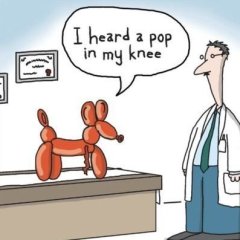
BobAzar Verified Member Posted June 23, 2022 Posted June 23, 2022 They put a lemon peel in his knee? operation mindcrime and Brandon 2
tarheeltwinsfan Verified Member Posted June 23, 2022 Posted June 23, 2022 Excellent post Lucas. Thank you. operation mindcrime, Lucas Seehafer PT, MN_ExPat and 1 other 4
tony&rodney Verified Member Posted June 23, 2022 Posted June 23, 2022 Lewis rebounded quite well from the last procedure and has the mental toughness to return effectively by June of next season. He is the third baseman next summer for the Twins. MN_ExPat 1
MN_ExPat Verified Member Posted June 23, 2022 Posted June 23, 2022 Thanks as always Lucas. Love the write ups about this stuff (ok... maybe not the actual injuries themselves though). It's always super interesting to discuss the details of how something works behind the scenes . operation mindcrime, Lucas Seehafer PT and FlyingFinn 3
Doctor Gast Verified Member Posted June 23, 2022 Posted June 23, 2022 Great job Lucas! That extra stability gives us added hope that he can come back better than ever. operation mindcrime and Lucas Seehafer PT 2
bean5302 Verified Member Posted June 23, 2022 Posted June 23, 2022 While I'm now quite cautious on Lewis' ability to ever stay healthy, anything which improves his chances of consistently showing his abilities on the field is great. I wish him nothing but luck! operation mindcrime 1
twinssporto Verified Member Posted June 23, 2022 Posted June 23, 2022 Great information! Thank you for posting this! Lucas Seehafer PT and operation mindcrime 2
markymark12 Verified Member Posted June 23, 2022 Posted June 23, 2022 Perhaps Parker Fox should have a look at that. Similar situation. Just sayin '. operation mindcrime 1
Heezy1323 Verified Member Posted June 23, 2022 Posted June 23, 2022 Great job Lucas. Difficult subject to describe using words alone. The analogy I use with patients when I recommend/perform this procedure in conjunction with an ACL reconstruction is that they should try to think of the knee like a steering wheel. The ACL is located in the center of the knee joint (steering wheel), while the ALL is located on the outer (lateral) edge of the steering wheel. Now imagine you are trying to hold the steering wheel of your car, and prevent it from turning. If you hold the steering wheel in the middle (ACL), it is hard to resist the wheel turning forcefully. However, if you hold the steering wheel on the outer portion (where we would typically put our hands), it is much easier to resist the rotation of the steering wheel. This represents the ALL. By performing the lateral extra-articular tenodesis (LET), you are recreating the ALL. This more easily resists the rotation forces that can put extra stress on the ACL. The data on the use of LET is intriguing, but it would be inaccurate (IMO) to say that it is conclusive at this point. I am mostly using the LET in re-do scenarios (such as Royce's) and select first-time surgeries where there is a more extensive injury or some other patient factors. Another interesting question I have not yet seen reported is- what type of graft did Royce have? I would assume he had a patellar tendon graft the first time around, and most commonly the graft is taken from the injured knee (though there are some surgeons who take it from the opposite knee the first time around). One of the (many) challenges of a revision situation is that most typically, the preferred choice for ACL graft was used the first time around. So the options are to go to the other knee and use the same type of graft, or to use a different type of graft from the injured knee (most typically quadriceps tendon or hamstring tendon). This can have an effect on recovery as well (if the 'other' knee requires rehab too, due to the graft harvest). Such a bummer for Royce, he was having such a promising debut. As if the kid needed any more adversity... Lucas Seehafer PT, Nine of twelve, lake_guy and 2 others 5
The Mad King Verified Member Posted June 23, 2022 Posted June 23, 2022 This new learning amazes me, Sir Bedavere. Explain again how sheep's bladders may be employed to prevent against earthquakes... Einheri and Strombomb 1 1
Nine of twelve Verified Member Posted June 24, 2022 Posted June 24, 2022 Mega-thanks to Lucas and Heezy for lending their professional expertise (free of charge, no less!) to the discussions. Not just this one but numerous orthopedic injury threads in the past (and, we hope, the future). Contrary to what we sometimes see in discussions about medical matters on this site, posts by people who have reliable, factual knowledge of the subject matter at hand is SOOO valuable and SOOO highly appreciated. Heezy1323 and Brazilian Twins Fan 2
ashbury Verified Member Posted June 24, 2022 Posted June 24, 2022 4 hours ago, The Mad King said: This new learning amazes me, Sir Bedavere. Explain again how sheep's bladders may be employed to prevent against earthquakes... (Psst, now, you wanna feel real old? This movie turns 50 years old in a couple of years.) The Mad King 1
Eduardo Tait Cedar Rapids Kernels - A+ C On Thursday, the 19-year-old went 2-for-4 with two home runs and three RBI in Cedar Rapids. That gives him nine homers this season. Explore Eduardo Tait News >
Recommended Posts
Create an account or sign in to comment
You need to be a member in order to leave a comment
Create an account
Sign up for a new account in our community. It's easy!
Register a new accountSign in
Already have an account? Sign in here.
Sign In Now