


Twins Video
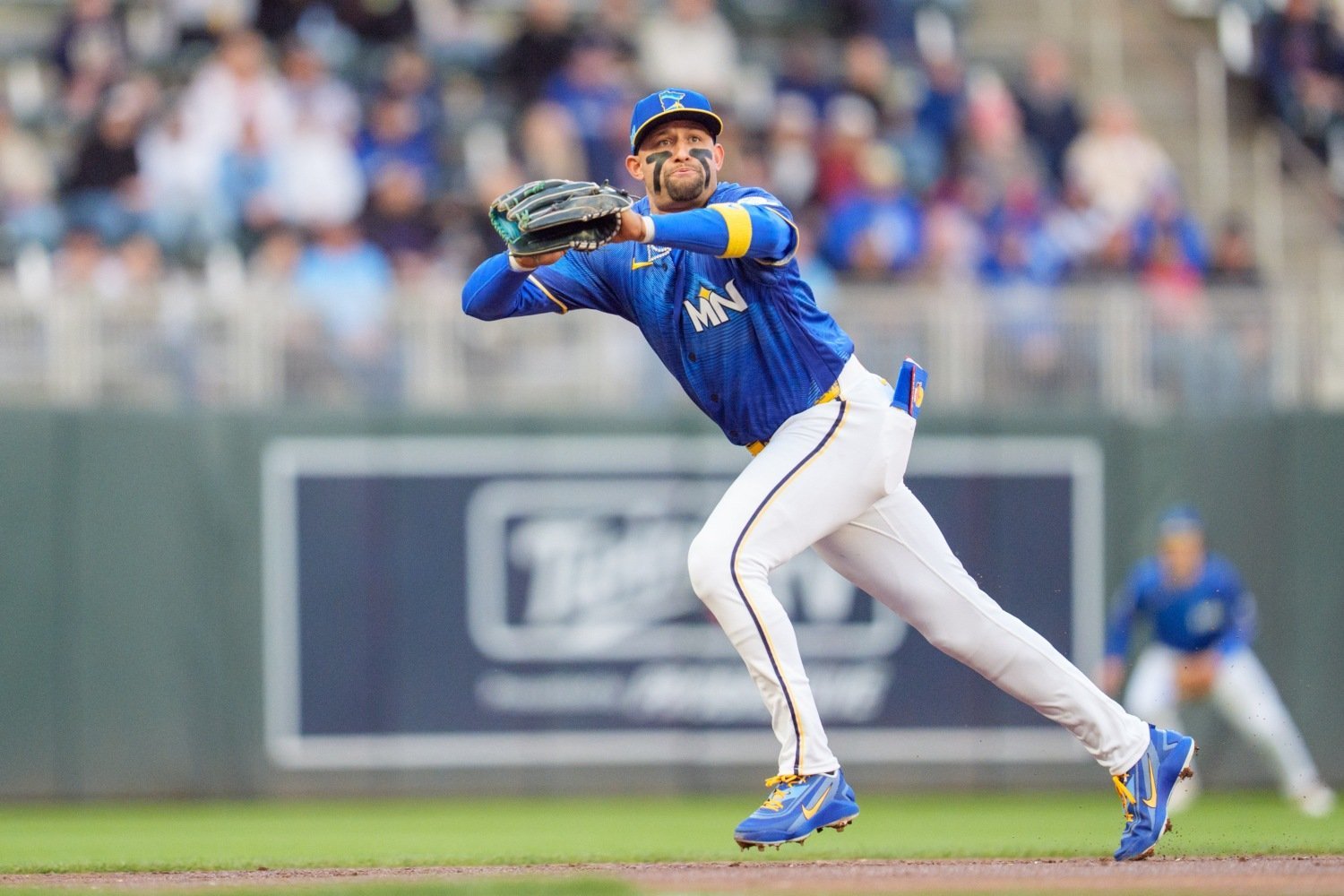
The Twins have spent much of the 2026 season trying to figure out where Royce Lewis fits. Lewis has spent most of his big-league career at third base, but the Twins have increasingly experimented with him at other positions. He's seen time at second base and first base, and the organization has made it clear that versatility is part of his path forward.
If the Twins keep Lewis this offseason, though, they need to do so with a clear vision of his role for next year's team. Lewis cannot spend another season simply bouncing around the diamond without a larger plan. The Twins need to determine which position best fits his defensive abilities; which gives him the best chance to stay healthy and productive; and which one(s) his bat can support, in profile.
That last part is particularly important. Lewis entered 2026 with many in the Twins front office hyping him up for a return to the production he had earlier in his career, but his campaign has not gone according to plan. In 119 games, he's hitting .228/.291/.383, with 14 homers, 24 doubles, and an 88 OPS+. That's not the offensive profile Minnesota wants from a player who was once viewed as one of the organization's foundational pieces. After showing real signs of improvement when he returned from the minors and well into August, he's been as bad down the stretch as he was in April and May.  So, where does he go from here?
Second Base Gives Lewis More Defensive Value
There is an argument that second base is the natural landing spot for Lewis if the Twins decide to keep him. He has lateral quickness, soft hands and a modicum of speed. Those traits are more valuable at second base than at first.
The defensive requirements are different, but second base allows Lewis to use some of the athleticism that made him such an intriguing prospect in the first place. The Twins have already seen him handle the position; he played there a lot for a three-week span from the All-Star break through early August. He returned to the position Saturday in Anaheim. Minnesota had also used him at second in St. Paul during his minor-league stint. At the big-league level, he's played 106 1/3 innings at second (almost all of them this year) with 1 OAA, his only position this season with a positive total. The problem is that Lewis hasn't accumulated enough second-base innings to know exactly what the long-term defensive results would look like with as much certainty as one might prefer.
As a second baseman, though, his bat would also be a plus. This year, the league's keystoners have batted .248/.317/.380. That's better than Lewis's full-season line, but already, the only way the team retains him is if they believe in the version of him who batted .256/.313/.436 in his first 300 plate appearances afrer making it back from St. Paul. If the Twins don't think his bat easily clears the bar at second, the rest of this conversation is moot.
First Base Takes Pressure Off the Glove, Not the Bat
At first base, Lewis doesn't have to make nearly as many difficult plays. That sounds obvious, but it matters. The Twins can live with a player who's merely adequate defensively at first base if he is providing significant offensive production.
Lewis has shown flashes that suggest he can be a very good receiver of throws. Statcast's first-base receiving data has credited him with positive value (2 OAA) in that area. However, his overall defense at first has been worth -3 OAA, as he has tried to learn the nuances of a new position on the fly.
But first base comes with another problem. The offensive expectations increase. A .700 OPS might be survivable from a middle infielder, if the defense is good enough. It's much harder to justify from a first baseman. First basemen have hit .256/.337/.438 league-wide this year; only for a month or two has Lewis managed to meet that standard.
The Twins don't need Lewis to become a Gold Glove first baseman. They need him to become a productive hitter. If he's playing first base every day (or anywhere near that), the offensive bar becomes considerably higher.
That creates an interesting offseason question. Would Lewis benefit from knowing that he is playing second base every day and having the freedom to concentrate on rebuilding his offensive game? Or would moving to first allow him to focus less on difficult defensive responsibilities and put more energy into becoming the hitter Minnesota believes he can be? As is so often true with Lewis, there's no easy answer.
The Position Could Affect His Offensive Development
This might be the most overlooked part of the discussion. Position does not directly determine how well a player hits. But expectations, workload and defensive responsibilities can affect how a player approaches his development.
Lewis has already gone through a significant adjustment period this season. He was optioned to Triple-A in May after struggling at the plate, then returned after hitting .340/.417/.868 in 2 1/2 weeks with St. Paul. When he returned, the Twins didn't simply hand him back his old third-base job. Instead, they began treating him as a more versatile player.
If Minnesota decides Lewis is its second baseman, he can spend the winter preparing specifically for second base. If the Twins decide he's a first baseman, he can spend the winter becoming as polished as possible at that position. The worst outcome would be spending another season without a clear answer.
Lewis Should Get the Chance to Earn Second Base
If the Twins keep Royce Lewis, second base should be his primary position. That spot gives Minnesota a chance to take advantage of more of Lewis's athletic ability, while allowing his bat to develop without the offensive expectations attached to first base.
There's also a bigger roster-building benefit. A Lewis-Kaelen Culpepper-Brooks Lee combination around the infield gives Minnesota three players with different defensive skill sets. If Lewis can become even an average second baseman, the Twins could have a relatively athletic infield with legitimate defensive upside. First base can then be filled by someone whose offensive profile better matches the position's expectations. That might be the most important consideration of all—though it assumes the team is proactive enough to go sign a productive first baseman this offseason.
Lewis needs an opportunity to settle into a position, prepare for it during the offseason, and spend an entire season learning how to play it at the highest level. If that position is second base, the Twins would be asking Lewis to prove that his athleticism can translate to the middle infield. If it's first base, they would be asking him to prove that his bat can carry the position. For a player whose future with the organization remains one of the biggest questions of the offseason, choosing the right defensive home could be just as important as figuring out what went wrong offensively in 2026.
Should Lewis be Minnesota’s starting second baseman in 2027? Leave a comment and start the discussion.







Recommended Comments
Create an account or sign in to comment
You need to be a member in order to leave a comment
Create an account
Sign up for a new account in our community. It's easy!
Register a new accountSign in
Already have an account? Sign in here.
Sign In Now