Jump to content
Twins Daily
  • Create Account

Recommended Posts

Posted
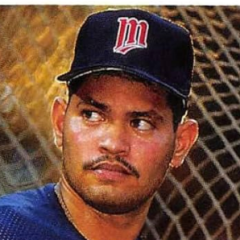
Image courtesy of William Parmeter

Player development is often where organizations separate themselves, and the Minnesota Twins are making sure they are not standing still. In a recent appearance on Inside Twins, Director of Player Development Drew MacPhail offered a detailed look into how the organization is rethinking pitching usage and in-game strategy across the minor leagues.

What emerged from the conversation was a clear theme. The Twins are not just tweaking around the edges. They are actively challenging long-held norms about how pitchers are deployed and how information flows during a game. The goal is not only better performance today, but a more adaptable and durable pitching pipeline for the future.

One of the most notable changes centers on how starting pitchers are used. Traditionally, starters work every five days and build toward 100 pitch outings. Minnesota is pushing against that model by experimenting with a four-day rotation paired with shorter outings. Last year, the Twins tried it with a handful of guys, but this year, it's expanded to about a dozen pitchers.

“Honestly, we've been doing a lot of research and talking a lot about this for a long time,” said MacPhail. “We experimented with it in 2025 in a smaller group, and we saw a ton of success. I think the idea behind it…was basically the idea that some of your starting pitcher type guys, some of your best pitchers in the organization, if you put them on a four-day, there's actually some interesting research that they could actually bounce back a little bit quicker if kept under a certain pitch count.”

MacPhail continued, “And the benefit of that was they'd actually be able to accrue more innings over the course of a season on that schedule. So we sort of started with a pilot program, and what we saw was the guys that we put on that program having more success in that four-day type role than they had in the previous year, as well as taking down more innings. The group was excited about kind of rolling it out to a bigger group this year, and that's what you're seeing so far in the 2026 season.”

The early results gave the Twins confidence to expand the program, and the structure has already produced meaningful workloads. Pitchers like John Klein approached the 100-inning mark last season, a significant benchmark for developing arms.

That shift, however, creates logistical challenges. With a mix of four-day and five-day starters and a universal off day, overlap is inevitable. Instead of viewing that as a problem, Minnesota is turning it into an advantage through piggyback outings.

“I think what you ultimately see is you have some of your best starting pitchers sort of piggybacking each other,” said MacPhail. “So, an example of that that happened recently was Connor Prielipp and Kendry Rojas. Kendry was on that four-day schedule, Connor was in a true five-day starter type role. Those guys piggybacked each other and ended up taking down eight plus innings of incredible baseball and Triple-A.”

“So I think what it ultimately means is you have sort of more of your starter type guys pitching on top of each other more, but ultimately that's sort of one of the benefits as well, is you kind of have two guys going back and forth, giving you a lot of innings, actually more than a starter pro typically would, is the idea and some two of your best pitchers taking over that workload.”

Beyond the immediate results, the approach also creates flexibility in how pitchers transition to the majors. Instead of forcing a binary choice between starter and reliever, the Twins are building pitchers who can handle multiple roles depending on need.

The Twins are not stopping with pitcher usage. They are also experimenting with coaches calling pitches during games, a responsibility that has traditionally been the catcher's at the professional level. This is the norm in college baseball, with nearly every program having the coaches call the pitches.

“The first is our pitching coaches spend a ton of time going over the advanced process game planning for hitters,” said MacPhail. “Our catchers do as well. But I think if you broke down that time a lot, then the pitching coaches are really the ones that are digging into it and putting in the most work and effort on that front and then helping educate the catchers on that.”

MacPhail discussed how the pitching coaches have the information in front of them during the game, making it easier to call pitches. The catcher is relying on recall and memory, which can be challenging with in-game batter changes, different matchups, etc.

“I think if you think about it from the outside looking in, it makes sense, just like you see an offensive coordinator or defensive coordinator in the NFL or college football calling plays, that the pitching coach would be calling plays, right? So I think it's a copycat league. We've seen some other organizations do that this past year.”

So, what are the benefits of coaches calling pitches?

“I think there's an ancillary benefit of our lower-level catching prospects, learning the pitch coach calling process from our pitching coaches, kind of spurring more dialogue there. Additionally, I think those games when they're not calling pitches, it helps free them up, and we're interested in do they perform better offensively? Do they perform better from a receiving standpoint, from a blocking and throwing standpoint?”

“There's so many things they have to worry about during the course of a game. If we take this sort of mental workload off them, well, we actually see their performance take up some too. So, you know, I'm not going to pretend like we know for sure that it's going to be a huge success, but it's something that we want to experiment with in the minor leagues, and ultimately, you know, it's a testing ground to bring these concepts to the major league team.”

For an organization that has consistently emphasized development, these changes represent a willingness to rethink the blueprint. Not every experiment will stick, and MacPhail was clear that there are tradeoffs worth evaluating. Still, the Twins are leaning into the idea that the minor leagues should be a proving ground for innovation.

If the early returns hold, Minnesota may not just be developing pitchers. It may be reshaping how they are developed across the game.


Will these changes be successful in the minors? How will this impact the big-league level? Leave a comment and start the discussion. 


View full article

Posted

Love the idea of the pitcher usage. Just like any fundamental practice (like bunting), piggybacking needs to be practiced in the MiLB. Throw pitchers in that situation on the MLB level & they fail; fans say "you see piggybacking doesn't work". No, piggybacking does work, but it needs to be practiced on the MiLB level 1st. 

IMO, it's best for the catcher calling the game, for they normally have a greater feel for the game. But not all catchers can, & coach feeding info to the catcher can't hurt. With this philosophy, the catcher should be encouraged to override any call if they deem fit.

Posted
38 minutes ago, Eris said:

This makes a lot of sense. A team would need 8 effective pitchers to make it through the rotation with 5 for relief type roles. The challenge will be finding 8 effective pitchers who can go 2X through the order. 

Not necessarily needing 8... The article talks about the team pushing towards 100 pitches on a 5-day rotation... what is the pitch goal on a 4-day rotation? 80 pitches should theoretically get you 5-6 innings, IMO it means that instead of the current 1-2 long relief guys, you might have 3 guys able to go 3 innings, with a few more comfortable going 2.

I also wonder how this addresses the current "max effort" philosophy. Are they discussing dialing it back  a bit for the SP? 

Posted

Good idea for the minor leagues to get more innings out of your best pitching prospects. Minor league relief-only pitchers are generally roster filler with no future.

It works because winning and losing is secondary to developing talent. That is not true in the major leagues.

Posted

I'm awfully skeptical of their assertions. It seems to me that Minnesota MiLB starting pitchers are often far behind other teams' innings.

100 innings isn't particularly noteworthy in my opinion. If the Twins are having a hard time getting their starters to 100 innings, they're not developing them right. For Tampa Bay last year, who is far and away more successful than Minnesota at developing pitchers, had 5 starters with more than 110 innings last year in AA and AAA alone. It's just not a big deal. Their biggest inning eaters were in the 160+ innings area.

Our MiLB pitchers often need 15-20 pitches to get through an inning which means we're probably going to see them limited to 3-4 innings. Not sure how 40 starts at 3.2 innings and piggy-backing vs 30 starts at 4.2 innings gets prospects more innings or prepares them to be successful at the MLB level.

The concept of piggybacking has been discussed ad nauseam around here. It doesn't add up. You wind up pitching your ace less in favor of your #6 guy more. There are only 26 rosters spots. This doesn't work in reality because you don't know when guys are going to pitch a good game or a bad one. This results in a bullpen which is too shallow, inconsistent workloads, routines and IMHO, elevated risk of injury.

Posted

It is an interesting theory that one less day of rest, but also less pitches, could produce better overall results, and more innings overall. Part of my question is that just for development, or are they looking to use this as MLB level? 

Over the years teams have done different things with the 162 game setting and off days.  Do they keep their pitcher on normal rest and use 4 starters when there is an off day or just give them the extra day and keep with 5.  If you stuck with 5 all season they would get 32 starts each with top couple getting 33.  In recent years 5 to 6 innings have been average across the league on starting pitching.  Top guys slightly more, bottom guys slightly less.  We used to say 200 innings was a good bench mark for a solid starter. If a starter pitched in 33 games, and pitched over 200 innings, that would be 6 innings per start about.  

If that is top of the limits, understanding there is the few times they will go 7, 8, or very rare 9 innings. How much of a decrease will we expect per game innings wise, if we did 4 day rotation?  Would it be 20%, my guess we should not suspect that else the math says it will be equal, so we need to assume they are going to say between 10 to 15% decrease  in pitches/innings. 

That would mean somewhere between 5 to 5.5 innings.  If they are closer to the five, we are at  a wash, why? At the end of the season we are looking at 200 innings still, just spread over 40 games than over 32 games. Maybe they think it will increase results in those innings.  

The assumption then is that they will face the order only 2 times generally, and hopefully will still have decent enough stuff over the innings they are doing that, on the limited rest, and although you are getting similar innings, they will generally be more effective innings.  This will be fine, if you can do this with multiple pitchers, to basically piggy back.  You get the 4 to 5 innings from the starter, and the 4 innings from the piggy back guy.  Then they both get their 4 days off.  You then need basically 8 pitchers to do this effectively normally.  Leaving then 5 other pen guys.  The guys that will come in late in games as special guys.  

This could work, only if you stick with the plan through the whole season and you say these 8 pitchers will stay on this rotation.  Then you only use the other 5 guys when the plan goes off the rails.  You cannot mess with it. It will be interesting to see if they think it is workable.  The big issue will be injuries though. 

Posted

It makes some sense in theory and trying something new isn't necessarily a bad thing, but I'm not sure if it makes that much of a difference or not.  You look at the Twins system this year and there were a ton of arms that started the season late Rojas, Quick, Mitrovcich and supposedly Horn, Reitz and Soto although they might as well join the 60 day IL arms in Barr, Fang, Kaminska, Carpenter. Not to mention guys with stretches on the IL already in Garcia, Moring, Bohorquez.  

It seems like arms are just naturally struggling with the max effort required to pitch these days whether it be 60 pitches or 90 to 100.  I get that fewer pitches per outing should be easier to recover from, but how much does that matter. Once the arm is "warmed up" is it less prone to injury than just starting the warming up process?  I mean guys who throw just one or two innings out of the pen get hurt all the time as well.  

I don't know what the answer is and since it is the minors am willing to see how they do compared to other teams, but to my knowledge there isn't a lot of proof that shaving of 20 to 30 pitches per outing will change much.

Posted
5 hours ago, Eris said:

This makes a lot of sense. A team would need 8 effective pitchers to make it through the rotation with 5 for relief type roles. The challenge will be finding 8 effective pitchers who can go 2X through the order. 

I would assume the guys that can go longer would be used in a more traditional way.  Perhaps 3 traditional SPs and 4 that piggy-back still leaves 6 BP arms.

Posted

I can see why the Twins are willing to go down this road as it takes players like Morris, Festa, Matthews, etc. and allows them the opportunity to succeed in a more hybrid role if you haven't really given up on them as a starter yet and don't think they can be an effective reliever.  I don't see this catching on until the rules are changed regarding a starter needing to go 5 innings to qualify for a win.  Pitchers are very cognizant that their future pay highly depends on them being successful as a starting pitcher instead of a reliever.  IMO, a pitcher will only really sign onto this if they believe that this is their only way to get to the big leagues.

My other concerns are listed as follows:

Warm-up procedure:  Starters have their own routine and typically take longer to warm up than relievers.  Does the second pitcher need to start with a clean inning, thus burning a reliever to bridge the gap while the "second" starter is warming up? 

Ineffectiveness: When does a manager go get his starter under this scenario?  I understand that the outing where Abel came in after Ober was an aberration.  It still does show a potential pitfall of this arrangement.  Shelton was reluctant to go get Abel because he needed to get his work in when it was apparent that he did not have it that day.  Do you go get the pitcher knowing you will burn two 'starters' and further stretch your bullpen to cover the outs that one of your paired starters couldn't get?

I'm not sure this is a wise procedure for the major league roster.  If you have a number of starters in the minors, getting everyone some work may be helpful for developmental purposes.  Then you could work with everyone and possibly further stretch out your best pitchers if they are close to being called up.

Posted

This is why I was hoping for a clean sweep of the front office, I am not sure if Zoll is any different than Falvey.  It is never a bad thing to try and find an edge.  But this organization is letting their analytics department run the baseball operations.  They have been adding to the analytics staff and reducing scouting.

They have an interesting definition of success, last year the Saints won 62 games.  I realize it is about development in the minor leagues but if you are having success I would expect more wins and more impact on the major league club.

This club needs to identify talent and develop that talent rather than trying constantly to be the smartest one in the room.  Falvey had limited success in his nine years at the helm.  Maybe all his ideas weren't as good as they think.  We need fresh leadership to take an objective review of what is trulyworking and what isn't.


Posted

I see real merit for the 4 IP every 4 days in MILB for several reasons:

1] A drafted pitcher very rarely debuts until the following season, instead they work on the side with instructors in Ft Myers. So there is a natural build up to begin the next season, their 1st professional debuts.

2] It makes sense for a pitcher coming off injury the previous season to again, ramp up.

3] It does allow more arms to get in multiple innings of work to develop their offerings.

4] It's a good way to take those arms that might not seem to project as ML SP, but have some interesting qualities, to work on their "stuff" beyond some immediate shift to the bullpen where they only get, usually,  2 innings to throw. More time to develop their repetoire is a good thing. And you might occasionally get a surprise development where you want to give them a legitimate shot at being a SP.

But while I see real merit to the 4 & 4, there's also a major pitfall if this goes beyond the parameters listed above. The most important one being, how does a SP develop the ability to throw 5-6 innings at the ML level if his arm has been trained to throw 4 IP at a time? I recognize that a TOP PROSPECT would probably not be subject to the 4 & 4 beyond their introduction to pro ball, or building up post injury, but let's just say Quick was used in this way this season, and maybe next. (I doubt he would, but I'm using him for reference sake). So now he's ready for a ML debut, fast tracked due to talent and production, to debut late 2027 or early 2028. His arm and experience facing lineups is only geared to 4 IP per turn. And NOW you want 5 or 6 IP from him at the ML level?

An exaggeration for sure, but I think the point has been made. It should be adapted ONLY for the reasons I've listed above. 

At the ML level, it's not uncommon for a rookie arm to be nursed a bit early. The Twins did this sort of thing with Ober and SWR initially. They're kinda-sorta doing it with Prielipp currently. But unless roster sizes change...which I want, but that's a completely different discussion...it ONLY works for a team that just doesn't have a 5th SP, for example. Instead of the "opener"...which has largely died as an experiment...a team might have a 4 IP option and a piggy back that also isn't fully trusted to be a mainstay to follow. That COULD be a way to mitigate that hole in the rotation, leaving 7 pen arms to still take over additional, more regular, innings.

But what if that designated SP, or his piggyback, just have a bad day and blow up? Then you're right back to any NORMAL staff that occasionally has a bad performance day. And you've accomplished nothing. 

It's still an interesting idea to pursue at the ML level if your 1 starter short to try. Maybe it works 75-80 % of the time and you get good results. But I just don't see a ML practically of the idea.

But again, it could be a really good way to build up a SP his first couple of seasons. And it's a good way to build up a "questionable" arm that could either surprise, or simply gain more IP to just refine his offerings for a middle inning pen role, or an eventual late innings role. But I see little practically for the majority of quality arms within the system, and VERY limited opportunity to be employed at the ML level.

Posted

The “what if” scenarios in the potential future state are making a new concern out of an existing concern.

What if your designated starter craps the bed? Today, bring in the long man. Tomorrow ask your piggy back to come in earlier.

Tomorrow, what if your piggy back craps the bed? Either a bullpen game or slide the schedule forward. For the next game, make a call up from AAA if needed. If this is a deployed strategy, you’ll have depth to call on same as today.

What if you have a very good starting pitching prospect who can perform a traditional starter workload? Today, great stick him in the rotation. Tomorrow, great stick him in the rotation.

This reminds me of Moneyball for pitchers. They’re experimenting with building a Skubal in the aggregate.

Create an account or sign in to comment

You need to be a member in order to leave a comment

Create an account

Sign up for a new account in our community. It's easy!

Register a new account

Sign in

Already have an account? Sign in here.

Sign In Now
The Twins Daily Caretaker Fund

You all care about this site. The next step is caring for it. We’re asking you to caretake this site so it can remain the premier Twins community on the internet.

×
×
  • Create New...