Jump to content
Twins Daily
  • Create Account

Recommended Posts

Twins Daily Contributor
Posted

The veteran first baseman hasn’t hit like this since 2019. What’s behind Santana’s late-career renaissance? Does it have legs for the second half? 

Image courtesy of © Matt Krohn-USA TODAY Sports

Over at FanGraphs, Jay Jaffe started his trade deadline preview with articles identifying the roster holes contending teams might be looking to upgrade. Jaffe started his series this year with first base, and the piece was notable for this community, in that it did not include the Twins. 

Not only has first base not been a problem for the Twins, it’s been surprisingly solid. The Twins’ 1.9 fWAR from first base is the 6th-highest total for that position in MLB this season. If I had told you before the season began that first base would be a source of strength at the All-Star break, you might have assumed that meant Alex Kirilloff had leaped forward. That has not been the case, with Kirilloff some combination of scuffling and injured.

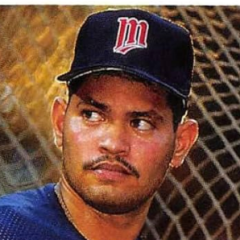
Instead, that first base production has mostly been provided by Carlos Santana, the 38-year-old journeyman on his sixth team in the last five seasons.

Jest clear of the break, the always-durable Santana has played in 91 of the team’s 98 games, with 81 starts at first base. He’s been far more than just an available warm body, however, with a slash line of .241/.325/.429 which is 15 percent above league average by wRC+.

Add in defense that Statcast places in the 93rd percentile (+6 fielding run value), and Santana has already racked up his highest seasonal WAR total since 2019, when he was an All-Star with Cleveland and finished 16th in American League MVP voting.

In the context of the rest of the league’s first basemen, Santana’s WAR is tied for 5th in MLB (and tied for 1st in the AL) with Cleveland’s Josh Naylor. While his glove is a big piece of that value puzzle, Santana’s bat work also ranks 9th among all first sackers (and 3rd in the AL) in wOBA (.326) and wRC+ (115).

That means the Twins have already more than broken even on their modest $5.25 million offseason investment in Santana’s services. FanGraphs estimates that Santana has already provided $13.6 million worth of value this season.

That’s all well and good, but it's fair to wonder how Santana is doing this. It’s certainly not unheard of for a player to outrun Father Time as they approach their 40th birthday (Nelson Cruz, anyone?), but it is unusual. That’s especially the case for Santana, whom the esteemed Ben Clemens of FanGraphs was calling cooked nearly three full seasons ago — which is to say nothing of the April 2024 Twins Twitterati — and whose bat has not been meaningfully above-average in five seasons. Is his first half a nice run of good fortune, or might it have legs down the stretch?   

The Usual Suspects
Whenever I want to understand what’s driving a hitter’s hot stretch, I often start the evaluation by checking their plate discipline, batted-ball luck, and batted-ball quality metrics. Has their ability to choose pitches to swing at changed? Have they gotten abnormally fortunate with batted balls landing for hits or over the fence for home runs? Are they hitting the ball harder or on more optimal angles?

Comparing Santana’s first half to the last few seasons doesn’t reveal that he’s having abnormally good luck or made any major gains in discipline or batted ball quality. Take a look: 

AD_4nXcMcXJDGeojMta7pk439hgSBa-K8l5HJ6nL

You’re welcome to look across those figures and see if you find any patterns. He’s walking less often than before, but hasn’t struck out more often. The BABIP row shows Santana is a beneficiary of the defensive shift ban, but his .258 mark this year is perfectly in line with his career norms. His average launch angle is up, but it’s close to what he had in 2022 and may be worth exploring further. You can squint and say he’s swinging and missing a bit more often, but it doesn’t seem much out of line with the recent past. We’ll have to keep looking.


View full article

Posted

Nice job on the article! Honestly, what I've taken away from this is there's no good reason for Santana to be hitting so well, but there may not have been a good reason for Santana to have looked so poorly in 2020-2022.
 wOBA vs. xwOBA
2020 255 PA, .316 vs .372
2021 659 PA, .294 vs .335
2022 506 PA, .316 vs .352
3yrs 1420 PA .303 vs .348
--------
2023 .323 vs .308 <--- Looked cooked. 
--------
2024 .328 vs .323

There's every reason to believe Santana's solid production days were behind him. While 2020-2022 paints harshly unlucky results, when you see a pattern that long over that many plate appearances, it's so rarely a coincidence you just have to reset that to the new norm for a player.

xwOBA of .348 (2020-2022) would be good for about a wRC+ 120ish, instead he managed an actual wRC+ 91 over that span. Then, last year, his expected numbers tanked to an xwOBA of just .308 at age 37 while his actual numbers reversed some of what appeared to be "bad luck" in the previous years.

If you blend everything together, you get a player who is definitely in the twilight of their career, but Santana may be able to sustain close to this level of overall production through 2024. I think he'll regress a bit, yet, but he may be able to put up a slightly better than league average season at the plate.

Using OAA on it's own isn't a good practice, IMHO. It's the worst possible defensive metric to use as a standalone and Fangraphs should switch back away from it ASAP. It's wildly inconsistent, and it's more like a video game "what if" simulation rather than crediting the player with what they actually produced. By most measures, Santana is a good first baseman, but the defensive metrics are actually split on him. Combining them all together gives the view of Santana being a solid first baseman.
DRS = Excellent
UZR = Below Average
OAA = Excellent
RF/9 = Poor

Posted
On 7/22/2024 at 8:10 AM, Brock Beauchamp said:

I had no idea Santana was destroying lefties THAT MUCH.

Conversely he's part of the problem against right-handers.  This goes beyond him and applies to most of the guys facing righties from the left side of the plate.  Only because our RHB have fared actually pretty well against the right-handers has it not become a full-blown disaster.  Kepler, Julien and Santana are tasked with pulverizing RHP and they just aren't doing it.

Posted
Just now, ashbury said:

Conversely he's part of the problem against right-handers.  This goes beyond him and applies to most of the guys facing righties from the left side of the plate.  Only because our RHB have fared actually pretty well against the right-handers has it not become a full-blown disaster.  Kepler, Julien and Santana are tasked with pulverizing RHP and they just aren't doing it.

Oh for sure. What looked to be a potent collection of lefty bats has underperformed, almost to a man. 

Posted
20 minutes ago, Twins_Fan_in_NJ said:

Front office takes a lot of heat - some of it, rightfully so - but Santana at $5M is a complete steal and the Twins' season would look a lot different (in a bad way) without him.

Jose Miranda is better than Carlos Santana. Miranda would have directly replaced Santana's plate appearances. The implication Santana has provided some sort of major lift to the team is looking at his play in a vacuum.

Posted
10 minutes ago, bean5302 said:

Jose Miranda is better than Carlos Santana. Miranda would have directly replaced Santana's plate appearances. The implication Santana has provided some sort of major lift to the team is looking at his play in a vacuum.

There's a lot what if's in your post, bean. Miranda hasn't been able to 'directly replace' Santana's plate appearances due to injuries to Lewis and Kirilloff. Under the current circumstances, Santana's absolutely needed. Ironically enough, to just presume that Miranda would be the direct replacement without considering other factors - that's looking at things in a vacuum. 

Posted
On 7/22/2024 at 1:06 PM, bean5302 said:

Nice job on the article! Honestly, what I've taken away from this is there's no good reason for Santana to be hitting so well, but there may not have been a good reason for Santana to have looked so poorly in 2020-2022.
 wOBA vs. xwOBA
2020 255 PA, .316 vs .372
2021 659 PA, .294 vs .335
2022 506 PA, .316 vs .352
3yrs 1420 PA .303 vs .348
--------
2023 .323 vs .308 <--- Looked cooked. 
--------
2024 .328 vs .323

There's every reason to believe Santana's solid production days were behind him. While 2020-2022 paints harshly unlucky results, when you see a pattern that long over that many plate appearances, it's so rarely a coincidence you just have to reset that to the new norm for a player.

xwOBA of .348 (2020-2022) would be good for about a wRC+ 120ish, instead he managed an actual wRC+ 91 over that span. Then, last year, his expected numbers tanked to an xwOBA of just .308 at age 37 while his actual numbers reversed some of what appeared to be "bad luck" in the previous years.

If you blend everything together, you get a player who is definitely in the twilight of their career, but Santana may be able to sustain close to this level of overall production through 2024. I think he'll regress a bit, yet, but he may be able to put up a slightly better than league average season at the plate.

Using OAA on it's own isn't a good practice, IMHO. It's the worst possible defensive metric to use as a standalone and Fangraphs should switch back away from it ASAP. It's wildly inconsistent, and it's more like a video game "what if" simulation rather than crediting the player with what they actually produced. By most measures, Santana is a good first baseman, but the defensive metrics are actually split on him. Combining them all together gives the view of Santana being a solid first baseman.
DRS = Excellent
UZR = Below Average
OAA = Excellent
RF/9 = Poor

In the past couple weeks you've used several players whose projected numbers don't match up to actual results. Are these abnormalities? Or do they happen more often? Just the last paragraph alone with 4 different ways of measuring how good he is defensively tells me that it's faulty at best. What were Miranda's projections for 2024? I doubt they were as sterling as his results have been. And based off that wouldn't he be expected to have a huge regression? 

Posted
4 hours ago, bean5302 said:

Jose Miranda is better than Carlos Santana. Miranda would have directly replaced Santana's plate appearances. The implication Santana has provided some sort of major lift to the team is looking at his play in a vacuum.

Is a dust buster considered a vacuum? I can't see doodely squat cuz it has a solid base. 

Posted
1 hour ago, Schmoeman5 said:

In the past couple weeks you've used several players whose projected numbers don't match up to actual results. Are these abnormalities? Or do they happen more often? Just the last paragraph alone with 4 different ways of measuring how good he is defensively tells me that it's faulty at best. What were Miranda's projections for 2024? I doubt they were as sterling as his results have been. And based off that wouldn't he be expected to have a huge regression? 

It's sample size, luck, and defensive shift changes. xwOBA is like a more wide reaching stat than something like BABIP. Consider it ERA vs FIP, but a bit more advanced. Maybe like ERA vs SIERA.
2024 wOBA vs xwOBA 
Correa = .383 vs .362
Castro = .343 vs .331
Buxton = .354 vs .330
Miranda = .379 vs .345
Santana = .332 vs .326
Jeffers = .339 vs .322
Lewis = .430 vs .400
Kepler = .311 vs .308
Julien = .305 vs .298
Larnach = .330 vs .353
Lee = .297 vs .304
Wallner = .351 vs .313
Vazquez = .225 vs .249
Farmer = .256 vs .277

While you can see a single season variance, especially with this just being a little more than half season so far, seeing a trend where xwOBA diverges substantially from actual wOBA isn't common.

When it comes to defensive metrics, they're measuring totally different things.
OAA replaces the actual player with a fictional, hypothetically average fielder with average reflexes, average, acceleration, average speed and an average arm. Then it simulates what would have happened if the hypothetical fielder was asked to make the play vs. what actually happened, but positioning and instincts can make enormous differences in the outcome of a play.

DRS and UZR are pretty similar. They use IDENTICAL datasets. They section the field into zones, then assign positions to their expected zones. The metrics give bonus modifiers for making a difficult play or botching a routine play, but UZR limits the modifier while DRS does not. UZR also uses scorers to report when shifts are employed and it throws that data out. DRS separates batted ball data more aggressively, but it separates the data sets so much you wind up with super SSSS which might sit at the edges of statistically relevant. Basically, UZR is steadier, but it might blend a bit too much while DRS is less steady, but subject to additional error.

RF/9 says fielders of position x are involved in the making of outs y times. If a fielder is involved in more or less outs than league average, they're better or worse than league average. It's vulnerable to shifts like the Twins employed so frequently because it increases the rate at which some fielders are involved in plays.

Twins Daily Contributor
Posted
1 hour ago, bean5302 said:

Then it simulates what would have happened if the hypothetical fielder was asked to make the play vs. what actually happened, but positioning and instincts can make enormous differences in the outcome of a play.

Defensive measures are noisy and take a long time to become reliable. One detail point of clarification is that Statcast measures from where the player is positioned. If the pre-pitch positioning makes the play easier for the player, they get less credit for successfully making it. If that positioning makes it harder, they get more credit if they convert it.

The other defensive measurement systems don't handle pre-pitch positioning as precisely as Statcast. 

Posted
3 hours ago, John Foley said:

Defensive measures are noisy and take a long time to become reliable. One detail point of clarification is that Statcast measures from where the player is positioned. If the pre-pitch positioning makes the play easier for the player, they get less credit for successfully making it. If that positioning makes it harder, they get more credit if they convert it.

The other defensive measurement systems don't handle pre-pitch positioning as precisely as Statcast. 

Sorry I didn't make that clear enough.

The fact a fielder who is very good at positioning gets dinged for it vs. a player who positions terribly, but makes up for some of it with athleticism gets rewarded is the greatest flaw in OAA. It's why I feel OAA is the worst metric to use on its own; it doesn't tell you what actually happened, and whether or not a fielder's play results in more real outs than average. It's probably also a big reason why OAA is the least reliable metric with the greatest swings from year to year.

Posted
On 7/23/2024 at 12:24 PM, bean5302 said:

Jose Miranda is better than Carlos Santana. Miranda would have directly replaced Santana's plate appearances. The implication Santana has provided some sort of major lift to the team is looking at his play in a vacuum.

Miranda may be a better hitter, but on balance Santana is a better 1st baseman. Better glove for sure, knows exactly what to do on every play, so he's half a step ahead of Miranda defensively. At the plate, Santana may not bring quite the power Miranda does, but Santana is a switch hitter, and he has one ability Miranda can't match: Availability. Having a steady, capable 1st baseman helps the whole infield. 

Posted
46 minutes ago, jimbo92107 said:

Miranda may be a better hitter, but on balance Santana is a better 1st baseman. Better glove for sure, knows exactly what to do on every play, so he's half a step ahead of Miranda defensively. At the plate, Santana may not bring quite the power Miranda does, but Santana is a switch hitter, and he has one ability Miranda can't match: Availability. Having a steady, capable 1st baseman helps the whole infield. 

Not. Even. Close. The small advantage (if any advantage at all should Miranda see regular playing time at 1B) in WAR for Santana's defense over Miranda's is not worth the better bat Miranda brings. Jose Miranda has all of 50 innings played at 1B the last 2 years.

Santana is a switch hitter, but the only side he can actually hit well is from the right side against lefties. He's been below league average against righties in recent years. Miranda hits both righties and lefties.

Create an account or sign in to comment

You need to be a member in order to leave a comment

Create an account

Sign up for a new account in our community. It's easy!

Register a new account

Sign in

Already have an account? Sign in here.

Sign In Now
The Twins Daily Caretaker Fund

You all care about this site. The next step is caring for it. We’re asking you to caretake this site so it can remain the premier Twins community on the internet.

×
×
  • Create New...