


Twins Video
Derek Falvey and Thad Levine were hired by the Twins after the 2016 season, primarily, to turn around a woeful arms department. There are other components to winning games of course, but Minnesota's pitching operation was in such a dismal state that it was preventing any real chance of success.
To its credit, the Falvine Machine has proven its mettle on this front. Through trades and a few late-round success stories, the Twins have risen to the pinnacle of Major League Baseball in pitching prowess.
As Aaron Gleeman noted last week, the Twins' pitching staff checked in at the halfway point leading all of baseball in virtually every important metric, from ERA to strikeout rate to OPS against to quality starts.
In the seventh year of their tenure, Falvey and Levine have fulfilled their vision of building a truly elite pitching corps – and it's beyond elite. Amid all the valid disgruntlement around the team's middling overall results in the first half, we really should take a moment to recognize this monumental accomplishment. Particularly when you consider where they came from.
In the 2016 season, the last before the front office turned over, Minnesota ranked 29th in ERA, 27th in strikeout rate, and allowed the highest batting average of any team in baseball. Help was not on the way. These were the pitching prospects ranked among Twins Daily's top 10 in the system that year: José Berríos (#2), Tyler Jay (#5), Stephen Gonsalves (#6), Alex Meyer (#8), Kohl Stewart (#9) and Nick Burdi (#10).
Aside from Berríos, it was in retrospect a brutal group – representative of the broken pitching approach that culminated in the dismissal of Terry Ryan's regime. Minnesota's front office had grown out of touch with the tenets of successful modern pitcher development, leading to continual breakdowns in talent evaluation, prospect handling, and on-field results.
Their staffs were full of slow-tossing, strike-throwing, pitch-to-contact hurlers who got bashed around endlessly. By the time Ryan was relieved of duties, the franchise had become a punchline for its stubborn reliance on mediocre pitchers with no real upside.
Falvey's involvement with the operation in Cleveland, as assistant general manager for arguably the most effective pitching powerhouse in the league – with self-limited resources, no less – was a chief selling point for a Twins team in desperate need of an overhaul. The results have been undeniable.
In seven years before Falvey took over, the Twins ranked 29th among MLB teams in ERA, ahead of only Colorado. Compare the context of Coors Field and you can fairly state that Target Field housed the worst pitching staff in the league on balance in its first seven seasons of operation.
Since Falvey's first season in 2017, the Twins rank 14th in ERA. To move from the absolute bottom of the league to the top half, particularly given the system he inherited, is a resounding delivery on the promise that sold the organization on this bright young executive: an opportunity to modernize their methods, and go from laggards to leaders in the arms race.
The makeup of this premier Twins pitching staff epitomizes how the hire has worked out exactly as hoped on that front. Their two highest-stakes trades for pitching have yielded frontline starters who were both named to the All-Star Game last week: Sonny Gray and Pablo López. The front office turned trade deadline "sell" rentals into Joe Ryan and Jhoan Duran. They turned a 12th-round draft pick into Bailey Ober.
You can quibble with the misses (Tyler Mahle, Jorge López, etc.), and you can quibble with the philosophies (too many same-sided changeups!), but you cannot argue with the final result. Falvey and his braintrust did it: they took the Twins from the bottom to the top from a pitching standpoint.
Of course, that is only one side of the coin. And when we expand our view to that ever-so-important other half of winning baseball games – scoring runs – we find the Twins front office cast in a very different light.
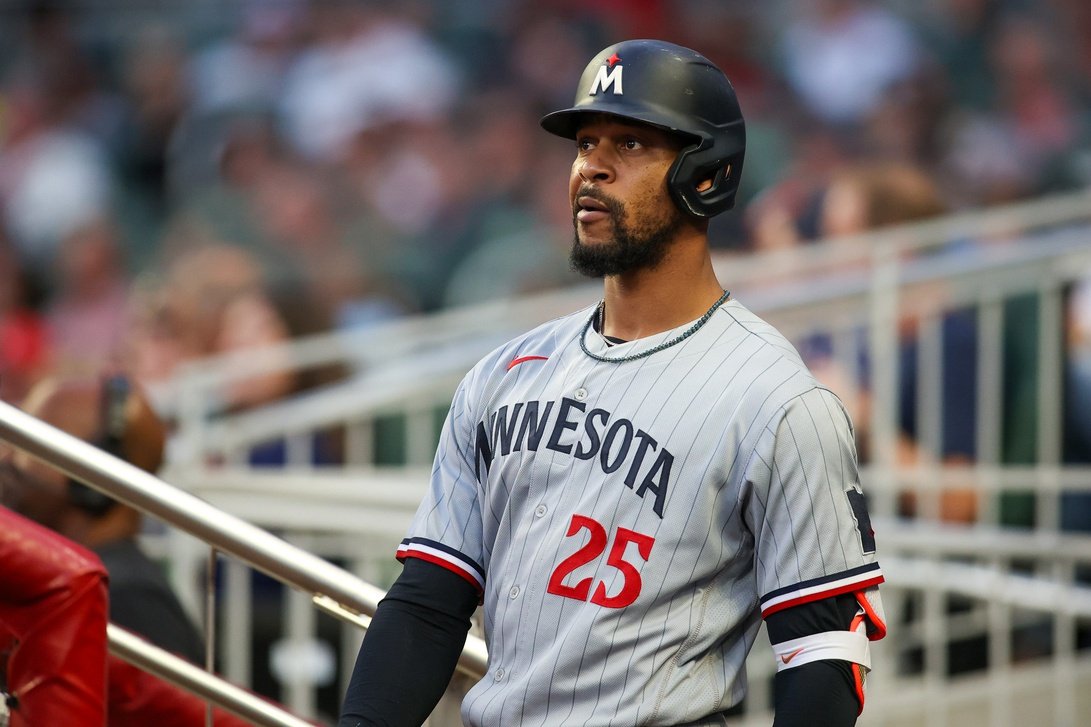
Even with this world-class pitching staff, the team finds itself below .500 here at the All-Star break, at risk of botching one of the biggest opportunities in franchise history thanks to an underperforming offense that can't get out of its own way.
In a blowout loss to close out the first half on Sunday, the Twins were held to a two runs for a 17th time in 91 games. They've scored two or fewer in 37 of 91 games (41%), posting a 6-31 record in those contests.
In short, the offensive shortcomings of this team have single-handedly sabotaged any chance at consistent winning, at a time where the bare minimum of run-scoring competency would result in a comfortable division lead and full-on vindication for the organization's leadership.
How'd we get here? It's strange.
You can't say the current front office didn't inherit a favorable situation on the position-player front. The state of pitching in the Twins system might have been dire circa 2016, but they were brimming at the time with promising young hitters: Byron Buxton, Miguel Sanó, Jorge Polanco, Max Kepler, and Eddie Rosario were all 24 or below. In the latest draft they had added a highly promising high school bat in Alex Kirilloff, and in the next they would add another in Royce Lewis with the No. 1 overall pick.
You can't say this front office hasn't invested in hitters. They locked down Kepler and Polanco long-term just ahead of their breakout 2019 campaigns. They've pushed ownership to repeatedly rewrite the franchise record for free agent spending, with high-profile splurges on Josh Donaldson, Carlos Correa, and then Carlos Correa (again). They overlooked their risk-based reservations to keep Byron Buxton home for $100 million.
Roughly $80 million of the team's record payroll this year is allocated to five position players: Correa, Buxton, Joey Gallo, Christian Vázquez, Kepler. Their entire Opening Day pitching staff accounted for a shade under $50 million.
Finally, you can't say this front office hasn't shown in the past they can build a successful offense. In 2019 the Twins hit a major-league record 302 home runs on the way to scoring 939 times. Their overpowering offense led the way in a 101-win season full of thrilling highlights.
Looking back, you might make a case that the Bomba Squad season was the starting point of this ill-fated path we've now traveled. That year, the Twins embraced a mentality of ambushing opposing pitchers, aiming to elevate and do damage – it paid off handsomely, to say the least. Albeit at a time where all their hitters were clicking, and cashing in their uppercut hacks against a juiced ball.
The Twins have since tried to recapture that highly effective (highly marketable!) offensive dynamic in various ways, starting with the blockbuster signing of Donaldson to upgrade an already potent lineup. Despite their efforts, they have never come close. After finishing second among MLB teams in runs scored in 2019, Minnesota ranked 19th in 2020, 14th in 2021, and 17th in 2022. Now they find themselves all the way down to 24th at the All-Star break here in 2023.
The fantastic quality of this pitching staff and total inadequacy of this offense make for a remarkable contrast. In evaluating the current Twins front office against the backdrop of its predecessor's pitching woes, you almost wonder if a parallel path is playing out with hitting now: a commitment to a way of doing things that once worked, but no longer does.






Recommended Comments
Create an account or sign in to comment
You need to be a member in order to leave a comment
Create an account
Sign up for a new account in our community. It's easy!
Register a new accountSign in
Already have an account? Sign in here.
Sign In Now