


Twins Video
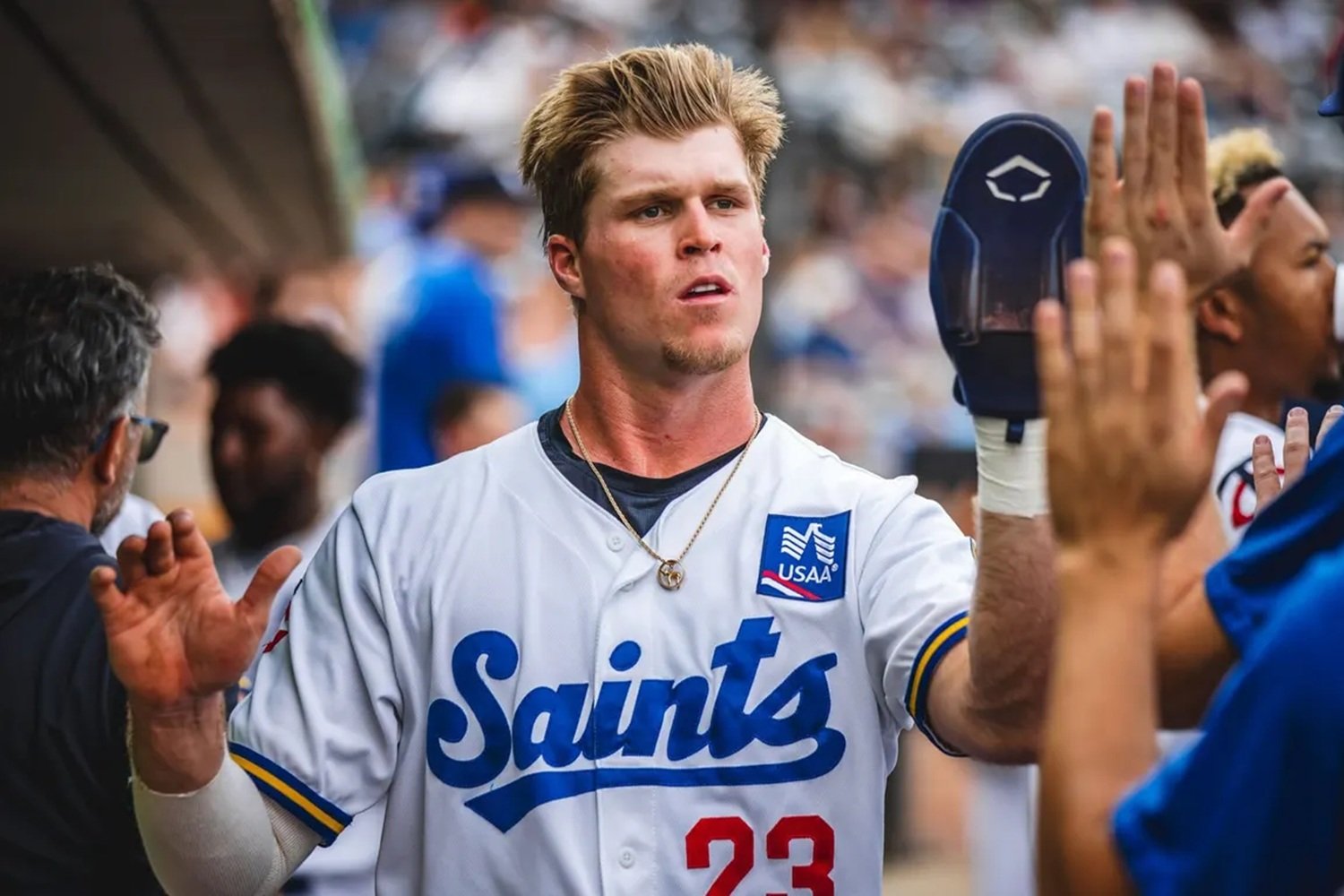
There is no way to know whether Walker Jenkins would have changed the Minnesota Twins' season. That is the uncomfortable part of this conversation.
Maybe he would have arrived at Target Field and struggled. Maybe the transition to the majors would have exposed areas of his game that haven't been tested at Triple-A. Maybe he would have needed a few weeks to adjust before becoming the impact hitter everyone expects him to be. Or maybe he would have helped the Twins win just enough games to change the shape of their season.
At this point, that possibility is becoming increasingly difficult to ignore. The Twins entered Thursday 64-70, four games behind the Cleveland Guardians for the American League's final Wild Card spot. Their playoff odds have fallen to roughly 10 percent after Minnesota was swept by San Diego and dropped two of three games to the Athletics.
And while there are plenty of reasons for the collapse, the Twins' decision to leave Jenkins in Triple-A is one that deserves another look. Not because Jenkins was guaranteed to be a superstar immediately. Because Minnesota had a glaring need for an impact bat, and its best option happened to be putting together one of the best offensive stretches in the organization.
The Situation Changed
When Jeremy Zoll explained earlier this month why Jenkins had not been promoted, his reasoning was understandable. The Twins wanted to make sure there was a legitimate opportunity for Jenkins to play every day. Calling up a top prospect only to have him sit on the bench isn't particularly beneficial for his development. Zoll also pointed to Kaelen Culpepper's promotion as an example of how opportunity matters when deciding when to move a prospect to the majors.
That is a reasonable philosophy. But baseball seasons don't stay static. The situation changed. By the middle of August, Byron Buxton was dealing with another hip issue. The outfield mix became less stable. Minnesota needed offense, and suddenly the theoretical opportunity for Jenkins was sitting right in front of the organization.
At the same time, Jenkins was making the decision harder with virtually every game he played. In the first 16 August games, he hit .415/.493/.800 with a 1.293 OPS, seven home runs and six stolen bases. He followed that by continuing to produce during the final week of the month, including another home run on Thursday.
At some point, keeping a player in Triple-A stops being about whether he has something left to prove. Jenkins reached that point.
Development Matters, But So Does Winning
The Twins deserve credit for being deliberate with Jenkins. He missed a significant portion of the season after suffering a shoulder injury, and rushing him back would have been irresponsible. Player development should never be dictated solely by public pressure.
But there is a difference between rushing a player and recognizing when a player has become ready. Jenkins' performance suggests he reached that stage. He had already been performing at Triple-A for months, and his August production was not simply a small sample fueled by a few fortunate games. He was showing power, plate discipline, speed and the ability to impact games in multiple ways.
The Twins also weren't operating as a rebuilding team. They bought at the trade deadline. They added Jeff Hoffman, Dean Kremer and A.J. Minter because they believed this team had a chance to play meaningful baseball in September. They promoted Culpepper because they believed he could help them win now.
That makes the decision to keep Jenkins in Triple-A more difficult to reconcile. You can't spend the final week of July and the first week of August behaving like a team trying to make the playoffs, then suddenly become entirely focused on preserving a prospect's developmental timeline when the roster needs help.
Did Jenkins Cost the Twins a Playoff Spot?
This is where the argument needs some restraint. Saying Jenkins definitely cost Minnesota a playoff berth would be impossible to prove.
The Twins have lost games for countless reasons. Their pitching has been inconsistent. Their best players have dealt with injuries. The schedule hasn't always been kind. And Minnesota has simply played poor baseball for stretches. Jenkins alone cannot fix that.
But the question isn't whether Jenkins would have single-handedly carried Minnesota into October. The question is whether he could have provided enough value over the weeks leading into this collapse to make a difference. That's a much more reasonable question. The Twins were sitting in the Wild Card picture just over a week ago. Now they are four games back, with their postseason odds falling from nearly 40 percent to roughly 10 percent in just over a week.
When the margin is that thin, one or two wins can completely change the conversation. Maybe Jenkins gives them one extra hit. Maybe he makes one catch. Maybe he takes one extra-base hit away from an opposing pitcher. Maybe he doesn't do any of those things.
But Minnesota had an elite prospect producing at a ridiculous level in Triple-A while its major-league outfield was dealing with injuries and inconsistency. At some point, the risk of calling him up becomes smaller than the risk of leaving him there.
The Bigger Lesson
The Twins shouldn't regret being careful with Jenkins. They should regret not recognizing when the circumstances changed. There is a difference between protecting a prospect and protecting yourself from making a difficult decision.
Jenkins' long-term future is far more important than the final 30-plus games of the 2026 season. But the organization also spent much of the summer telling everyone through its actions that it believed this team could contend. That meant maximizing the roster. And Jenkins was becoming increasingly difficult to leave off it.
Maybe the Twins eventually call him up and he struggles. Maybe they call him up next week and his arrival comes too late to matter. That's baseball.
But when Minnesota looks back at a season that could end just short of the playoffs, Jenkins' time in Triple-A will be one of the obvious "what if?" questions. The answer may never be known.
Still, watching the Twins stumble through an injury-plagued August while Jenkins tears apart Triple-A pitching makes one thing increasingly clear: The Twins probably didn't need Walker Jenkins to become a star this summer. They simply needed to find out whether he could help them win. And they may have waited too long to find out.
Did the Twins wait too long to call up Jenkins? Leave a comment and start the discussion.
Which team do you dislike the most in the AL Central?
Follow Twins Daily For Minnesota Twins News & Analysis



- mikelink45, Rufus and roger
-
 2
2
-
 1
1



Recommended Comments
Create an account or sign in to comment
You need to be a member in order to leave a comment
Create an account
Sign up for a new account in our community. It's easy!
Register a new accountSign in
Already have an account? Sign in here.
Sign In Now