


Twins Video
During the final broadcast of the season, former MVP and current Twins TV color commentator Justin Morneau spoke about studying other teams, and seeing what they did well. It’s obvious to point to a team like the Royals and show how they added $100 million in payroll to turn it around this season. However, if the Twins are going to spend less, the question is how to spend it better.
Case in point: The San Diego Padres. After losing owner Peter Seidler to cancer and finding themselves victims of the Bally Sports fiasco, baseball operations head A.J. Preller was given a mandate to aggressively cut payroll. He did so, dropping San Diego from 5th in the league in spending to 12th from last year to this one. That meant losing not just All-Star, but era-defining players: Juan Soto, Josh Hader, and Blake Snell departed, among others. They also suffered from a bizarre 2023 season in which a huge 10-game difference between their expected record based on run differential and their actual record led to their missing the postseason. Meanwhile, they watched the rival Dodgers pour over a billion dollars into their winter additions.
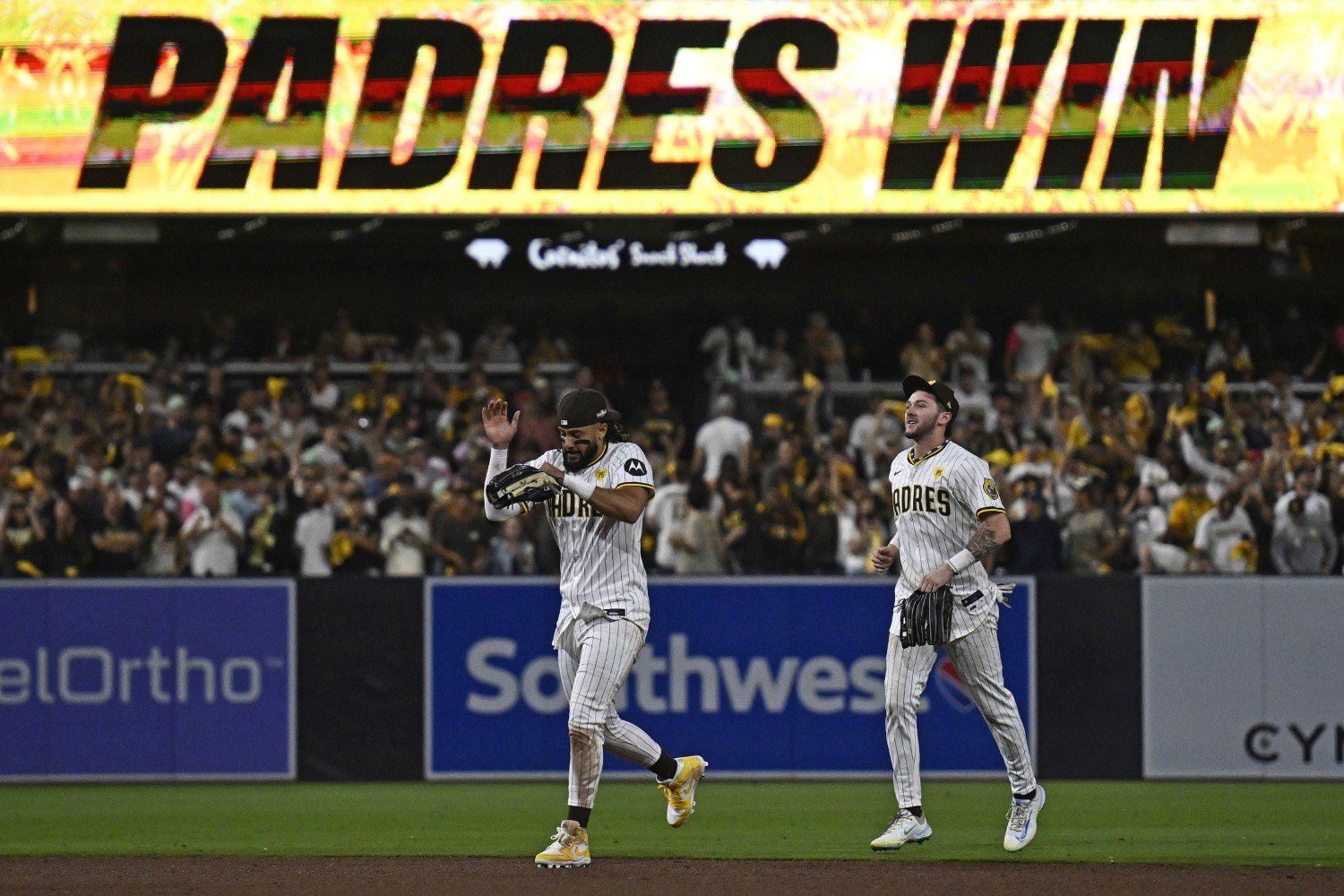
The result for 2024? The Padres finished only five games behind the Dodgers, and easily secured the top Wild Card spot in the National League. According to FanGraphs projections, they’re actually better built for the postseason than their LA rivals, whose pitching ran thin late in the campaign. This was a team that cut $90 million in payroll to begin the season and cruised to victory all season long. So how did they do it?
Overpay For Talent, and Lots of It
The Padres have not been afraid to offer big contracts, even ones so ridiculous that the league office has nixed them. The Padres have three position players (Fernando Tatis Jr., Manny Machado, and Xander Bogaerts) and two pitchers (Joe Musgrove and Yu Darvish) all making more than Byron Buxton will in any of his contracted years, and all those contracts last through at least the 2027 season. And guess what? They combined for 8.7 hitting fWAR and 2.5 pitching fWAR. That’s $95 million in WAR for $90 million in salary.
Part of this was prepping for injuries. Tatis and Boegarts both lost time to injuries, while the two pitchers were each limited to less than 100 innings. It didn’t matter, because that Padres still had other players like Ha-Seong Kim, Jake Cronenworth, and Wandy Peralta to fill the gaps. And if you remove Jackson Merrill (more on that later), the team only gave 1.6% of its plate appearances to rookies. Turns out, having enough players with big money means you don’t need to rely on every single one of them to deliver.
Trade Early, Trade Often
Preller is an executive who would move a dozen players back and forth to gain 0.2 WAR and a few years of team control, and while it might drive some crazy, it often works. Forced to move Juan Soto (who ended up earning $30 million in arbitration with the Yankees) as well as dumping Matt Carpenter, Preller somehow still found ways to make a number of other trades. Just as the season began, he convinced the White Sox to give up Dylan Cease, who threw a no-hitter for the Padres this summer. In dealing Soto, he got a fully formed starting pitcher in Michael King, as well as starting catcher Kyle Higashioka and prospects--one of whom, Drew Thorpe, then became a centerpiece of the Cease deal.
Frustrated with an early offensive slump, he made a surprising May trade to get three-time batting champion Luis Arraez. And at the deadline, Preller beefed up the bullpen by dealing for two top arms, in Tanner Scott and Jason Adam. For good measure, he picked up Martín Pérez just to eat some innings down the stretch. Reports suggested they almost scored Jarren Duran from the Red Sox, too. In all, Preller dealt 12 of his team’s top 21 top prospects. That might seem like a team destined for pain down the road, but the team has had a seemingly endless supply of prospects in the past and knows that winning fixes everything.
Small Deals, Big Payoffs
Despite a team with three major stars, the Padres’ All-Star this year was none other than Jurickson Profar (4.3 fWAR), a former No. 1 prospect who finally paid off with a true star-caliber season after a decade-long career--while making just barely over the league minimum. Other signings overachieved, too, including former Twin Donovan Solano (0.9 fWAR), David Peralta (0.5 fWAR), knuckleball savant Matt Waldron (1.9 fWAR), and waiver pickup Jeremiah Estrada (1.6 fWAR). These were all acquisitions that cost $1 million or less. Compare that to the cheap pickups Derek Falvey tried this year, which all backfired. Whatever magic Preller has in picking lottery tickets, Falvey desperately needs his own bag of tricks.
Score Big With Your Rookie Phenom
There was a possibility, early in the season, that Brooks Lee (or Royce Lewis, for that matter) might have put up numbers like the following: .292/.324/.500, with 24 home runs, including three walk-off shots. Alas, that wasn’t the season for Lee or Lewis, but for Jackson Merrill. Dubbed “The Kid” by broadcaster Don Orsillo, Merrill led the team in WAR, playing 155 games all while the shortstop prospect learned to play center field on the fly. Perhaps call it luck, but Twins rookies and sophomores mostly disappointed on the season, and having that kind of power could have turned the season around.
Though Merrill was one of the game's top handful of prospects even coming into the season, this item ties in with the last one, about finding diamonds in the rough. Both elements of success come down to doing great player development even at the big-league level, including coaching. This is one reason why the Twins fired four coaches this week; they haven't been getting the most out of talent the way the Padres have been.
Be a Big Spender, Anyway, Especially When You’re the Only Game in Town
San Diego is ranked 26th among baseball media markets. But ever since the Chargers left, they’ve leaned into being the only game in town, drawing in 3.3 million fans (4th in the league) despite the payroll cuts. The Padres still spent $169 million this year, which put them in the top half of the league, despite being a smaller market than the Twin Cities. You might look at some of these numbers and balk that they put too much in single players, but it turns out it does not matter when you have enough to go around.
When Seidler died, there were details about how the man ran the team with no inhibition. According to another owner, "People [in the sport] were upset with him because he spent his own money, but he wanted to win the World Series and he wasn't worried about the cost. He did it the right way -- he paid into revenue-sharing, rather than being a recipient."
And even when feeling cheaper than last year, the Padres still spend big. They might get October gold as their reward. The Twins can learn from them on many fronts, especially that one.









Recommended Comments
Create an account or sign in to comment
You need to be a member in order to leave a comment
Create an account
Sign up for a new account in our community. It's easy!
Register a new accountSign in
Already have an account? Sign in here.
Sign In Now