


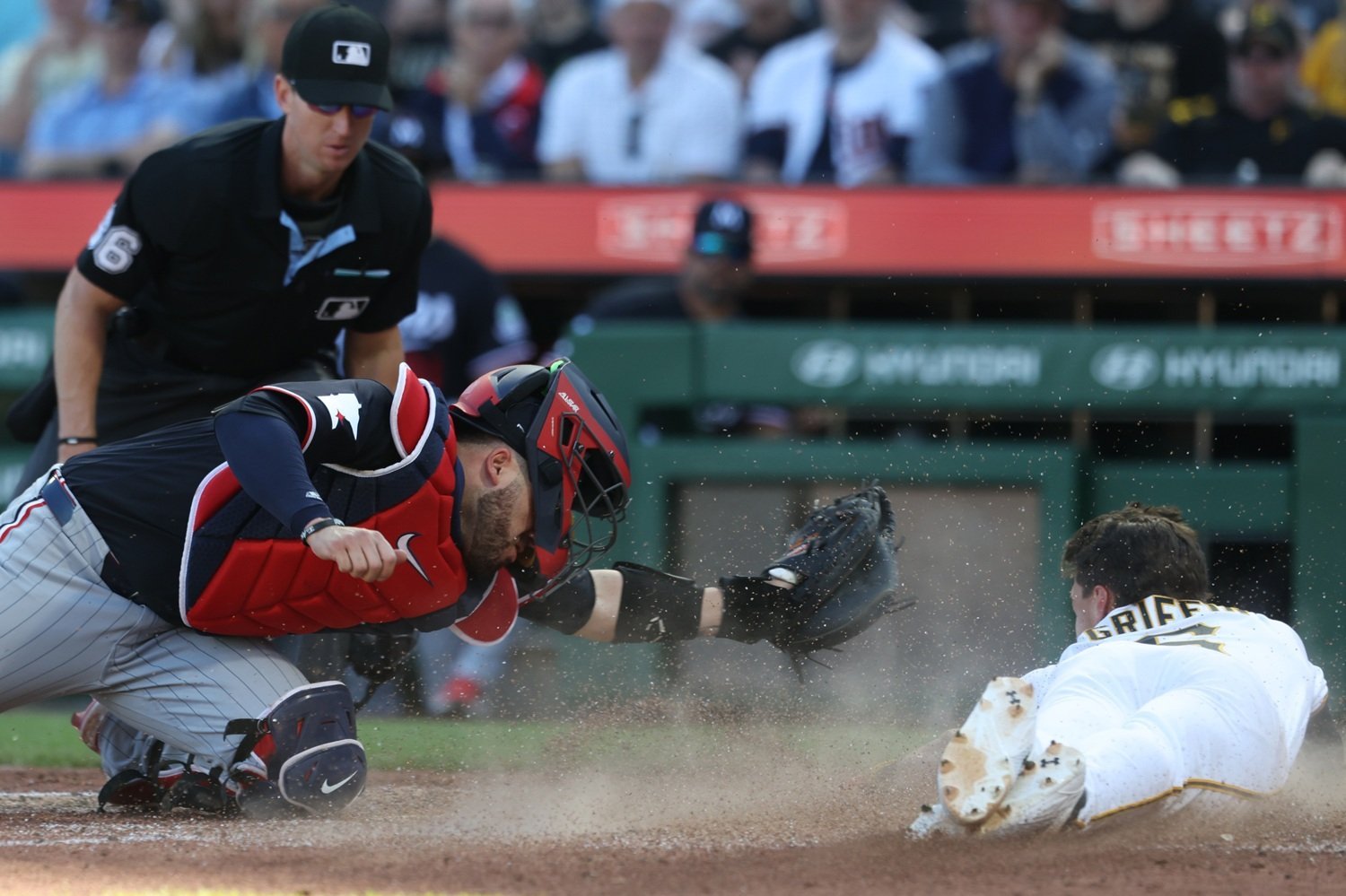
Twins Video
The Minnesota Twins had a clear plan when they entered last winter’s free-agent market. Christian Vázquez was leaving after an underwhelming three-year run in Minnesota, and the team needed someone capable of bridging the gap behind the plate. They landed on Victor Caratini. (Maybe the Twins should just stay away from veteran catchers from Houston.) Vázquez combined for just 0.1 rWAR and a 60 OPS+ across three seasons with Minnesota. Caratini was supposed to provide a more competent offensive option, while also giving the Twins some flexibility.
The Twins signed Caratini to a two-year contract, knowing Ryan Jeffers was entering the final season of his team control. The idea was straightforward. Caratini could handle some of the workload, Jeffers would become more like a full-time starter, and Minnesota would have a veteran catcher under contract heading into 2027.
Things haven't worked out quite that cleanly. Caratini struggled out of the gate, posting a .538 OPS through the end of May. Then, almost overnight, he became one of the best hitters in the Twins lineup. Jeffers landed on the injured list, forcing Caratini into an everyday role. He responded with one of the best offensive stretches of any Twins hitter this season. In 20 games during June, Caratini hit .338/.429/.631 for a 1.059 OPS, with five home runs and four doubles. That stretch made the decision for 2027 look a little easier.
Then July arrived. Caratini has posted just a .494 OPS since July 1. His last extra-base hit came on July 20. The offensive production that made him look like a potential solution has largely disappeared. That's a problem, because Minnesota's catching depth chart for 2027 gets pretty thin if Caratini isn't able to rediscover the hitter he was in June.
Organizational Catching Depth
Behind him is Alex Jackson, who has been a serviceable backup. Jackson can provide some defensive stability and occasional offense, but asking him to become a primary catcher would be a significant gamble.
The Twins don't have an obvious answer waiting at Triple-A, either. Ricardo Olivar, Noah Cardenas, and David Banuelos represent the organization's primary depth at the position. Olivar had a 131 wRC+ at Triple-A before suffering an injury, giving him the most intriguing offensive profile of the group. Cardenas has posted a 93 wRC+, while Banuelos has struggled to a 53 wRC+.
There is still time for those players to change the conversation, but expecting any of the three to walk into Minnesota next season and become a reliable big-league catcher would be asking a lot.
Could the Twins Bring Back Jeffers?
That brings the conversation back to Jeffers. The Twins could make Jeffers a qualifying offer, which would put him in position to return on a one-year contract worth more than $24 million. That's a lot of money for a catcher, particularly for a team that has dramatically reduced its payroll over the last few seasons.
At the same time, Jeffers would likely prefer the security of a multi-year contract. If he declines the qualifying offer and signs elsewhere, the team acquiring him would also have to surrender a draft pick. That could complicate his market, but it wouldn't necessarily prevent him from landing a significant deal.
For the Twins, the question becomes whether Jeffers is worth the investment. And if Minnesota doesn't bring him back, the free-agent market doesn't exactly offer inexpensive alternatives.
Free-Agent Catching Options
There are several recognizable names who could be available, including Carson Kelly, Tyler Stephenson, Travis d'Arnaud, Kyle Higashioka, Gary Sánchez, and Jonah Heim. Some of those players have mutual options that could keep them off the market, but there should still be catching talent available. The problem is that good catching usually isn't cheap.
The Twins have spent the last year trying to figure out how much they can get from their current roster, while keeping payroll under control. Catcher could force them to make a difficult decision. They could spend significantly to bring Jeffers back, pursue another veteran, or take a chance on their internal options. None of those choices is particularly comfortable.
Caratini's contract gives the Twins one catcher for 2027, but it doesn't give them a definitive answer. Jackson is a backup. The Triple-A options remain unproven. Jeffers is almost sure to sign elsewhere, leaving a real void that must be filled somehow.
The Twins spent last winter trying to bridge the gap at catcher. Now, they need to figure out how to build the position back up. If Caratini's June performance proves to be a last burp of effectiveness from a declining player, Minnesota could enter the offseason with one of the biggest holes on the entire roster sitting directly behind home plate.
What should the Twins do at catcher? Leave a comment and start the discussion.
Which team do you dislike the most in the AL Central?
Follow Twins Daily For Minnesota Twins News & Analysis



- glunn and nclahammer
-
 2
2


Recommended Comments
Create an account or sign in to comment
You need to be a member in order to leave a comment
Create an account
Sign up for a new account in our community. It's easy!
Register a new accountSign in
Already have an account? Sign in here.
Sign In Now