


Twins Video
Player development has never been a simple, linear process, but the modern version of it might be more unpredictable than ever. Organizations map out a vision for prospects when they are drafted or signed, but that vision often changes as players face better competition, adjust to new information, and learn what actually works against major-league pitching. Some players arrive exactly as advertised. Others have to reshape their identities entirely, even after they reach the highest level.
That evolution is not a failure of scouting or development. It reflects how difficult it is to project human performance years into the future. The version of a player at age 21 is rarely the same as the finished product at 27. Adjustments happen. Bodies change. Approaches shift. The result can look very different from the initial blueprint.
Take Byron Buxton as the clearest example. Early in his career, the Twins tried to mold him into a traditional leadoff hitter. The focus was on putting the ball on the ground, using his elite speed, and letting him create offense with his legs. In theory, it made sense. In reality, it limited what Buxton could become.
With time, it became obvious that the best version of Buxton is not a slap hitter. He's a middle-of-the-order force who punishes mistakes and changes games with power, while still bringing elite speed as a secondary weapon. The shift in expectations unlocked a different level of production. That same theme is playing out across the 2026 roster.
Austin Martin
Original Expectations: Coming out of Vanderbilt University, Martin built a reputation as one of the most polished bats in his draft class. His .368/.474/.532 collegiate slash line made him the No. 5 overall pick in the 2020 MLB Draft. His offensive identity centered around elite bat-to-ball skills, strike-zone control, and the ability to spray contact to all fields. Early returns in pro ball backed that up, including a .414 OBP in his debut season, though questions lingered about how much impact he would generate.
Updated Expectations: That question has followed him into the big leagues, and the answer has taken an unexpected shape. Over-the-fence power hasn't materialized, but Martin has leaned fully into what he does best. Over the first month of this year, he has more walks (18) than strikeouts (13), and that level of discipline has allowed him to function as a table-setter in a very different way than originally envisioned.
He may never reach the 20-home run mark, but his ability to control at-bats, use the entire field, and turn routine hits into extra bases with his legs gives him value. At 27 years old, he looks like a player who's finally settling into a sustainable version of himself after a development path that was anything but typical.
Brooks Lee
Original Expectations: Lee’s amateur track record suggested one of the safest bats in the 2022 MLB Draft. After starring at California Polytechnic State University, he entered pro ball with a reputation for elite contact skills and advanced feel from both sides of the plate. He consistently walked more than he struck out in college, ran a strikeout rate of just 11.7%, and showed the ability to drive the ball with wood bats during summer leagues. The expectation was a high-average hitter with steady production and enough strength to grow into moderate power.
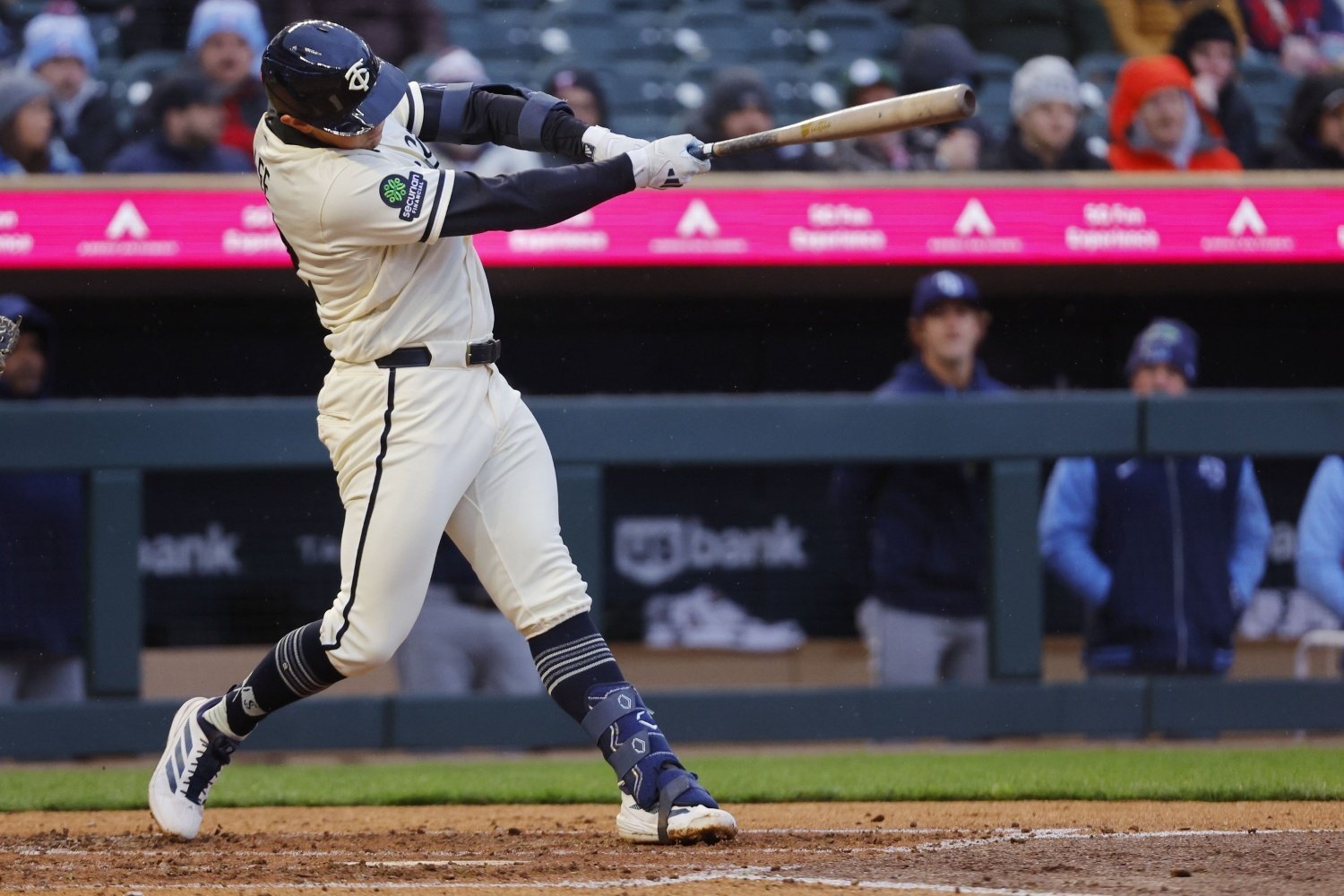
Updated Expectations: His transition to the majors has not followed that script. Lee has found it difficult to maintain consistent contact, carrying a career batting average under .240. Pitchers have found ways to attack Lee and get him to chase poor pitches on the edges of the zone. At the same time, another part of his game has taken a step forward.
Through the first 28 games, he has launched five home runs, trailing only Buxton on the team. His 106 OPS+ and 109 wRC+ point to above-average offensive production, especially for a player handling a premium position. Long term, he may slide off shortstop, but the emergence of legitimate power has added a layer that was not part of his original profile.
Lee and Martin’s development arcs remind us that improvement is not always predictable. The carrying tool can regress, while another tool rises to take its place. What matters is the overall package, not whether it matches the initial report—and that package can change over time, too.
The idea of a fixed player archetype is fading. Development is more fluid now, shaped by data, experience, and a willingness to adapt. Players are trying a wider variety of things, to find the version of themselves that works once they get to the highest level.
For the Twins, that has meant rethinking what success looks like for players like Buxton, Martin, and Lee. The original expectations still matter, but they no longer define the outcome. In many cases, the best version of a player is the one that no one fully saw coming.
Can Lee and Martin continue to meet their updated expectations? Leave a comment and start the discussion.
Do you approve of Twins ownership?

Follow Twins Daily For Minnesota Twins News & Analysis



- arby58, tarheeltwinsfan, Clare and 1 other
-
 4
4



Recommended Comments
Create an account or sign in to comment
You need to be a member in order to leave a comment
Create an account
Sign up for a new account in our community. It's easy!
Register a new accountSign in
Already have an account? Sign in here.
Sign In Now