Jump to content
Twins Daily
  • Create Account

Recommended Posts

Posted
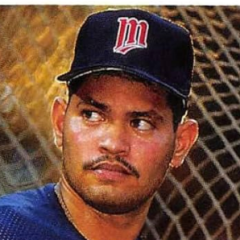
Image courtesy of Peter Aiken-Imagn Images

Baseball has released a litany of statistics that has changed the way fans can scout and analyze the game. We now have access to information that, not all that long ago, would have been locked away inside the internal departments of major league organizations.

One such metric is arm angle. The concept itself is hardly new. Somewhere between the shin-high grass at Elysian Fields and the modern bullpen, pitching coaches have been encouraging their hurlers to make adjustments to their arm path. It probably comes immediately after the old-timey pitching coach's first instruction: just throw strikes.

For those unfamiliar, arm angle measures the angle of a pitcher's arm relative to the shoulder at pitch release. The metric matters in a variety of ways. Teams are interested in outlier arms, particularly those operating at the extreme ends of the spectrum, but arm angle can also help explain how a pitcher imparts spin and creates movement. A lower or higher slot can, depending on the individual pitcher, unlock different characteristics in the arsenal.

Forward-thinking teams see this as an opportunity. If a pitcher has an attribute they like but another area they believe can be improved, perhaps there is a player sitting right there waiting to be acquired, tinkered with, and turned into something better.

Which brings us to Dean Kremer.

The Minnesota Twins targeted the right-hander ahead of the trade deadline after he had put together a pretty good 700-inning career with the Orioles. Of course, the Twins weren't necessarily interested in the version of Kremer that had already accumulated those innings. They saw things in him that they believed they could enhance.

One of the low-hanging fruits was his pitch selection. With Baltimore, Kremer was throwing his four-seam fastball around 21% of the time and his sinker around 17%. With the Twins, the four-seam usage has jumped to roughly 39%, while the sinker has fallen to about 6%. This has become something of a Twins go-to move. When they acquired Yoendrys Gomez earlier this year, they also moved him away from his sinker and toward a heavier four-seam diet. We've seen similar ideas play out with other recent acquisitions, including Jeff Hoffman and A.J. Minter.

But another change has caught the attention of the stat hounds.

Kremer's arm angle has jumped from roughly 42 degrees with Baltimore to 47 degrees with the Twins.


IMG_7438.jpg

That is an interesting development because it puts Kremer's arm slot closer to where it was when he first came up with the Orioles in 2020. It would be easy to look at that and conclude the Twins simply asked him to raise his arm five degrees, but that's not really how pitching mechanics work. The arm is the caboose of the delivery. Everything that happens before it helps determine where that caboose eventually arrives.

For Kremer, one of the first things that changed was his hand break, the point in the delivery where a pitcher separates the throwing hand from the glove.


With Baltimore, Kremer's glove hand would work out and around after the hand break. Now, you'll see it move upward and toward the plate, almost like he is stretching a bow and arrow. It reaches a considerably higher point, creating a different path for the throwing arm to follow. The easiest way I can describe it is that the old movement looked more like a carousel, while the new one has more of a Ferris wheel effect. Naturally, if the wheel is moving differently, the arm is going to arrive at a different angle.


I've posted before about the Twins changing a pitcher's posture during his delivery. Mick Abel made a subtle adjustment this spring, while Yoendrys Gomez made a similar change during the season, both keeping their weight farther back toward first base rather than allowing the body to tip toward third. Kremer has some of the same characteristics in his new delivery.

This is less about the shoulders themselves and more about keeping the lower half stacked in the glute. With Baltimore, Kremer's weight would tip over his rear knee, allowing some of his momentum to leak toward third base. Again, the body starts working around the ball like a carousel. By keeping the upper half more stacked behind the knee, Kremer is in a better position to drive toward the plate instead, creating the Ferris wheel movement pattern. That can have implications for both command and power.

The real story here isn't that Kremer and the Twins made these adjustments and now he's improved. The more interesting story is the complex system that has to exist behind the scenes for an organization to identify a player, determine what it wants to change, communicate those changes to the player, and then actually implement them in the middle of a major league season.

That process is particularly interesting when viewed through the lens of Lance Brozdowski's preseason survey of more than 80 MLB staffers. The Twins weren't exactly viewed as the gold standard in pitching acquisition and development. Only four respondents considered Minnesota the best organization in that area, while three considered them the worst.

They are not at the Milwaukee Brewers' level of consistently generating top-flight arms, but the Twins have had their successes. And if you zoom out from Kremer, a pattern starts to emerge.

Taj Bradley altered his arm action. Simeon Woods Richardson changed his arm slot. Mick Abel tweaked his glove placement to prevent pitch tipping and adjusted his posture. Yoendrys Gomez changed his posture and pitch mix. Now, with Kremer, we're seeing a movement-pattern adjustment that may result in more consistency and power.

That doesn't happen by accident.

Somewhere inside the Twins' baseball operations department has to be a database, whether literal or figurative, of pitchers whose attributes the organization likes. Not just names and scouting grades, but specific characteristics and potential adjustments. Maybe a pitcher has a good four-seam fastball but doesn't throw it enough. Maybe his arm slot is lower than the organization would prefer. Maybe there is a posture issue, a movement-pattern inefficiency, a pitch-tipping concern or a pitch in his arsenal that isn't maximizing his strengths.

Assembling that information likely requires an effort across multiple internal departments. Scouting sees one part of the player. Analytics sees another. Biomechanics can identify something happening in the delivery that isn't obvious on a traditional scouting report, while the coaching staff has to determine whether the proposed adjustment can actually be taught and implemented.

That is where Jeremy Zoll and his group come into the picture. As the Twins work the waiver wire or troll the trade market, they presumably have a pretty clear understanding of what they are acquiring and, perhaps more importantly, what they believe they can change once the player gets to Minnesota.

The Twins aren't necessarily acquiring the finished product. They're acquiring the ingredients.

That's a fundamentally different way of evaluating a player. A pitcher can have a flaw that makes him less attractive to 29 other organizations while simultaneously possessing an attribute that makes him particularly interesting to one team because that organization believes it knows how to fix the flaw.

But identifying the change is only half of the equation.

At some point, someone has to sit down with the newly acquired pitcher and explain what the organization wants to do and, more importantly, why it believes the change will make him better. This is the part of the Kremer story that would require someone with access and relationships to really uncover.

What does that conversation look like?

If you rely on reports from former players such as Josh Donaldson, the process can sometimes sound like little more than analytics being dumped on players without much explanation behind it (but that is more likely a Josh Donaldson issue). I personally tend to believe there is considerably more communication happening inside organizations than those accounts would suggest, but there has to be some person or group responsible for taking the information assembled by scouting, analytics and biomechanics and translating it for the player.

It has to go deeper than, "Welcome to Minnesota, Dean. We'd like you to throw more four-seamers and raise your arm slot five degrees."

There has to be an explanation of why the four-seamer fits, what is happening in the delivery, what the mechanical change is supposed to accomplish, what the player should feel and how much of the change can realistically be implemented during a season.

Most importantly, the player has to buy into it.

That's what makes the Kremer story so fascinating. We can see the results from the outside. We can see the arm angle move from 42 degrees to 47. We can see the four-seam usage jump while the sinker disappears. We can see the hand break change and the posture become more stable.

What we can't see is the organizational process that connected all of those dots.

And that's the real story.

The Twins didn't acquire Dean Kremer and suddenly discovered that he could throw a baseball differently. They acquired him with a pretty good idea of what they wanted him to become, then went about trying to make those changes happen.

For now, the early returns suggest another win for the Twins' pitching development staff.


View full article

Posted

Great article Parker! You do great work. 

This is that ole' change of scenery term that the broadcast teams like to throw around when struggling players leave an organization. 

If the staff can coach, teach, or just find a light switch that others couldn't find. Players can improve quickly and improvement makes past stats irrelevant. This is what coaches and analysts are paid to do. Their job is to Improve players and they have successes and failures. 

Who knows what the rest of the year (or next year for that matter) has in store for Kramer but right now he is 12 Innings in with a 0.58 WHIP. 

Go get Em Dean

Posted

Arm angle is something I never would have guessed should be tinkered with during the season - except in extreme cases where performance has gone totally to pot.  The comment about Abel doing it in spring would seem more expected.  The risk that I can think of is a sudden loss of control, and there could be other bad outcomes too.

And yet, here we are.  They apparently raised Kremer's arm angle, and early returns are promising, not disaster.

Shows what I know.

Of course, this article just placed a massive jinx on the poor guy.

Posted

So, within the Twins Organization, who is the savant/Yoda that has masterminded these transformations?  He could become the Twins MVP!

Create an account or sign in to comment

You need to be a member in order to leave a comment

Create an account

Sign up for a new account in our community. It's easy!

Register a new account

Sign in

Already have an account? Sign in here.

Sign In Now
The Twins Daily Caretaker Fund

You all care about this site. The next step is caring for it. We’re asking you to caretake this site so it can remain the premier Twins community on the internet.

×
×
  • Create New...