


Twins Video
The Arizona Fall League gives prospects another opportunity to develop after the minor league regular season ends. For some players, it is a chance to make up for lost time because of injuries. For others, it provides a final opportunity to impress their organization before an important offseason decision.
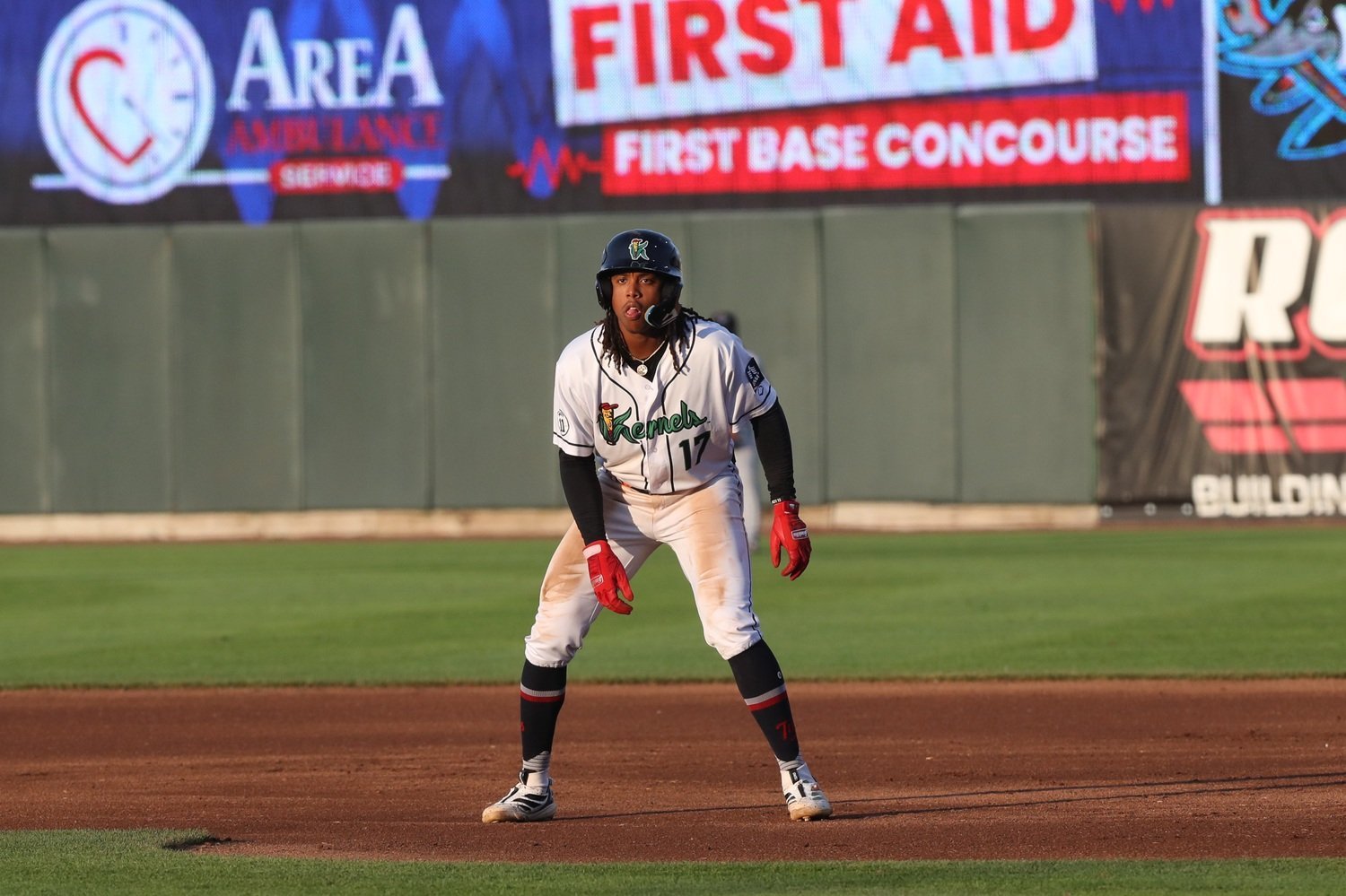
The Minnesota Twins have several prospects playing for the Salt River Rafters this fall, but Yasser Mercedes stands out as the group's most intriguing name. The 21-year-old outfielder is the highest-ranked Twins prospect participating in the league (currently 19th on Twins Daily’s rankings), and his combination of power and speed makes him an interesting player to watch. He also has a decision approaching that could shape his future with the organization.
Minnesota must evaluate its eligible prospects before the November 17 deadline to add players to the 40-man roster. Players left unprotected can become available to other organizations in the Rule 5 Draft, assuming the major league phase takes place as scheduled. During the last lockout, the Rule 5 Draft was cancelled, but it could be rescheduled as part of the new Collective Bargaining Agreement.
Mercedes presents a difficult case for the Twins. His performance in 2026 offered encouraging signs of progress, but questions remain about his ability to consistently handle better pitching. Should Minnesota use a valuable 40-man roster spot to protect his potential, or should the organization give him another season to develop?
Who Is Yasser Mercedes?
The Twins signed Mercedes for $1.7 million in January 2022, making him one of the more notable outfielders in that year's international signing class. The right-handed hitter arrived with intriguing offensive tools, particularly his ability to generate bat speed and produce power. However, turning those raw abilities into consistent production has taken time.
Mercedes immediately made an impression in the Dominican Summer League, batting .355/.420/.555 (.975) with a 154 wRC+. His transition to the United States proved more challenging. He struggled during his first season in the Florida Complex League (63 wRC+) before showing improvement in 2024 (168 wRC+). Even so, his move to full-season baseball brought another set of challenges, and injuries interrupted parts of his development.
The 2026 campaign finally provided some momentum. Mercedes opened the season with Fort Myers in the Florida State League and hit .321/.439/.642 with a 176 wRC+ across his first 21 games. His six home runs during that stretch helped earn him a promotion to High-A Cedar Rapids in May.
The adjustment to the Midwest League was more difficult. Across 88 games with the Kernels, Mercedes recorded a .232/.320/.409 slash line, with 12 home runs and 116 strikeouts against 39 walks. He finished the season with career highs of 18 home runs and 52 stolen bases, hitting .249/.343/.453 in 109 games between the two levels. His final 30 games at Cedar Rapids also provided some encouragement as he began to show more consistent production (.727 OPS).
Those numbers help explain why the Twins remain interested in his future. Mercedes has demonstrated that he can impact a game in multiple ways, even when his hitting becomes inconsistent. His physical tools are a significant part of the appeal. Mercedes generates impressive bat speed and has the potential to drive the ball with authority, particularly when he stays within his approach instead of trying to do too much. His speed also remains an asset, and he finished the season with more stolen bases than any other player in the Twins organization.
Defensively, Mercedes continues to receive opportunities in center field while also getting work in right field. His athleticism gives him a chance to remain in the middle of the outfield, while his strong arm could be particularly useful in a corner position.
Why the Twins Should Add Him
The strongest argument for protecting Mercedes is the difficulty of finding players with his combination of tools. Home runs and stolen bases do not always come together in the same prospect, and Mercedes demonstrated that he can produce both over a full season.
MLB Pipeline analyst Jim Callis has pointed to that combination as a reason to remain interested in Mercedes. On the traditional 20-to-80 scouting scale, Callis sees the potential for above-average raw power and speed, both of which could make Mercedes an intriguing player if his offensive approach continues to develop.
Those tools are difficult to ignore. If Mercedes learns to turn his raw power into more consistent production while maintaining his ability to reach base and steal bags, he could become a valuable outfielder. Minnesota has invested significant resources in his development, and his age leaves room for improvement.
There is also a practical consideration. Leaving Mercedes unprotected creates an opportunity for another organization to take a chance on him. A rebuilding team or an organization with an open roster spot might be willing to gamble on his physical abilities, particularly if its scouts believe his offensive struggles are correctable.
The Rule 5 Draft does impose an important restriction on any team selecting him. A player chosen in the major league phase generally must remain on the selecting club's active roster for the entire season, subject to the applicable injured-list provisions, or be offered back to his original organization. That requirement makes Mercedes a risky selection, but it does not eliminate the possibility that a team could be tempted by his upside.
Adding Mercedes to the 40-man roster would protect him from that outcome without requiring Minnesota to put him on its Opening Day roster. He could continue developing in the minors while remaining part of the organization. If the organization believes Mercedes is beginning to put everything together, using a roster spot now could be a worthwhile investment in his future.
Why the Twins Might Wait
The argument against protecting Mercedes is just as compelling. While his final numbers show progress, much of his production came during his dominant opening month at Fort Myers. His results became less impressive after he reached High-A, where pitchers exposed some of the weaknesses that have followed him throughout his development.
The strikeout numbers are particularly concerning. Mercedes had a 27.8 K% with Cedar Rapids, compared to a 9.9 BB%. That is a substantial amount of swing-and-miss for a player who has yet to establish himself above High-A.
His power is real, but power alone does not guarantee success. Mercedes needs to demonstrate that he can recognize pitches, make consistent contact and use his offensive tools against more advanced pitching. Until those improvements become more reliable, projecting him as a future major leaguer remains a bet on potential rather than a conclusion supported by sustained production.
The distance between Mercedes and the major leagues is an important consideration. The outfielder has not played above High-A, and his results at that level have not yet established him as a prospect who is close to contributing in the majors.
That creates a difficult situation for any club considering a Rule 5 selection. A team would have to carry Mercedes on its major league roster rather than send him to the minors for additional development. Asking a 21-year-old with his strikeout concerns to make that jump would be a significant gamble.
The Complicated Decision
Mercedes is exactly the type of prospect who makes Rule 5 decisions challenging. His 18 home runs and 52 stolen bases demonstrate the impact he can have when his tools translate into production. His early-season dominance and strong finish at Cedar Rapids also provide reasons to believe he is making progress.
However, the Twins still need to see more consistency before treating Mercedes as a near-term major league option. The strikeouts, uneven High-A performance and distance from the majors make protecting him a difficult proposition when 40-man roster spots are limited.
It seems more likely for the Twins to leave Mercedes unprotected for now, accepting the risk that another organization could take a chance on his tools. That approach would give Minnesota more time to determine whether his 2026 season represents a meaningful step forward.
The decision is not without danger. Another team could see the same power and speed and decide Mercedes is worth the gamble. If the Twins believe his offensive development is further along than the numbers suggest, protecting him would be defensible.
Ultimately, the organization must decide how much weight to place on what Mercedes could become compared with what he has accomplished so far. His potential makes him worth watching, but the next step in his development may be more important than the decision made this November.
Should the Twins protect Mercedes? Leave a comment and start the discussion.
Are you optimistic about the Twins right now?

Interested in learning more about the Minnesota Twins' top prospects? Check out our comprehensive top prospects list that includes up-to-date stats, articles and videos about every prospect, scouting reports, and more!
View Twins Top Prospects



Recommended Comments
Create an account or sign in to comment
You need to be a member in order to leave a comment
Create an account
Sign up for a new account in our community. It's easy!
Register a new accountSign in
Already have an account? Sign in here.
Sign In Now