


Twins Video
The Minnesota Twins are going to have difficult decisions to make this winter. Some of those decisions will involve players who have struggled. Others could involve players who have actually performed well enough to make their futures more complicated. That's the situation with two of their longest-tenured players: Trevor Larnach and Bailey Ober.
The two players are having very different seasons. Larnach is putting together arguably the best offensive campaign of his career, while Ober has continued to struggle to find the form that once made him one of Minnesota's most dependable starters. Yet, their situations have one important thing in common. Both players are entering their final year of team control, and the Twins have to determine whether they still fit into the organization's plans for 2027.
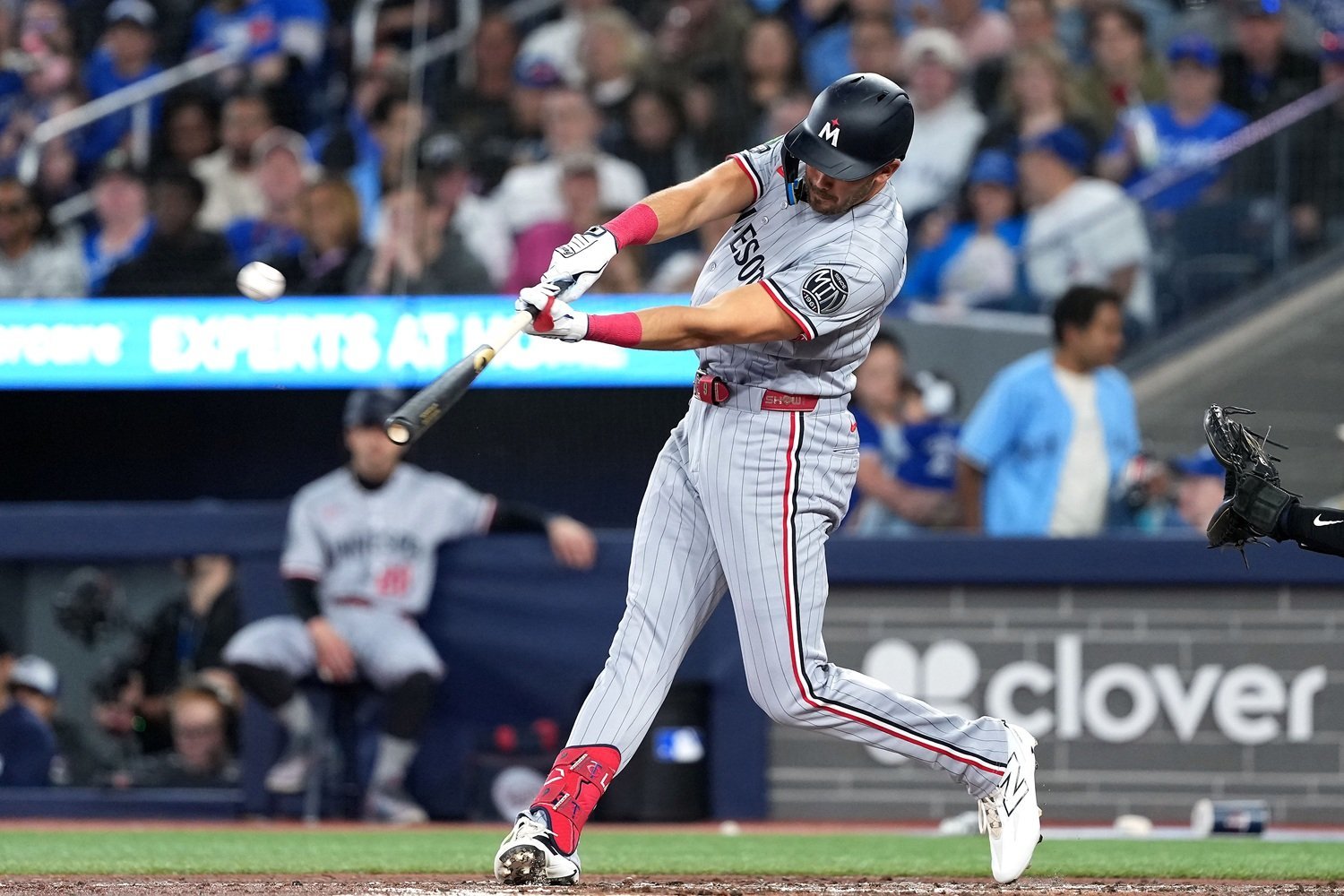
Insofar as he can control the situation, Larnach has earned another opportunity with the Twins. Through 101 games, he's hitting .272 with 19 doubles, 10 home runs, 42 RBIs and a .788 OPS. He's become one of the more reliable offensive pieces in Minnesota's lineup, helping them remain in the playoff picture. As has been widely reported, though, the team all but traded him at the deadline, in a move nixed by Astros ownership at the last moment.
That makes his situation particularly interesting. Larnach is making $4.475 million this season in his second year of arbitration. FanGraphs has valued his 2026 production at roughly $16 million, illustrating just how much value the Twins have received from him relative to his salary.
On the surface, moving on from a productive 28-year-old outfielder doesn't make much sense. The problem is that the Twins may not have an obvious place for his skill set. Minnesota controls Larnach for one more season, and his strong 2026 campaign should result in another raise through arbitration. The Twins could certainly keep him around, but that would mean committing additional money to a player who could become redundant as their top prospects matriculate. Medium-marked teams can't afford to pay market rate for all their production, and Larnach's progress toward free agency is eroding his marginal value.
Emmanuel Rodriguez is out of options and will have to be on the Opening Day roster next season (although, of course, he could instead be traded this offseason). Walker Jenkins is nearing his MLB debut and should be a major part of Minnesota's plans moving forward. Alan Roden, acquired at last year's trade deadline, does at least some of what Larnach does, and he's younger and cheaper.
That creates a legitimate roster crunch. The Twins don't necessarily need to decide that Larnach isn't good enough. They may instead have to decide whether there is enough playing time available for him, given their medium-term goals and plans.
It's been a much less successful campaign for Ober. He entered the season hoping to rebound from a disappointing 2025, and there have been some signs of improvement. His 4.64 ERA and 4.78 FIP (before his start Monday night against Atlanta) are both better than the 5.10 ERA and 4.90 FIP he posted last season. But the overall numbers still aren't where Minnesota needs them to be.
Ober has a 91 ERA+, a 16.1% strikeout rate and a 6.0% walk rate. More concerning is the direction his season has taken. Since throwing a complete-game shutout in May and before a short but solid outing Monday, Ober had made nine starts with an ERA approaching 6.00. His velocity has also become a major concern. Ober's average four-seam fastball velocity dropped from 91.7 mph in 2024 to 90.3 mph in 2025 and is just 88.1 mph this season.
At those velocities, he has very little margin for error. Opposing hitters are taking advantage. His four-seam fastball has been slugged at a .542 clip this season. Two years ago, Ober generated a 22.2% whiff rate with that pitch. That number has fallen all the way to 14.8% this season. He's never been especially reliant on missing bats with his heater, but the less batters have to worry about that, the harder it is for him to induce whiffs or defensive swings with his secondary offerings.
Ober is also heading toward his final year of team control. He's making $5.2 million this season, and FanGraphs has valued his production at $7.8 million. The Twins would probably still have to pay somewhere near that latter figure through arbitration next season, even if his struggles continue.
That makes the decision more complicated than simply asking whether Ober can be useful. The Twins have to determine whether he's worth the salary and roster spot that comes with another season of control.
This might ultimately be the biggest issue facing Ober. Minnesota already has several pitchers who should have strong claims to rotation spots next season. Taj Bradley, Joe Ryan, Connor Prielipp and Dean Kremer are currently in the rotation, and could remain there. Pablo López and Mick Abel are expected to return as well, assuming their recoveries progress as hoped.
Then there's Kendry Rojas, who's likely to continue developing as a starter. David Festa and Zebby Matthews remain part of the equation, though health (Festa) and performance (Matthews) have forced them to the periphery of the picture. Suddenly, there are a lot of names competing for a limited number of spots. The Twins could decide they need another veteran starter. They could also decide that one of their younger pitchers is ready to take on a larger role. Either scenario makes it more difficult to justify holding onto a struggling Ober simply because he has been a longtime member of the organization.
Two Different Players, One Difficult Decision
Larnach and Ober represent two very different types of offseason decisions. With Larnach, the Twins could be moving on from a player who's finally putting everything together. His production is legitimate, his value is strong, and he’s in his prime. But Minnesota may have younger and more highly regarded left-handed outfielders who need opportunities. With Ober, the concern is almost the opposite. The Twins could be moving on because his performance no longer matches the expectations that come with his salary and roster spot.
Neither decision would be easy. The Twins are approaching another important offseason, and the organization needs to figure out what its roster will look like beyond 2026. That means making difficult choices about players who have been around for a long time, even when those players have provided plenty of value. Of course, they don't have to commit themselves to anything now, but every game is another datum in the file, and the decision point has begun to loom large on the horizon.
Will Larnach or Ober be on the 2027 Twins roster? Leave a comment and start the discussion.







Recommended Comments
Create an account or sign in to comment
You need to be a member in order to leave a comment
Create an account
Sign up for a new account in our community. It's easy!
Register a new accountSign in
Already have an account? Sign in here.
Sign In Now