


Twins Video
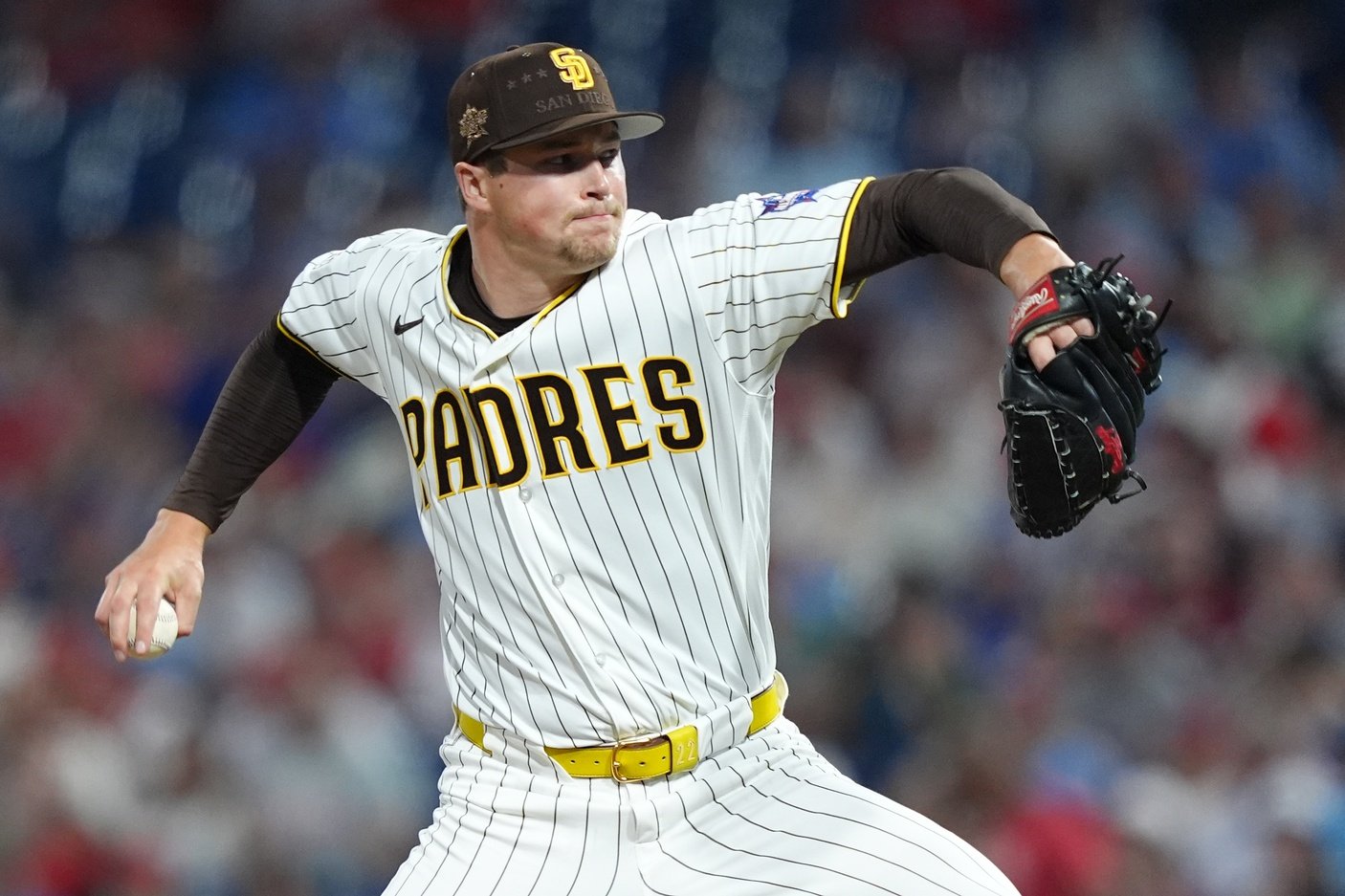
Trade deadline rumors are beginning to heat up, and one of the biggest names on the market could be Padres closer Mason Miller. Kevin Acee of The San Diego Union-Tribune recently reported that San Diego is open to moving the All-Star right-hander, a surprising development considering Miller has been nearly untouchable since arriving in San Diego. While adding the game's most dominant closer is an exciting idea, the Twins should look elsewhere this deadline.
Miller was arguably the biggest name dealt at last year's trade deadline when the Padres acquired the flamethrowing closer from the Athletics. San Diego paid an enormous price, headlined by consensus top-five prospect Leo De Vries along with several additional prospects. At the time, it felt like one of the rare blockbuster trades that worked out exactly as both sides hoped. The Athletics received a franchise cornerstone prospect, while the Padres acquired arguably the most dominant reliever in baseball.
After posting a microscopic 0.77 ERA during the second half of last season, he has followed it up with a 0.91 ERA across 40 innings with San Diego while leading the majors with 25 saves. There is little debate that Miller has established himself as baseball's premier closer.
Despite all of that success, the Padres appear willing to deal away the right-hander. It is an understandable position for a team sitting at 48-48 in an incredibly competitive National League, particularly in a loaded NL West. With playoff odds hovering around 12 percent, the Padres may see this as an opportunity to replenish a farm system they emptied to acquire Miller in the first place.
If he truly is available, there will be no shortage of bidders. Every contender would love to shorten games by handing the ninth inning to Miller. He is the type of player who instantly raises a team's ceiling.
Despite their back-end bullpen needs, the Twins simply are not in the position where paying that price makes sense.
Minnesota has put itself in a good spot to return to the postseason for the first time since 2023, finally back to a .500 record and with playoff odds of nearly 40 percent. That alone represents meaningful progress after the disappointment of the past two seasons. But making the playoffs and being one player away from a deep October run are two very different things.
Acquiring Miller is the type of move teams make when they believe they are one missing piece from winning a World Series. It is hard to make that argument for this Twins roster.
The asking price is almost certainly going to start with elite prospects. If San Diego paid Leo De Vries to get Miller, they are not going to flip him one year later for a package built around secondary prospects. The Twins would likely have to begin conversations with names like Walker Jenkins or Kaelen Culpepper. That is simply too steep for a relief pitcher, even one as dominant as Miller, for a team that's no sure thing to make the playoffs, nevertheless the World Series.
There is also the financial side of the equation, which should not be overlooked.
Miller is making just $4 million this season, but he has already begun the arbitration process which figures to escalate quickly for someone of his caliber. That matters because saves are one of the biggest drivers of arbitration salaries for relievers. With a league-leading save total and continued dominance, it is easy to envision Miller earning well north of $10 million next season before climbing to nearly $20 million and above in his remaining arbitration years.
Yes, the Twins could technically afford those salaries. The better question is whether that is the smartest use of (self imposed) limited payroll flexibility.
For organizations like the Dodgers, Yankees, or Mets, paying top dollar for a closer is manageable. For a mid-market club like Minnesota, every payroll decision carries more weight. Committing that kind of money to a reliever limits flexibility elsewhere on the roster, especially when the Twins have several young players who will also become more expensive over the next few seasons.
Recent reports suggest the Padres have discussed the possibility of attaching Xander Bogaerts to a Miller trade as a way to unload the remainder of the veteran shortstop's contract. Bogaerts is still owed $25 million annually over each of the next seven seasons, an enormous commitment for an underperforming 33-year-old.
On paper, absorbing that contract could reduce the prospect package needed to acquire Miller. In reality, it creates an even bigger problem for Minnesota.
The Twins are already carrying $10 million annually of dead money for Carlos Correa's contract through 2028. Taking on Bogaerts would saddle the organization with another massive long-term commitment for a declining player. Even if the prospect cost became more reasonable, the financial burden would almost certainly outweigh the benefit.
That is not how this front office should allocate its resources.
The bullpen certainly deserves attention before the deadline. There is no question the Twins could use multiple reliable late-inning arms. The mistake would be confusing that need with a reason to push all of their chips into the middle of the table.
Successful mid-market organizations rarely build bullpens through blockbuster trades. They identify undervalued relievers, develop arms internally, and spread their resources across multiple needs rather than concentrating them into one bullpen spot.
If the Twins are going to make a significant deadline splash, it should come at a position that impacts the game every day or every fifth day. A frontline starter or an impact bat would move the needle far more than even the best closer in baseball.
There is no denying that watching Mason Miller in a Twins uniform would be a lot of fun. His electric fastball and dominant stuff would immediately transform the back end of Minnesota's bullpen and make every late lead feel secure.
The problem is that acquiring him would likely require paying both a prospect price and eventually a financial price that simply do not align with where this organization is today. The Twins are trending in the right direction, but they are not one closer away from winning a championship.
Sometimes the smartest deadline move is recognizing that the biggest name on the market is not the right fit.
What do you think? Should the Twins push their chips to the middle for the best closer in baseball, or should they focus their prospect capital and payroll on addressing bigger needs before the trade deadline? Leave a comment below and start the conversation!








Recommended Comments
Create an account or sign in to comment
You need to be a member in order to leave a comment
Create an account
Sign up for a new account in our community. It's easy!
Register a new accountSign in
Already have an account? Sign in here.
Sign In Now