


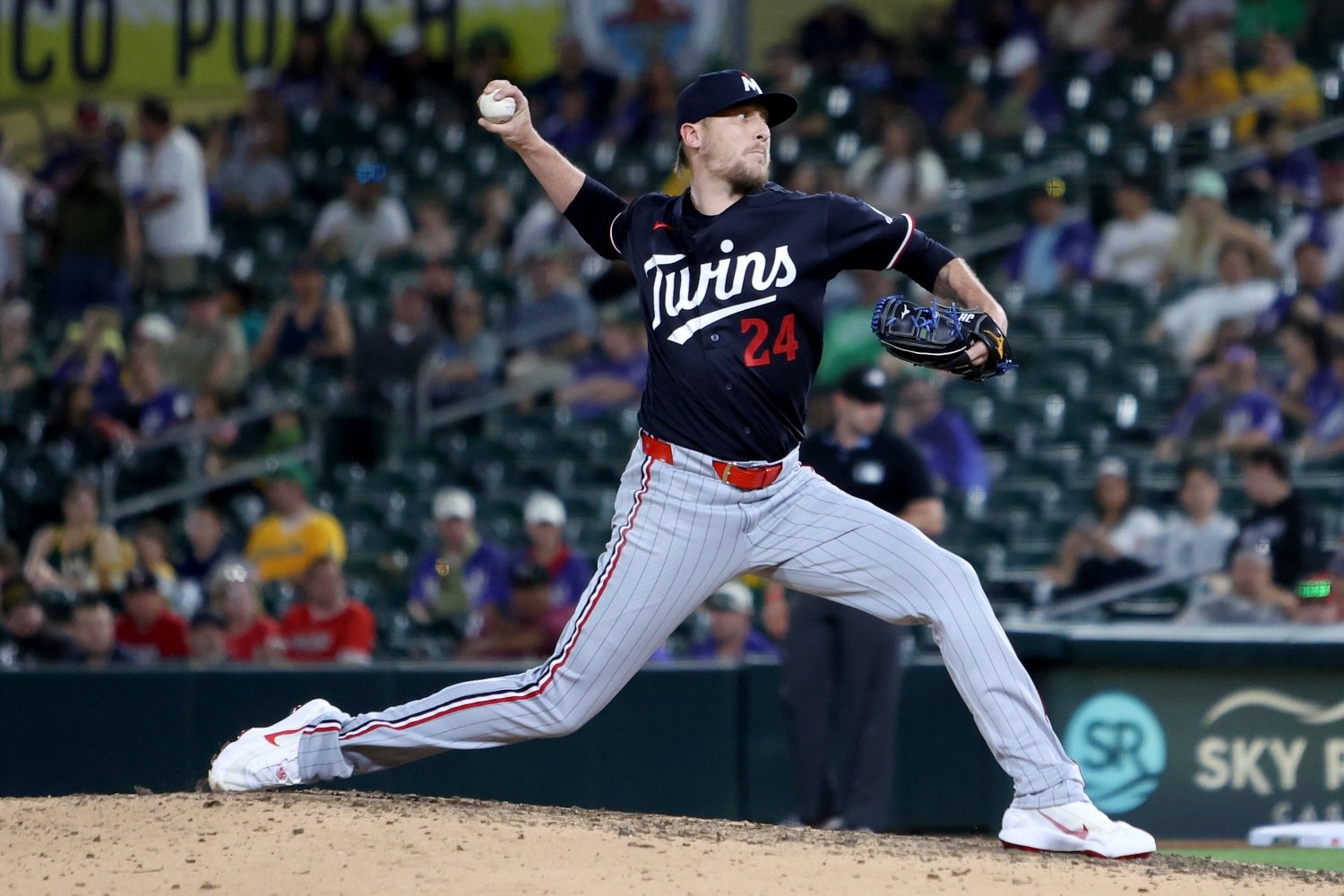
Twins Video
Leading up to the 2026 trade deadline, there was plenty of speculation about what the Twins would do. Ultimately, they wound up being buyers, adding four arms to the pitching staff in an effort to make a playoff push. Unfortunately, the Twins fell short and were eliminated over the weekend. But that’s not necessarily because of the moves they made at the deadline. Most of the players they acquired have actually performed pretty well since arriving in Minnesota, and several of them will remain with the team beyond this season. So now that we’re reaching the end of the season, let’s go back and re-grade each of the Twins’ deadline moves, to see how they look with the benefit of hindsight.
Twins receive: RHP Tommy Nance
Blue Jays receive: C Ryan Sprock
Trade Grade: B
Nance was the first addition the Twins made at the deadline, and for a while, this was looking like a complete steal. After arriving from Toronto, Nance put together an excellent month of August. He finished the month with a 1.74 ERA over 10 1/3 innings, striking out 14 batters while walking just two.
That looked like exactly what the Twins needed from a bullpen addition. Minnesota had struggled mightily in the first half of the season, but the bullpen turned things around in a major way, and Nance quickly looked like another reliable option. But then September rolled around.
He currently owns an 8.64 ERA over 8 1/3 innings this month, and his sudden collapse has felt pretty fitting with the rest of the team. After looking like one of the better relievers in the bullpen, he's struggled to sustain those results down the stretch. Still, I’m going to give this move a B. Nance has multiple years of team control remaining, and if his August numbers are any indication, he’s capable of helping this team. One bad month shouldn’t completely erase what he showed earlier in the season.
The Twins also have plenty of catching talent in the minor leagues. While Sprock could certainly turn into something down the road, I’ll take the proven arm with multiple years of control (even if the volatility of relievers of his quality and his age make it unlikely that he sticks around for long).
Twins receive: LHP A.J. Minter
Mets receive: INF Billy Amick and INF Bruin Agbayani
Trade Grade: C
The A.J. Minter trade is the one that looks the worst with the benefit of hindsight. Minter was acquired from the Mets in exchange for Billy Amick and Bruin Agbayani, and while I liked the thought process behind the move at the time, it was a deal focused on a goal the team didn't even approximate.
Hindsight is always 20/20, but Minter is a free agent after this season. Maybe the Twins bring him back; maybe they don’t. But they traded two infielders with some upside for an aging bullpen arm, while still falling short of the postseason.
To be fair, Minter hasn’t been bad. He currently owns a 2.70 ERA with the Twins, giving Minnesota exactly what it hoped to get from him when the trade was made. He's been a reliable left-handed option in the bullpen and addressed an obvious need at the time. The problem is what happens next. If the Twins want Minter back in 2027, they’re going to have to pay him. If they don’t bring him back, Minnesota will have traded two prospects for (essentially) two months of a middle reliever.
Amick and Agbayani both have plenty to prove, but they also have upside. That makes it tougher to look at this deal favorably now than it was when the Twins were still fighting for a playoff spot.
Twins receive: RHP Dean Kremer
Orioles receive: OF Jhomnardo Reyes
Trade Grade: A-
Kremer had really struggled in Baltimore this year, posting a 6.50 ERA before the trade. Since joining the Twins, however, that number has dropped to 3.80, and he has a 3.82 FIP to go along with it. One of the biggest differences has been his ability to limit hard contact. Kremer has significantly cut back on the amount of hard contact he allows, and the results have followed.
The other major factor here is his contract situation. Unlike Minter, Kremer isn’t a rental. He’s under team control for next season as well, meaning (assuming that they tender him a contract and pay him the $7-8 million he's in line to earn) the Twins will have a legitimate starting pitcher who can stabilize the back end of the rotation beyond 2026. That could be especially valuable for a team that has dealt with so many pitching injuries in recent years.
The Twins gave up outfield prospect Jhomnardo Reyes in exchange for Kremer. He’s only 18 years old, so it’s far too early to know what he’ll become. There’s definitely a chance Reyes turns into something for Baltimore. But when comparing what an 18-year-old prospect could become to what Kremer has already shown he can provide at the major-league level, I’ll take the back-end starter in this deal.
Twins receive: RHP Jeff Hoffman
Blue Jays receive: LHP Dasan Hill, RHP John Klein and INF Dameury Pena
Trade Grade: B+
The Jeff Hoffman trade was the final move the Twins made at the deadline, and it was also the most expensive deal they made. But Hoffman has been excellent. He currently owns a 2.12 ERA and a 1.98 FIP across 17 innings as a Twin, along with a staggering 26 strikeouts and 10 walks. He has quickly established himself as one of Minnesota’s most reliable late-inning options. He's also under contract beyond this season. The Twins didn’t just acquire a reliever who could help them for two months. They added someone who should continue to be part of their bullpen in 2027.
I don’t love giving up Dasan Hill. It’s rare to find left-handed starters with his ability, and there’s certainly a chance he turns into a valuable major-league pitcher. There are also some kinks Toronto will have to work out with him, particularly when it comes to his command. The same thing goes for John Klein and Dameury Pena, the other two prospects the Twins gave up in the deal. All three have some level of upside, and it’s always difficult to know how those prospects will develop once they leave the organization.
But I’ll take the proven, controllable late-inning reliever with filthy stuff over what could be with the three prospects. Hoffman has already shown exactly what he can do in Minnesota, and the Twins still get him beyond this season.
The Twins ultimately fell short of the postseason, but that doesn’t mean every trade they made at the deadline was a mistake. Three of the four players they acquired are likely to be back next season, and all four have shown something that could make them useful pieces moving forward. That the team fell short is not the fault of the new arrivals, and realistically, there was little more the front office could have done at the deadline to position themselves for success.
Which team do you dislike the most in the AL Central?
Follow Twins Daily For Minnesota Twins News & Analysis



- Patzky, thelanges5, 4twinsJA and 3 others
-
 6
6



Recommended Comments
Create an account or sign in to comment
You need to be a member in order to leave a comment
Create an account
Sign up for a new account in our community. It's easy!
Register a new accountSign in
Already have an account? Sign in here.
Sign In Now