


Twins Video
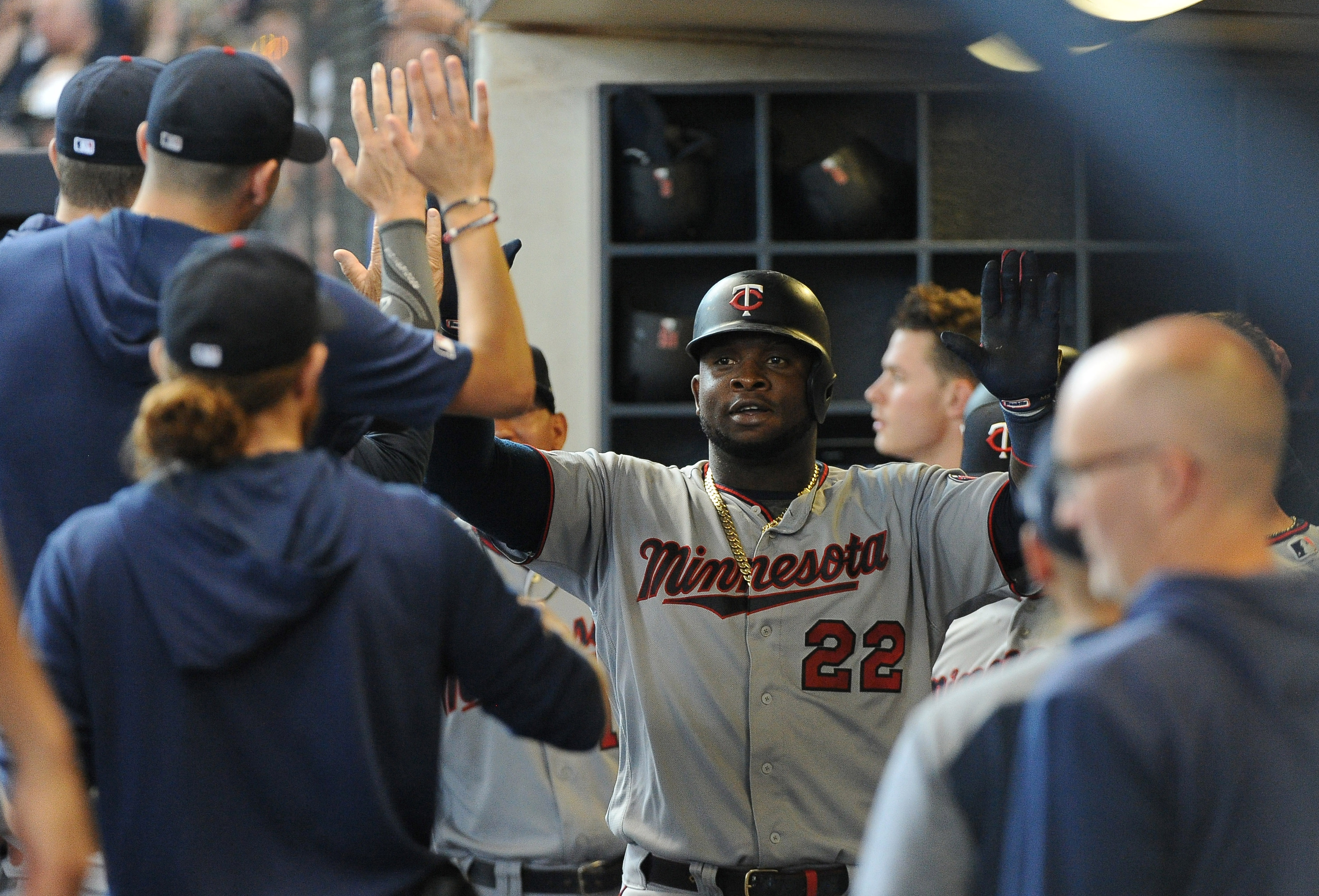
In late June, Miguel Sano’s 2019 season felt like it was on the brink of collapse.
From his delayed start in May through the end of June, the Minnesota Twins’ third baseman led baseball with a grotesque 42 percent strikeout rate. He had been strikeout prone but now in nearly half of his trips to the plate, he headed back to the bench without putting a ball in play, often looking a fool in the process. While the game was trending toward more whiffs, the average hitter still managed to strike out in only 20 percent of his plate appearances. Pitchers had him eating out of their hands.
The Twins staff finally intervened, retooled, and rewired his swing. The results have been no short of outstanding. Since the end of June, Sano’s 627 slugging percentage has been one of the best in the game. His average exit velocity of 95.6 miles per hour has been the third highest among qualified hitters and he has hit 60 percent of his balls in play over 95 miles per hour (third best in MLB).
While all the rocket shots and batted ball data is intriguing, perhaps most importantly, Sano no longer leads all hitters in strikeouts. So what changed?
Here’s how Miguel Sano became hotter than hard seltzer this summer.
Sano’s low point involved a frustrating pitch selection and inexplicable inability to make contact with fastballs. He would swing through low 90s center-cut fastballs or flail at a breaking ball that bounced in the left-handed batter’s box.
To repair, the Twins and Sano focused on his hand path, starting with eliminating the extra movement before getting to his launch point. As innocuous as it may seem, with the added bat tip forward Sano would put himself in the position of having to cheat to catch up to fastballs while getting burnt on breaking and offspeed pitches. Refraining from tipping the barrel toward the pitcher (as seen on the left) provided him with the ability to read pitches better.
Since reducing the slack, Sano is swinging less, chasing pitches out of the zone less and swinging through fewer pitches.

“The goal is to put his hands in a position to handle balls out over the plate to get to that ball up a little bit better and to be able to stay through the ball so that he can get on top of the ball consistently or to be able to drive through it more consistently,” Twins’ hitting coach James Rowson told The Athletic’s Dan Hayes.
That ball up, as Rowson noted, was Sano’s kryptonite. Pitchers who threw even the softest of gas could tie him in knots when elevating in the upper third. Before the correction, Sano swung through 66% of fastballs up in the zone and had just one hit. After Rowson and Rudy Hernandez performed their magic — working on drills that reduced hand movement from his start to his launch point — Sano improved his swing-and-miss rate on fastballs up from 66% to 28% and has three home runs on fastballs in that area of the zone.
Before the adjustment, Sano’s swing was powerful but one-dimensional. He mashed fastballs in one spot in the zone (outer-third, waist high) yet, because of his delayed swing process, his barrel would struggle to find anything middle-in. As long as opponents stayed away from that zone with their fastball, Sano’s power was muted. Again, speeding up his timing mechanism paid dividends. Over those first 30 games, Sano hit just .120/.267/.280 on fastballs middle-in but has since hit .395/.469/.907 with 7 home runs.

And that has been the key to Sano’s turnaround: hammering the heat.
Former player and manager Matt Williams used to say that the best way to hit a curveball was to not miss the fastball. In Sano’s case he would miss the fastball and would be reduced to rubble on various breaking balls. Even with the new approach, Sano has not handled non-fastballs well when swinging. However, he has greatly reduced the number of hacks at them.

Sano also points to another factor in his offensive uptick. He told Fox Sports North that Rowson had recommended adjusting his grip on the bat, aligning his middle knuckles rather than having his top hand bottom (proximal) knuckles aligning with his bottom hand bottom (proximal) knuckles. This is a similar effect to how Axe Bat-type handles naturally align knuckles, a feature that some hitters have raved about, which the Cubs’ Kris Bryant credited with turning his 2019 season around. It stands to reason that once he was able to decipher good from bad pitches, he would be able to drive them better with a new grip and more efficient hand path.
His load adjustment provided him with the ability to separate pitch types earlier while his grip allows him to drive through the ball. Needless to say, Sano’s in-season turnaround is a testament to the Twins’ coaching process as well as his ability to implement changes on the fly.
Do you approve of the job the Twins front office is doing?

Want to play the role of Twins general manager? Check out our free-to-use "You're The GM" offseason tool and build your own Twins roster!
Build Your 2027 Roster




Recommended Comments
Create an account or sign in to comment
You need to be a member in order to leave a comment
Create an account
Sign up for a new account in our community. It's easy!
Register a new accountSign in
Already have an account? Sign in here.
Sign In Now