


Twins Video
There are growing pains that come with any new technology, and Major League Baseball’s Automated Ball Strike challenge system is no exception. On Thursday, the Minnesota Twins found themselves in the middle of one of the most talked-about moments yet in the early days of ABS, a call so close that it is now fueling debate across the sport about what the strike zone should actually be.
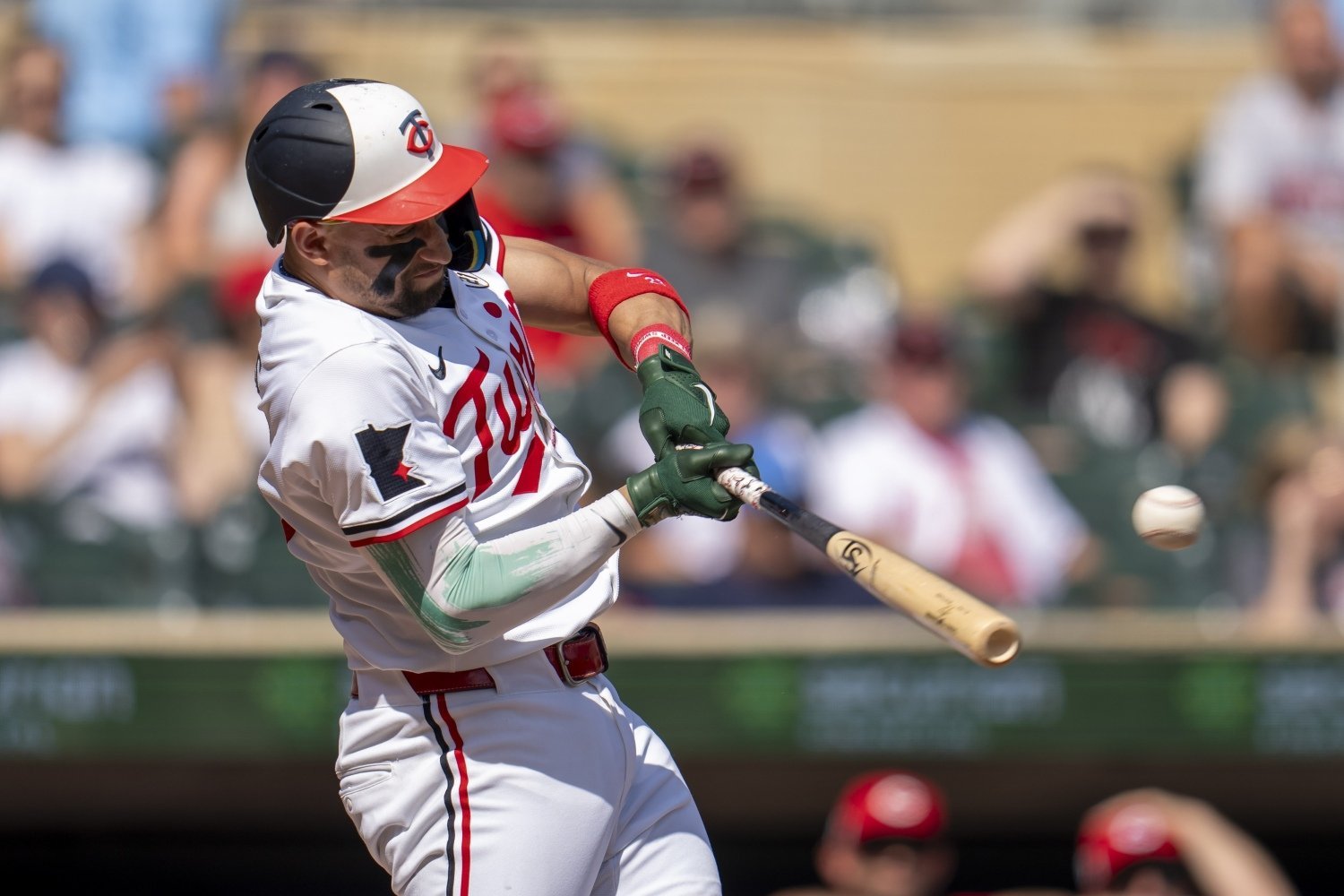
In the bottom of the second inning, Royce Lewis stepped to the plate against Jack Flaherty with a runner on first base. The count moved to 3-1, and Flaherty delivered an 91.3 mph fastball that was ruled a ball by the home plate umpire. Lewis began his routine jog to first base, shedding his gear as if the walk was already secured.
Detroit catcher Jake Rogers tapped his helmet, signaling for a review. Within seconds, the Hawk Eye system took over and delivered its verdict. The call was overturned. Strike two.
Not just a strike, but the closest confirmed strike yet under the system, according to Codify Baseball. Hawk Eye showed that the tiniest sliver of the baseball clipped the strike zone, enough to flip the call and send Lewis back into the box. Instead of standing on first base, Lewis was suddenly in a 3-2 count, and Flaherty finished the at-bat with another fastball that Lewis swung through for strike three.
It is exactly the type of moment ABS was designed to handle, but it is also the type of moment that exposes how different a rulebook strike zone can feel compared to the one players and fans have grown used to seeing.
The debate picked up quickly. MLB analyst Ryan M. Spaeder voiced frustration with how the system currently interprets the zone. He suggested a 50-50 rule, where at least half the baseball must cross into the strike zone to be called a strike. His argument centered on the idea that the current system effectively expands the zone beyond its traditional 17-inch width. When accounting for the baseball's full diameter, Spaeder argued, the zone can be closer to 22.8 inches wide.
That interpretation has raised eyebrows, especially for hitters who now must account for pitches that barely graze the edge rather than clearly enter the zone. From a hitter’s perspective, the difference between a ball and a strike has never been thinner, literally.
Still, not everyone sees a problem. There is a strong contingent across the league that believes this is exactly what ABS is meant to accomplish. For pitchers, a pitch that clips the zone is a perfect pitch, and the system rewards that precision without bias or inconsistency. In a sport that has long struggled with inconsistent strike zones from umpire to umpire, ABS offers a level of consistency previously unattainable.
Royals reliever Matt Strahm even pushed back on Spaeder’s idea publicly, noting that if baseball is going to start redefining what counts as a strike based on partial entry, then the same logic would need to apply elsewhere. He suggests that the foul line/pole shouldn’t be fair then.
For the Twins, the moment was more frustrating than philosophical. What looked like a routine walk turned into a strikeout, and a potential scoring opportunity disappeared just as quickly as it appeared. It is the kind of swing that can change an inning, or even a game, and it underscores how impactful the challenge system can be in high-leverage spots.
At the same time, it is hard to argue that the system got the call wrong. By definition, it got it exactly right.
That is where the tension lies as baseball continues to adapt. The ABS system is doing what it was designed to do, but it is also forcing players, analysts, and fans to reconsider what they expect the strike zone to look like. The human element has not disappeared, but it is now being checked by a level of precision that leaves little room for interpretation.
Moments like this one involving Lewis are likely to keep popping up as the season unfolds. Each will add another layer to the conversation about fairness and consistency.
For now, the early returns suggest that while there may be flaws to iron out, the overall reception to ABS has been positive. Players are adjusting, fans are learning, and the league is gathering valuable feedback in real time. The strike zone may not look the way it used to, but it has never been more exact.







Recommended Comments
Create an account or sign in to comment
You need to be a member in order to leave a comment
Create an account
Sign up for a new account in our community. It's easy!
Register a new accountSign in
Already have an account? Sign in here.
Sign In Now