


Twins Video
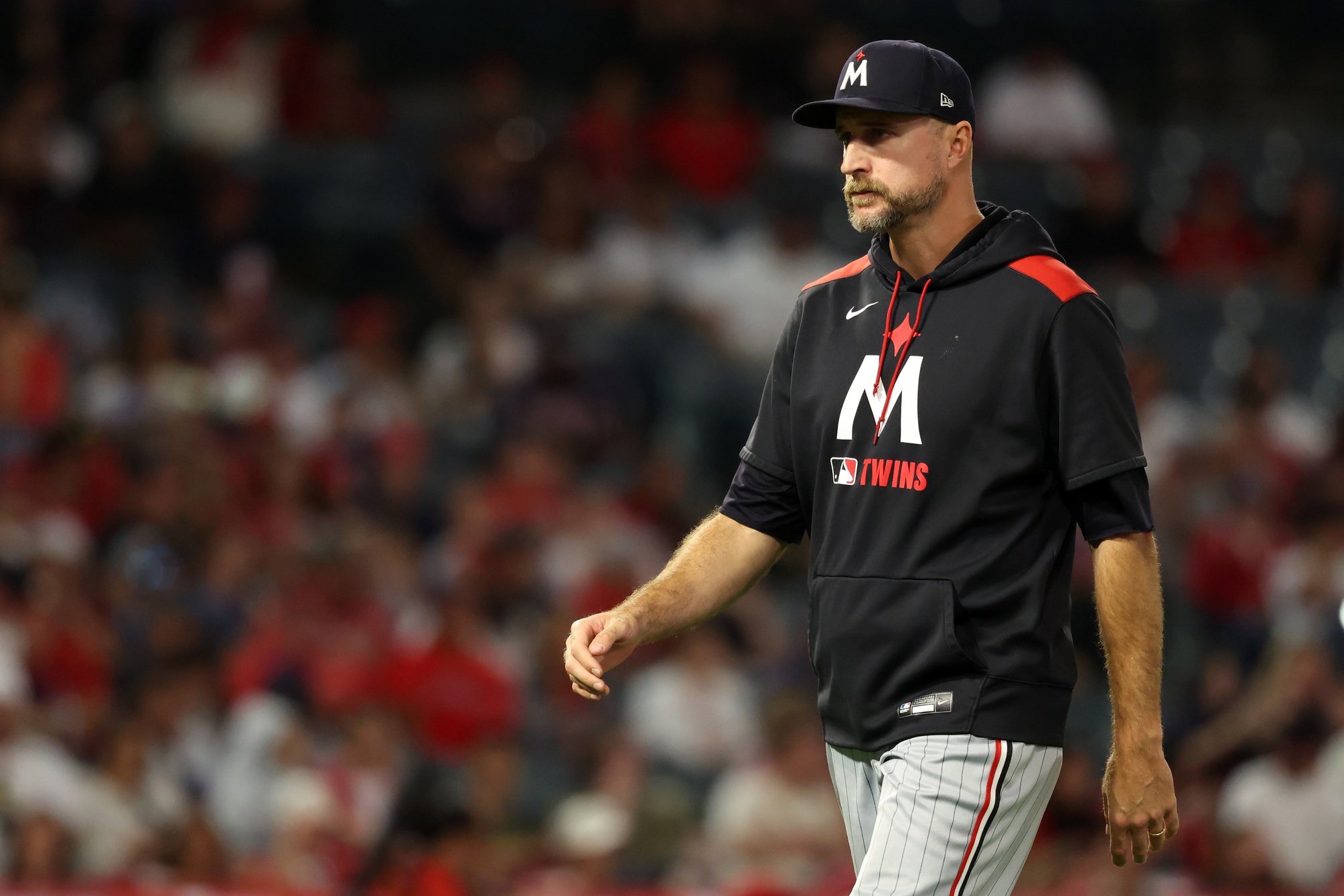
In a recent fan survey in The Athletic, more than 5,000 respondents were asked to assign blame for the Twins' collapse in back-to-back seasons. According to readers, the three primary culprits were ownership (78.7% of responses), the front office (11.1%), and the hitters (7.3%). Manager Rocco Baldelli ranked fourth, with just 2.4% feeling he’s the biggest factor in the Twins’ struggles.
And yet, in Cody Christie’s evaluation of Rocco’s standing amongst the best managers in Twins history, the overwhelming sentiment in the comments section is some version of “Fire Rocco.” While this disconnect is interesting, and worthy of analysis, this piece is going to examine what history tells us could come as a result of implementing a new manager for the 2026 season.
First, though, it’s important to be cognizant that the Twins picked up Baldelli’s 2026 option. An organization that just fired 80% of its scouting department, supposedly in a cost-saving measure, is unlikely to want to pay two managers a couple million dollars each for a season.
But, it’s clear change is needed to try to jumpstart the team before we as fans are forced to write off yet another season. Maybe a new manager would accomplish this very thing. But why? What would it accomplish? And would it really help the Twins win more games next season?
Often, changing managers is more about tone than approach. Replacing a players’ manager with a disciplinarian can focus attention on the message and create a culture of accountability for one’s actions, level of play, and even the decisions made in individual at bats. Similarly, replacing a “red ass” with a players’ manager can provide the mental and emotional support players may benefit from as they strive to deal with adversity, make adjustments in real time, and develop on the fly.
For the past several seasons, fans have largely perceived Rocco as a players’ manager, and also one that leads through analytics only. It’s probably true that his clubhouse became lax at times, and he was specific with his words during Spring Training, hinting that he may need to hold players more accountable. Has it worked? Not really. Still, perhaps it’s a question of authenticity. If Rocco is not truly a red-ass, then asking him to play one just may not work. Perhaps, a real one would accomplish what Baldelli has been unable to.
One final thing to note: it has been very important to this front office to take a modern, data-centric approach. They have specifically sought leaders that are able to translate date into the sort of accessible nuggets that players can digest, regardless of their aptitude and appetite for data and analytics. It’s clear that any manager going forward will likely make at least similar decisions to Baldelli, and ones that are similarly informed by analytics. So, the changes are more likely to be centered around how the manager interacts with the players and with the media.
Still, if a new manager were to get similar results, then it would be apparent beyond a reasonable doubt that the respondents to the fan survey in The Athletic were correct, and the issue actually rests with the front office.
All of that said, irrespective of management styles, the first year, at least, of a new manager’s tenure does tend to feature a performance spike. Each of the past three Twins managerial changes have experienced notable, statistically significant jumps in win totals.
Ron Gardenhire
Ron Gardenhire took over for Tom Kelly beginning with the 2002 season. In his first season, he won 94 games and the Twins reached the ALCS. This is coming off of a stretch in which Kelly led the Twins to eight losing seasons in nine years, before finally getting above .500 in his final season by finishing 85-77. Beginning with this nine-game bump, Gardy had five straight winning seasons to start his career, showing that a new voice (and of course, a young and promising core maturing) could make all the difference in the world.
Of course, things didn’t end well for Gardenhire. He was widely perceived to have let the game pass him by, and his loyalty to an inept coaching staff may have proven to be his downfall. From 2011-2014, his high-water mark was 70 wins. This led to his firing, and replacement by Paul Molitor.
Paul Molitor
Paul Molitor is a baseball legend, and the vibe at the time was that he would teach the Twins speed, defense, and work ethic. In 2015, his first season, the Twins saw a 13-game jump and finished 83-79. This was, of course, a Pyrrhic victory, as the following season the Twins experienced their Total System Failure season en route to losing 103 games.
2017 brought a slightly better than .500 record, and Molitor won Manager of the Year simply because of the improvement from terrible to mediocre. As it turns out, Molitor did not lead the team to sustained success, things were torn down, a new front office was brought in, and when the opportunity presented itself, Derek Falvey fired Molitor and replaced him with Rocco Baldelli.
Rocco Baldelli
In his first season as Twins manager, Baldelli led the 2019 Bomba Squad to a 101-win season as they set a record for most home runs in a season. This was a year-over-year improvement of 23 wins, and led to Baldelli being voted in as Manager of the Year. By his own admission, he didn’t have to do a ton of managing that season as the Twins scored So. Many. Runs. Fast forward, and Baldelli has a winning record in four of his seven seasons as Manager.
On average, the Twins have seen a 15-game jump in their win column each of the last three times they have changed managers. They are currently on pace to win 70.3 games headed into Friday’s opener against the Guardians. Speaking of the Guardians, they got a 16-game bump last year under new manager Stephen Vogt, who was replacing a World Series-winning Hall of Famer in Terry Francona. Sometimes, it's simply about bringing in a new voice. That doesn't assure anything, especially if the front office is resigned to rebuilding, but history shows it can make a difference.
Is it worth it, Twins fans, to chase the unknown in the hopes that next season, at least, could see a return to relevance even if the future beyond remains murky? I would love to hear from you







Recommended Comments
Create an account or sign in to comment
You need to be a member in order to leave a comment
Create an account
Sign up for a new account in our community. It's easy!
Register a new accountSign in
Already have an account? Sign in here.
Sign In Now