


Twins Video
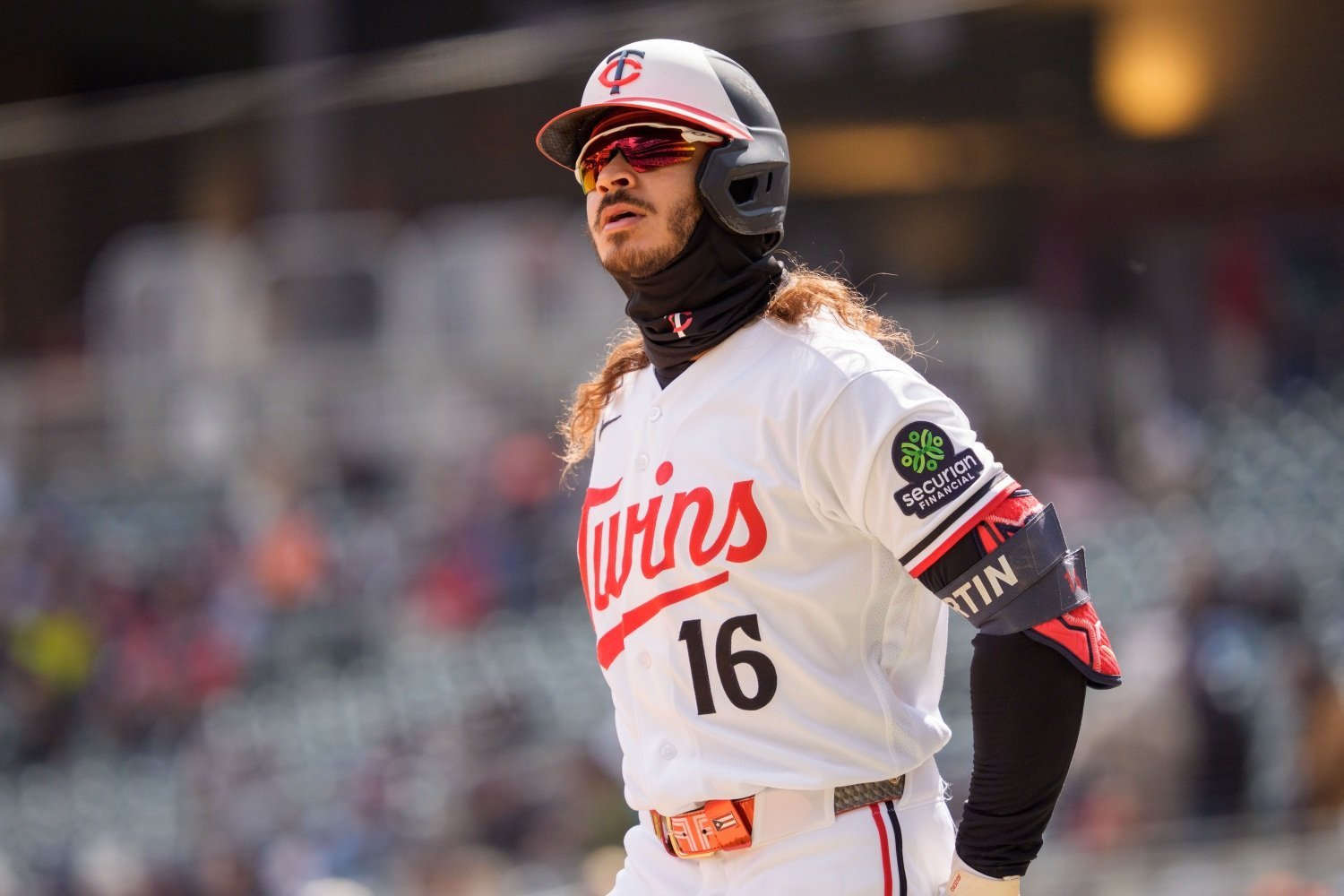
Austin Martin may have played the best game of his Twins career on Monday night against the Baltimore Orioles. He went 4-for-5 with a double, a home run, three runs scored, and a stolen base, putting together the kind of performance that reminded everyone why Minnesota was so excited to acquire him at the 2021 trade deadline.
Martin was the top prospect coming back to the Twins in the Jose Berrios trade, and Monday provided a glimpse of the player the organization hoped he could eventually become. Unfortunately, one excellent game doesn’t erase what has been a prolonged stretch of poor offensive performance.
For the first six weeks or so of the season, Martin looked like he was finally becoming the hitter the Twins envisioned when they acquired him. He was never expected to provide much power, but he was making up for it by leaning into the strengths that had always defined his offensive game. Martin was making consistent contact, showing impressive strike-zone awareness, and finding his way onto the bases with regularity.
Through May 14, he owned a .333 batting average and a remarkable .454 on-base percentage, while drawing more walks than strikeouts. His 155 wRC+ during that span suggested Minnesota had found a legitimate high-level contact bat. At the end of April, Twins Daily named Martin the team’s Hitter of the Month, which was especially encouraging based on his strong finish to 2025 (108 OPS+ in 50 games).
That early-season success made Martin's subsequent collapse even more difficult to understand. Since May 14, he is batting just .186/.290/.273 for a .563 OPS over 200 plate appearances. His strikeout-to-walk ratio during that stretch is 40-to-20, and he has been worth -0.83 WPA. Over a 162-game pace, that comes out to roughly -2.0 WPA. Those aren't numbers that simply suggest a player is going through a minor slump. They're the kind of numbers that make it difficult for a team trying to remain competitive to justify keeping a player in the lineup.
The Twins have also tried to put Martin in situations where he can succeed. He has received some protection from right-handed pitching because the platoon numbers are so different. Martin owns a .587 OPS against right-handed pitchers compared to a much better .809 OPS against lefties. Still, some of those positive numbers versus southpaws came in the season’s early weeks.
The problem is that opponents have also figured out that there isn't much reason to fear Martin's power. His .337 slugging percentage against fastballs is nearly 40 points lower than it was in 2025, while his contact against breaking and offspeed pitches has been particularly problematic. He is batting below .175 against those pitch types, making it increasingly difficult for him to consistently reach base the way he did earlier in the season.
That's where the roster fit becomes especially difficult to defend. Martin's best traits are supposed to be his ability to make contact and get on base, but when neither of those things is happening consistently, there isn't much else to carry his offensive profile. He isn't providing enough power to make up for a low batting average, and the current version of Martin isn't getting on base at a high enough clip to justify sacrificing offense elsewhere in the lineup.
The Twins also have a fairly easy solution available if they decide it's time for a reset. Martin has one minor league option remaining, meaning Minnesota can send him to Triple-A without having to expose him to waivers and potentially lose him for nothing.
There is precedent for taking this approach with a talented player who has struggled at the big-league level, as the Twins did with Royce Lewis earlier this season. A trip to the minors could give Martin an opportunity to get regular at-bats, work through his swing, and rediscover the approach that made him so effective during the first six weeks of the season.
Monday's performance should not be ignored, either. Going 4-for-5 with a home run, double, three runs, and a stolen base is exactly the type of game that can remind a player and an organization what is possible. But the Twins can't make roster decisions based on one night, especially when the previous 200 plate appearances have been this poor.
Martin still has time to change the narrative surrounding his Twins career. The organization invested heavily in his potential when it acquired him as part of the Berríos trade, and his early-season production showed that there may still be a legitimate big-league hitter somewhere in there. Right now, though, the Twins need production more than they need potential, and Martin hasn't provided enough of it for nearly half a season.
Does Martin need a reset at Triple-A? Leave a comment and start the discussion.
Are you optimistic about the Twins right now?

Follow Twins Daily For Minnesota Twins News & Analysis



- nclahammer and mikelink45
-
 2
2


Recommended Comments
Create an account or sign in to comment
You need to be a member in order to leave a comment
Create an account
Sign up for a new account in our community. It's easy!
Register a new accountSign in
Already have an account? Sign in here.
Sign In Now