


Twins Video
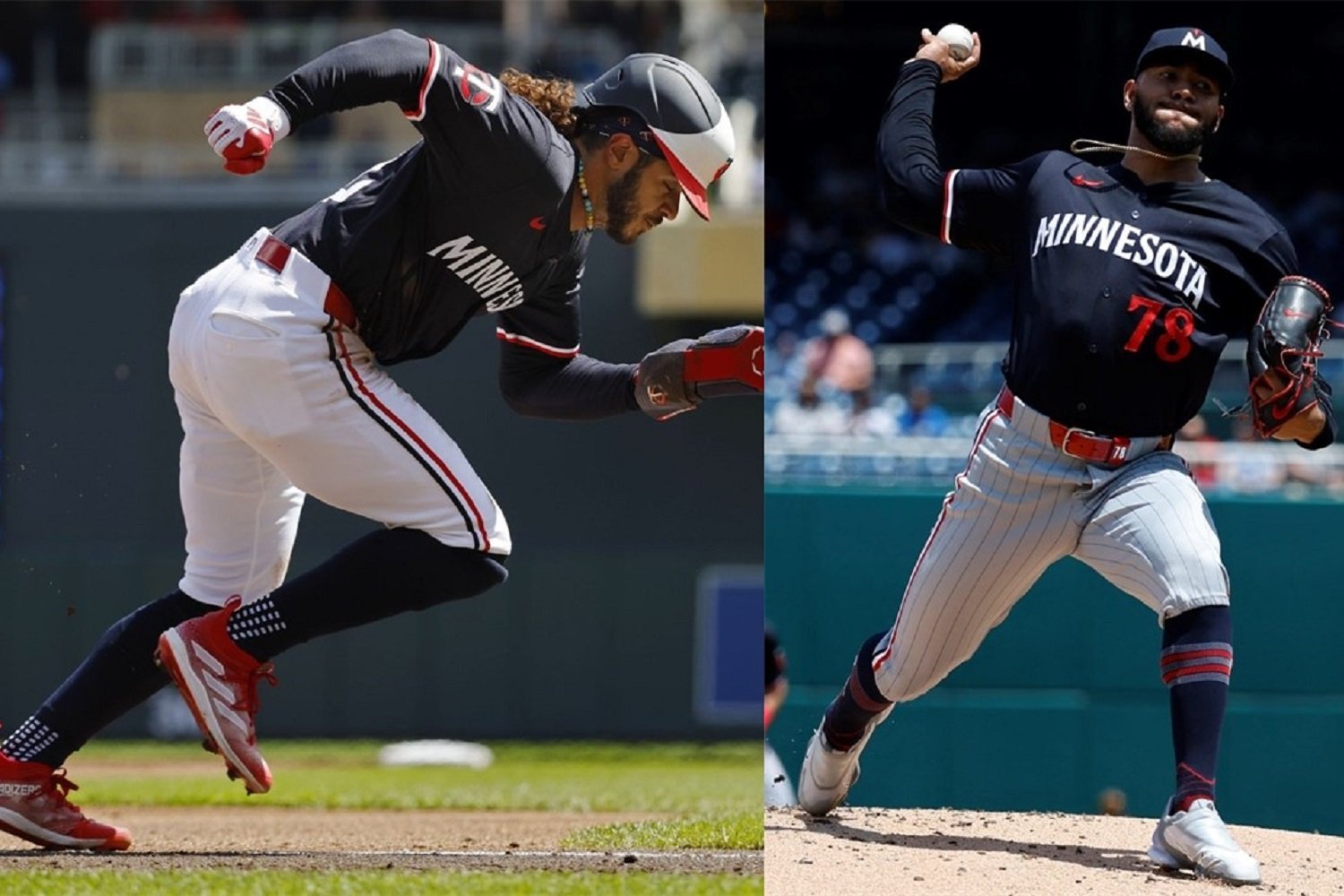
Five years have passed since Derek Falvey made one of the most consequential trades in recent Twins history. At the 2021 trade deadline, Minnesota sent homegrown ace José Berríos to the Toronto Blue Jays in exchange for two Top 100 prospects: Austin Martin and Simeon Woods Richardson. At the time, it felt like a franchise-altering deal. The Twins were selling after a disappointing season, and Toronto was aggressively pursuing a postseason berth.
Now, with Berríos sidelined following Tommy John surgery, Woods Richardson heading back to Toronto, and Martin establishing himself as a regular contributor in the major leagues, there is enough distance from the trade to begin evaluating what each side actually received.
What Was Said at the Time?
When the trade was announced in July 2021, the baseball industry largely viewed it as a major win for Minnesota. The Twins had not actively shopped Berríos entering deadline week, but once they began listening, Toronto's offer exceeded expectations. FanGraphs described the return as a "bounty," noting that Minnesota had landed two Top 100 prospects for a pitcher with only a season and a half of club control remaining.
That praise came with plenty of caveats. Martin, the fifth overall pick in the 2020 MLB Draft, possessed elite on-base skills but carried questions about his future defensive home, power potential, and rising strikeout rates. Woods Richardson was viewed as a polished pitching prospect, though evaluators wondered whether his command and lack of premium velocity would limit his upside.
The Twins were betting on talent and projection. The Blue Jays were betting on certainty.
Berríos Delivered Mixed Results in Toronto
Toronto quickly demonstrated its commitment to Berríos by signing him to a seven-year, $131 million extension. However, that extension should not factor into the original trade evaluation. Minnesota only traded away the remainder of the 2021 season and the entirety of 2022.
Berríos was excellent down the stretch in 2021. Across 12 starts with Toronto, he posted a 3.58 ERA and 1.10 WHIP while generating 1.5 rWAR. His performance looked very similar to what he had provided for the Twins throughout his career.
The following season was a completely different story. Berríos struggled throughout 2022, finishing with a 5.23 ERA while leading the American League in both hits and earned runs allowed. He accumulated a disappointing -0.7 rWAR season. When all was said and done, the Blue Jays received just 0.8 rWAR during the season and a half of team control Minnesota traded away.
Martin's Path Has Been Anything But Linear
Few prospects have experienced a more winding road through the Twins organization than Austin Martin. Many of the concerns scouts identified in 2021 followed him through the minor leagues. Injuries slowed his development, and there were moments when it appeared he had fallen out of Minnesota's long-term plans altogether.
Martin finally debuted in 2025, appearing in 93 games. The overall numbers were underwhelming. He posted a .670 OPS and an 89 OPS+ while finishing with -1.0 rWAR.
Yet the story changed dramatically after the 2025 trade deadline. Following a stint at Triple-A and a healthier second half, Martin returned to Minnesota looking like a different player. Over his final 50 games, he produced 0.7 rWAR with a 106 OPS+. He also showcased the athleticism that once made him one of baseball's premier prospects, successfully stealing 11 bases in 15 attempts. On a team that collapsed down the stretch, Martin emerged as one of the few reasons for optimism.
Entering 2026, his role remained uncertain. However, a strong April combined with struggles from several teammates helped him earn more consistent playing time. Through 54 games, Martin has already matched last year's 0.7 rWAR total while posting a 102 OPS+.
The season has not been without challenges. After recording a .899 OPS in April, that figure dropped to .587 in May. Even so, he has established himself as a legitimate major-league contributor. Because he was a late bloomer, he remains under team control into his early 30s.
Woods Richardson's Roller-Coaster Ride
While Martin arrived with the bigger prospect pedigree, Woods Richardson arguably provided more value to Minnesota in the short term. Between 2024 and 2025, he developed into a reliable member of the Twins rotation. Across 245 innings, he produced 4.1 rWAR with a 4.11 ERA and a 103 ERA+.
His future appeared especially bright late last season. Last September, Woods Richardson unveiled a splitter that transformed his repertoire. Over his final 27 innings, he posted a 2.33 ERA and struck out 36 hitters. The pitch generated swings and misses at a rate he had never previously achieved and looked capable of elevating him from a back-end starter to something more.
Unfortunately, that momentum disappeared almost immediately in 2026. His first two starts offered little reason for concern. Against Kansas City and Tampa Bay, Woods Richardson allowed just three earned runs across 11 2/3 innings. Then everything unraveled.
Over his next seven starts, he went 0-5 with a 9.79 ERA, surrendering 38 runs in only 30 1/3 innings. Opposing hitters consistently squared up his fastball, and the effectiveness of his splitter vanished. By the time the Twins designated him for assignment, he had accumulated -1.3 rWAR while leading the American League in both losses and earned runs allowed. It was a stunning collapse.
So, Who Won the Trade?
Trade evaluations rarely provide simple answers, and this one remains incomplete. If the conversation is limited strictly to the value Minnesota traded away, the Twins appear to have done exceptionally well. Berríos produced only 0.8 rWAR during the year and a half of control Toronto acquired before reaching free agency.
Meanwhile, Woods Richardson alone generated 4.1 rWAR during his productive 2024 and 2025 seasons. Even after accounting for his disastrous 2026 campaign, he still provided substantially more value than Berríos did during the control window that was exchanged.
Martin's story is still being written. After posting a combined 1.4 rWAR over the last two seasons, he remains a controllable major-league player who could continue adding value for several more years. At the moment, the Twins have already received more on-field production than the Blue Jays got from Berríos during the period they originally acquired him. That alone makes the trade look favorable for Minnesota.
However, the final verdict may still be years away. Martin is only beginning to establish himself in the majors, and his future contributions could ultimately determine just how significant this trade becomes in Twins history. Five years later, what once looked like a prospect-heavy gamble appears to be paying off. Whether it becomes one of the franchise's best modern trades depends on what Martin does next.
How should fans view this trade after five years? Leave a comment and start the discussion.







Recommended Comments
Create an account or sign in to comment
You need to be a member in order to leave a comment
Create an account
Sign up for a new account in our community. It's easy!
Register a new accountSign in
Already have an account? Sign in here.
Sign In Now